The Ultimate Guide to Mech Grooved Fittings
2026-06-02 10:04:08


Mech grooved fittings are an innovation in industrial pipe technology that gives procurement experts and engineers a faster, safer, and cheaper connecting solution. These mechanical coupling devices use precise groove-and-gasket design to make leak-tight connections without welding or threading. Grooved pipe connections are essential for fast, flexible, and reliable fire protection, HVAC, plumbing, and industrial fluid systems. Our thorough guide covers technical requirements and procurement methodologies, helping your team to make educated decisions that maximize performance and budget.


Understanding Mech Grooved Fittings: Definition, Types, and Key Features
What Are Mech Grooved Fittings and How Do They Work
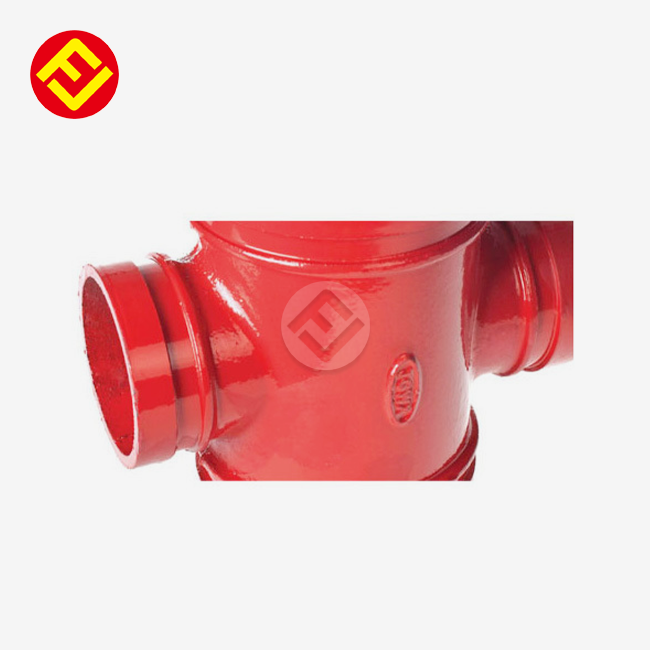
A mech grooved fitting's mechanism is simple yet efficient. A sturdy anchoring point is created by cutting a cold-formed or machined groove into the pipe end. The coupling housing wraps around the grooved pipes, and a pressure-responsive EPDM or nitrile rubber gasket seals several places. When bolts tighten the housing, the gasket compresses equally, forming a watertight seal that can resist 500 PSI or greater, depending on design. Hot work permits, exposed flames, and professional welding personnel are eliminated in this design.
Material Composition and International Compliance
Ductile iron that meets ASTM A536 Grade 65-45-12 is used in high-quality mech grooved fittings because it has a minimum tensile strength of 65,000 psi and better impact resistance than gray iron. ASTM-compliant carbon steels are stronger for high-pressure applications. Gasket materials are tested using ASTM D573 heat aging techniques to maintain elasticity over decades. Red paint, epoxy coatings, and hot-dip galvanized finishes provide different corrosion resistance levels. Procurement teams can trust Products" target="_blank" style="color:blue" >products in mission-critical installations with UL/FM, CE, and ISO9001 certifications for fire safety and quality management.
Product Portfolio: Couplings, Elbows, Tees, and Specialty Components
Grooved system components include stiff and flexible couplings, 90-degree and 45-degree elbows, equal and reducing tees, concentric and eccentric reducers, caps, and mechanical tee outlets. Rigid couplings support structures and withstand axial movement, whereas flexible ones allow 3-5 degrees of angular deflection for thermal expansion, seismic activity, and small pipe misalignment. The noise-dampening capabilities of HVAC-optimized fire sprinkler components limit vibration transfer. Most commercial and industrial plumbing needs are met by sizes from 1 inch to 48 inches (25mm to 1200mm). Precision laser measuring verifies each component's ANSI/AWWA C606 groove compliance.
Comparing Mech Grooved Fittings to Other Connection Solutions
Time and Labor Efficiency Advantages
When procurement managers analyze connection technology, installation speed affects project timeframes and labor costs. Traditional welded connections need certified welders, pipe beveling, alignment, numerous weld passes, cooling, and post-weld inspection. Typical 6-inch welded connections take 45-60 minutes of competent effort. Threaded connections need accurate tools, cutting oils, thread compounds, and alignment to avoid cross-threading. A skilled technician can install a 6-inch grooved joint in about five minutes using only a grooving tool and wrench. This efficiency reduces labor costs by 30-50%, especially in big projects with hundreds of connections.
Maintenance Access and System Flexibility
An often-overlooked benefit arises during maintenance and customization. Welded and threaded systems provide permanent connections that must be cut and disassembled for repairs or reconfigurations. Grooved systems, including those using a mech grooved fitting, have unions at every connection, so technicians may remove bolts, split the coupling, and access pipe interiors or replace parts without disrupting surrounding piping. This trait is important in operations that upgrade equipment or modify processes often. Flexible coupling types absorb thermal expansion and contraction, reducing stress concentration and improving system lifespan in temperature-variable situations like outdoor industrial installations or buildings with poor climate control.
Pressure Containment and Safety Performance
Engineers specifying pipe connectors prioritize pressure performance. Mech grooved fittings placed properly can reach 300 PSI, 500 PSI, and 1,000 PSI. Internal pressure energizes the multi-point gasket seal against the pipe surface, making it more effective. Grooved connections meet or surpass welded joints in pressure while removing field welding problems such partial penetration, porosity, and slag inclusions. Metallurgical changes that might jeopardize pipe integrity over time are absent without heat-affected zones.
Installation, Maintenance, and Performance Optimization of Mech Grooved Fittings
Step-by-Step Installation Procedures
Pipe preparation is key to installation success. Technicians must use power saws or specialized pipe cutters to properly cut pipes and remove burrs that might harm gaskets. Roll grooving cold-forms the groove without losing material, whereas cut grooving machines a precise channel. Roll grooving is used for most applications because it retains pipe wall thickness and strengthens joints. Installers use a gap gauge to check groove depth and breadth after grooving. The gasket fits in the housing groove, pipe ends align, and housing segments unite around the pipes. Tightening bolts in a star pattern ensures equal gasket compression, while torque wrenches calibrated to manufacturer requirements avoid leaks and gasket damage.
Preventive Maintenance Protocols
Grooved pipe systems are easier to maintain than other connections, but routine inspections assure reliability. Quarterly maintenance teams should visually inspect exposed connections for gasket extrusion, housing corrosion, and bolt tension, including mechanical grooved fitting. Annual comprehensive inspections evaluate bolt torque, gasket compression set or cracking, and system vibration for incorrect support. Corrosive or chemical-laden systems require more inspections. EPDM works well with water and mild chemicals from -30°F to 230°F, nitrile with petroleum-based fluids, and silicone with severe temperatures. Only system depressurization, bolt removal, and component substitution are needed for replacement.
Quality Testing and Performance Validation
Procurement teams should validate thorough testing processes from reputable manufacturers. Metallurgical analysis ensures ductile iron nodularity surpasses 90% in each production batch, preventing shattering under stress loads. Dimensional examination with coordinate measuring equipment verifies bolt pad spacing, key widths, and groove profiles meet specifications. Pre-shipment hydrostatic pressure testing at 150% of rated operating pressure finds casting porosities and flaws. Gasket materials are tested for compression set and heat aging following ASTM D395 and D573 to ensure long-term sealing. These ISO9001-certified quality standards provide B2B buyers confidence when choosing critical infrastructure items.
Procurement Guide: Buying Mech Grooved Fittings for Your Business Needs
Sourcing Strategies and Supplier Evaluation
The grooved fitting market requires procurement experts to favor suppliers with technical expertise and quality processes. Evaluation factors include manufacturing capacity (ability to fulfill big orders), material traceability (confirming raw material origins and requirements), certification portfolios (UL/FM for fire safety, CE for European markets), and technical assistance. When projects require non-standard dimensions or particular applications, quick prototyping and custom engineering manufacturers are advantageous. Suppliers with regional warehouses minimize lead times and freight costs compared to direct overseas shipment for every purchase. Before ordering in bulk, your engineering team may evaluate samples for dimensional correctness, surface polish, and pipe compatibility.
Pricing Factors and Cost-Benefit Analysis
Understanding how mech grooved fitting prices vary helps negotiate favourable terms while preserving quality. Material choice drives cost—ductile iron is cheaper than carbon steel, while specialist alloys cost more. Size affects material consumption and production complexity, with bigger diameters costing more per unit. Economical painted finishes, mild epoxy coatings, and premium hot-dip galvanization increase cost but enhance service life in tough situations. UL/FM-listed fittings cost more to test, therefore manufacturers add them to unit prices. Bulk orders frequently enjoy large discounts. Cost-benefit evaluations should include total installation costs, labor savings, decreased project delays, and long-term maintenance benefits, not just component prices.
After-Sales Support and Service Commitments
Supply and buyer relationships often endure beyond the first transaction, especially for construction businesses and distributors with inventories. Leading manufacturers offer fast technical support, including engineering calculations, system design evaluations, and installation instructions to prevent field difficulties. Warranty durations are usually one to two years and cover material and manufacturing faults, but not faulty installation or operating outside rated conditions. Return policies should cover wrong-size orders and project scope changes, however restocking fees may apply. Complex custom fabrication might take 2-4 weeks for basic dimensional changes to 6-8 weeks for new designs needing tooling development. Procurement managers respect professionalism in 24-48-hour quotation turnaround and transparent production communication.
Why Choose Mech Grooved Fittings? Core Benefits and Value Proposition
Quantifiable Performance Improvements
Grooved pipe systems provide construction managers and facility operators with verifiable project benefits. Installation time reductions of 60% compared to welding enable faster project completion and earlier occupancy dates—critical in commercial construction where every day of delay costs money. Averaging 30-50% labor cost savings boosts project margins or bidding advantages. The removal of hot work permits speeds installation in occupied buildings, chemical factories, and other locations where fire watch regulations are costly. Field testing shows system flexibility decreases pipe stress by 40%, increasing infrastructure lifespan and lowering maintenance. In fire protection applications, grooved connections' decades-long durability gives site managers confidence that life-safety systems will operate during crises.
Real-World Application Success Stories
Municipal water systems show grooved technology's longevity, specifically with mechanical grooved fitting. A large urban water system renovated 12 miles of distribution infrastructure with grooved connections in half the time expected while preserving service through selective valve isolation. The flexible connections handled seasonal ground movement without joint failure, avoiding leak repairs in the old welded method. An industrial petrochemical facility used grooved connections for a process water expansion to change pipe layouts during commissioning without cutting and rewelding. Vibration-dampening characteristics lowered noise by 15 dB, benefiting the workplace. Grooved systems are preferred by fire protection contractors for high-rise installations because to welding limits and limited construction timeframes. These case studies show how grooved technology solves operational problems in many sectors.
Innovation and Future-Ready Technology
Product development keeps mech grooved fitting technology current with industry needs. Gasket compounds resistant to growing chemical additives in water treatment systems, high-temperature versions for thermal energy networks, and antimicrobial coatings for healthcare facilities are recent discoveries. Software calculates pressure decreases, thrust forces, and support needs for grooved pipe systems. Continuous improvement manufacturers engage in R&D to minimize material usage, energy-efficient production methods, and recyclable component materials to meet sustainability targets. This forward-thinking strategy makes grooved systems the best choice for enterprises developing infrastructure that must last 30-50 years and adapt to changing operating needs.
Conclusion
For contemporary fire protection, HVAC, plumbing, and process industrial pipe systems, mech grooved fittings are dependable and cost-effective. The technique speeds installation, lowers labor costs, increases system flexibility, and simplifies maintenance. Quality ductile iron or carbon steel goods with extensive testing and international certifications provide procurement experts confidence in performance and safety. Grooved pipe connections improve project outcomes and operational efficiency for construction firms, distribution businesses serving contractors, and industrial facility maintenance.
FAQ
1. What pressure ratings do grooved fittings support?
Standard grooved coupling systems can withstand 300 PSI (2.07 MPa), which meets most commercial and industrial applications such fire sprinkler systems, HVAC chilled water loops, and municipal water distribution. Thicker housing materials and stronger gaskets provide high-pressure designs with 500 PSI ratings for demanding industrial process applications. Designs for harsh environments approach 1,000 PSI. Pipe size, material quality, gasket compound, and system operating temperature affect pressure. Engineers should examine pressure-temperature rating charts from manufacturers during specification formulation to establish safety margins.
2. Can grooved fittings withstand corrosive environments?
Housing material and surface treatment determine corrosion resistance. Indoor climate-controlled installations are protected by standard painted finishes. For moderately corrosive industrial settings, epoxy coatings improve chemical resistance. Hot-dip galvanized fittings protect outdoor installations, salty coastal regions, and chemical processing facilities against corrosion. EPDM handles water, mild acids, and alkalis, nitrile handles petroleum products, and specialty compounds manage harsh chemicals. Environmentally appropriate material selection assures decades of dependable service.
3. What lead times should procurement teams expect for bulk orders?
Order parameters and manufacturing capacity determine lead times. Standard catalog goods in common sizes arrive in 1-2 weeks when suppliers have enough inventory. Order confirmation to delivery for large volume manufacturing orders takes 3-4 weeks. Design validation, tooling development, production, and quality testing take 6-8 weeks for custom-engineered components with non-standard dimensions, unusual materials, or unique certifications. Established manufacturers with comprehensive planning systems give precise delivery schedules and proactive production concerns updates. Building trust with suppliers and stocking strategically helps distribution companies and contractors avoid project delays.
Partner with FLA Industrial & Trading Co., Ltd. for Premium Mech Grooved Fitting Solutions
FLA Industrial & Trading Co., Ltd. has been a trusted mech grooved fitting supplier to building contractors, distributors, and industrial facilities in North America, Europe, and Asia-Pacific for than four decades. Our premium ductile iron and carbon steel product line spans 1 to 48 inches and includes epoxy coating and hot-dip galvanization. Every component is ISO9001, CE, and UL/FM certified and undergoes rigorous quality testing to meet the highest industry standards. When projects require non-standard specs, our engineering staff gives quotes within 24-48 hours and works on tailored solutions. Contact our knowledgeable technical team at sales@flaindustrial.com to discuss your needs, get product specs, or get competitive quotes for your projects. Find out why Fortune Global 500 firms choose FLA Industrial for dependable, high-performance pipe connections.
References
1. American Water Works Association. "ANSI/AWWA C606: Grooved and Shouldered Joints." Standards for Water Supply Systems, 2020 Edition.
2. National Fire Protection Association. "NFPA 13: Standard for the Installation of Sprinkler Systems." Fire Protection Engineering Guidelines, 2022.
3. Ductile Iron Pipe Research Association. "Mechanical Joint Systems: Design, Installation, and Performance." Technical Manual Series, 2019.
4. American Society of Mechanical Engineers. "ASME B31.1: Power Piping Code." Pressure Piping Standards and Guidelines, 2021.
5. Factory Mutual Research Corporation. "Approval Standard for Grooved Pipe Couplings and Fittings." Class Number 1680, 2018 Edition.
6. International Code Council. "International Plumbing Code: Chapter 6 - Water Supply and Distribution." Building Standards Compendium, 2021.