What Are Mech Grooved Fittings and Why Are They Widely Used in Piping Systems?
2026-06-11 14:20:08


Mech grooved fittings are a new way to connect pipes. They use precision-machined or roll-formed grooves on the ends of the pipes that lock firmly with housing parts and elastomeric gaskets. This mechanical coupling method gets rid of the need for welding, threading, or flanging. This lets contractors put together pipe networks quickly while still keeping the seals very strong. The technology solves some of the biggest problems in modern building by cutting installation times by as much as 60%, getting rid of the need for hot work permits, and allowing for thermal expansion without stress cracking. For projects that need speed, dependability, and long-term performance, these coupling solutions have become the best option. They are used in everything from fire protection systems in high-rise buildings to industrial HVAC loops in factories.


Understanding Mech Grooved Fittings: Definition and Key Features
What Makes Grooved Coupling Technology Unique?
Three main parts that work together to form the mechanical grooved fittings' basic design. The housing, which is usually made of ductile iron that meets ASTM A536 Grade 65-45-12, gives the structure strength and can hold at least 65,000 psi of tension. A pressure-responsive gasket, usually Grade E EPDM for water uses or Grade T Nitrile for fluids based on oil, sits between the housing and the pipe. When the housing pieces are pulled together by bolts, the gasket presses against both the pipe surface and the groove shoulders. This makes multiple seal points that stop leaks even when the temperature changes.
This system is very different from the old ways of doing things. Welded connections need certified welders, people to watch over the fire, and a thorough check after the weld is done. Threaded joints need to be carefully prepared on the pipe and often leak when the pipe moves. It costs a lot more and is heavier to use flanged systems. Grooved connections, on the other hand, only need basic hand tools and can be put together by regular workers with little training. This makes skilled pipe fitting work more accessible on building sites.
Material Selection and Performance Characteristics
The makeup of a material directly affects how long it will last and what it can be used for. Ductile iron fittings are better at resisting impact than grey iron ones, which makes them perfect for places that are prone to earthquakes and have a lot of foot traffic. The irregular graphite structure in ductile iron gives it flexibility that keeps it from breaking in a very bad way. Different types of carbon steel are stronger for high-pressure uses, like in oil and gas facilities where pressures can go over 500 PSI.
Surface treatments make things last longer in settings that are corrosive. Standard red paint coatings work well indoors where the air quality is managed. Epoxy coats protect water treatment plants that work with acidic or chlorinated fluids from chemicals. Hot-dip galvanized finishes offer the best protection for outdoor installs, offshore platforms, and marine settings where saltwater would quickly rust metal that isn't protected. Which of these finishes you choose will affect both the original cost and the total cost of ownership over many years.
Advantages of Mech Grooved Fittings Over Traditional Piping Solutions
Installation Speed and Labor Efficiency
The grooved connection method changes how much it costs to install. It takes about four minutes for a two-person crew to make a 6-inch grooved connection, but thirty minutes for a similar soldered joint. For example, a 10,000-foot sprinkler system that would take three weeks to build with welded pipe can be put in place in just one week with grooved technology. The savings in labor don't end at building time. Getting rid of welding supplies, consumables, and certified welder premiums cuts down on project costs and speeds up finish dates.
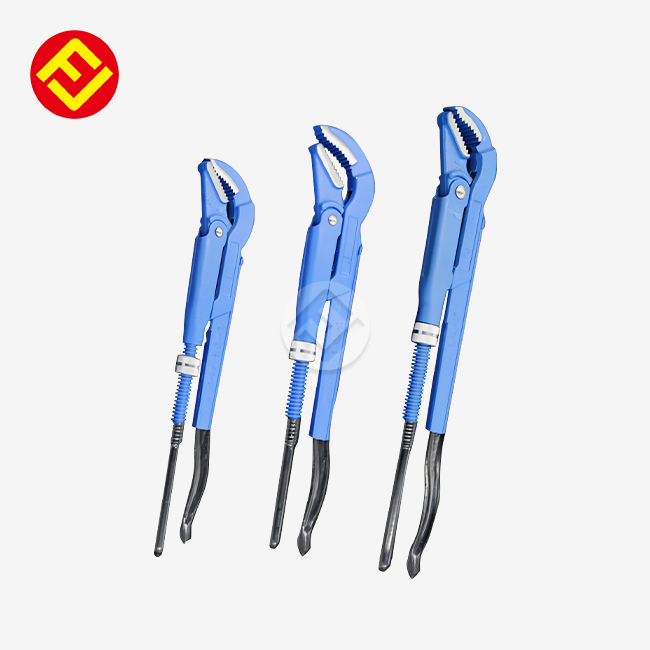
Standard wrenches and pipe-grooving tools are all that's needed for the mechanical grooved fitting process itself. Crews don't have to deal with the problems that come with handling welding generators, gas bottles, and ventilation gear. Without fire watches, there is no longer any need for them, which saves a lot of money and time. When changes need to be made during building or facility operations, grooved joints can be taken apart and put back together without any waste. This allows for adaptive reuse and system reconfiguration that welded infrastructure can't do.
Mechanical Flexibility and System Resilience
In addition to being easier to install, grooved couplings also improve system performance over its entire duration. It is possible for flexible coupling designs to bend up to 4 degrees, move linearly up to 0.75 inches, and rotate. They can also absorb forces that would break rigid links. This adaptability is very important in situations where the temperature changes quickly, because if the pipes didn't have this flexibility, the expansion and contraction would cause damage at the connection places.
Sensitive equipment is kept safe by vibration separation. Operating vibrations are made by pump stations, chiller plants, and compressor installations. These vibrations travel through rigid pipes, making noise complaints and speeding up the wear and tear on equipment. These vibrations are slowed down before they reach linked parts by flexible grooved couplings, which work like mechanical fuses. As a result, the buildings are quieter, the equipment lasts longer, and upkeep needs are lower. When looking at the total cost of ownership versus welded options, these operational benefits usually outweigh the differences in the original cost of the materials.
Compliance and Safety Standards
The proven dependability of grooved technology makes it a great choice for fire protection uses. UL and FM certifications show that the product works well in high-pressure and high-temperature situations that happen during emergency activities. ANSI/AWWA C606 standards make sure that all makers use the same measurements. This lets procurement teams find parts at low prices without worrying about compatibility issues. This standardization helps global supply lines work so that projects can get materials from more than one source.
Safety benefits also apply to places where installations are done. When welding isn't done on busy construction sites, burn hazards, arc flash risks, and fire starters are taken away. Without having to worry about welding fumes building up, work in confined spaces is better. When renovating buildings that are already occupied, grooved installation keeps business going while the work is being done because it doesn't require hot work restrictions and lets parts be commissioned one at a time.
Comprehensive Guide to Mech Grooved Fitting Types and Standards
Common Fitting Configurations and Applications
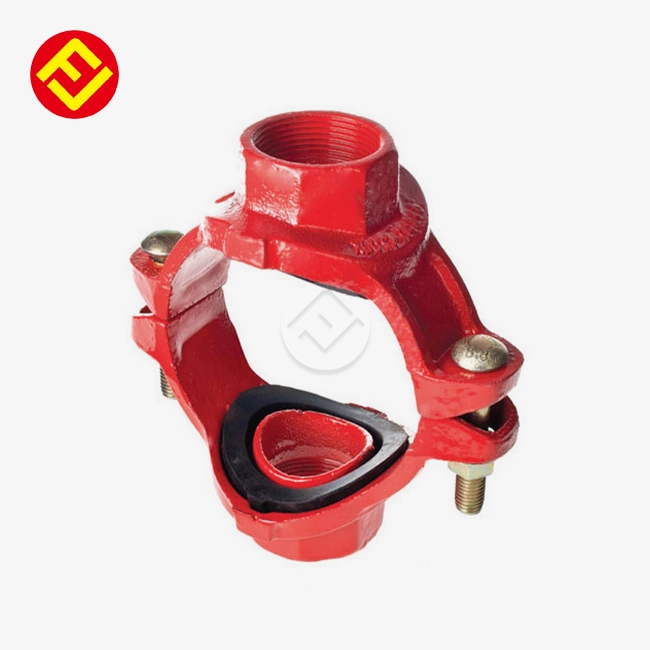
The curved fitting family includes a variety of shapes and sizes to meet the needs of different pipe geometries. Rigid joints allow straight-line connections for long runs that don't need to be able to move, and they can handle the most pressure. Flexible couplings let you control the deflection for managing thermal expansion and agreement with earthquakes. Mechanical tees let branch lines join to existing mains without having to cut or weld into them. This lets the system grow with little trouble. With reducing connections, you don't need eccentric reducers or special welding to go from one pipe size to another.
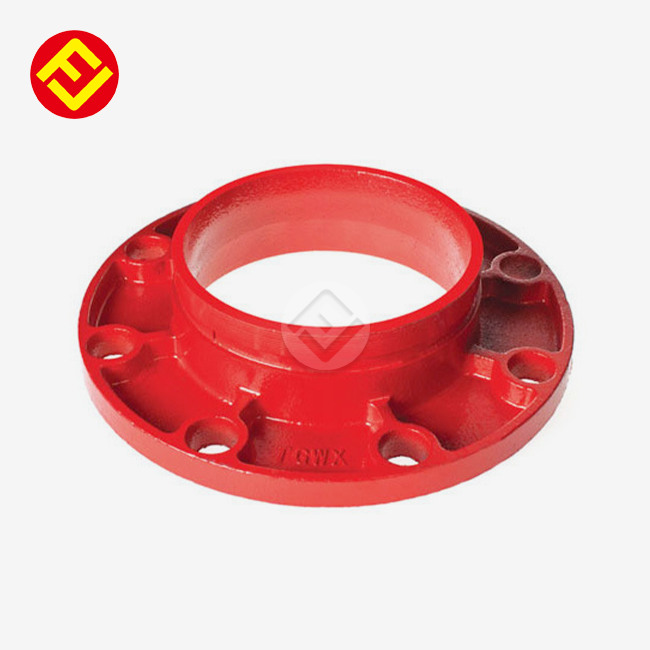
Elbows that are set up at 45 degrees and 90 degrees make it easy to change directions while keeping the flow going smoothly. Grooved caps can be used to permanently or temporarily stop a machine. Flange fittings let you connect grooved pipes to flanged equipment or valves, giving you more options in places with a mix of connections. Specialized fittings are available to meet specific needs. For example, drainable elbows with built-in weep holes are useful in places that tend to freeze, offset adapters fix alignment problems when retrofitting, and union couplings make it easy to do maintenance at equipment links.
Industry Standards and Certification Requirements
Professionals in procurement need to know the rules that apply to make sure that specifications are followed. ANSI/AWWA C606 tells water systems in cities and factories what groove sizes, tolerances, and pressure levels they need. ASTM standards list the qualities of different types of materials. For example, A536 covers ductile iron castings, A47 covers malleable iron, and different grades cover steel parts. Thread standards, such as ANSI B1.20.1, make sure that bolts from different makers can work together.
For international jobs, you might need more certifications. CE label shows that a product meets European safety standards. German and British fire safety officials are happy with VdS and LPCB approvals. Controls for the manufacturing process are shown by ISO 9001 quality management certification. When buyers buy from companies like FLA Industrial & Trading Co., Ltd. that have been in business for almost 40 years, they can access a lot of paperwork that helps them meet specifications in a wide range of regulatory settings.
For long-term dependability, dimension precision is important. Some important specs are the distance between bolt holes, the tolerances for key width, and the areas where the gasket fits. Precision casting, CNC machining, and automated surface treatment are all used together in manufacturing to make sure that these important measurements stay within the specifications. Protocols for quality assurance, such as hydrostatic pressure testing at 150% of the maximum working pressure, make sure that the structure is sound before it is shipped. This keeps buyers safe from problems in the field and warranty claims.
Installation Process and Best Practices for Mech Grooved Fittings
Step-by-Step Installation Methodology
Proper installation begins with thorough pipe preparation. Cut ends must be square and deburred to prevent gasket damage. Roll grooving or cut grooving creates the mechanical interlock—roll grooving suits standard-wall pipe by cold-forming a groove without removing material, while cut grooving machines away a groove in heavy-wall applications. Groove depth, width, and distance from pipe end must conform to ANSI/AWWA C606 specifications to ensure proper coupling engagement.
Gasket selection matches service conditions. EPDM gaskets handle potable water from -30°F to 230°F, providing ozone resistance and decades of service life. Nitrile gaskets suit petroleum Products" target="_blank" style="color:blue" >products and higher temperature applications. Silicone gaskets address extreme temperature ranges in specialized industrial processes. Before assembly, inspect gaskets for damage, contamination, or improper sizing. Position the gasket so its seating ribs align with the groove shoulders, ensuring uniform compression around the pipe circumference.
Housing installation of mechanical grooved fitting requires attention to bolt tightening sequence. Place housing segments around the pipe-gasket assembly, ensuring proper orientation if the coupling design has directional requirements. Hand-thread bolts and nuts, then tighten in a star pattern to achieve uniform gasket compression. Torque specifications typically range from 75 to 100 foot-pounds depending on coupling size and pressure rating. The industry-standard "pad-to-pad" visual confirmation ensures proper installation—metal bolt pads must contact completely, indicating correct gasket compression without over-torquing.
Common Installation Errors and Prevention
Several mistakes compromise joint integrity. Insufficient pipe insertion leaves the groove partially engaged, reducing coupling capacity. Paint, dirt, or oil on gasket seating surfaces prevents proper sealing. Cross-threaded or under-torqued bolts allow gasket relaxation and potential leaks. Over-torquing damages bolt threads and may crack housing castings. Each of these errors costs time and materials during commissioning when leaks force rework.
Preventive measures center on training and inspection. Visual guides showing proper gasket seating and groove engagement help crews verify correct assembly. Torque wrenches eliminate guesswork in bolt tightening. Pre-installation meetings reviewing pipe specifications, gasket selection, and environmental conditions align team understanding. When installations occur in challenging conditions—extreme temperatures, confined spaces, or elevated work platforms—additional supervision ensures quality standards maintain consistency.
Maintenance and Longevity Optimization
Routine inspection intervals depend on service conditions. Fire protection systems require annual visual inspections per NFPA 25, checking for gasket extrusion, housing corrosion, and bolt tightness. Industrial process piping in high-vibration environments may benefit from semi-annual inspections. Outdoor installations exposed to weather cycles warrant attention to coating integrity and bolt corrosion protection.
Gasket replacement indicators include visible extrusion beyond housing edges, hardening or cracking detectable by tactile inspection, and minor weeping at coupling perimeters. When these signs appear, schedule maintenance before leaks escalate into emergency repairs. Housing components may serve indefinitely if protected from corrosion and mechanical damage. Bolt replacement becomes necessary if threads show wear or corrosion that prevents proper torque application. Documenting maintenance activities builds historical data supporting predictive maintenance strategies and optimizing lifecycle costs.
Procurement Considerations for B2B Clients: Choosing and Buying Mech Grooved Fittings
Aligning Specifications with Project Requirements
Successful procurement begins with detailed specification development. Define pipe sizes, pressure ratings, and temperature ranges based on system design calculations. Specify material requirements considering service fluids, environmental exposure, and regulatory compliance needs. Identify required certifications—UL/FM listings for fire protection, NSF/ANSI 61 for potable water contact, or industry-specific approvals for specialized applications.
Quantity estimation should account for installation waste factors, spare parts inventories, and potential scope changes. Bulk ordering typically offers economic advantages, particularly for large projects with standardized specifications. Custom requirements—non-standard dimensions, special materials, or integrated design features—require lead time coordination with manufacturers capable of engineering and rapid prototyping. Companies with comprehensive technical support, like FLA Industrial & Trading Co., Ltd., can optimize specifications during planning phases, identifying opportunities for value engineering without compromising performance.
Evaluating Supplier Capabilities and Credibility
Supplier selection impacts project success beyond initial component costs. Established manufacturers with ISO 9001 quality management systems demonstrate process controls ensuring consistent product quality. Certification portfolios including CE marking and UL/FM listings indicate investment in compliance infrastructure. Manufacturing capabilities spanning casting, precision machining, and multiple surface treatment options enable suppliers to meet diverse project specifications without outsourcing critical operations.
Technical support availability distinguishes commodity suppliers from strategic partners. Responsive engineering teams provide specification clarification, installation guidance, and troubleshooting assistance. Documentation packages including material certificates, pressure test reports, and dimensional inspection records support commissioning and regulatory approval processes. Delivery reliability affects construction schedules—manufacturers with established logistics networks and inventory management systems minimize delays that cascade through project timelines.
Brand reputation within target industries provides confidence in long-term performance. Suppliers serving Fortune Global 500 partners demonstrate capability to meet enterprise quality standards and volume requirements. Geographic market presence in regions like the United States, Germany, and Australia indicates adaptability to diverse regulatory environments and customer service expectations. When procurement managers evaluate total value rather than unit prices alone, these factors often justify partnerships with premium mech grooved fitting manufacturers.
Conclusion
Mechanical grooved fittings have revolutionized piping system installation through their unique combination of rapid assembly, operational flexibility, and proven reliability. From eliminating costly hot work requirements to accommodating thermal movement that protects system integrity, these coupling solutions address real-world challenges facing construction contractors, facility managers, and industrial operators. Understanding material properties, installation best practices, and procurement strategies empowers decision-makers to specify grooved technology confidently, achieving project success through reduced labor costs, accelerated schedules, and extended system lifecycles that deliver measurable return on investment.
FAQs
Can mech grooved fittings handle high-pressure industrial applications?
Absolutely. Standard grooved couplings routinely operate at 300 PSI working pressure, with specialized designs rated to 500 PSI and beyond. The pressure capacity depends on housing material grade, gasket compound selection, and proper installation achieving full pad-to-pad contact. Always verify manufacturer specifications match your system design pressure with appropriate safety margins.
How often should gaskets be replaced in grooved coupling systems?
When installed within specified temperature and chemical compatibility parameters, quality elastomeric gaskets typically last the operational life of the piping system—often exceeding 50 years. Replacement becomes necessary only if visual inspection reveals extrusion, hardening, or leakage. EPDM gaskets in potable water service protected from UV exposure rarely require replacement during normal system lifecycles.
Do grooved connections install faster than welded joints?
Installation time comparisons consistently favor grooved technology by substantial margins. A competent two-person crew completes grooved connections approximately three times faster than equivalent welded joints. This advantage multiplies across large projects, potentially reducing installation schedules by weeks while eliminating specialized labor requirements and hot work permitting delays.
Partner with FLA Industrial & Trading Co., Ltd. for Premium Grooved Coupling Solutions
As a trusted mech grooved fitting supplier with nearly four decades of manufacturing excellence, FLA Industrial & Trading Co., Ltd. delivers the quality and reliability your critical piping projects demand. Our comprehensive product range spanning 1-inch to 48-inch sizes, manufactured from ductile iron and carbon steel with multiple finish options, meets ANSI, ASTM, and international standards. ISO9001, CE, and UL/FM certifications validate our commitment to quality, while our engineering team provides rapid response to technical inquiries within 24-48 hours. Contact Us at sales@flaindustrial.com to discuss your project specifications, request detailed catalogs, or obtain competitive quotations backed by our proven track record serving Fortune Global 500 partners across global markets.
References
American Water Works Association. "ANSI/AWWA C606 Standard for Grooved and Shouldered Joints." Denver: AWWA Publications, 2021.
ASTM International. "ASTM A536: Standard Specification for Ductile Iron Castings." West Conshohocken: ASTM Standards, 2019.
National Fire Protection Association. "NFPA 13: Standard for the Installation of Sprinkler Systems." Quincy: NFPA Publications, 2022.
Underwriters Laboratories. "UL 213: Standard for Rubber Gasketed Fittings for Fire Protection Service." Northbrook: UL Standards, 2020.
Grinnel, Henry S. "Mechanical Pipe Joining Systems: Engineering and Applications." Journal of Piping Engineering, vol. 47, no. 3, 2018, pp. 112-128.
Chen, Michael and Roberts, Patricia. "Comparative Life-Cycle Analysis of Pipe Connection Methods in Commercial Construction." Construction Technology Review, vol. 34, no. 2, 2020, pp. 45-67.