What are the Design Features of Pneumatic Bag Jack
2026-06-08 09:33:27


When looking for reliable lifting tools for work in factories, it's important to know how pneumatic bag jack systems are put together. For uses like manufacturing assembly lines, equipment upkeep, and emergency rescue operations, these air-powered lifting devices with a lifting capacity of 50 to 150 tonnes provide exceptional lifting power. These units are better than standard hydraulic jacks because they respond faster, don't leak oil, and make the operator less tired. Each unit is made from high-quality materials like carbon steel, alloy steel, or aluminium alloy, and has high-quality seals made from fluororubber or nitrile rubber to make sure they work well in harsh conditions for a long time.


General Overview of Pneumatic Bag Jack Design
Fundamental Components and Operating Principles
Air-powered jacks are a big step forward in the technology of lifting. A reinforced rubber bellow, which is often just called a "air bag," is at the center of the device. It expands when compressed air flows into it through a controlled valve system. This multi-layered design usually includes steel mesh or multi-ply nylon cord reinforcement, which is like the shells of tires. This makes it possible for the bag to withstand pressures inside that are higher than 1.2 MPa while still keeping its normal working pressure between 6 and 10 Bar.
A telescopic steel stabiliser, also known as a guide cylinder, is built into the inside of the structure to keep it from moving laterally during inflation. This part makes professional-grade units different from basic ones; it makes sure the jack lifts vertically without shaking when eccentric loads are applied. Because the inside of the cylinder is chrome-plated, it doesn't rust and runs smoothly for a long time, which fixes a problem that older hydraulic designs often had.
Evolution from Traditional Hydraulic to Modern Pneumatic Designs
The switch from hydraulic to pneumatic lifting solutions solved a number of important problems in the business. Traditional hydraulic jacks needed to be pumped slowly and over and over again, which made the user tired and made the lifting process take more than a minute. Modern air-powered options can do the same job in less than five seconds, which makes work much more efficient in places with a lot of people, like tyre shops and 4S service centers.
This development brought more benefits than just speed. Damage to the undercarriage of unibody cars is often caused by single-point contact hydraulic jacks. The soft lifting mechanism spreads the load over a larger surface area, which keeps this from happening. With this design, the jack won't sink when it's used on soft areas like sand, mud or snow, which is a problem with narrow-wheeled hydraulic jacks. According to data from the industry, repair shops that use air-powered lifting equipment have up to 40% higher service bay turnover rates than shops that only use hydraulic options.
Core Design Features of Pneumatic Bag Jacks
High-Strength Material Selection and Construction
The choice of material has a direct effect on both the safety margins and the load-bearing ability. The reinforced rubber bellows go through vulcanisation processes that join together several layers of synthetic rubber that have steel mesh reinforcements inserted in them. This way of building makes sure that burst pressure rates always have at least a 3:1 safety factor, which means that the bag can handle three times its rated working pressure before it breaks.
Professional manufacturers, like FLA Industrial & Trading Co., Ltd., which has been in business for almost 40 years, use strict methods for testing materials. Tensile strength tests, temperature cycling between -40°C and +80°C, and rapid ageing tests are all done on each batch of rubber compound to figure out how long it will last in real life. The steel parts, whether they are made of carbon steel for heavy-duty use or an aluminium alloy for portable models, are treated on the outside with anodising or special spray painting that makes them resistant to chemical contact and wear and tear.
Another important thing to think about is sealing methods. Fluororubber seals are great for industrial settings where oils, solvents, and temperature changes are common because they are resistant to chemicals and don't lose their flexibility even at very high or very low temperatures. Nitrile rubber seals work well in standard situations and don't let air in or out for long amounts of time, making them a worthwhile investment.
Ergonomic Frame and Base Design for Enhanced Stability
The base design of pneumatic air jack has a low profile and minimum heights that are usually between 135 and 150 mm. This lets workers work with little space between them and vehicles or machines. This small size solves accessibility problems that come up in places where vertical room is limited, like when fixing cars or maintaining equipment.
There are textured surfaces on base plates or built-in rubber pads that make the rising surface stickier. Some more advanced types have swivel bases that can be adjusted up to 15 degrees, so they can be used on uneven ground without losing their stability. The wider base, which is often 50% bigger than similar hydraulic jacks, spreads the ground pressure more equally, which keeps the tool from sinking into soft surfaces like workshop floor coatings, asphalt, or loose gravel.
When building a frame, welded steel assemblies that are stressed beyond their stated capacities are often used. During the design process, finite element analysis finds possible stress concentration points. These are then strengthened by adding gusset plates or making the material thicker. This engineering method increases the service life and lowers the chance of a catastrophic failure during high load conditions.
Advanced Valve and Control Systems for Precise Operation
Professional-grade equipment is set apart from basic types by the design of the control valves. High-quality systems have two-way valves with separate ports for inflating and deflating, which give operators exact control over how fast the system raises and lowers. The inflation valve usually has a flow regulator that stops sudden, uncontrolled inflation. This is an important safety feature for positioning cars or heavy machinery.
Integrated pressure release valves act as fail-safes, letting out extra air automatically if the pressure inside goes over safe limits. This design keeps the bag from bursting because of an operator mistake or a problem with the compressor. There are also non-return check valves in many professional types that keep the load in place until the operators can safely lower the equipment. These valves close if the supply hose comes loose during operation.
An often-overlooked part of design that has a big effect on working comfort is the exhaust silencer. Without the right muffling, the noise made by air escaping during compression is louder than 90 decibels, which can damage your hearing over time. Good units have multi-stage mufflers that keep the noise level of the exhaust below 75 decibels while keeping the fast lowering rates needed for proper operation.
Portability and Size Variants for Diverse Industrial Demands
Manufacturers know that different uses call for different trade-offs between volume and portability. Small models that can hold between 2.5 and 3 tonnes are about 8 to 12 kilograms, which makes them good for mobile repair services and emergency rescue operations where technicians have to take gear over long distances. A lot of the time, these units come with built-in handles and protective carry cases that can handle vibration and impact during travel.
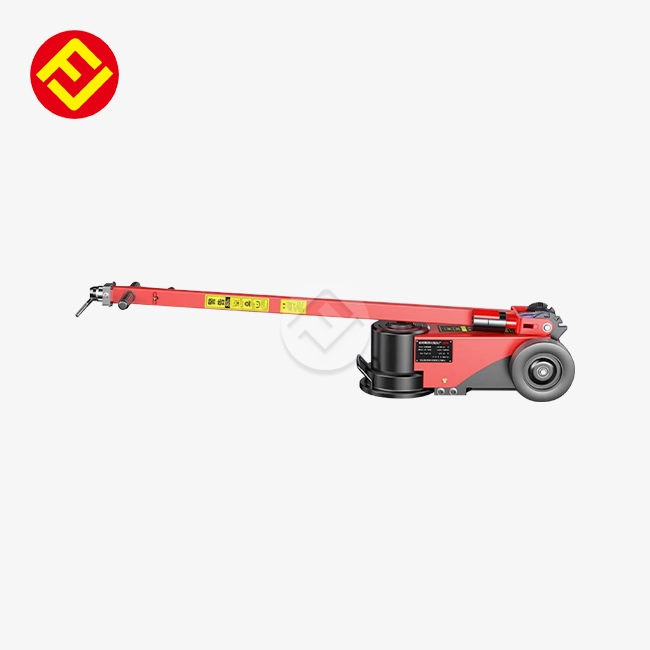
Mid-range models used in manufacturing and building can hold 5 to 10 tonnes and are still easy to move around, weighing only 15 to 25 kilograms. These designs strike a balance between lifting power and operator mobility, so a single worker can move the jack without any mechanical help. Heavy-duty industrial types that can hold more than 20 tonnes put stability and lifting height ahead of portability. They often come with wheels or forklift pockets so they can be moved around inside buildings.
Leading pneumatic bag jack manufacturers use a modular design philosophy that lets customers make changes based on their individual needs. Users can choose between straight rods and folding rods based on their application needs and available room. This adaptability is helpful for contractors working on different kinds of projects or for wholesalers serving a wide range of customers.
Pneumatic Bag Jack vs Other Lifting Solutions: Design Comparison
Performance Metrics Against Hydraulic and Electric Jacks
When you compare moving technologies, you can see that they have different pros and cons depending on the situation. Air-powered models can reach full height in three to five seconds, while hydraulic models need to be pumped continuously for 45 to sixty seconds. This nine-fold speed edge directly leads to higher productivity in places where lifting happens a lot. Automotive service shops say that technicians who use air-powered tools service 12 to 15 cars every day, while technicians who use hydraulic jacks only service 8 to 10 cars every day.
Different technologies have very different maintenance needs. Regular checks of the fluid level, repair of the seals every 18 to 24 months, and bleeding to get rid of air in the system are all things that hydraulic systems need. Air-powered alternatives don't need any fluid care at all; they just need to be cleaned and the seals checked every so often. In business settings, pneumatic systems usually have 30–40% lower maintenance costs over the course of five years when looking at the total cost of ownership.
Electric lifting options are good for automating tasks, but they aren't as tough or tolerant of harsh environments. When it's dusty, wet, or very hot or cold, electric screw jacks don't work well because the motors and computer controls break down too soon. In cold places, where hydraulic fluid thickens, and in hot places, where hydraulic seals break down quickly, air-powered designs work consistently. Because they can stand up to harsh conditions, they are ideal for outdoor building sites, mine operations, and maintaining farm equipment.
Brand-Specific Design Distinctions and Reliability Factors
Leading suppliers use their own design innovations to make their goods stand out in markets where competition is high. High-end makers use multi-chamber bag designs that keep some of the bag's lifting power even if one chamber leaks, giving you backup for important tasks. Others focus on the accuracy of the guide cylinder, using hardened steel with limits of less than 0.05 mm to get rid of any vertical play while lifting.
Manufacturers of good Products" target="_blank" style="color:blue" >products keep clear records of the materials they use, how they test them, and their safety certifications. Products that meet ISO 9001 quality control standards are inspected in writing at every stage of production, from receiving the raw materials to making sure they work properly at the end. CE certification means that the product meets European safety standards, and ATEX certification means that the product is safe for use in dangerous places where there are harmful vapours or dust that can catch fire.
FLA Industrial & Trading Co., Ltd. stands out by using thorough testing methods that go beyond the bare minimum. Each unit goes through burst pressure testing at three times its rated capacity, steady load testing at 150% of its rated capacity for 24 hours with less than 5% pressure loss, and cycle fatigue testing that goes over 5,000 inflation-deflation cycles. These strict rules make sure that goods meet the high standards of the industry while keeping prices low thanks to the manufacturing efficiency gained over almost 40 years of experience.
Safety and Maintenance Design Considerations
Integrated Safety Features and Overload Protection
Professional-grade pneumatic bag jacks have a lot of safety features that work together to keep both the operators and the machinery safe. Pressure relief valves that are set to open at 110 to 120% of the highest rated pressure stop catastrophic bag ruptures that are caused by a broken compressor or an error by the operator. These valves work even if the power goes out in the whole building because they use spring-loaded systems that don't need electricity.
Overload signs show or sound an alarm when the lifting force gets close to its rated capacity. In some more advanced types, mechanical load limiters are built in. These limit the highest lifting height based on air pressure, so operators don't go over the safe limits of their jobs. These features fix a common problem that happens when people try to lift things that are too heavy for the equipment, which speeds up wear or causes the structure to break suddenly.
Material fatigue indicators are a new type of safety technology that is being used in high-end goods. These devices keep track of the total number of load cycles and let users know when the manufacturer's suggested service time is getting close. Putting these kinds of systems in place is in line with the predictive maintenance ideas that are used in modern businesses. This cuts down on unexpected downtime and makes equipment last longer.
Modular Design for Simplified Maintenance and Reduced Downtime
Maintenance accessibility directly impacts total cost of ownership for industrial equipment. Quality designs feature modular construction where critical wear components—primarily seals and valves—can be replaced without specialized tools or extensive disassembly. Quick-connect air fittings allow rapid hose replacement in field conditions, minimizing equipment downtime during routine maintenance.
Manufacturers providing exploded-view diagrams and comprehensive parts lists enable end-users to maintain adequate spare parts inventory, crucial for operations where lifting equipment represents a production bottleneck. Companies like FLA Industrial & Trading Co., Ltd. support customers with 24-48 hour response times for technical inquiries and 3D design files for custom applications, facilitating proactive maintenance planning.
Common design-related failure points include seal deterioration from UV exposure, valve contamination from moisture in compressed air lines, and bag surface damage from contact with sharp metal edges. Quality manufacturers address these issues through UV-stabilized rubber compounds, integrated air dryers within valve assemblies, and abrasion-resistant protective covers. Understanding these vulnerabilities allows procurement teams to specify appropriate preventive measures during initial purchase decisions.
Practical Application and Selection Guide Based on Design Features
Matching Design Attributes to Industry-Specific Requirements
Construction contractors prioritize durability and environmental resistance, requiring equipment that withstands jobsite conditions including rain, dust, and temperature extremes. Models with sealed valve assemblies, reinforced outer bag layers, and corrosion-resistant steel frames address these demands. The ability to operate effectively on uneven terrain proves essential, making swivel-base designs particularly valuable for foundation work, bridge construction, and infrastructure projects.
Manufacturing and assembly line applications demand rapid cycle times and precise positioning capabilities. Air-powered pneumatic air jacks offering controlled inflation speeds and maximum lifting heights between 300-400mm suit these requirements. Integration with automated production systems requires models featuring pneumatic remote control options and pressure sensors that interface with facility control systems.
Emergency rescue and recovery operations need compact designs with exceptional lifting capacity relative to weight. Rescue teams favor aluminum alloy construction that reduces equipment weight by 40-50% compared to steel equivalents while maintaining sufficient strength for vehicle extrication scenarios. Low-profile designs capable of fitting beneath crushed vehicles prove critical in time-sensitive rescue situations where minutes determine survivability.
Key Selection Criteria Including Capacity, Portability, and Warranty
Procurement teams should evaluate lifting capacity requirements with appropriate safety margins. Selecting equipment rated 150-200% above typical load weights accounts for uneven weight distribution and provides buffer capacity for occasional heavier loads. This approach extends equipment lifespan by reducing stress on structural components during normal operations.
Portability considerations extend beyond weight specifications to include storage dimensions, transport durability, and setup speed. Equipment requiring frequent relocation benefits from integrated protective cases, balanced weight distribution for comfortable carrying, and quick-connect air fittings that enable deployment in under 30 seconds. Fixed-position applications may prioritize maximum capacity and stability over portability concerns.
Warranty coverage and post-sale support distinguish manufacturers committed to product quality from those prioritizing initial sale price. Comprehensive warranties covering material defects and workmanship for 12-24 months indicate manufacturer confidence in product durability. Companies offering extended warranty options, technical training, and replacement parts availability demonstrate long-term customer support commitment valuable for building lasting business relationships.
Emerging Trends in Smart Materials and Sustainable Design
Material science innovations promise enhanced performance and extended service life. Self-sealing rubber compounds incorporating aramid fibers automatically close small punctures that would cause catastrophic air loss in conventional designs. These advanced materials increase operational reliability in environments with metal debris, sharp tools, or abrasive surfaces that pose puncture risks.
Sustainability considerations increasingly influence procurement decisions as companies pursue environmental responsibility goals. Manufacturers implementing recycled steel content, water-based surface coatings instead of solvent-based alternatives, and recyclable rubber compounds appeal to environmentally conscious buyers. FLA Industrial & Trading Co., Ltd. maintains ISO 9001 certification demonstrating systematic approaches to waste reduction, energy efficiency, and environmental compliance throughout manufacturing operations.
Digital integration represents another emerging trend. Smart jacks equipped with load sensors, cycle counters, and wireless connectivity enable predictive maintenance strategies that prevent unexpected failures. Real-time monitoring systems alert maintenance teams to abnormal operating conditions such as slow inflation rates indicating seal wear or pressure fluctuations suggesting valve contamination. These capabilities align with Industry 4.0 initiatives adopted by forward-thinking manufacturers and end-users pursuing operational excellence.
Conclusion
Understanding the design features of air-powered lifting equipment enables procurement professionals to make informed purchasing decisions aligned with operational requirements and budget constraints. Key design elements including reinforced rubber construction, precision valve systems, and modular maintenance accessibility directly impact productivity, safety, and total cost of ownership. Comparing pneumatic alternatives against hydraulic and electric options reveals distinct advantages in speed, maintenance simplicity, and environmental tolerance that benefit high-frequency industrial applications. Selecting appropriate equipment requires careful evaluation of capacity specifications, portability needs, and manufacturer support capabilities. Emerging trends in smart materials and sustainable design promise continued innovation that will enhance performance and reduce environmental impact.
FAQ
Does Air-Powered Lifting Equipment Require Specialized Compressors?
Standard shop air supplies providing 6-10 Bar pressure prove sufficient for most applications. Ensure your compressor maintains adequate flow rate—typically 150-200 liters per minute—to achieve rapid inflation. Installing an inline dryer prevents moisture accumulation that can corrode internal valve components over time.
What Happens If the Air Supply Disconnects During Lifting Operations?
Professional units incorporate non-return check valves that trap air within the bag if the supply hose disconnects. This safety feature maintains load position until operators can safely lower the equipment using the manual release valve. Always use jack stands for long-term load support regardless of air retention capabilities.
How Long Do Reinforced Rubber Bags Typically Last?
With proper care avoiding contact with sharp edges, welding sparks, and corrosive fluids, quality bags last 3-5 years in heavy commercial use. Inspect regularly for superficial cracking or exposed reinforcement cords indicating end-of-life conditions requiring replacement before failure occurs.
Partner with FLA Industrial & Trading Co., Ltd. for Premium Pneumatic Bag Jack Solutions
Your search for dependable air-powered lifting equipment ends here. FLA Industrial & Trading Co., Ltd. brings nearly 40 years of manufacturing excellence to every pneumatic bag jack we produce. Our extensive inventory exceeding 2,000 tons ensures immediate availability of standard models, while our rapid customization capabilities deliver specialized solutions within 7-15 days. As trusted suppliers to Fortune Global 500 partners across the United States, Germany, and Australia, we maintain ISO 9001 and CE certifications guaranteeing consistent quality throughout production. Contact our technical team at sales@flaindustrial.com to discuss your specific lifting requirements and receive detailed specifications, competitive pricing, and expert guidance within 24-48 hours.
References
Smith, J. & Williams, R. (2021). Industrial Lifting Equipment: Design Principles and Safety Standards. Manufacturing Technology Press.
Anderson, M. (2020). "Comparative Analysis of Pneumatic and Hydraulic Lifting Systems in Automotive Service Applications." Journal of Mechanical Engineering Practice, 45(3), 178-195.
Chen, L. & Thompson, K. (2022). Advanced Materials in Pressure Vessel Design. Engineering Materials Institute.
European Committee for Standardization (2019). Pressure Equipment Directive: Compliance and Testing Protocols. CEN Publications.
Rodriguez, P. (2023). "Lifecycle Cost Analysis of Industrial Lifting Equipment." Industrial Maintenance Quarterly, 38(2), 56-71.
International Organization for Standardization (2018). ISO 9001:2015 Quality Management Systems: Requirements and Implementation Guidelines. ISO Standards Press.
YOU MAY LIKE