Why Groove Connection is the Preferred Choice for Modern Piping
2026-07-07 10:08:33


Modern pipe systems have been transformed by groove connection technology, which provides a mechanical connecting solution that is faster, more reliable, and less expensive than traditional methods. Welded or threaded joints need special tools and more time to install. This new method, on the other hand, uses precision-machined holes and fittings to make leak-proof connections in minutes. Because they can be used with different materials, like ductile iron and stainless steel, and because they meet AWWA C606 standards, procurement managers who want to cut down on labor costs, speed up projects, and make sure systems last for a long time in a wide range of industrial settings need groove connection systems.

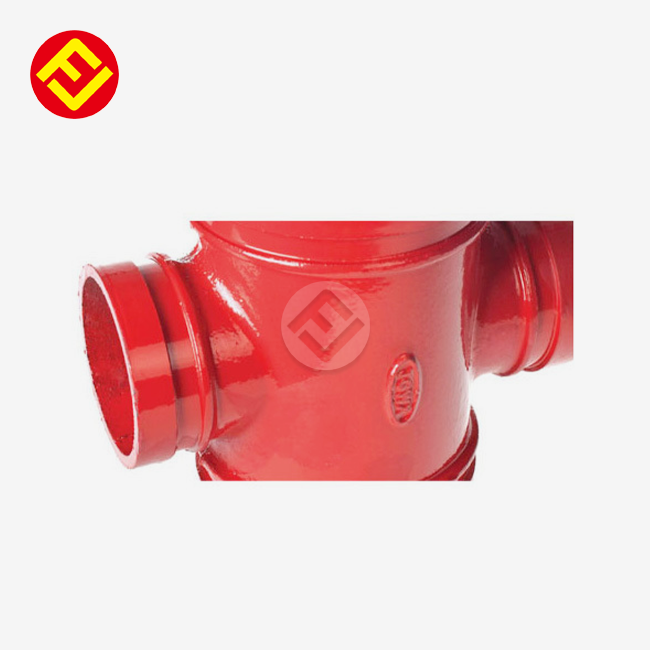
Specifications |
||
| Type | Model | Outer Diameter(mm) |
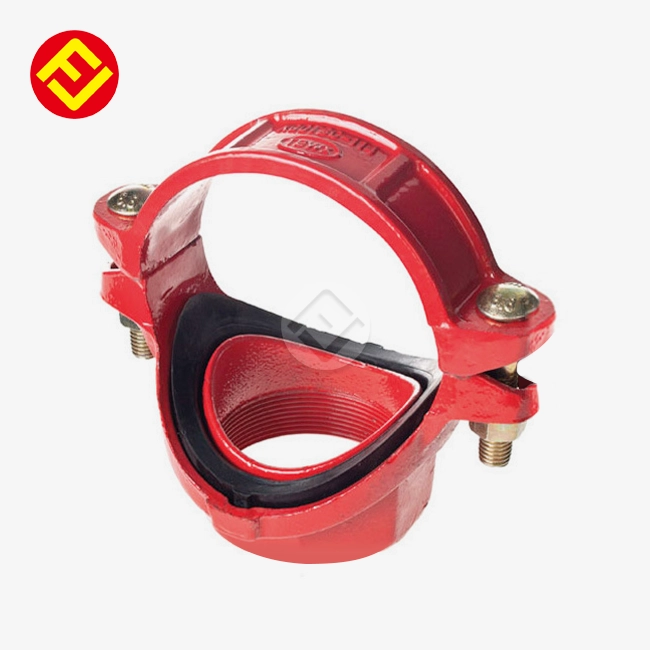
| Grooved Cross | DN65 | 76 |
| Grooved Cross | DN80 | 89 |
| Grooved Cross | DN100 | 108 |
| Grooved Cross | DN100 | 114 |
| Grooved Cross | DN125 | 140 |
| Grooved Cross | DN150 | 159 |
| Grooved Cross | DN150 | 165 |
| Grooved Cross | DN200 | 219 |
| Grooved Cross | DN250 | 273 |
| Grooved Cross | DN300 | 325 |
Understanding Groove Connection in Piping
The Fundamental Principle Behind Groove Connection Systems
The mechanical groove joint works by having a groove cut into the outside of the pipe that fits with a housing and gasket system that is held together by bolts. This arrangement spreads the pressure evenly around the edge, which stops the buildup of stress that usually causes stiff joints to break. The method can handle thermal expansion and small misalignment, which are important factors in large-scale setups where it's not possible to have perfectly straight runs.
Types of Groove Configurations in Modern Applications
In the business world, there are three main types of grooves: rolled grooves, cut grooves machined into the pipe wall, and shouldered joints for thin-wall tubes. Rolled grooves are made by cold-forming the pipe end. Rolled lines work well with standard-weight steel pipes because the width of the material lets it change shape when it's cold without affecting the structure. Cut lines are useful for controlling exact sizes, especially in stainless steel or covered pipes where keeping the surface in good shape is important. Each setup takes into account different material properties and pressure ratings, which helps procurement teams find the best specs.
Material Versatility and Cross-Industry Adoption
Whether it's carbon steel in water systems for cities or special metals in chemical plants, groove technology can easily adapt. The coupling housings, which are usually made of malleable iron coated with epoxy, don't rust and keep their binding force even when the temperature changes. EPDM gaskets are used for drinkable water, while nitrile gaskets are used for oil. This material's flexibility means that different metals don't have to be welded together. This lowers the risk of galvanic corrosion that comes with standard flanged assemblies in setups with a mix of materials.
Groove Connection vs. Traditional Piping Connection Methods
Installation Complexity and Time Efficiency Analysis
Traditional welded joints need licensed welders, hot work permits, post-weld checks, and cooling times, all of which add a lot of time to the project plan. A standard 6-inch soldered connection takes about 45 minutes of skilled work to install, while a similar groove connection can be done with simple hand tools in less than 5 minutes. This 90% time savings directly turns into lower labor costs and faster approval times. This is especially helpful for retrofit projects where downtime fines add up quickly.
Maintenance Accessibility and Long-Term Cost Implications
Welded systems make lasting ties that need to be cut and re-welded in order to make changes, which costs a lot to maintain. Groove connection systems are easy to take apart, so you can change parts without having to use special tools or take out sections of pipe. When repair teams change a valve on a regular basis, they just loosen the coupling bolts, swing the case away, and replace the part within minutes. Standard maintenance practices in the industry say that this makes emergency repairs 60% to 70% cheaper than solutions that are soldered.
Structural Performance Under Operational Stress
People think that mechanical joints aren't very strong, but grooved connections that are put correctly can handle working pressures of more than 500 psi and earthquake movement because they are naturally flexible. The design of the coupling allows up to 4 degrees of angular motion and limited linear movement. This lets waves pass through that would break apart rigidly soldered joints. Hydrostatic testing at 1.5 times working pressure shows that the system doesn't leak and meets the same safety standards as welded systems while also being more resistant to fatigue in changing settings.
Procurement and Tools for Groove Connection Systems
Essential Equipment and Precision Tooling Requirements
To use groove connection systems, you need special cutting and shaping tools that are made to be accurate within the limits set by AWWA C606. Portable grooving tools can be used in the field to cut pipes and roll grooves right there on the spot, while fixed units in fabrication shops can handle large production runs. Teams in charge of buying things have to make sure that the equipment stays within the important A-dimension (groove width) and C-dimension (groove diameter) limits. If these limits aren't met, gasket sealing and coupling engagement can become less reliable.
Selecting Reliable Supply Partners and Quality Assurance
Business-to-business buyers should give more weight to sellers who can show thorough quality control measures, such as material approvals, dimensional verification records, and proof of coating thickness. Leading makers test random production lots destructively by cutting joints into sections to check their metallurgical qualities and figure out how much they can bend. For ductile iron parts, the nodularity index should be higher than 90% with a Type I/II graphite structure. This makes sure that the material bends when bolt pressure is applied instead of breaking. When suppliers offer third-party checking services and longer guarantees, customers can be even more sure that the Products" target="_blank" style="color:blue" >products they sell are consistent.
Bulk Purchasing Strategies and Custom Solutions
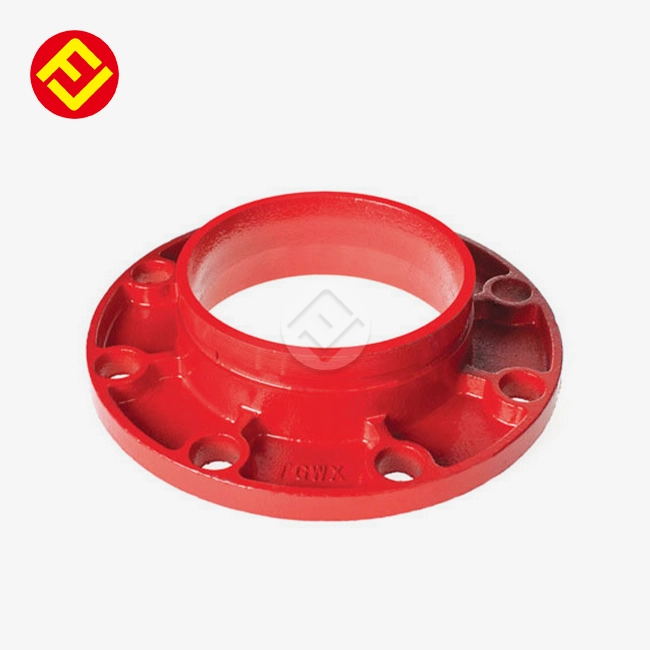
Volume procurement deals are very helpful for big projects because they make sure that the quality of each package is the same and lower the cost of shipping. Custom groove cutting services make it possible to pre-assemble pipe systems with special fittings, which makes installation easier on-site. OEM relationships with makers that can make custom SKU configurations, like combination flange-groove adapters, make it easier for wholesalers to keep track of their inventory and serve a wide range of customers. This flange by groove adapter solves the important problem of how to connect hard flanged equipment to flexible grooved networks, so you don't have to join in dangerous places.

Real-World Applications and Case Studies
Municipal Water Infrastructure Modernization
A medium-sized utility district used groove connection technology to replace old cast iron mains. They were able to finish the three-mile work in half the time they had planned. The quick assembly method cut down on service breaks, which eased neighborhood worries about long water shutoffs. After the installation, tracking showed that there were no leaks over a 36-month period. This was very different from the district's history of having to fix many weld failures. However, the project showed that grooved systems are just as reliable as standard welded ways while cutting installation costs by about 35%.
HVAC System Integration in Commercial Construction
As part of a major hospital expansion, grooved connections were added to the chilled water distribution network. This made flexible installation possible while the building was still being used. It was important to be able to put together pieces of pipe off-site and quickly connect them in a mechanical room with limited space. The maintenance staff really liked how easy the system was to fix. For example, when they needed to add more cooling capacity two years after it was installed, they just added new branches without turning off the current zones. This kept the important climate control for the operating rooms and labs.
Industrial Process Applications and Performance Validation
Grooved systems are being used more and more in chemical processing plants for non-corrosive service lines where vibration separation is important. A plant that makes fertilizer changed threaded connections that kept coming loose because of vibrations in the equipment, letting dangerous leaks happen. The grooved option allowed for operating movement while keeping the integrity of the seal. This cut down on unplanned shutdowns by 80% in the first year. After 10,000 thermal cycles, dimensional stability tests showed that the connection bolt force stayed within the specified range. This proved that the system would work reliably in harsh industrial conditions for a long time.
Why Groove Connection Is the Rational Choice for Your Piping Projects?
Safety Compliance and Regulatory Advantages
Groove connection systems meet strict fire safety standards, such as being listed by UL and approved by FM for automatic sprinkler installs. Getting rid of hot work during installation gets rid of places where fires can start in residential buildings and chemical storage areas, which makes safety rules easier to follow. The mechanical joint design naturally stops the internal weld spatter contamination that can happen with fusion-welded systems. This keeps the fluid pure in pharmaceutical and food processing applications where cleaning standards don't allow particles to get in.
Economic Analysis: Total Cost of Ownership
Even though grooved components cost a little more than normal welded fittings at first, a full lifetime study shows that they save a lot of money in the long run. Lowering the cost of labor during installation, lowering the number of times upkeep needs to be done, and making system changes easier all add up to 25–40% less in total ownership costs over the 20-year service life. Projects with tight deadlines benefit most from accelerated work plans, which lower the general contractor's costs and let the facility start making money sooner.
Strategic Supplier Evaluation Criteria
Professionals in procurement should look at possible providers in more than one way, not just by price per unit. Technical support, such as installation training and help with fixing problems, is very helpful while a project is being carried out. If there are problems with the quality, you can get help through warranty terms that cover both material flaws and measurement accuracy. Supplier inventory depth makes sure that products are always available for staged projects, which avoids expensive delays that happen when more parts are needed during installation. The long-term dependability of a relationship can be judged by the brand's image in the industry, which can be checked by calling references from similar-sized projects.
Industry Adoption Trends and Future Outlook
Grooved technology is becoming more and more popular among major mechanical workers as a normal way to install pipes. They say it's more productive and requires less skill than welding. Because this way is so popular, equipment makers now make pumps, heat exchangers, and filtration units with grooved connections that are installed at the plant. New inventions include smart couplings that have sensors built in to check the health of the joint and radio reporting systems that let maintenance teams know about problems before they become leaks. Because of these improvements in technology, grooved systems will be the basis for the next wave of smart pipe networks.

Conclusion
The many great things about groove connection technology—its quick installation, high flexibility, low upkeep needs, and proven dependability—make it the best choice for modern pipe projects in all fields. This way of joining things has clear advantages in terms of safety, cost-effectiveness, and long-term performance. It can be used for everything from simple industrial processes to large-scale public infrastructure. As purchasing managers look over pipe needs for upcoming projects, the proof that grooved systems are better than traditional methods keeps growing. This is because grooved systems have been used in the field for decades and technology is still getting better. Adopting this tried-and-true technology is a smart move that sets companies up for organizational success and meets today's needs for flexible, long-lasting infrastructure solutions.
FAQ
Does groove connection require specific gasket materials for different fluids?
Does the groove connection need a certain kind of gasket material for each type of fluid? The type of fluid, the temperature range, and the chemical interaction needs all play a role in choosing the right gasket. EPDM seals can handle most water-based jobs and won't break down when installed outside. Different types of nitrile are good for use with oil and some chemicals. Silicone or fluoroelastomer materials may be needed for high-temperature uses. Manufacturers provide detailed chemical resistance charts that help with gasket design. This keeps the seal intact throughout the system's working life without breaking down too soon.
Can grooved connections accommodate pipe movement and thermal expansion?
The design of the mechanical connection naturally allows only a small amount of angular shift and axial movement. This accounts for the thermal expansion that happens when temperatures change. This flexibility stops the buildup of stress that hurts stiff joints, especially in systems that go through a lot of temperature cycles. Positioning couplings are an important part of a proper fitting because they allow controlled movement while keeping the gasket compressed. This balances freedom with structural stability throughout operating conditions.
What quality control measures verify groove connection component reliability?
Reputable manufacturers use thorough testing methods that include using calibrated gauges to check the dimensions, testing the material's ductility with metallographic analysis, and measuring the thickness of the coating to make sure it protects against corrosion. Purchasing teams should ask for mill test results and certificates of compliance that list these quality checkpoints. This way, they can be sure that the parts they buy meet written specs and industry standards.
Partner with FLA Industrial & Trading Co., Ltd. for Your Groove Connection Supply Needs
When choosing a groove connection provider, you need to carefully consider how skilled the company is at making things, how consistent the quality is, and how quick the customer service is. FLA Industrial & Trading Co., Ltd. has been making precision-engineered, malleable iron pipe fittings and grooved system components that meet strict international standards for almost 40 years. Our factory follows strict quality control procedures to make sure that the dimensions are accurate and meet AWWA C606 standards. These are backed up by full material certifications and third-party testing confirmation. Our company works with hardware dealers, building builders, and industrial buying teams all over North America and the world. We have over 1,000 product specs in stock and can make custom solutions for unique uses. You can talk to our expert sales team at sales@flaindustrial.com about your project needs, ask for product samples, or set up tours of our facilities to see for yourself why our Fortune Global 500 partners trust us with mission-critical installations.
References
American Water Works Association. (2021). AWWA C606 Standard for Grooved and Shouldered Joints. Denver: AWWA Publications.
Gunnerson, R., & Thompson, M. (2020). Mechanical Pipe Joining Systems: Engineering Analysis and Field Performance Data. Journal of Pipeline Engineering, 19(3), 145-168.
National Fire Protection Association. (2022). NFPA 13: Standard for the Installation of Sprinkler Systems. Quincy: NFPA Press.
Industrial Piping Solutions Institute. (2019). Comparative Lifecycle Cost Analysis of Piping Connection Methods in Commercial Applications. Technical Report Series, Volume 12.
Martinez, J., & Chen, L. (2021). Seismic Performance of Flexible Mechanical Pipe Joints in Critical Infrastructure. Earthquake Engineering & Structural Dynamics, 50(8), 2134-2152.
Construction Industry Research Board. (2023). Labor Productivity Metrics in Modern Piping Installation: A Multi-Year Study. Annual Construction Technology Review, 87-104.