Grooved Fittings vs. Threaded: Which is Best for Your Project?
2026-07-07 10:08:31


When selecting pipe connection methods, grooved fittings typically outperform threaded options in speed, reliability, and long-term cost efficiency. Grooved systems use mechanical couplings with elastomeric gaskets, eliminating hot work permits and reducing installation labor by 30-50%. They excel in fire protection, HVAC, and industrial applications where vibration absorption, thermal movement accommodation, and rapid assembly matter. Threaded fittings suit low-pressure scenarios and existing threaded infrastructure but require skilled labor and extensive thread preparation, increasing installation time and potential leak points.

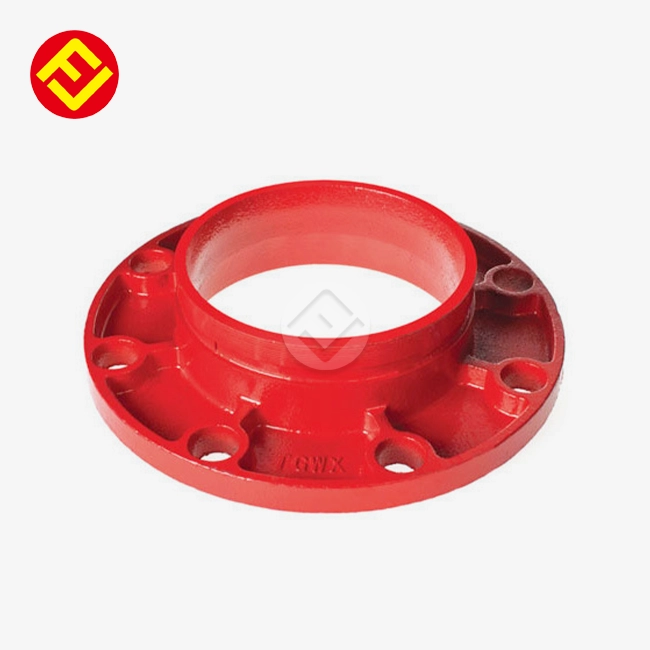
Specification |
||||
| Specification | Size (mm) | L(mm) | H(mm) | φ Diameter (mm) |
| 1 | 33 | 98 | 42 | 54 |
| 11/2 | 48 | 114 | 143 | 69 |
| 2 | 60 | 127 | 43 | 82 |
| 2/2 | 76 | 145 | 44 | 99 |
| 3 | 89 | 159 | 44 | 112 |
| 4 | 108 | 186 | 47 | 133 |
| 4 | 114 | 192 | 47 | 140 |
| 5 | 133 | 214 | 48 | 161 |
| 5 | 140 | 221 | 48 | 167 |
| 6 | 159 | 245 | 49.5 | 189 |
| 6 | 165 | 251 | 49.5 | 195 |
| 6 | 168 | 254 | 49.5 | 198 |
| 8 | 219 | 324 | 59 | 254 |
| 10 | 273-1.6 | 416 | 61 | 316 |
| 10 | 273-2.5 | 416 | 62 | 317 |
| 12 | 325-1.6 | 467 | 61 | 370 |
| 12 | 325-2.5 | 469 | 62 | 372 |
Understanding Grooved and Threaded Fittings
Choosing the right pipe connection method affects project timelines, safety compliance, and operational longevity. Both grooved and threaded fittings serve critical roles across industries, yet their mechanical designs and performance characteristics differ substantially.
How Grooved Fittings Work?
Grooved pipe connectors have a cold-formed or machined slot on one end of the pipe that fits into a two-piece housing that has a pressure-responsive seal inside. These bolts have a tensile strength of over 65,000 psi and are mostly made of ductile iron that meets ASTM A536 Grade 65-45-12. Chemical compatibility is ensured across temperature ranges from -30°F to 230°F by the seal material, which is usually Grade E (EPDM) for water services or Grade T (Nitrile) for oil Products" target="_blank" style="color:blue" >products. They are suitable for fire prevention systems because they meet ANSI/AWWA C606 standards and have licenses from UL, FM, VdS, and LPCB.
Threaded Fitting Fundamentals
Threaded connections depend on parallel or curved threads that are cut into the inside of fittings and the ends of pipes. Most things are made of carbon steel or stainless steel, and NPT (National Pipe Taper) threads are most popular in the U.S. To install something correctly, you have to carefully cut the threads, clean them, use sealant solutions or PTFE tape, and make sure you have the right torque levels to stop leaks. These fittings work well with modest pressures, but they aren't flexible enough to handle the structural movement or thermal growth that comes with modern pipe networks.
Material and Compliance Considerations
When purchasing managers look at parts, they need to make sure that the metal's features and dimensions are correct. To keep ductile iron products from breaking when they are shocked, grooved systems need nodularity rates above 90%. Standard C606 slots can be used because the bolt pad gaps and key lengths have been checked with a laser. For threaded parts to work, the ASME B1.20.1 thread standards must be followed to the letter. Knowing these technical differences can help people in the building, HVAC, and industrial repair industries choose products that meet safety standards and meet the needs of their operations.
Comparative Analysis: Grooved Fittings vs. Threaded Fittings
Performance differences between these connection methods directly impact project budgets, labor allocation, and system reliability. We examine installation efficiency, durability, operational performance, and total cost of ownership to guide procurement decisions.
Installation Speed and Labor Requirements
When you use a grooved fittings connection system, you don't need Threading Tools, welding equipment, or hot work permits. With just tools, two people can usually finish a 6-inch grooved joint in less than five minutes. Pipe threading tools, vise stands, cutting oils, and trained workers who know the right thread engagement depths are needed for threaded installs. A similar threaded joint usually takes 20 to 30 minutes, which includes preparing the threads, cleaning, applying sealer, and checking the pressure. Industrial case studies show that moving from threaded to grooved systems in business fire sprinkler retrofits cuts installation time by 40%.
Durability and Maintenance Access
Grooved methods are better for long-term use because of the way the mechanical connection is designed. When you press gaskets together between the ends of the pipes and the housing pieces, you make leak-proof seals that can handle up to 4 degrees of angular shift and linear movement caused by thermal expansion. This flexibility stops stress collection points that lead to threaded joint breakdowns in places where vibrations are common. Each grooved link works as a union, so the system can be quickly taken apart for maintenance or to make changes without having to cut any lines. Threaded systems often need union joints in key places, which can add cost and create leak points. It only takes minutes to change a gasket in a grooved assembly, but it takes hours to fix a threaded joint.
Pressure Ratings and Flow Characteristics
When fitted correctly, both methods can handle certain pressure ranges, but grooved fittings work better in changing situations. High-pressure grooved connections can handle up to 1,000 psi of pressure, but most of them are only rated for 300 psi. Threaded fittings can usually handle pressures up to 300 psi in small widths, but this limit drops as the pipe size rises. When compared to threaded joints, where sealant solutions stick out into flow paths, grooved housings have smooth internal profiles that reduce turbulence and pressure drop. Grooved fittings are proven to be solid by hydrostatic testing at 1.5 times the working pressure. Threaded connections, on the other hand, often show slight weeping that needs to be retorqued after pressurization cycles.
Long-Term Value Proposition
The initial cost of materials for grooved fittings is usually 15–25% higher than those for threaded fittings. Total cost study, on the other hand, shows that there are big savings thanks to less work, no need for redoing, and lower upkeep costs. The ability to reuse curved systems is helpful for projects that need to make system changes often, like those in data centers and the pharmaceutical industry. A single grooved coupling can be put together and taken apart many times without losing its performance, but threaded joints lose their performance with each rejoining. When you buy in bulk from well-known sellers, you can negotiate better prices that close the initial cost gap and get warranty protections and technical support that aren't available with standard threaded goods.

Application-Specific Recommendations for B2B Procurement
Matching fitting technology to project requirements optimizes reliability and budget efficiency. We outline scenarios where each connection method delivers maximum value.
Fire Protection and Life Safety Systems
Most automatic sprinkler systems use grooved fittings mechanical connections because they are approved by the Factory Mutual and work consistently in emergencies. Since there are no threading operations, there are no metal bits that could block sprinkler orifices, and quick installation speeds up the project in occupied buildings where hot work restrictions apply. In the vicinity of riser connections, flexible grooved couplings absorb seismic forces and building settlement, keeping buildings from failing in terrible ways during earthquakes. Threaded fittings can still be used for small-diameter branch lines in home settings, but they don't meet the approval standards for business high-rise projects.
Industrial HVAC and Process Piping
Networks of chilled water, heating systems, and compressed air are all affected by vibrations and thermal cycles caused by moving parts and changes in temperature. Installing flexible grooved connections next to pumps, chillers, and compressors blocks mechanical noise and keeps stress from spreading to pipes that are attached. This sound dampening makes equipment last longer by lowering the loads on bearings and fixing aligning problems. Threaded connections in similar situations often become loose from repeated loads, needing to be tightened on a regular basis, which adds to the work of upkeep. Grooved systems can handle errors during initial assembly, which makes up for situations in the field where perfect alignment isn't possible.
Mining, Oil, and Gas Applications
Harsh settings with rough slurries, toxic fluids, and uneven ground need strong links that can handle movement and allow for quick deployment. Because grooved fittings can handle small changes in angle, they can be used in mine dewatering systems where the ground moves. They are also easy to put together, so temporary pipe setups can be moved from one drilling site to another. Getting rid of open flames from welding lowers the risk of fire in places where explosives are present. Threaded connections don't work well in these situations because hits and dirt can damage the threads and cause them to fail early.
Retrofit and Maintenance Projects
When improving or adding to systems, it can be hard to integrate equipment that already has threaded pipes. Grooved adapters change the type of connection so that new grooved networks can join to old threaded parts without having to replace the whole system. In this hybrid method, useful parts are kept while the benefits of grooved technology are used in new building. When connecting small-diameter branch lines to existing threaded mains, threaded fittings make sense as long as there is enough room for the threading tools to work.
Procuring Grooved and Threaded Fittings: What You Need to Know?
Successful procurement balances product quality, supplier reliability, and commercial terms to support project schedules and budget constraints.
Supplier Selection Criteria
Finding manufacturers with good track records makes sure that the products are consistent and that there is expert help throughout the lifecycle of a project. Well-known brands keep a lot of certifications that cover both local fire rules and business standards. When evaluating a supplier, you should look at how much they can produce, whether they have stock for popular sizes, and whether they can make custom designs. Delivery dependability separates trustworthy sellers from dishonest ones; late shipments mess up building plans and raise labor costs. Support after the sale, like installation training, expert advice, and handling insurance claims, adds value above and beyond the price of the product.
Quality Verification Protocols
Incoming inspection processes for grooved fittings keep the system safe from low-quality goods that could damage it. Metallurgical research shows that the nodularity percentages of ductile iron meet the requirements, which keeps the iron from breaking when it is hit. ANSI/AWWA C606 standards are used to check the groove widths, housing bolt hole shapes, and gasket seating surfaces during dimension checking with calipers or laser scanners. Testing sample batches under hydrostatic pressure makes sure the seals are strong, and testing gasket materials under compression set pressure makes sure they will stay flexible over time. Documentation needs to include certifications for materials, test records, and markings that connect goods to batches of production so that quality checks can be done.
Commercial Considerations for Bulk Orders
A lot of people buying at once helps big projects get better terms. Framework deals should be made by procurement managers that spell out pricing levels based on order amounts, payment terms that balance cash flow with source security, and delivery schedules that work with building stages. Transparency about lead times keeps materials from running out. Standard grooved fittings ship within 2 to 4 weeks, but special designs may take 8 to 12 weeks. Stock is kept at job sites or regional stores through consignment inventory arrangements. This keeps projects from being held up by problems in the supply chain. There is less risk when there are warranty provisions that cover material flaws and performance failures. Reliable sellers will fulfill claims by replacing the product and paying for the installation costs.
Common Challenges and How to Avoid Them?
Installation and maintenance errors undermine even superior products. Understanding frequent mistakes enables prevention strategies that preserve system reliability.
Installation Error Prevention
Installing a grooved joint may look easy, but it needs careful attention to detail. Gasket mismatch during housing assembly makes leak paths even when bolts are properly torqued. Before putting housing pieces in place, installers must center gaskets on the ends of the pipes and then tighten bolts in a cross pattern to keep the gaskets compressed evenly. Pipe ends can split under pressure when the groove depth is too shallow because the roll cutting tools are worn out. Dimensional shift can be avoided by inspecting and replacing tools on a regular basis. Threaded joints often fail because the threads aren't engaged enough. For full strength, the minimum engagement is one pipe width. Thread cutting oils need to be cleaned out before sealer is applied to keep the area from getting dirty, which makes the sealant less effective.
Maintenance Best Practices
Grooved systems need to be checked every so often to make sure the bolts are tight and the gaskets are in good shape. Over many years, UV light, chemical attacks, and changing temperatures break down elastomeric seals. Visual review of the gaskets should be part of maintenance plans when the system is turned off, and they should be replaced every 15 to 20 years, based on how well they're working. When the system is first pressurized, retorquing the bolts makes up for the compression of the gasket seating. When vibrations or changes in temperature happen at the joints of threaded links, they leak. Inspections once a year that find moisture buildup allow for quick retorquing before small leaks turn into fails that need major fixes.
Compatibility Matching
When fittings and lines don't have the same material, it can lead to galvanic rust or mechanical incompatibility. Grooved couplings for steel pipe are different from those for copper or HDPE pipe. The materials used for the housing pieces and gaskets must match the specs of the pipe. Pipe plans must match threaded fitting classes (150, 300, and 3000) to make sure the right wall thickness for thread contact. When you mix different makers' groove sizes, it makes assembly difficult, even though the stated sizes are the same. By sticking to accepted product combinations that are written down in submittal packages, field issues that slow down building can be avoided.

Conclusion
Grooved fittings are very useful for projects that need to be installed quickly, have flexible systems, and be reliable over the long run. Their mechanical connection design gets rid of the need for hot work, lowers labor costs, and can handle structure movement that can cause threaded joints to fail. The strong performance of grooved technology is best for fire safety, industrial HVAC, and heavy-duty uses. Threaded joints can still be used for low-pressure systems, small-diameter sections, and connecting to systems that are already in place. To be a good buyer, you need to carefully evaluate suppliers, follow quality control procedures, and know what the unique needs of the product are. FLA Industrial & Trading Co., Ltd. has been in the producing business for almost 40 years and can help you make these choices with confidence.
FAQ
What pipe materials work with grooved coupling systems?
When paired with the right housing and gasket specs, grooved fittings can handle lines made of steel, stainless steel, ductile iron, copper, and some types of plastic. Most of the time, carbon steel and Schedule 10/40 pipe are used. For thin-wall tubes and PVC systems, there are special connections that can be used.
How much faster is grooved installation compared to threaded connections?
Studies of industrial time show that curved systems cut the time needed to put them together by 40 to 60 percent. A normal 4-inch grooved joint takes 3–5 minutes to make, while the same-sized threaded connections take 20–30 minutes, which includes time to prepare the threads and let the sealant dry.
Can grooved fittings handle high-pressure applications?
Standard grooved fittings can handle working pressures of up to 300 psi, and high-pressure versions can handle up to 1,000 psi. Pressure capacity is based on the type of structure, the material of the seal, and the order of the pipes. Manufacturers offer pressure-temperature charts that match certain goods to the conditions of work.
What maintenance do grooved systems require?
Periodic eye inspection during system shutdowns checks the state of the gaskets and the tightness of the bolts. Depending on the surroundings, gaskets should be replaced every 15 to 20 years on average. After the initial pressurization, retorquing the bolts makes up for the compressed seal.
Partner with FLA Industrial & Trading Co., Ltd. for Superior Grooved Fitting Solutions
Our company offers certified grooved fittings mechanical coupling systems that are backed by 40 years of production success for partners in the Fortune Global 500. We keep up with over 1,000 product specs that meet ASTM, ANSI/AWWA, and international fire safety standards because we are a reliable grooved fittings provider. You can meet your procurement goals from specification to installation with the help of expert advice, cheap price, and the ability to place bulk orders.Email our team at sales@flaindustrial.com to talk about your project needs, get specific quotes, and get access to technical tools that will help you improve the performance and efficiency of your pipe infrastructure.
References
American Water Works Association. "ANSI/AWWA C606-17: Grooved and Shouldered Joints." Denver: AWWA, 2017.
Bracken Engineering. "Comparative Analysis of Pipe Joining Methods in Commercial Construction." Journal of Plumbing Engineering, vol. 45, no. 3, 2019, pp. 28-41.
Fire Protection Research Foundation. "Performance of Grooved Mechanical Couplings in Seismic Conditions." Quincy: National Fire Protection Association, 2018.
Henderson, Robert J. "Total Cost of Ownership: Grooved vs. Threaded Piping Systems." Mechanical Engineering Magazine, vol. 141, no. 6, 2020, pp. 54-59.
Industrial Piping Solutions Institute. "Installation Best Practices for Mechanical Coupling Systems." Technical Bulletin Series, Chicago, 2021.
Society of Fire Protection Engineers. "Material Standards and Testing Protocols for Fire Sprinkler System Components." SFPE Handbook of Fire Protection Engineering, 5th ed., Springer, 2016, pp. 1247-1289.