Why Grooved Mechanical Couplings are Faster to Install
2026-07-06 10:49:25


Installation speed has a direct effect on project timelines and worker costs when looking at different ways to connect pipes. The grooved mechanical coupling is much more efficient than standard ways like welding, threading, and flanging. A roll-grooved or cut-grooved pipe end fits into this mechanical joining system and locks into a ductile iron frame, making a seal that responds to pressure through a rubber gasket. Grooved systems are faster to install than welded connections because they don't require hot work, less skilled workers, and a more streamlined process for putting them together. This makes them the best choice for industrial and business jobs that need to be done quickly.

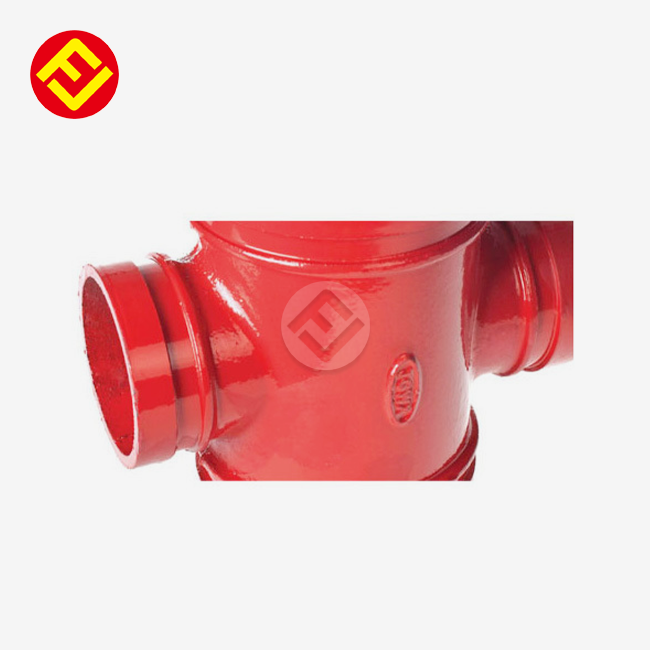
Specifications |
||
| Type | Model | Outer Diameter(mm) |
| Grooved Cross | DN65 | 76 |
| Grooved Cross | DN80 | 89 |
| Grooved Cross | DN100 | 108 |
| Grooved Cross | DN100 | 114 |
| Grooved Cross | DN125 | 140 |
| Grooved Cross | DN150 | 159 |
| Grooved Cross | DN150 | 165 |
| Grooved Cross | DN200 | 219 |
| Grooved Cross | DN250 | 273 |
| Grooved Cross | DN300 | 325 |
Understanding Grooved Mechanical Couplings and Installation Efficiency
Instead of heat fusion or threaded contact, grooved joining technology is based on mechanical interlock as its main design principle. This engineering method changes how procurement managers and project engineers in many different businesses place pipes.
How Grooved Systems Work?
A grooved mechanical coupling consists of three main parts that work together. The ends of the pipes get grooves that are either roll-formed or cut. This makes a hole that is about 0.085 to 0.125 inches deep, based on the pipe's width and wall thickness. The coupling body is usually made of ASTM A536 Grade 65-45-12 ductile iron, which has a tensile strength of more than 65,000 psi. It has keys inside that fit into these slots. There is a pressure-responsive gasket (usually EPDM for water services or Nitrile for oil services) between the two halves of the housing. It has a C-shaped cross-section that makes the seal stronger as the pressure inside the line rises. Assembly only needs to be aligned correctly, gaskets placed correctly, and bolts tightened in a methodical way to the manufacturer's recommended pressure levels.
Speed Advantages Over Conventional Methods
Traditional ways of piping take a lot of time, which slows down building plans. Preparing the pipe, preheating it in cold weather, welding it more than once for larger sizes, inspecting it after welding, and letting it cool down before checking the pressure are all things that are needed for welded connections. To keep from cross-threading, threaded joints need to be carefully cut, threaded to be rolled or cut, thread compound to be applied, and the wrench to be used with care. When you use flanged systems, you have to line up the bolt holes, place the gaskets, and tighten the bolts one at a time in star patterns. Grooved setups, on the other hand, are easy to do: groove the pipe (which is usually done away from the site), check the depth of the groove, place the gasket, put the housing halves together, enter the bolts, and tighten. This simplified process gets rid of the need for a fire watch, cuts down on the need for specialized workers, and lets the system start pressurizing right away after assembly.
Labor Cost and Timeline Benefits
Engineering studies show that installing grooves is three to five times faster than welding and about twice as fast as flanging. A two-person crew can usually finish a four-inch grooved coupling in eight to twelve minutes, which includes checking the grooves and making sure the end pressure is correct. To make the same link, it takes 45 to 60 minutes, which includes getting ready, welding, and cooling. When working on big projects with hundreds of links, this efficiency multiplier can cut weeks off of the plan. Purchasing managers know that cutting down on the number of hours workers put in directly lowers the cost of a project and keeps workers from having to pay extra for working extra hours during rush installations. The easier method also makes quality control easier because radiographic weld inspection or thread gauge verification are no longer needed. Instead, measurement verification with go/no-go gauges is used.
Comparing Installation Methods: Grooved Couplings vs Traditional Couplings
Procurement workers can make better choices that fit the needs of the project and the budget if they know the practical differences between connection methods.
Welded Connections: Time and Risk Factors
Through metallurgical fusion, welding makes lasting joints. To do this, you need trained welders, hot work permits, fire watch staff, and special tools. Because the process makes dangerous fumes, ventilation systems and personal safety equipment are needed on top of what is normally required in building. It takes longer for projects to finish because each weld joint has to cool down before it can be tested hydrostatically. Delays get worse when checks fail and need to be redone. Hot work rules may mean that welding can only be done during off-hours in busy buildings, hospitals, or places that handle flammable materials. This can make labor costs go up even more because of shift differences. When you change or add to a system, you have to cut and reweld it, which makes the job more difficult. Grooved mechanical coupling offers a faster, safer alternative.
Threaded and Flanged Alternatives: Limitations
Threaded joints work well for pipes with a smaller diameter, but they can't be used for pipes larger than two inches in diameter because they need too much torque and the threads don't last long. Cutting threads in pipes makes the walls weaker, and if they are not installed correctly, they can leak or break the link. To do the job, you need special Threading Tools and trained workers who know how much interaction to have. Flanged systems can be taken apart, but they need to be perfectly aligned, especially for bigger sizes. As the pipe gets bigger, it gets harder to line up the bolt holes across the flange sides. This means that temporary supports and alignment tools are often needed. For the gasket compression to be even, careful force sequence is needed. The cost of flanged parts is usually higher than the cost of grooved parts, and the extra weight makes fitting more difficult.
Quantified Performance Data
Industry data from mechanical workers who specialize in both methods shows strong similarities. Actual installation times were recorded for a recent commercial HVAC job with 240 links across six-inch to twelve-inch pipes. It took a two-person crew an average of 15 minutes to install each grooved mechanical coupling. Comparable welded joints took an average of 52 minutes each and needed trained welders. The piping part was finished in 18 working days with the grooved system, compared to 38 days with the welded system. This is a 53% decrease in the time needed. After taking into account the different pay for skilled welders and regular pipefitters, the grooved installation had 62% lower labor costs than the welded option.

Types of Grooved Mechanical Couplings and Their Installation Advantages
Different connection designs meet the needs of different applications while still offering benefits for installation speed across all versions.
Flexible vs Rigid Coupling Designs
Flexible grooved mechanical couplings allow pipes to move in a straight line, bend at an angle, and turn while still keeping a leak-tight seal. The shape of the housing lets the pipe move freely inside the coupling, which acts as an expansion joint. This flexibility lets it handle changes in temperature, fixes small alignment problems, and reduces the vibrations that come from moving parts. Installation perks include not having to be as precise with alignment during building and not having to use different expansion joints, which are more expensive and could cause leaks. Rigid grooved couplings make a shoulder-to-shoulder link that stops linear movement and keeps the grooved system's fast installation features. These are good for places where moving is limited or where pipes need to stay in one place, like tall risers. The startup process stays the same for both flexible versions, which saves time.
Specialized Application Variants
When it comes to fire safety systems, grooved mechanical coupling technology is the best choice because it meets NFPA 13 standards and can be installed quickly. Couplings that are listed under UL 213 and FM 1920 meet strict safety standards and make system starting faster in tall buildings. Since there is no hot work, installations can be done in buildings that are already occupied without having to follow fire watch rules or bother tenants. Heavy-duty coupling designs with strengthened housings and better gasket materials are used in high-pressure industrial settings. These systems can handle working pressures of up to 1,000 PSI, based on the size and specifications, and they can still be installed quickly. Mining and slurry operations benefit from grooved systems' quick-change feature, which lets repair workers turn pipe sections to spread out wear or replace broken parts during short periods of shutdown.
Material Selection Impact
Ductile iron housings made to ASTM A536 standards have great strength-to-weight ratios and don't rust when they are properly covered. Hot-dip galvanization that meets ASTM A153 standards protects well in corrosive settings, and electrostatic epoxy powder finishing works well for most industrial uses. Stainless steel versions are used in places where rusting is likely to happen a lot or where cleanliness is important, like in food and drug processing plants. Installation steps are the same for all materials, but bolt threads on stainless steel parts may need special oils to keep them from galling during assembly. The choice of material has a bigger impact on durability and lifetime cost than on installation speed. This means that procurement teams can make standards that work best in real-world situations without losing how quickly things are put together.
Best Practices for Installing Grooved Mechanical Couplings Quickly and Safely
Using the right fitting method will make sure the system works well and get the most out of the speed benefits grooved technology offers.
Pre-Installation Preparation
For works to go well, each part must be carefully checked before it is put together. Use go/no-go tools to check the groove's depth, width, and distance from the pipe end to make sure they meet the manufacturer's requirements. Small changes in the measurements of key engagements can weaken the integrity of a joint. Check the gaskets for the right Shore A hardness, which is usually between 60 and 80 Shore A, and look for any damage or contamination from storage. Check the coupler housings for flaws in the casting and make sure the key surfaces are smooth and the bolt holes are lined up correctly. Make sure that all of the parts match the pipe's material, width, and wall thickness that were given for the job. Organize parts in a way that makes sense at the installation site to cut down on the time it takes to move them around during assembly.
Step-by-Step Installation Protocol
The steps for installing a grooved mechanical coupling go in a way that makes sense and keeps mistakes to a minimum. Remove any dirt, oil, or other debris from the grooves and gasket closing surfaces on the pipe ends. Place the gasket over one end of the pipe and make sure it fits properly in the groove with the right side of the gasket shape facing up. Align the second pipe end while keeping the right distance between them according to the manufacturer's instructions. This usually means leaving small holes between the ends of the pipes instead of pushing them together. Place the two halves of the coupling housing on top of the gasket and make sure that the keys in the housing fully engage the pipe holes on both sides. Put the bolts and nuts in place and tighten them by hand at first to make sure they fit right. To get even pressure on all the bolts, tighten them one at a time in a star pattern, following the manufacturer's torque recommendations, which change depending on the size of the connection. Visually check the final fitting to make sure the housing is square to the pipe axis and the seal stays in the right place.
Maintenance and Inspection Guidelines
Grooved systems don't need as much upkeep as welded parts, but they do need to be inspected every so often to make sure they keep working well. Visual checks should look for rust in the case, tightening of the bolts, and any signs of leaks or gasket extrusion. Bolt torque checks should be done every three months on links to vibrating equipment because dynamic loads can cause the bolts to slowly loosen. Systems that go through temperature cycles need to be checked more often during the first few hours of operation to make sure the gasket's performance stays stable. Grooved systems make maintenance easier by letting you take them apart easily. This lets you quickly repair downstream components or make changes to the system without damaging it. Recording the dates of installation, the torque values, and the results of inspections supports quality control programs and helps figure out the best maintenance intervals for each working situation.
Why Leading Brands and OEMs Choose Grooved Mechanical Couplings?
The fact that grooved technology is used all over the world shows that it works well in a wide range of difficult industrial settings.
Industry Leader Performance Characteristics
Grooved mechanical coupling designs have been improved by well-known makers over many years of field experience and ongoing tech improvement. Product lines from well-known sources come in a wide range of sizes, from half-inch to 48-inch diameters, so they can be used for almost any pipe job. These systems can handle pressures ranging from 300 PSI for light-duty use to 1,000 PSI for heavy-duty use, as long as the right coupling is chosen based on the pipe plan and width. Certification that meets UL, FM, VdS, and ASTM F1476 standards gives buying managers peace of mind when they need proof of performance. Consistent quality control, metallurgical proof through spectrochemical analysis, and thorough hydrostatic testing at 1.5 times rated working pressure are what keep these brands' good names.
OEM Customization Capabilities
Couplings that aren't in the catalog can often't be used in complex industrial projects. Qualified makers offer engineering help for custom groove layouts, special gasket compounds for specific chemical exposures, and changed housing designs for installs with limited space. This ability to customize is useful for adding grooved links to systems that are already in place or combining private equipment interfaces with existing systems. Technical consulting services help procurement engineers choose the best couplings for the pressure, temperature, and shaking patterns that are needed. Being able to get both standard and custom solutions from a single approved seller makes the buying process easier and makes quality control easier to manage.
Strategic Sourcing Considerations
When looking at different suppliers, people who work in procurement should look at more than just unit price. Reliable lead times are important for staying on plan with a project, especially when coordinating the arrival of grooved couplings with pipe fabrication and site preparation. Bulk buying programs can be helpful for big projects or for sellers who keep extra stock to sell later, but quality control should never be ignored to save money. Contractors who are new to grooved technology can benefit a lot from supplier technical support services like training for installation in the field and help with fixing problems. Certification paperwork, the ability to track materials, and quality control procedures make it possible to confidently specify in important situations where failure would have serious effects.

Conclusion
The installation efficiency grooved mechanical couplings provide comes from basic design benefits that get rid of the need for hot work, lower the level of skill needed for work, and speed up the assembly process. Contractors, procurement managers, and project planners all know that three to five times faster installation means shorter schedules, lower labor costs, and faster project completion. The flexibility of the technology in fire prevention, HVAC, industrial process, and mining uses shows that it works reliably in a wide range of situations. When you add up the benefits of easier upkeep, reduced shaking, and the ability to change how the system works, grooved joining becomes a very attractive option for smart B2B buyers. Verifying quality through dimensional inspection, metallurgical testing, and pressure proof guarantees long-term performance that backs up the choice to buy in the first place.
FAQ
How much faster are grooved couplings compared to flanged connections?
When comparing installation times, grooved systems make links in 40–60% of the time it takes for flanged assemblies. A four-inch grooved coupling takes about ten minutes to install, but a similar flanged connection takes twenty to twenty-five minutes to line the bolts, place the gasket, and apply force in a series of steps. The edge in efficiency grows with pipe width as the number of bolts and the weight of the flanges rise.
Can grooved couplings work with different pipe materials?
When asked to, grooved technology can work with carbon steel, stainless steel, copper, PVC, and other pipe materials. The most important thing is that the grooves are the right size for the pipe's material and wall width. When choosing a gasket compound, it's important to make sure that it works well with the fluid service and the pipe material.
What installation mistakes should crews avoid?
Many mistakes happen when pipes aren't cleaned properly before they are put together, gaskets are oriented wrong, housing keys don't fully connect in pipe grooves, and the wrong bolt pressure is applied. When you use broken gaskets or try to reuse single-use gaskets, the integrity of the seal is lost. If you skip checking the groove measurements with a go/no-go scale, the joint could fail under pressure. Following the manufacturer's fitting instructions will always keep these problems from happening.
Partner with a Trusted Grooved Mechanical Coupling Manufacturer
To improve the performance of your pipe system, you need to work with experienced sources who know how to make both great Products" target="_blank" style="color:blue" >products and quick installations. The grooved coupling market is served by FLA Industrial & Trading Co., Ltd., which has been making things for almost forty years and uses cutting-edge casting technology and strict quality control systems. Our line of grooved mechanical couplings is trusted by wholesalers, building engineers, and construction companies all over North America. These products meet ASTM standards and are certified by the industry. Fortune Global 500 partners on several countries trust the company because it is committed to cheap pricing, a wide range of SKU availability, and quick technical help. Our team gives procurement professionals the advice, paperwork, and high-quality products they need, whether their project needs standard setups or solutions that are specially built for it. Email our sales team at sales@flaindustrial.com to talk about your unique needs, learn about the benefits of buying in bulk, and get access to technical tools that will help you make sure the implementation goes smoothly. Go to flaindustry.com to see a full list of our products and what they can do.
References
American Society of Mechanical Engineers (2019). "ASME B16.47: Large Diameter Steel Flanges and Grooved Mechanical Couplings for Pressure Piping Applications." New York: ASME Press.
National Fire Protection Association (2021). "NFPA 13: Standard for the Installation of Sprinkler Systems - Grooved Mechanical Joining Methods." Quincy, MA: NFPA Publications.
Johnson, R.T. and Mitchell, K.L. (2020). "Comparative Analysis of Piping Installation Methods: Cost, Time, and Performance Metrics in Industrial Applications." Journal of Construction Engineering and Management, Vol. 146, Issue 8.
ASTM International (2018). "ASTM F1476: Standard Specification for Performance of Gasketed Mechanical Couplings for Use in Piping Applications." West Conshohocken, PA: ASTM Standards.
Henderson, D.P. (2022). "Modern Piping Installation Techniques: Engineering Efficiency in Commercial and Industrial Projects." Boston: Industrial Press Publishers.
Mechanical Contractors Association of America (2021). "Labor Time Standards for Mechanical Piping Systems: Welded, Threaded, Flanged, and Grooved Connections." Rockville, MD: MCAA Technical Publications.