Why welding table clamps are essential for safe and efficient welding?
2026-06-05 09:33:26


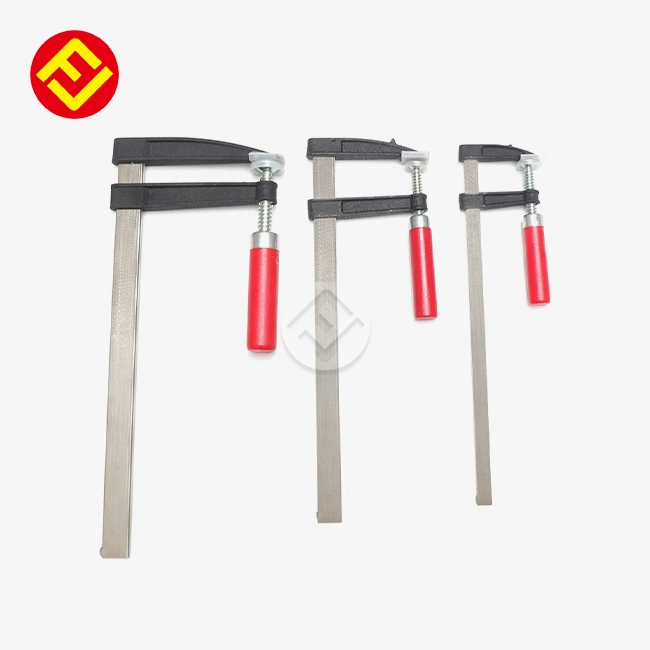
Welding table clamps are very important tools that have a direct effect on how safe and efficiently welding is done in industry settings. In particular, the F-Clamps/16mm-welding-table-clamps">16mm welding table clamp is a popular way to hold things in place while TIG, MIG, and stick welding are being done. These well-designed tools keep the workpiece from moving, cut down on delays, and make sure the quality of the weld stays the same. These are all very important things for purchasing managers, site directors, and manufacturing engineers. Knowing how the right clamping technology improves the results of welding helps people make choices about what equipment is best for worker safety and output speed.
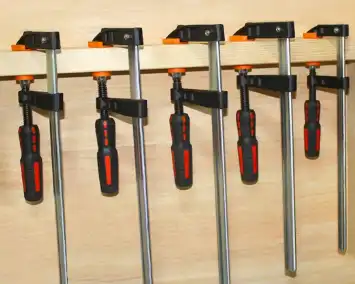
Understanding 16mm Welding Table Clamps: Features and Benefits
Fixturing tools called welding table clamps are designed to keep materials steady while high-heat manufacturing work is being done. The 16mm number refers to the shaft diameter that fits normal welding table holes, making a strong mechanical link between the clamp and the table surface.
Material Construction and Durability
These days, welding clamps are made from carbon steel or cast iron that can be shaped. These materials are chosen because they are very strong for their weight. The rigidity of carbon steel construction means that it can survive repeated changes in temperature without breaking down. Cast iron that can be shaped is tough without being flimsy, so clamps won't break when they're hit hard or loaded unevenly. Both materials are zinc-plated or painted to protect them from corrosion caused by chemicals, workshop humidity, and grinding dust. This makes them last much longer than options that aren't protected.
Core Performance Characteristics
The best thing about clamps that are mounted on a table is that they can provide steady clamping force without having to be repositioned by hand. Handheld g-clamps need to be adjusted all the time, but a properly placed 16mm clamp will keep the pressure on during long welding sessions. This steadiness is especially helpful when thermal expansion causes the size of the workpiece to change during multiple passes of welding.
Professional-grade clamps have features that deal with problems that come up in real life when making things. Traditional clamps often stop up when weld spatter builds up on the threads, but enclosed spindles keep this from happening. Replaceable pressure pads with ball-joint articulation can work with uneven workpiece surfaces and spread power out evenly. The structure stays strong even when it's placed near busy welding zones where temperatures change quickly because the design is resistant to heat.
There are real operational benefits that come from these technical standards. Weld mistakes caused by moving workpieces happen less often in fabrication shops. Cycle times are faster on assembly lines because workers don't have to spend as much time readjusting parts. Maintenance teams save money on tool replacement costs by making clamps last longer. All of these things help industrial buyers get a better return on their investment when they look at fixturing options for their operations.
How to Properly Use and Maintain a 16mm Welding Table Clamp for Optimal Results?
For welding clamps to work well and last as long as possible, you need to know how to place them correctly and how to keep them in good shape.
Installation and Setup Procedures
Choosing the right clamp specs for your application is the first step to successful clamping. Choose between normal and heavy-duty versions after thinking about the thickness of the workpiece, the type of material it is made of, and the clamping force that is needed. Make sure that the holes in your welding table match the width of the clamp shaft. Mismatches in tolerances can cause wobble, which lowers the accuracy of your work.
Before installing, clean the table holes by getting rid of any cutting dust, paint overspray, or weld spatter from before. Fully insert the clamp shaft into the table hole, making sure it is straight up and down against the work area. Put the pressure pad on the piece of work and turn the handle until there is a hard contact. While welding, make sure there is enough torque to stop any movement, but don't use too much force, as that could damage the 16mm welding table clamp device or bend thin materials.
Safety Considerations
Welding areas have their own risks that can be reduced by using the right clamping methods. When workpieces are fixed securely, they don't move around during arc hits, which can cause burns and eye injuries. When positioning is stable, workers don't have to manually brace materials as much, which keeps their hands out of welding zones. When clamps are kept in good shape, they don't suddenly break, letting loose workpieces fall or shoot debris.
Wiring ground wires for welding should never go through clamp assemblies. When high amperage flows through swivel gears, it creates micro-arcing that joins internal parts together, making the tool useless. To keep the clamps working and avoid electrical dangers, always connect grounding clamps directly to the table or workpiece.
Maintenance Protocols
Wear can be found before it causes problems by inspecting things on a regular basis. Check the pressure pads for cracks or distortion that means they need to be replaced. Check the threads for damage or splatter buildup that makes them less smooth to use. Check the spindle's turning to make sure it can move freely, without getting stuck or having too much play.
The way you clean your workshop should fit the conditions there. In high-spatter situations, removing the buildup of dirt every day keeps things from wearing out too quickly. As a safety step, spray anti-spatter on surfaces that will be touched. Regularly grease the threads with a high-temperature grease made for welding settings, since regular oils can turn carbonised when exposed to heat.
When you store things correctly, they last a lot longer. Clamps should be kept dry when they're not in use to keep the surface from rusting. Set up tools in a way that makes sense so that workers can quickly find the right size without having to dig through jumbled bins. Keep track of the state of each tool over time by writing down what was found during inspections and maintenance activities. This way, you can replace tools before they break down and mess up production schedules.
Comparing 16mm Welding Table Clamps with Other Clamping Solutions
Selecting optimal fixturing equipment requires understanding how different clamp types perform across varied application contexts.
Size Comparisons: 16mm versus Larger Variants
The 16mm shaft diameter represents a middle ground between portability and clamping capacity. Compared to 20mm or 28mm alternatives, 16mm clamps offer adequate force for most light-to-medium fabrication work while maintaining compatibility with standard table configurations. Larger diameter clamps generate higher force ratings—useful for heavy structural steel but requiring tables specifically designed with oversized hole patterns.
Procurement teams should match clamp size to predominant workpiece dimensions. Automotive exhaust fabrication benefits from 16mm clamps because their compact footprint allows access into tight bend radii without obstructing torch positioning. Structural steel beam assembly might justify investment in larger clamps that provide the additional force needed to prevent movement in heavy sections. Standardizing on a single size simplifies inventory management, though maintaining a mixed assortment offers flexibility for diverse project requirements.
Table Clamps versus Traditional C-Clamps
Traditional C-clamps remain common in many workshops, but table-mounted alternatives deliver distinct advantages for repetitive welding operations. C-clamps require manual repositioning for each workpiece, consuming time that table clamps eliminate through permanent table mounting. The fixed geometry of table systems ensures consistent workpiece positioning across multiple parts—critical for maintaining dimensional accuracy in production runs.
C-clamps do retain value for certain scenarios. Field welding situations where modular tables aren't available require portable clamping options. Extremely thick materials exceeding welding table clamp throat depth might necessitate the extended reach that large C-clamps provide. However, for fixed-location fabrication shops performing repetitive tasks, table-mounted systems dramatically improve workflow efficiency.
Magnetic Clamps as Alternatives
Magnetic fixturing offers rapid setup through instant attachment to ferrous materials. This speed advantage proves valuable in low-volume custom work where frequent reconfiguration occurs. Magnetic systems struggle with consistent force application across varying surface conditions—scale, paint, or surface irregularities reduce magnetic grip significantly. Heat from welding operations can demagnetize units partially, causing unexpected workpiece movement mid-process.
Mechanical clamps deliver predictable, measurable clamping force regardless of surface conditions or thermal exposure. The mechanical advantage provided by threaded spindles enables operators to generate higher holding forces than magnetic equivalents. For industrial buyers prioritizing reliability over setup speed, mechanical table clamps represent the more dependable choice for mission-critical welding operations.
Top-Rated 16mm Welding Table Clamps and Trusted Brands for B2B Procurement
Procurement decisions benefit from understanding how leading manufacturers differentiate their Products" target="_blank" style="color:blue" >products through design innovation and quality control practices.
Evaluating Manufacturer Credentials
Established brands like Bessey have built reputations through decades of producing precision-engineered clamping tools. Their products typically feature advanced materials like plasma-nitrided steel that naturally repels weld spatter adhesion. VEVOR targets cost-conscious buyers with functional designs that balance performance against competitive price positioning. Deepla focuses on modular systems offering extensive accessory compatibility for complex fixturing requirements.
FLA Industrial & Trading Co., Ltd. brings nearly 40 years of manufacturing expertise to the welding clamp market. The company's ISO9001 certification validates consistent process control from raw material selection through final inspection. Each production batch undergoes dimensional accuracy verification ensuring perfect fit with standard table systems. Load-bearing tests confirm that clamping force meets specifications consistently across all units. Surface finish inspection guarantees uniform coating coverage for optimal corrosion resistance—quality assurance measures that procurement teams should verify when evaluating potential suppliers.
Bulk Procurement Strategies
Hardware distributors and tool wholesalers sourcing for resale inventory should prioritize suppliers offering diverse SKU options and strong packaging. Multiple head diameter configurations (16mm, 19mm, 20mm, 28mm) allow distributors to serve broader customer bases without managing relationships with numerous vendors. Robust packaging prevents transit damage that creates returns and customer dissatisfaction.
Construction contractors and fabrication shops benefit from suppliers maintaining substantial inventory for immediate shipment. Project timelines rarely accommodate extended lead times, making rapid fulfillment capabilities essential. Suppliers capable of delivering custom orders within 7-15 days provide flexibility for specialized project requirements without disrupting critical path schedules.
Negotiation leverage increases when buyers demonstrate understanding of manufacturing economics. Volume commitments justify preferential pricing, particularly when orders align with supplier production schedules. Long-term partnership agreements that guarantee recurring business enable suppliers to allocate resources confidently, often translating into improved service levels and technical support availability.
After-Sales Support Considerations
Technical assistance throughout the procurement lifecycle separates exceptional suppliers from merely adequate ones. Pre-purchase consultation helps buyers specify appropriate clamp configurations for their applications. During production, regular updates on order status enable better internal planning. Post-delivery support addressing installation questions or warranty concerns builds confidence for future transactions.
Suppliers offering customization capabilities provide additional value for buyers with non-standard requirements. Custom special-shaped parts break free from one-size-fits-all limitations, enabling optimized solutions for unique fixturing challenges. Access to mold development services and 3D visualization tools accelerates design validation before committing to production quantities—services that justify premium positioning for manufacturers capable of delivering them.
Why Investing in Quality 16mm Welding Table Clamps Enhances Your Welding Operations?
Strategic investment in superior fixturing equipment generates measurable returns through multiple operational improvements.
Safety and Risk Reduction
Workplace accidents carry substantial direct and indirect costs. Medical expenses and workers' compensation claims represent obvious financial impacts. Less visible but equally significant are productivity losses from injured worker absence and regulatory compliance burdens following incidents. Quality welding table clamps reduce accident frequency by preventing the workpiece movement that causes common injuries like burns from uncontrolled arc strikes or crushing injuries from falling materials.
Reliable clamping equipment supports compliance with occupational safety regulations governing welding environments. Documented inspection and maintenance records demonstrate due diligence during regulatory audits. Investing in certified equipment from ISO9001 manufacturers provides defensible evidence of commitment to worker safety—important considerations for site supervisors and procurement heads managing liability exposure.
Production Efficiency Gains
Weld defects consume resources through rework labor, wasted materials, and delayed deliveries. Stable workpiece positioning eliminates movement-related defects like inconsistent penetration or misaligned joints. The cumulative time savings from eliminating repositioning and rework activities improves overall throughput substantially. Fabrication shops operating on tight margins find that fixture-related efficiency gains directly impact profitability.
Automation initiatives increasingly common in modern manufacturing depend on consistent fixturing. Robotic welding cells programmed with precise toolpaths cannot accommodate unpredictable workpiece positioning. Table clamp systems maintain fixed geometric profiles that ensure compatibility with automated processes—supporting manufacturers transitioning toward lights-out production capabilities.
Long-Term Value Proposition
Initial acquisition cost represents only one component of total ownership economics. Durable construction using quality materials extends service life, reducing replacement frequency. Maintainable designs with replaceable wear components lower lifecycle costs compared to disposable alternatives. Suppliers providing ongoing technical support and parts availability protect equipment investment over extended operational periods.
Future-proofing workflow capabilities requires selecting fixtures compatible with evolving welding technologies and materials. Modular designs accepting various accessories adapt to changing production requirements without complete replacement. Building relationships with manufacturers capable of producing custom configurations ensures access to specialized solutions as business needs develop—strategic considerations that distinguish experienced procurement professionals from those focused solely on immediate cost minimization.
Conclusion
Welding table clamps represent essential tooling that directly influences safety outcomes, production efficiency, and weld quality across industrial fabrication environments. The 16mm configuration delivers balanced performance suitable for diverse applications while maintaining compatibility with standardized table systems. Proper selection requires evaluating material construction, clamping force capacity, and supplier credentials including quality certifications and technical support capabilities. Correct installation procedures and regular maintenance practices maximize tool performance and longevity. Strategic procurement decisions that prioritize quality over minimum initial cost generate superior long-term value through reduced accidents, lower defect rates, and improved operational flexibility supporting both current operations and future growth.
FAQs
What materials are used in quality welding table clamps?
Professional welding clamps utilize carbon steel or malleable cast iron for structural components. Carbon steel offers excellent rigidity and strength, while malleable cast iron provides toughness without brittleness. Both materials receive protective finishes—zinc plating or industrial paint—that resist corrosion from workshop environmental exposure including humidity, grinding dust, and chemical contact.
How do I know when a table clamp needs replacement?
Regular inspection reveals several failure indicators. Deformed or cracked pressure pads no longer distribute force evenly. Damaged threads bind during adjustment or fail to maintain tension. Excessive spindle wobble indicates worn pivot points compromising positional accuracy. Persistent spatter buildup that cleaning cannot remove suggests the protective mechanisms have failed. Replace clamps exhibiting any of these conditions to maintain safe, reliable operations.
Can standard 16mm clamps work with System 28 welding tables?
Using reduction bushings allows physical installation, but this configuration is not recommended for heavy-duty applications. The 16mm clamp generates approximately 2.5 kN force compared to 5-7 kN for System 28-specific clamps. This reduced capacity may prove insufficient for structural steel fabrication where workpiece movement under welding stress could compromise safety and weld quality.
Partner with FLA Industrial & Trading Co., Ltd. for Your Fixturing Needs
Upgrading your welding operations with reliable 16mm welding table clamps delivers immediate improvements in safety and productivity. FLA Industrial & Trading Co., Ltd., a leading 16mm welding table clamp manufacturer with nearly four decades of experience, provides the quality and support your business demands. Our ISO9001-certified production process ensures every clamp meets rigorous dimensional and performance standards. We maintain 2,000 tons of inventory enabling rapid standard product shipment, while custom orders ship within 7-15 days. Whether you need ten units or ten thousand, our high-volume capabilities scale to your requirements. Contact our team at sales@flaindustrial.com to discuss bulk procurement options, request technical specifications, or explore customized solutions tailored to your industrial applications—experience the difference that trusted manufacturing partnership delivers.
References
American Welding Society. (2021). Welding Handbook: Welding Processes, Part 1. Miami: AWS Publications.
Hoffman, R. & Stevens, M. (2020). Industrial Fixturing Systems: Design and Application. New York: Manufacturing Engineering Press.
National Institute for Occupational Safety and Health. (2019). Preventing Injuries in Welding Operations. Washington: NIOSH Publications.
Thompson, J. (2022). Quality Control in Metal Fabrication: Standards and Best Practices. Chicago: Industrial Quality Institute.
European Committee for Standardization. (2020). EN ISO 9001: Quality Management Systems Requirements. Brussels: CEN Publishing.
Welding Equipment Manufacturers Association. (2021). Safety Guidelines for Welding Fixtures and Clamping Devices. Cleveland: WEMA Technical Standards.
YOU MAY LIKE