Agricultural Machinery Counterweights Improve Operation Stability
2026-07-30 15:04:59


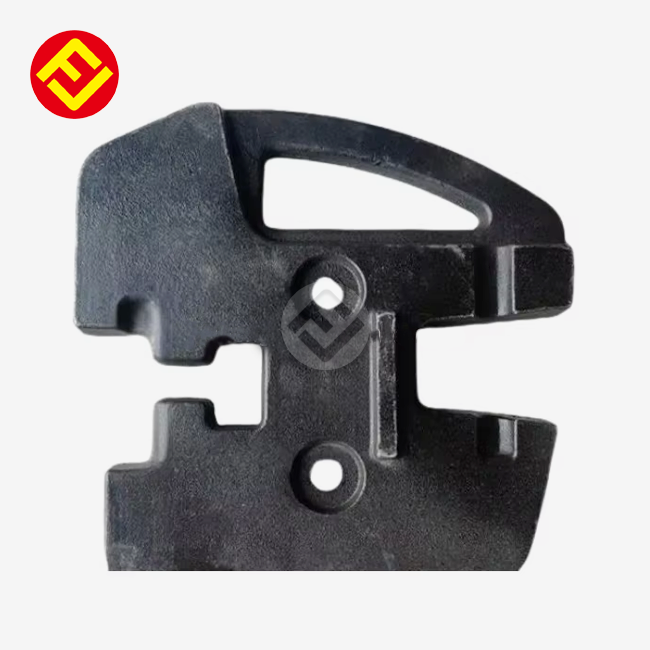
Agricultural Machinery Counterweight solutions transform how modern farming equipment performs under demanding field conditions. These specialized ballast components optimize axle load distribution and center of gravity, directly addressing tractive efficiency losses and dynamic instability that plague high-horsepower tractors and combine harvesters. When operators struggle with wheel slippage exceeding acceptable thresholds or face dangerous tipping scenarios during heavy draft work, properly engineered counterweights restore control and maximize power transfer to the ground, ensuring safer and more productive operations across diverse terrain.


Specification |
||
| Product Name | Weight Specification | Design Type |
| Agricultural Machinery Counterweight | 20kg | Narrow Slot |
| Agricultural Machinery Counterweight | 20kg | Wide Slot |
| Agricultural Machinery Counterweight | 20kg | Square |
| Agricultural Machinery Counterweight | 40kg | Old Model |
| Agricultural Machinery Counterweight | 40kg | New Model |
| Agricultural Machinery Counterweight | 45kg | Standard |
| Agricultural Machinery Counterweight | 50kg | Arc-shaped |
What Are Agricultural Machinery Counterweights and How Do They Work?
Understanding the basic physics behind Agricultural Machinery Counterweight systems shows why they are still needed to keep equipment stable and improve its performance in farming settings.
Core Functions and Operational Principles
Agricultural Machinery Counterweights are strategic additions of mass that even out the load that is put on by tools, attachments, and goods. The center of gravity of a tractor changes a lot when it pulls a big plow or lifts round bales with a front-end loader. Without the right amount of support, this shift makes the machine lose its balance and either power hop or tip over, which is very dangerous. The Agricultural Machinery Counterweight moves the center of gravity back to a safe position. This keeps the tires in good contact with the ground and maintains turning control.
Moment arm estimates and weight-to-power ratios are directly related to the physical principles that determine how well an Agricultural Machinery Counterweight works. Engineers say that for heavy draft operations, the weight-to-power ratio should stay between 45 and 55 kilograms per horsepower. This ratio makes sure that the engine's full power gets to all four wheels quickly and smoothly, without putting too much stress on the frame or compacting the ground too much with overweight setups.
Material Selection and Performance Characteristics
The choice of material has a big effect on how long an Agricultural Machinery Counterweight lasts, how dense it is, and how much it costs. The professional tools market is dominated by grey cast iron types HT200 and HT250, which have a very high density of about 7.2 grams per cubic centimeter. This high density makes it possible for compact designs that keep ground clearance and operator sight while still providing the required ballast mass.
Spheroidal graphite iron, which is also known as "ductile iron," has a tensile strength of over 400 megapascals and a higher resistance to impact. This material doesn't break when it's hit with shock loads during rough terrain navigation. Some makers are looking into composite materials that are made of concrete and polymer binders as cheaper alternatives. However, these materials need to be made in bigger quantities to have the same mass, and they can crack from vibrations after a long time of use.
The chemical makeup of a material must be carefully described in its specs. Spectrophotometer testing is needed to check the amounts of carbon, silicon, and manganese to make sure they meet the grade and keep the material from breaking. To avoid cold shorts that cause catastrophic fractures during operation, phosphorus content must be strictly controlled below 0.15 percent.
Design Considerations for Agricultural Applications
Agricultural settings have special needs for Agricultural Machinery Counterweight design that go beyond just needing to be heavy. A surface finish quality between 12.5 and 25 microns improves coating bonding, which is very important for equipment that is constantly exposed to fertilizers, dung, and water. The surface of Agricultural Machinery Counterweights is treated in several steps, starting with shot blasting to meet Sa 2.5 cleanliness standards. Next, electrophoretic deposition primers and polyurethane topcoats are applied. These help the Agricultural Machinery Counterweights pass 500-hour salt spray tests, which show that they will not rust over time.
The accuracy of the mounting interface determines whether Agricultural Machinery Counterweights work smoothly with the host machine or cause vibrations that damage the structure. Coordinate measuring machines and go/no-go gauges make sure that the mounting holes, slots, and bolt patterns are the right size. Misaligned mounting points are important reject criteria because they send damaging forces through the frames of tractors while they are working.
Importance of Counterweights in Improving Operation Stability
Quality Agricultural Machinery Counterweight systems improve stability, which directly leads to measurable safety changes and production gains that make investment worth it for serious farming operations.
Safety Enhancement Through Tip-Over Prevention
Rollover accidents are still one of the worst things that can happen to people who operate farm equipment. When tractors with heavy rear implements go up or down hills or quickly stop, the back weight can go over the stability thresholds if there isn't enough front ballast. When the Agricultural Machinery Counterweight mass is spread out correctly, it lowers the effective center of gravity and increases the stability baseline. This makes it less likely that the vehicle will tip over during difficult maneuvers. This extra safety margin is very helpful when workers are working on steep hills or moving big loads between field sites on public roads.
Traction Optimization and Power Transfer Efficiency
Slipping wheels lose fuel, speed up tire wear and slow down work rates. Aim for slippage rates between 10 and 15 percent to get the best grip without compacting the soil too much. These goals are met by Agricultural Machinery Counterweights, which raise the normal force between the drive tires and the ground. This lets the tread lugs effectively engage the soil. There are well-known mathematical models that show how adding more ballast mass affects traction gain. This lets operators fine-tune weight distribution for different tools and soil conditions.
Power hop, the violent shaking that happens when drive wheels alternately grip and slip, is lessened by better traction. This event puts stress on the engine parts and makes the operation uncomfortable. Proper Agricultural Machinery Counterweighting reduces power hop by making the tire-to-ground contact more consistent and using the vibration-absorbing qualities of cast iron materials.
Load-Bearing Capacity and Mechanical Longevity
When weight is evenly distributed, parts last longer across the whole machine. Front-end loaders put a lot of stress on their front axle bearings, pivot pins, and hydraulic cylinders when they lift heavy loads without rear Agricultural Machinery Counterweights. Also, back tools that don't have front ballasts that match them put too much weight on the rear axles and gearbox housings. Strategically placing Agricultural Machinery Counterweights spreads operating stresses out according to the design specs set by the maker. This keeps equipment from breaking down too soon and lowers the cost of upkeep for whole fleets of equipment.
Studies by outside groups working with major tractor makers show that properly ballasted equipment has 20–30% fewer engine component breakdowns than machines that aren't weighted properly but are still doing the same work. These improvements in reliability lead to big savings in the total cost of ownership over the life of the equipment, which can be thousands of hours of use.

Types and Designs of Agricultural Machinery Counterweights
Knowing the different types of Agricultural Machinery Counterweight setups helps purchasing managers find solutions that fit the needs of the business and the features of the equipment.
Suitcase Weights for Front Mounting
Standardized or custom connectors let suitcase weights connect to front mounting mounts. Their modular design lets workers add or remove individual weight pieces, which changes the total ballast mass to meet the needs of different implements. This adaptability is helpful for farms that use different sets of tools during the planting, growing, and harvesting seasons.
Good suitcase weights have strong mounting brackets that are made to handle vibration and impact loads without cracking from stress. To keep mounting hardware from coming loose while the tractor is running, the bolt hole patterns must line up perfectly with the front frames of the tractors. Weight limits of plus or minus 2% make it possible to predict how the axle loads will be distributed.
Wheel Weights for Direct Rim Mounting
Wheel weights attach straight to the rims of the wheels, adding weight as far away from the axle axis as possible. This position lowers the center of gravity and makes the Agricultural Machinery Counterweight work better per unit of mass. When working with heavy drafts, like plowing or subsoiling in dense clay soils, where maximum traction is needed for good work rates, rear wheel weights are especially helpful.
For different rim shapes on different tractor brands and types, mounting bolt patterns need to be changed. Manufacturers use reverse engineering and 3D scanning to make sure that their Products" target="_blank" style="color:blue" >products will work with all wheel combinations. When fittings aren't right, weights can come loose during use, which can be dangerous and lead to serious accidents.
Ballast Boxes and Three-Point Hitch Counterweights
When trucks pull front-end loaders or other front-mounted tools, ballast boxes attached to three-point hitches add a lot of weight to the back. Most of the time, these boxes hold cast iron blocks, steel plates, or, when money is tight, concrete weights. Attaching and removing items quickly is possible with the three-point hitch mounting method. This makes it easy to change the setup of tools quickly for different tasks.
Professional operations choose cast iron Agricultural Machinery Counterweight solutions over concrete options, even though it costs more to buy at first. Because cast iron is so dense, it can be used to make small structures that still have enough ground clearance and back view. Concrete ballast needs a lot more of it to have the same mass, which can cause clearance problems and make it hard for operators to see when they're turning.
Custom-Engineered Solutions for Specialized Equipment
Specialty crop equipment like combine harvesters, self-propelled sprayers, and others often need Agricultural Machinery Counterweights that are made to fit their specific shapes. Custom engineering solves problems like awkward fixing spots, weight distribution needs, and space limitations that make it impossible to use standard goods. For these uses, equipment makers and Agricultural Machinery Counterweight providers need to work together closely to come up with solutions that meet the needs for both safety certification and operating performance.
Advanced manufacturing techniques, such as precision casting, CNC machining for mounting interfaces, and surface treatments designed specifically for the application, help custom Agricultural Machinery Counterweight projects. Custom tooling and engineering costs are worth it when the number of orders allows for spreading development costs out over multiple production runs. This works for OEMs and big farming operations that manage teams of equipment.
How to Calculate and Maintain Agricultural Machinery Counterweights
Correctly calculating the Agricultural Machinery Counterweight and doing regular maintenance on equipment ensures it works within its design parameters for as long as it lasts.
Weight Calculation Methodology
Finding out the equipment's weight-to-power ratio based on its main uses is the first step in figuring out how much Agricultural Machinery Counterweight mass is needed. Heavy farming tasks need ratios of about 55 kilograms per horsepower, while smaller tasks like mowing can handle ratios of about 45 kilograms per horsepower. When doing the math, you have to take into account how much the tractor weighs now, how much the tool will weigh, and how you want the loads to be distributed across the axles. For best stability and traction, you should aim for 40% front and 60% back.
When engineers use moment arm formulas, they take into account the lengths between the axle centers, the mounting points for the implement, and the suggested sites for the Agricultural Machinery Counterweights. With these figures, you can find out how much mass you need to put in certain places to get the load patterns you want. You can use online calculators and maker specification sheets as starting points, but for more complicated setups, it's best to talk to application experts who can take into account things like tire size, ballast water in the tires, and changing loads while the machine is running.
Inspection and Maintenance Protocols
When problems are checked on a regular basis, they are caught before they become unsafe or stop working properly. Surface rust, covering damage, or cracks in casting material should be easy to spot with the naked eye. If you see cracks in the Agricultural Machinery Counterweight, you should replace it right away because problems inside may have spread to dangerous levels. When installing hardware, the force must be checked according to the manufacturer's instructions. It is especially important to look for loose bolts that could let Agricultural Machinery Counterweights move or come loose.
Ultrasonic methods for non-destructive testing can find internal shrinking holes or sand holes that can't be seen with the naked eye. Professional operations use NDT as part of regular maintenance plans, especially for Agricultural Machinery Counterweights that are going through heavy task cycles or are getting close to the end of their useful lives. This proactive method stops catastrophic failures that could hurt people or damage expensive equipment.
For surface treatment maintenance, you have to clean up any dirt and organic matter that has built up and then check the integrity of the coating. Minor harm to the finish can be easily fixed by using primers and topcoats that are suitable. When coatings break down over a large area, they need to be refinished by a professional. This includes completely stripping, preparing the surface, and reapplying full coating systems.
Safety Protocols for Installation and Operation
When installing an Agricultural Machinery Counterweight, it's important to pay close attention to the right order and torque requirements. To keep clamping loads fairly distributed and avoid warping that causes stress clusters, mounting bolts must be tightened in star designs. Thread-locking compounds stop loosening caused by vibrations while the machine is running. Installers need to make sure that Agricultural Machinery Counterweights clear all moving parts during the whole range of motion of the equipment. This keeps interference from happening, which could damage hydraulic lines, connections, or structural members.
As part of operational safety checks, the extra mass of the Agricultural Machinery Counterweight must not go over the tire load rates or axle capacity limits set by the equipment's maker. When you overload something, it can be dangerous because the tires could blow out or the structure could bend under the stress. When Agricultural Machinery Counterweighted equipment moves on public roads, transport laws may add extra rules, such as limits on lighting, marking, and size that change from place to place.
Procurement Guide: How to Choose and Buy Agricultural Machinery Counterweights
Strategic buying makes sure that Agricultural Machinery Counterweight investments get the most out of their money by carefully choosing suppliers and creating specifications.
Evaluating Supplier Quality and Capabilities
Before judging a supplier, it's important to make sure that their quality control procedures are in line with OEM standards and best practices in the business. Spectrometer testing for chemical composition analysis makes sure that all material grades meet specifications every time a batch is made. Coordinate measuring tools are used for dimensional inspection, which shows a commitment to mounting interface accuracy that keeps problems from happening during installation in the field.
Coating application facilities need extra attention because the quality of the surface treatment decides how resistant the material will be to corrosion in the long run. When suppliers use electrophoretic coating systems, they get better coverage in tight spaces than when they use traditional spray methods. Certifications from salt spray tests that show performance for 500 hours or more are objective proof that the coating will last against agricultural chemicals.
Following international standards is shown by certifications that say the product meets ISO 185 for grey cast irons and ISO 4298 for measurement limits. Suppliers that work with big tractor OEMs usually have strong quality management systems that meet strict automotive-grade standards. However, these qualifications come at a higher cost because they require more process controls.
Balancing Customization Needs with Cost Considerations
Standard Agricultural Machinery Counterweight designs are cheaper because the cost of the tools is spread out among many customers. Standard products are easy to find, have low prices, and are delivered quickly, which is good for equipment owners who use popular tractor models. As a trade-off, you have to accept current weight increases and mounting arrangements that might not be the best for certain uses.
Custom Agricultural Machinery Counterweights have exact weight requirements, unique mounting ports, and unique features like quick-attachment methods or built-in tool storage. Custom solutions are especially helpful for businesses that use specialized tools or manage big fleets and want to improve performance enough to justify engineering investment. Custom projects usually have minimum order numbers, which makes this method the most cost-effective way to buy multiple machines or make supply deals that cover needs for more than one year.
OEM Compatibility and Aftermarket Alternatives
Original equipment maker Agricultural Machinery Counterweights makes sure that the product fits perfectly and that the warranty is followed, but the price usually reflects the fact that the product is aimed at a captive market. Depending on how the brand is positioned and how well the distribution channels work, aftermarket alternatives can save you anywhere from a moderate to a substantial amount of money. Good aftermarket suppliers spend money on reverse engineering to make sure that the dimensions are compatible and use manufacturing efficiencies to keep prices low.
When looking at aftermarket choices, purchasing managers should ask for full dimension drawings and information on the mounting hardware. Costly compatibility problems can be avoided by physically testing the fit before placing big orders. References from current users who are using the same types of tools can tell you a lot about how well and how long an OEM option works in the real world.
Bulk Purchasing and Supply Chain Optimization
Through consolidated purchasing agreements, companies that manage fleets of equipment can get economies of scale. When providers make volume promises, they can plan production more efficiently and pass on the savings by lowering unit prices. Blanket purchase orders with planned releases help keep track of stockpiles and plan for cash flow, and they protect prices against changes in the market prices of raw materials.
When planning logistics, one thing to think about is how close the suppliers are so that shipping costs for big, heavy items are kept to a minimum. Because Agricultural Machinery Counterweights are dense compared to their value, freight costs are a big part of their costs. Regional delivery plans or direct-from-factory shipping choices should be looked at based on how often orders come in and how much space is available at receiving sites. Some suppliers have consignment inventory plans where Agricultural Machinery Counterweights stay with the provider until they are taken out of service. This means that customers don't have to pay as much for working capital.
Conclusion
Having stable operations thanks to well-designed and well-kept Agricultural Machinery Counterweight systems has a direct effect on the safety, productivity, and longevity of agricultural equipment. The link between strategically placing ballast and measured performance gains, such as lower risks of sliding and better traction efficiency, makes Agricultural Machinery Counterweights essential parts rather than extras. When making a procurement choice, it's helpful to weigh the total cost of the item, including the cost of acquisition and any upkeep needed during its lifetime, against the quality of the material, its ability to be customized, and the reliability of the provider. When fleet managers and equipment operators put quality and the right specifications first, they protect both the safety of their employees and the investments they've made in capital equipment while also getting the most out of their operations in a wide range of farming situations.
FAQ
What inspection intervals do counterweights require?
Visual checks should be done on equipment at regular repair times, which are usually every 250 hours of use or as needed by the season. These checks look for damage to the coating, loose mounting bolts, and flaws in the casting that can be seen. Every year, thorough inspections that include checking the torque and doing a full visual examination find problems as they start to happen before they become dangerous. When equipment has to work hard for long periods of time, it's helpful to use ultrasonic non-destructive testing every two to three years to find problems inside that can't be seen.
Can older tractors be retrofitted with modern counterweight systems?
It is still possible to retrofit as long as the mounting connections can handle current Agricultural Machinery Counterweight designs. For older equipment, you might need to make special adapter brackets that connect the old mounting points to the new Agricultural Machinery Counterweight designs. Engineering evaluation makes sure that the extra weight doesn't go over the limits set by the original equipment manufacturer for the axles, frames, and tires. When powertrains and hydraulics can still be used, retrofitting older equipment to make it last longer is a more cost-effective option than replacing it all.
What hazards result from improper counterweight installation?
When the force on the mounting bolts is too low, the Agricultural Machinery Counterweights can move around while the machine is running. This causes strong vibrations that damage the mounting frames and structures nearby. Complete separation creates projectile dangers that put users and onlookers in danger. Too much Agricultural Machinery Counterweight mass overloads tires beyond their stated capacity, which raises the risk of blowouts, or it goes beyond the limits of the structure, which cracks the frame. If the weight isn't distributed correctly, it can make the vehicle less stable by moving the center of gravity outside of safe limits. This makes it more likely to roll over instead of less likely.
Partner with FLA Industrial & Trading Co., Ltd. for Premium Counterweight Solutions
Problems with the safety of equipment need engineering-backed answers from Agricultural Machinery Counterweight makers with a lot of experience. FLA Industrial & Trading Co., Ltd. has been making accurate castings for nearly 40 years and uses that experience in tough farming applications. Our high-quality cast iron and steel are made to last in tough outdoor conditions by going through strict quality control and material testing methods that are in line with international standards.
We can make any Agricultural Machinery Counterweight you want, as long as it meets your exact weight tolerances, size requirements, and mounting configurations specific to your brand. Our multi-step surface treatment methods, which include shot blasting, electrophoretic coating, and polyurethane topcoats, have been shown to be resistant to rust in extensive salt spray tests. This dedication to high-quality materials and the ability to make custom designs makes sure that the weight is evenly distributed, which lowers the risk of tipping over and improves the overall safety of your equipment fleet.
Our engineering team works with procurement managers, site supervisors, and equipment specialists to come up with Agricultural Machinery Counterweight solutions that meet budget and performance standards. Our manufacturing skills can handle orders ranging from small prototypes to large production runs. This is true whether your business needs standard setups for popular tractor models or custom-engineered solutions for specialized machinery.
Get in touch with our technical sales team at sales@flaindustrial.com to talk about your specific Agricultural Machinery Counterweight needs. We offer thorough specifications, material certifications, and application engineering help to make sure that you get the best ballast options for your farm equipment. Find out why partners in the Fortune Global 500 choose FLA Industrial & Trading Co., Ltd. as their top source for stability, safety, and performance Agricultural Machinery Counterweights.
References
1. American Society of Agricultural and Biological Engineers. (2019). ASAE Standards: Agricultural Machinery Management Data. St. Joseph, Michigan: ASAE Publications.
2. Johnson, P.R. and Schmidt, D.L. (2018). Tractor Stability and Ballasting: Engineering Principles for Safe Operation. Agricultural Equipment Technology Journal, 45(3), 112-128.
3. National Institute for Occupational Safety and Health. (2017). Preventing Tractor Rollovers: The Role of Counterweights and Ballast. NIOSH Publication No. 2017-145.
4. Turner, M.J., Harrison, H.P., and Chen, W. (2020). Cast Iron Applications in Heavy Equipment: Material Properties and Performance Analysis. Materials Engineering Quarterly, 38(2), 67-84.
5. Agricultural Equipment Manufacturers Association. (2021). Industry Guidelines for Counterweight Design and Testing Standards. Chicago, Illinois: AEMA Technical Publications.
6. Reynolds, K.T. and Patterson, G.S. (2019). Weight Distribution Optimization for Agricultural Tractors: Field Performance Studies. Journal of Agricultural Mechanization Research, 52(4), 201-217.