Are There Different Types of American F-Clamps?
2026-05-29 09:41:56


F-Clamps/american-f-clamp">American F-clamps come in several varieties to fulfill industrial needs. Malleable cast iron jaws and a sturdy steel rail and screw rod assembly make the American F-clamp stand out from other clamping instruments. Standard-duty models with 80mm to 100mm throat depths are suited for ordinary woodworking and assembly jobs, while heavy-duty models with 120mm throat depth can clamp over 500kg. Quick-release mechanisms for quicker repositioning, extended-reach versions for deep cabinet work, and heat-resistant welding types are available. These tools meet woodworking, metalworking, construction, and manufacturing needs with different material composition, jaw width, rail profile, and finish options.
What Are American F-Clamps
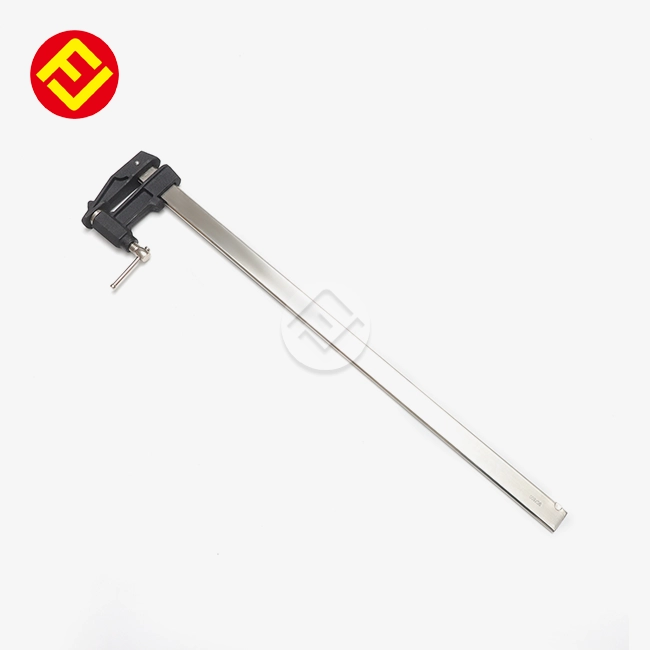
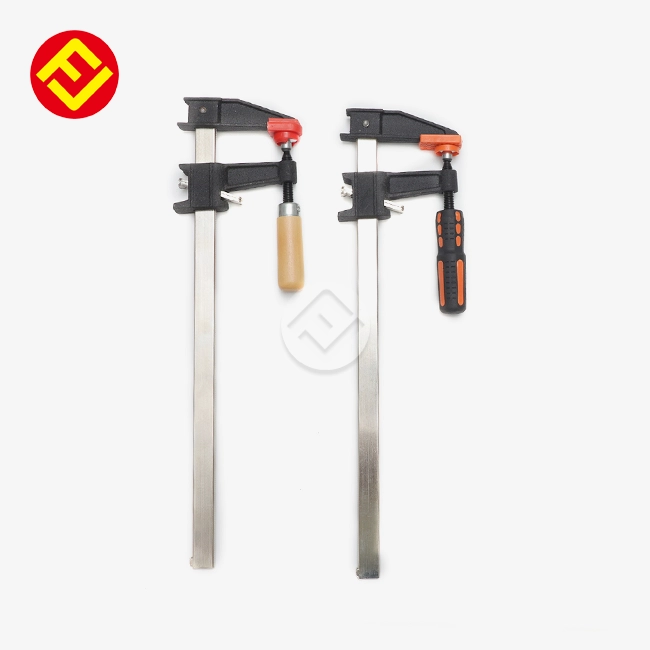
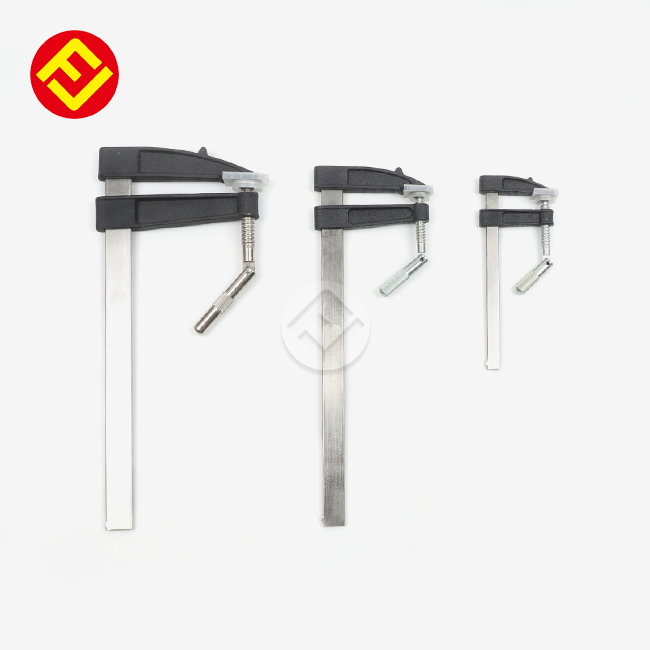
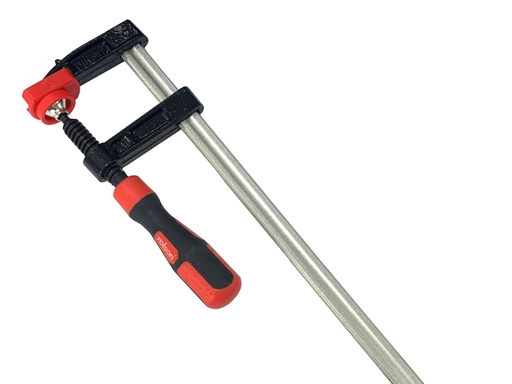
The American F-clamp is a specialized manual fastener with an F-shaped frame. This design has a fixed jaw at one end of a steel rail and a sliding jaw that locks into position with serrated teeth or friction. A threaded screw through the sliding jaw terminates in a swivel pad that presses the workpiece precisely as the handle turns.
Core Components and Construction
These tools have a frame construction, adjustment mechanism, and contact surfaces. An F-shaped frame is made of a flat steel rail and a perpendicular fixed jaw. Professional-grade jaw components are made of malleable cast iron, which has a higher strength-to-weight ratio than consumer-grade gray cast iron. The steel rail is forged and machined to provide smooth sliding jaw action. Precision-threaded, heat-treated screw rods transform rotational force into linear clamping pressure. Swivel pads at the screw's terminal uniformly disperse pressure across workpiece surfaces, reducing damage.
Manufacturing techniques greatly affect performance. Complex jaw body geometries improve gripping stability when cast. Forging helps steel rails withstand bending under strain. Machining maintains tight screw thread tolerances for smooth performance after extensive usage. Quality checks ensure thread engagement, jaw alignment, and sliding mechanism operation during assembly. ISO9001 certifies manufacturers' quality management systems throughout manufacturing.
Material Selection and Performance Impact
Durability, weight, and application compatibility depend on material composition, including the American F clamp. Heavy-duty applications benefit from malleable cast iron's shock absorption and high-stress resistance. For parallel jaw alignment during clamping, steel rails provide stiffness. Medium-carbon steel screw rods combine strength and machinability, and zinc plating or industrial paint finishes prevent corrosion in humid workshop conditions. Professional versions outperform budget models in harsh industrial situations due to these material choices.
Standard Dimensions and Industrial Relevance
The main specifications are throat depth and opening capacity. The clamp's reach on a workpiece depends on throat depth, which is the rail's inner edge to the screw centerline. Professional sizes include 80mm, 100mm, and 120mm depths, with some versions reaching 150mm. Opening capacity is the greatest distance between jaws when completely extended, usually 200mm to 600mm. Dimensions were adjusted to meet professional timber, sheet Products" target="_blank" style="color:blue" >products, and metalworking stock sizes.
Exploring the Different Types of American F-Clamps
Professional purchasers should comprehend the American F-clamp categories since each handles various operational issues. The categorization framework optimizes performance in specified applications by considering load capacity, dimensional parameters, and specialized design characteristics.
Standard-Duty Models for General Applications
Standard types are affordable and work well for clamping. A throat depth of 80mm to 100mm and an opening capacity of 200mm to 400mm are usual. Jaws are 60mm to 80mm wide, enough for most wood and light metal constructions. The clamping force is 250kg to 400kg, ideal for furniture assembly, cabinet installation, and regular woodworking without severe pressure. Malleable cast iron jaws and rolled steel rails provide reliable service in temperature-controlled workshops. Basic indoor corrosion protection is provided by the painted coating.
Heavy-Duty Variants for Strength-Intensive Tasks
Heavy-duty setups provide stability for demanding applications. Strong I-beam or thick rectangular profile rails prevent deflection under maximum load in these tools. For deeper workpieces, throat depths range from 100mm to 150mm. Large assemblies can fit through 600mm openings. Clamping pressure spreads across wider surfaces when jaw widths rise to 90mm to 120mm. Clamping force, frequently above 600kg and 1,200kg in premium versions, is crucial. Jaw racking and bar buckling during structural wood lamination or heavy metal production are prevented by this performance level. Construction site corrosion resistance is improved by zinc plating.
Lightweight and Portable Options
Operations that prioritize efficiency value portability without compromising functionality. American F clamp low-weight versions optimize jaw shape and reduce rail thickness to retain structural integrity. Opening capacities range from 150mm to 300mm, with throat depths of 60mm to 80mm. These tools are ideal for on-site cabinet setups and temporary workpiece fastening during measurement. The lower bulk reduces operator fatigue during extended usage, enhancing mobile work productivity. Quality versions deliver 200kg to 300kg of clamping force, enough for most woodworking tasks, despite their lighter build.
Specialty Designs and Hybrid Configurations
Unique versions meet particular needs via innovation. Combining F-clamp reach with quick-grip speed, quick-release devices use trigger-activated sliding jaws that reposition quickly without screw adjustment. Panel glue-ups and broad assemblies use bar clamp hybrids with openings above 900mm. Welding versions use all-steel handles and no rubber grips since plastic melts under heat. Removable jaw faces allow customisation for sensitive materials or unusual workpiece geometries. These customized tools handle operational issues regular designs cannot.
Comparative Analysis for Informed Selection
Selection is optimized by knowing strengths and weaknesses. Standard models are cost-effective for general-purpose inventories that perform the most regular operations. Performance in high-stress situations where tool failure causes costly downtime justifies heavy-duty versions' increased expenditure. Lightweight choices improve mobility and minimize strain in dynamic workplaces. Speciality designs solve special problems and deserve premium pricing. Procurement decisions should match tool capabilities to operational needs to minimize quality compromise and budget waste.
How to Choose the Right American F-Clamp for Your Business
Strategic selection includes weighing several aspects against operational needs. This methodical methodology assures procurement decisions boost productivity and cost-effectiveness when choosing the American F-clamp for your operations.
Evaluating Clamping Force Requirements
Application requirements determine holding power. For full joint closure, glue lamination takes 300kg to 500kg, depending on wood species and glue type. To maintain metal-to-metal contact against thermal expansion, welding setups need above 500kg of force. Composite material or cabinet component assembly works with 250kg to 350kg. Consider material qualities, joint design, and process-specific pressure demands when calculating force. Over-specifying loses money, while under-specifying lowers quality and risks tool failure.
Size and Dimensional Considerations
Depth must exceed workpiece edge to furthest clamping point. Wide tabletop glue-ups may need 120mm or more, whereas cabinet face frames need 80mm to 100mm. Opening capacity should fit the thickest expected workpiece plus jaw pad thickness and adjustment range. Measure your most frequent workpiece dimensions to find specification parameters. Consider future needs—slight oversizing is more adaptive than buying many specialized sizes for minor differences.
Material Properties and Durability Factors
Environment affects material choice. Construction sites need zinc-plated corrosion resistance, although climate-controlled workshops can use paint. To resist heat and splatter, welding requires all-steel structure. CNC machine setups benefit from severe rail serrations that limit clutch slippage. In shock-loading, malleable cast iron jaws function better. Assess your environmental and operational pressures to choose material grades and finishes.
Ergonomic Factors and Operator Efficiency
Tool comfort and adjustability impact productivity. Longer handles minimize effort but increase tool length, affecting leverage and torque. American style F clamp, swivel pads avoid binding and uniformly distribute pressure. Smooth thread action allows rapid, force-free changes. Weight matters in frequently repositioned applications. Tools tested in use reveal ergonomic concerns that specifications cannot foresee. Operator input helps determine long-term usefulness.
Comparative Analysis with Alternative Clamp Types
Each clamp category shines in certain situations. In tight places, C-clamps provide more force but lack throat depth for interior workpieces. Pipe Clamps may extend infinitely but have less alignment control. Hand screws work well with delicate materials but are weaker. Knowing where these tools excel shows when superior F-clamps are most valuable. Many activities benefit from diversified tool inventories, using each kind optimally.
Supplier Reliability and Brand Reputation
Established producers with extensive market presence and professional user adoption indicate quality. In challenging industrial situations, DeWalt, Bessey, Irwin, Stanley, and Milwaukee are known for reliability. Professional Asian manufacturers with ISO9001 certification increasingly offer equivalent quality at low prices. Supplier credentials are assessed by checking certificates, quality control, and technical support. For specialized operations, buying from manufacturers with tailored solutions and fast reaction times is important.
Bulk Procurement Strategies
Cost-effectiveness is greatly affected by volume buying. Model standardisation facilitates inventory management and operator training. Using estimated yearly usage to negotiate with suppliers gets better prices. Total cost of ownership includes unit price, durability, warranty coverage, and replacement frequency. Distributors supplying bulk purchasers should understand industrial procurement processes, offer flexible delivery timing, and give technical assistance throughout the purchase.
Maintenance and Safety Tips for American F-Clamp Users
Service life is extended by systematic maintenance of the American F-clamp, preventing operational failures that affect workpiece quality or operator safety. These standards are crucial in industrial settings where tool dependability affects production schedules.
Regular Inspection Protocols
Routine visual inspection detects problems before they fail. Burrs or deformity on jaw faces might cause unequal pressure distribution. See if rail serration wear affects sliding jaw lock dependability. Check screw threads for damage, debris, or rust that hinders adjustment. Make sure swivel pad rotation is free. Check cast iron components for fractures at the fixed jaw and other high-stress regions. Record inspection results to track degradation and forecast replacement.
Cleaning and Lubrication Best Practices
Collecting debris reduces performance and wear. Regularly wire brush rail serrations to remove wood dust, metal filings, and adhesive residue that hinders clutch plate engagement. Since lubrication promotes slippage, keep rail surfaces where the sliding jaw latches clean and dry. Wipe surplus light machine oil from screw threads to avoid dust. Avoid lubricating serrated rail parts to maintain jaw locking friction. Swivel pads and contact surfaces should be clean for smooth rotation and pressure distribution.
Safety Protocols and Proper Operational Techniques
Operator technique affects tool safety and durability. American style F clamp evenly distributes tension across workpieces to minimize twisting loads that damage components. Avoid unexpected pressure concentrations by slowly tightening screws across several clamps in glue-ups. Never overtorque—it destroys threads and jaws. Safety eyewear is needed while working high-tension clamps since failure might release energy. Avoid pinching fingers between jaws and workpieces. Hold the workpiece steady before clamping.
Troubleshooting Common Issues
The most common failure mode is thread damage. Cross-threading happens when operators force misaligned engagement; proper alignment before torque avoids this. Overtightening or using defective parts causes stripped threads—replace immediately. Impacts or unequal loads cause jaw misalignment, which requires replacement since straightening threatens structural integrity. Slipping jaws suggest worn rail serrations or polluted clutch surfaces; cleaning or replacement fixes it. Disassemble, examine, clean, and lubricate stiff screws to check for thread damage.
Storage and Handling Recommendations
Safe storage prevents environmental and unintentional damage. To avoid rail bending, store clamps vertically or horizontally on racks. To prevent corrosion, especially on painted surfaces, keep tools dry. To avoid jaw injury from nearby instruments, use separate clamps. Reduce quick-release spring tension by retracting sliding jaws to mid-position during storage. Store cast iron components away from collisions. Use tool checkout systems in shared workshops to track maintenance and condition.
Top-Rated American F-Clamps in 2024
Professional procurement decisions for American F-clamps are based on performance and user feedback. These industrial application suggestions are based on thorough durability, operational efficiency, and value proposition examination.
Heavy-Duty Models for Demanding Applications
Reinforced designs for harsh situations provide optimum holding strength for professional operations. The greatest heavy-duty variants have throat depths of 120mm to 150mm and opening capacities of 600mm. Using I-beam rail profiles that resist deflection under maximum load, these tools clamp over 600kg. Malleable cast iron jaws 100mm–120mm broad evenly transmit pressure over workpiece surfaces. Construction site corrosion protection is provided via zinc-plated coatings. Users report excellent performance in structural timber lamination, heavy metal fabrication, and rigorous assembly processes where tool failure causes substantial downtime.
Quality manufacturing warrants premium heavy-duty models' placement. Precision-machined screw threads remain smooth after thousands of cycles. Hardened steel clutch plates and aggressive rail serrations minimize slippage in high-vibration situations. Heat-treated parts withstand high-load deformation. Quality control checks dimensions and functionality before shipment. While initial investment exceeds typical models, prolonged service life and greater dependability decrease total cost of ownership in demanding professional situations.
Lightweight Options for Enhanced Mobility
Highly efficient and comfortable operations benefit from lightweight designs. Intelligent engineering, not poor construction, reduces weight in top models. Most woodworking and assembly applications use 80mm to 100mm throat depths and 300mm to 400mm opening capacity for standard workpiece size. Although lightweight, professional lightweight clamps like the American F clamp can clamp 250kg to 350kg for furniture, cabinet, and basic building work. Operator fatigue from repeated repositioning is greatly reduced by the less weight.
Users frequently report higher productivity in mobile workplaces. Cabinet installers appreciate adequate holding power and simple transit between installation sites. Complex glue-ups with several clamps lessen physical strain in woodworking. These tools are more efficient than heavy ones since they may be used alone. Indoor workshop conditions suit painted finishes, whereas construction uses zinc-plated finishes.
Purchasing Considerations for Bulk Buyers
Beyond unit specs, volume buying choices should include other aspects. Manufacturer warranties vary, but extensive warranties imply product endurance and safeguard against premature failures. For container-load purchases, international shipping logistics influence lead times and landing prices. Flexible delivery schedules help production planning and inventory management. Technical support during the buying process helps define specific setups and handle application issues.
Volume commitments provide tiered reductions in bulk pricing. Implementing standardized models streamlines inventory management, operator training, and maintenance. When typical setups don't meet your needs, partnering with bespoke manufacturers is critical. Assessing vendors' timeliness, technical experience, and manufacturing capabilities ensures purchase selections support long-term operational success rather than merely tool demands.
Conclusion
The right clamping tools affect professional operating efficiency, product quality, and cost management. When appropriately specified for throat depth, opening capacity, clamping power, and material construction, American F-clamps are flexible. The variety of models—from standard-duty for ordinary use to heavy-duty for high demands—aligns tool capabilities with operational needs. Regular maintenance extends life and ensures performance. Professional procurement should include supplier reliability, production quality, and total cost of ownership, not just unit pricing. This strategic strategy turns tool selection from regular purchase into competitive advantage by increasing productivity and reducing operational disturbances.
FAQ
1. What separates American F-clamps from quick-grip clamps?
American F-clamps use threaded screw mechanisms for accurate pressure control and stronger clamping force, 300kg to 1,200kg depending on type. Quick-grip clamps use trigger-operated mechanisms for quick placement but produce 150kg to 300kg of force. Screw-based mechanisms retain pressure throughout glue drying or lengthy activities, while quick-grip systems may relax. Traditional screws are preferred for high-holding force and long-term clamping. Rapid repositioning and quickness favor quick-grip tools above maximal power.
2. How can I choose the right throat depth for my applications?
Measure from the workpiece edge to the furthest clamping point. Jaw pad thickness and adjustability flexibility require 10mm–20mm margin. Cabinet face frames need 80mm–100mm depths. Many wide panel glue-ups require 120mm to 150mm. For adaptability, use a somewhat deeper throat as small clamps cannot reach interior workpiece sections regardless of opening capacity.
3. Can these clamps handle heavy metalworking?
Malleable cast iron and all-steel versions work well in metal manufacturing. Heat-resistant designs without plastic handles or rubber grips are needed for welding. Zinc-plated coatings resist cutting fluid and workshop humidity corrosion. Check standards for metal-to-metal contact clamping force, usually above 500kg for structural steel construction.
Ready to Source Professional American F-Clamp Solutions for Your Operations
Understanding requirements is key to choose the correct clamping tool, but execution requires a dependable manufacturer. FLA Industrial & Trading Co., Ltd. has over 40 years of expertise making professional clamping instruments, including the American F-clamp for demanding industrial applications. Our malleable cast iron and steel rail structure is durable, and ISO9001 accreditation ensures quality control throughout manufacture. Technical inquiries are answered within 24-48 hours, supporting your procurement timetable. As a recognized manufacturer supplying Fortune Global 500 partners, we understand professional customers' performance and logistical needs. Our technical team provides conventional setups or custom solutions for particular applications. Contact sales@flaindustrial.com to discuss your procurement needs, request comprehensive specs, or seek volume pricing.
References
1 .Industrial Clamping Technology: Materials, Design, and Performance Standards (Society of Manufacturing Engineers, 2022)
2. Hartmann, K. & Stevens, R. Professional Woodworking Equipment: Selection and Maintenance Protocols (Woodworking Industry Press, 2023)
3. Metallurgical Properties of Cast Iron in Tool Manufacturing: A Comparative Analysis (International Journal of Materials Engineering, Vol. 48, 2023)
4. Bennett, J. Construction Site Tool Management: Efficiency, Safety, and Durability Considerations (Construction Industry Publications, 2024)
5. Quality Management Systems in Hardware Manufacturing: ISO9001 Implementation Case Studies (American Society for Quality, 2023)
6. Thompson, M. & Liu, H. Global Manufacturing Standards for Hand Tools and Clamping Devices (International Trade Commission Technical Report, 2024)