Elevator Guide Rail Clamps: Top Brands for Safe & Precise Lift Installation
2026-07-15 10:34:25


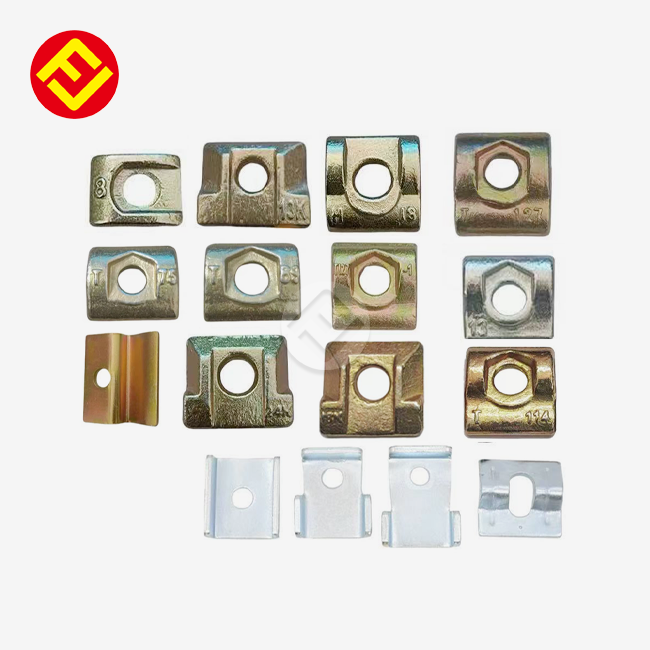
The quality of your fixation components has a direct effect on operating safety and ride accuracy when it comes to holding elevator guide tracks in vertical transportation systems. Elevator guide rail clamps hold the lift rails in place and absorb movements during normal use. At FLA Industrial & Trading Co., Ltd., we make precision-engineered clamps that meet international standards like ISO9001 and EN81 certifications. This makes sure that your setups are reliable, which is what modern building projects need.


Specification |
||
| Product Specification | Nominal Thread (M) | Nominal Length (mm) |
| 8K | 8 | 12-40 |
| 13K | 13 | 12-40 |
| 18K | 18 | 16-50 |
| 24K | 24 | 16-50 |
| 8K(12-40 Screw/Flat/Washer) Complete Set | 8K(12-40 Screw) | [12-40 Screw) |
| 13K(12-40 Screw/Flat/Washer) Complete Set | 13K(12-40 Screw) | [12-40 Screw) |
| 18K (16-50 Screw/Flat/Washer) Complete Set | 18K(16-50 Screw) | [16-50 Screw) |
| 24K(16-50 Screw/Flat/Washer) Complete Set | 24K(16-50 Screw) | 16-50 Screw) |
Understanding Elevator Guide Rail Clamps: Types, Materials, and Specifications
What Makes Guide Rail Clamps Essential Components?
Elevator guide rail clamps have two jobs that seem to be at odds with each other but work perfectly together. They keep the rails in a straight line to make sure the house travels smoothly, and they can also adjust for the steel tracks' thermal expansion and contraction as the temperature changes. Without properly designed clamps, rails can break in the summer heat or get out of line in the winter, which puts passengers at risk and makes them less comfortable.
It works by shifting weight from the rail to the mounting clamps and reducing movements caused by the roller guides interacting with each other. This stops noise from getting into the building structure, which is important for living and leisure settings where ride quality affects how people feel.
Comparing Clamp Types and Configurations
Different clamp types are used for different tasks. Fixed clamps allow for precise placing at specific anchor points. They are usually put in place at the base of rail stacks. These parts resist forces from both above and below, and they set the point of reference for the whole rail system.
Sliding clamps have springs or flexible materials inside that let you control how much they move up and down. This design takes into account temperature elongation in tall buildings, where steel lines can grow a few millimeters over hundreds of meters. The controlled movement keeps the structure stable on the sides and stops stress from building up.
The standards in our product line range from 8K to 24K and are compatible with T-profile trains such as T75, T89, and H18 types. Each standard has a different load capacity and rail size, so you can easily match them to the elevator capacity and trip height of your project.
Material Selection: Cast Steel Versus Cast Iron
The choice of material has a big effect on how well and how long a clamp works. Cast steel has a higher tensile strength, which means it can be used in high-load freight lifts and other places where big cargo loads in an uneven way. Because the material is flexible, it protects against impact forces during emergency stopping situations.
Because it is made up of graphite, cast iron, especially gray cast iron, is very good at damping vibrations. Because of this, it is better for passenger lifts in high-end living and business areas where noise reduction is important. Cast iron has a compression strength that is strong enough to handle the vertical loads that are common in passenger lifts.
Our elevator guide rail clamps are made with advanced casting, grinding, and forging techniques that make sure the dimensions are exact and the material is always the same. For better rust protection in damp places, hot-dip galvanizing is one way to treat the surface. For climate-controlled indoor shafts, quality paint finishes are another option. When you hot-dip galvanize something, a zinc layer is put on top. This saves the base metal even if the surface gets scratched during installation or maintenance.
Critical Specifications for Product Selection
The main specification is the load capacity, which is found by adding the maximum force that is predicted to be applied during regular operation to account for possible emergency situations. When it comes to jaw geometry, rail profile compatibility is important. For example, a clamp made for T89 rails might not fit T75 versions because the flange thickness is different, according to ISO 7465 rail names.
Specifications for corrosion protection for elevator guide rail clamps are especially important for sites near the coast or for outdoor lifts with views. Standard zinc plating is enough for shafts inside buildings, but Dacromet coats or construction from stainless steel are needed for shafts in sea settings to provide better security. Protocols for testing include salt spray tests that last longer than 72 hours to make sure the layer is still intact.
When needed, our full sets come with grade 8.8 nuts, flat washers, and spring washers to make sure that all of the parts work together as a single unit. This method gets rid of worries about compatibility and makes installation easier for your teams.
Choosing the Best Elevator Guide Rail Clamps for Your Project
Evaluating Load Requirements and Environmental Factors
To start analyzing a project, you need to know how fast and how many people your elevator can hold. When systems go faster than 4 meters per second, they create more dynamic forces when they speed up and slow down. This means that elevator guide rail clamps need to have higher load values. When heavy cargo enters the cabin off-center, it creates lateral forces that normal passenger lift clamps can't handle. This is called eccentric loading, and it needs to be taken into account in freight elevators.
The amounts of humidity, temperature ranges, and exposure to corrosive elements are all part of an environmental review. When it comes to problems, underground parking garage lifts are different from penthouse installs. For example, moisture buildup affects the rate of corrosion, and stable temperatures affect estimates for thermal expansion.
Different places have different rules about how to follow them, but EN81 is the most common European standard for lift safety parts. For projects that will be sold in the US, they should make sure they meet the requirements of ASME A17.1; for projects in Asia, they may use GB standards. Our EN81 license shows that we follow strict European safety rules that are used in many foreign markets.
Comparing Top Manufacturers and Brand Considerations
Some of the biggest names in the industry, like Thyssenkrupp, Otis, Schindler, Mitsubishi, and Kone, make their own clamp systems that are only compatible with their own elevator types. These brand-name parts are sure to work with each other, and they usually come with full technical help for installation. Proprietary systems, on the other hand, can make it harder to find parts and may take longer to get replacements.
Specialized companies like FLA Industrial focus on making high-quality parts that work with a number of different elevator types. Our way of making things focuses on precise measurements and consistent materials that meet or go beyond OEM standards. We have been making precise hardware for almost 40 years and sell parts to Fortune Global 500 partners who value quality and dependability.
Because elevator parts are used in safety-critical situations, the image of the brand is important. If an elevator guide rail clamp fails during operation, the rails could become out of line, which would make the house less stable. Documentation for certification shows that quality control systems and testing methods for Products" target="_blank" style="color:blue" >products are real. Our ISO9001 license shows that we have a method for controlling quality, from checking the raw materials to checking the finished product.
Material Durability and Maintenance Considerations
Lifecycle cost analysis looks at how much something costs to buy at first, how much it costs to maintain, and how long it lasts. Stainless steel elevator guide rail clamps cost a lot, but they last for decades in tough settings without rusting. When installed correctly, cast iron that has been properly galvanized is a great deal for normal uses and will last for 15 to 20 years.
Long-term costs are affected by how easy it is to do maintenance. For example, elevator guide rail clamps that need to be inspected or adjusted often will cost more in work over the elevator's active life. Our design theory puts an emphasis on making things easy to install and simple to maintain, because we know that many building managers have limited budgets and staff for upkeep.
Thermal expansion control with elevator guide rail clamps needs to be carefully thought out for high-rise uses. For buildings taller than 100 meters, you need sliding elevator guide rail clamps at the middle points and set points only at the bottom. This way, the rails can grow upward without putting too much stress on the alignment. This technical method, along with choosing the right elevator guide rail clamps, makes sure that the machine works smoothly even when the temperature changes with the seasons.

Installation and Maintenance Best Practices for Elevator Guide Rail Clamps
Systematic Installation Approach
Before assembly starts, preparation starts by checking the hoistway measurements, bracket placement, and rail storage conditions. Rails that are kept outside might have surface rust that needs to be cleaned, and the brackets need to be checked for straightness, which has a direct effect on where the end rail goes. Safety rules say that installation teams working in high shafts must have the right scaffolding, fall protection gear, and be able to talk to each other clearly.
There is a set order to the steps for installation. Brackets are attached to the building structure at set distances, usually every two to three meters, but this depends on the length of the rails and building rules. Specialized lifting tools are used to move the rails into place, and they are then briefly locked in place while alignment checks are done. Accurate measuring tools check the vertical alignment, horizontal placement, and distance between guide rails—information that is necessary for the house to work properly.
When installing an elevator guide rail clamp, you need to pay close attention to the force requirements. Fixed points get torque values that are estimated to make sure they are securely fastened without warping the rail flanges. Sliding points use controlled torque and spring washers or double-nut designs that let them move with temperature changes but keep them from coming loose from vibrations. Based on the clamp's specs and the installation conditions, our expert team gives you specific torque suggestions.
Scheduled Inspections and Preventative Maintenance
As part of regular elevator repair, which should happen every three months for high-traffic business installations or every six months for domestic ones, inspection procedures should be carried out. A visual inspection can show surface rust, bolt loosening, or signs of strange wear patterns that point to alignment problems.
As part of functional testing, the rail-to-clamp contact must be checked to make sure there are no holes that could let the rail move. For sliding elevator guide rail clamps, it's important to make sure that the temperature can move easily without getting stuck or putting stress on the train system. Some signs that it's time to replace something are obvious cracks in cast parts, corrosion that goes beyond the surface covering, or lasting deformation from overloading.
Documentation techniques help with following the rules and managing your risk. Maintaining records of check dates, findings, and corrective steps in maintenance logs creates a paper trail that shows proper care. This paperwork is useful for regulatory checks or if operational problems happen that need a root cause study.
Compliance Documentation and Quality Assurance
Safety standards require certain paperwork to be filled out during installation and for as long as the system is in use. Installation certificates show that the right steps were taken and that alignment standards were met through checks. Material approvals show where parts came from and make sure they meet certain grades and processes.
As part of our quality control process for elevator guide rail clamps, we check the dimensions of the material as it comes in, check the thickness of the layer on the surface after treatment, and put sample batches through load tests. Before being packed, every product goes through a final check to make sure that only parts that meet our standards get to your project site. This organized method, which has been proven by ISO9001 approval, gives you peace of mind that the parts will work as planned.
Procurement Process: Buying Elevator Guide Rail Clamps from Reliable Suppliers
Sourcing from Certified Suppliers
For B2B procurement to go well, providers must have manufacturing skills and quality processes that can be checked. When reviewing certificates, they should look at ISO9001 for quality control as well as product-specific ones like EN81 for elevator parts. For big projects with a lot of parts, site visits or checks by a third party can add extra peace of mind.
Our production site keeps 2,000 tons of standard elevator guide rail clamps in stock, which lets us ship quickly for common needs. This stock depth helps workers who need to repair things quickly and distributors who use just-in-time inventory systems. Custom specs usually deliver within 7–15 days of order confirmation. We can meet this deadline because we can schedule production well and machine parts quickly.
Advantages of Bulk Ordering and Sample Programs
By buying in bulk, you can save money on costs and make sure that the parts you use on multiple projects are all the same. Dedicated production runs that reduce setup differences are better for bulk orders because they offer tighter dimensional tolerances than mixed-batch manufacturing. Packaging made for transport to a building site protects parts during shipping and makes it easier for installation teams to get them.
Sample order tools let you check the specifications before committing to full amounts. By testing a sample elevator guide rail clamp, you can be sure that it will fit your specific rail shapes and bracket systems, that the surface finish is good, and that the documentation meets the needs of your project. This step for lowering risk is especially helpful when moving sources or asking for parts that aren't OEM.
Customization Options and Lead Time Optimization
Most jobs can be solved with standard stock items, but some need custom setups for specific rail profiles, mounting conditions, or better corrosion protection. Within 24 to 48 hours, our engineering team sends you 3D plans to look over, which lets you make changes quickly to finish the specs. The same quality controls are used for making unique elevator guide rail clamps as for regular ones, so the performance is always the same.
Lead time management is the process of coordinating the arrival of parts with the installation plans for a project. We keep in touch with you quickly and easily, sending you information on production and shipping that help you plan your tasks. We have experience sending goods to countries like the US, Germany, and Australia, so we know what paperwork is needed and the best way to ship things so they get to their destination on time.
Understanding Warranty Terms and Post-Sale Support
Warranty coverage for elevator guide rail clamps should cover problems with the way the product was made, but it should also be clear what doesn't cover problems with fitting or upkeep. Our normal warranty terms show that we trust the quality of our manufacturing, but they also recognize that the success of a component rests on how it is used and installed correctly.
Having access to technical help is important throughout the duration of a product. Support teams that are skilled can help with questions that come up during installation, making sure that future orders are clear on the specs, or fixing problems with performance. We answer questions within 24 to 48 hours and give advice that helps you get the most out of each elevator guide rail clamp and the success of your project.
Why Choose Industry-Leading Elevator Guide Rail Clamp Brands?
Value of Established Brand Reputation
Partnering with well-known makers gives everyone involved in the project trust. For example, building owners, contractors, and regulatory inspectors all like parts that come from sources with a history of reliability. A brand's image is based on the experience gained from thousands of installations, on making improvements based on how well the product works in the field, and on investing in technical resources that help the product grow.
We have agreements with Fortune Global 500 companies, which shows that big companies trust our production skills. These relationships grow when you consistently produce high-quality goods, provide helpful customer service, and charge fair prices that are within the budget of the project. Serving a wide range of businesses, such as construction, hardware delivery, and building materials, has helped us learn more about how different customers set goals.
Innovation Driving Future Performance Standards
As material science progresses, elevator guide rail clamp performance traits keep getting better. Ductile iron formulations have tensile strength similar to steel while still having the vibration-damping qualities of cast iron. Modern covering technologies protect against rust better than traditional galvanization, which is especially useful in harsh environments.
New designs focus on making installation easier and upkeep more accessible. Installing quick-mount methods takes less time and doesn't weaken the hold. Inspection windows in clamp bodies let you see if the rails are touching without taking the whole thing apart. Based on feedback from installation workers and support teams, these changes make things better in ways that go beyond basic functionality needs.

Conclusion
To choose the right fastening components for elevator guide rails, you have to weigh technical requirements, environmental factors, and lifetime costs against project timelines and budgets. Quality elevator guide rail clamps made from the right materials and with the right surface processes will last for decades, keeping passengers safe and making the ride more comfortable. Working with certified, experienced suppliers who offer expert help and a variety of ordering choices makes the buying process easier and lowers the risk of the project. When you combine tried-and-true production methods with strict quality control and helpful customer service, you get relationships that help with installations and ensure long-term reliability.
FAQ
Why choose cast iron guide rail clamps over forged steel alternatives?
Because it is made of graphite, cast iron is better at stopping vibrations, which means that noise from trains doesn't travel as far into buildings. This feature is necessary for high-end home and business setups where ride quality affects how happy people are in the space. The compression strength of grey cast iron is good enough for passenger elevators, and it doesn't make as much noise as forged steel does at the same price.
What torque specifications apply during clamp installation?
The amount of torque needed depends on the type of elevator guide rail clamp and whether the point is set or moves. Usually, the bolts are M12 or M16. To control the force for sliding setups, spring washers or double nuts are often used. These allow for thermal expansion while keeping the nuts from coming loose. Fixed places get more torque, which is determined to hit the yield strength of the material. Always look at the load charts provided by the maker to find exact numbers that match your rail profile and clamp model.
How can I prevent corrosion in humid elevator shafts?
Choose surface solutions that are right for the surroundings. Hot-dip galvanizing makes zinc coats that keep wetness out, which makes it a strong way to protect things in damp places. Dacromet coatings work better on sites that are near the coast and are subject to salt air. Standard paint finishes are only good for internal shafts that are climate-controlled. Check the coating's thickness against ASTM standards, and ask for proof of salt spray tests that go beyond 72 hours of contact.
Partner with FLA Industrial for Premium Elevator Guide Rail Clamp Solutions
For elevator installs to be done right, the parts must be precisely designed and long-lasting. FLA Industrial & Trading Co., Ltd. is a well-known company that has been making elevator guide rail clamps for almost 40 years. They offer fastening options that meet the highest international standards. Our cast steel and cast iron clamps go through strict quality control that is backed up by ISO9001 and EN81 standards. They are reliable enough for your projects. Whether you need standard specs to be shipped right away from our 2,000-ton inventory or unique configurations to be delivered in 7–15 days, our engineering team can meet your needs with quick communication and technical know-how. Email our team at sales@flaindustrial.com to talk about your needs, ask for samples of our products, or get full quotes. Hardware stores, builders, and construction workers from all over the US and other countries can buy from us because we have low prices and reliable supply lines that keep your projects on track.
References
International Organization for Standardization. (2015). ISO 7465:2015 - Passenger lifts and service lifts - Guide rails for lift cars and counterweights - T-type.
European Committee for Standardization. (2018). EN 81-20:2014 - Safety rules for the construction and installation of lifts - Lifts for the transport of persons and goods - Part 20: Passenger and goods passenger lifts.
American Society of Mechanical Engineers. (2019). ASME A17.1-2019/CSA B44-19 - Safety Code for Elevators and Escalators.
Smith, R.T. (2017). Elevator Mechanical Design: Third Edition. Elevator World Educational Services.
Strakosch, G.R., & Caporale, R.S. (2010). The Vertical Transportation Handbook: Fourth Edition. John Wiley & Sons.
National Association of Elevator Contractors. (2020). Guide Rail Bracket and Fastener Installation Standards: Industry Best Practices Manual.