Heavy Duty Straight Pipe Wrench Ensures Reliable Grip for Pipe Installations
2026-08-04 14:45:16


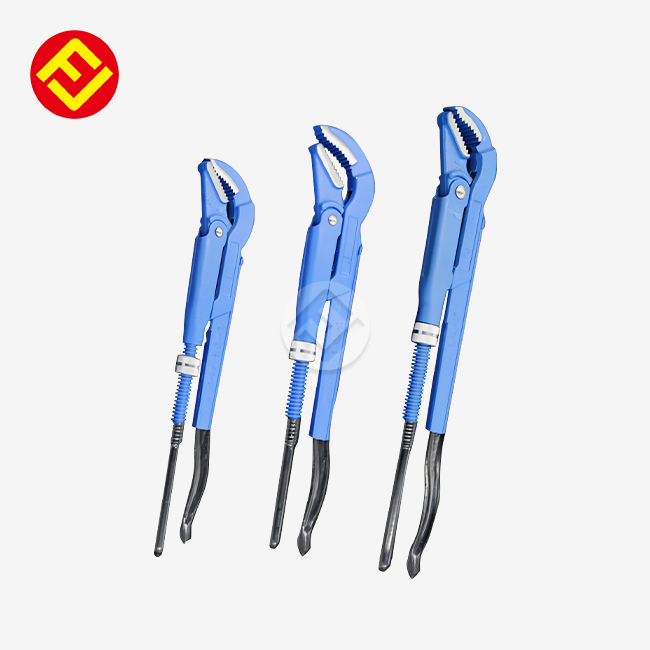
When it comes to pipe installations, achieving a secure and reliable grip can make the difference between seamless project completion and costly delays. A heavy duty straight pipe wrench serves as an essential tool in industrial environments where threaded pipes and fittings demand precise torque application under challenging conditions. Engineered with heat-treated jaws that bite deeply into metal surfaces, these wrenches deliver exceptional gripping power on round pipes while resisting slippage even when exposed to oil, grease, or moisture. The forged alloy steel construction ensures the tool withstands extreme forces without bending or breaking, making it indispensable for construction sites, plumbing operations, and industrial maintenance.

Specification |
||||
| Model | Total Length | Total Width | Maximum Opening | Product Weight |
| European Heavy Duty 10" | 24.5cm | 6.5cm | 5.5cm | 0.68kg |
| European Heavy Duty 12" | 27.5cm | 7.5cm | 6.5cm | 0.97kg |
| European Heavy Duty 14" | 31.5cm | 8.0cm | 8.7cm | 1.28kg |
| European Heavy Duty 18" | 40cm | 9.0cm | 9.5cm | 1.89kg |
| European Heavy Duty 24" | 51cm | 10cm | 11.0cm | 3.00kg |
Understanding Heavy Duty Straight Pipe Wrenches: Features and Functionalities
The performance features of professional-grade pipe tools have a direct effect on safety and efficiency in many fields. Knowing their design mindset helps buying teams make decisions that are in line with what the business needs.
Construction Materials That Define Durability
Premium pipe wrenches have housings made of ductile iron that meets ASTM A536 standards. This makes them more resistant to shock than options made of weak cast iron. The hook and heel jaws are made by forging chrome-vanadium or chrome-molybdenum alloy steel and then induction hardening them until they reach a Rockwell C hardness (HRC) rating of 55 to 60. This two-step process keeps the teeth from flattening when they grip hardened industrial pipes and keeps them tough enough to avoid chipping when they are hit.
The weight-to-strength ratio is maximized by the I-beam handle shape, which is a technical optimization. This arrangement uses less material without compromising the structure's strength, which lets the tool handle torque loads higher than 2,500 Nm on bigger models. Powder coatings with corrosion inhibitors are often used for surface treatments. These keep the iron substrate from rusting in humid storage areas that are common on job sites.
Heat Treatment Processes That Enhance Performance
A special kind of heat treatment does a lot more than just harden things. Controlled quenching and hardening processes are used by manufacturers to make the jaw teeth with a gradient hardness profile. The cutting edges get as hard as they can get so they can go deep, but the tooth roots stay flexible so they can handle shock loads without breaking. This level of metal knowledge explains why professional tools keep their sharp, rough tooth patterns even after years of use on rough pipe surfaces.
Different heat treatment methods are used on the adjustment device to make sure it works smoothly when it's under load. For quick jaw adjustment, the knurled nut must be able to spin easily but not come loose from vibrations during use. Good manufacturers put this balance to the test by testing it with static and suspension torque. This makes sure that the floating hook jaw keeps the right spring-back tension for ratcheting to work.
Ergonomic Design Elements That Reduce Fatigue
Long periods of pipefitting work put a lot of stress on the hands and wrists. These days, tools have textured, non-slip handle surfaces that keep users safe even when they are wearing gloves or working in oily circumstances. The length of the handle is directly related to the diameter of the pipe it can hold. This is because, according to engineering rules, the length of the wrench should be about eight to ten times the diameter of the pipe being worked on so that it can be used with enough force.
The shape of the handle also takes into account how the grip position changes during spinning cycles. A balanced center of gravity keeps the tool from feeling front-heavy when it is extended away from the body. This keeps the wrists from getting sore from doing the same thing over and over. Even though these changes may not seem like much, they add up to big physical benefits over the course of a job with hundreds of pipe connections.
Size Selection and Pipe Diameter Compatibility
To choose the right wrench dimensions, you need to match the tool's capacity to the size of the pipe. Most 18-inch wrenches can fit pipes up to 2 inches in diameter, and most 24-inch wrenches can fit pipes 2.5 to 3 inches in diameter. Quality wrenches have graduated markings that show roughly where the jaws open. This lets you check the size quickly without having to make a lot of adjustments. Knowing this sizing connection keeps you from choosing tools that are too small, which can cause your jaw to slip, or too big, which makes it hard to use in tight places.
Comparison With Alternative Wrench Types
Offset pipe wrenches, adjustable wrenches, and Heavy Duty Straight Pipe Wrenches are all very different from each other. When set up in a straight line, the jaw opening is parallel to the handle, which gives you the most power in an open area. Offset versions, on the other hand, work best in small spaces where the handle swing has to get around things. Adjustable crescent wrenches don't grip cylinder-shaped surfaces as well as pipe wrenches do because of their self-tightening cam action, which means that when force is applied, jaw pressure increases equally.
When working with finished pipes that are very delicate and tooth marks are not acceptable, chain wrenches and strap wrenches are useful tools, but they can't match the torque capacity of toothed jaw designs on threaded connections that need breakaway force to break decades of corrosion bonding.
How to Choose the Right Heavy Duty Straight Pipe Wrench for Your Business Needs
Strategically choosing the right tools means weighing their instant usefulness against their expected long-term costs and dependability. Structured evaluation systems that look at many choice factors at the same time are helpful for procurement pros.
Assessing Your Installation Scenarios and Pipe Materials
The type of pipe you have a lot to do with what tools you need. In oil and gas extraction facilities, drilling mud and corrosive agents need to be dealt with, so self-cleaning thread mechanisms are needed to keep jaws from locking up. This problem is solved by the moving hook jaw design, which lets dirt and other particles pass through the adjustment mechanism without building up in the tight tolerances.
Large black iron pipes with diameters between 2 and 6 inches are used in HVAC and steam fitting uses. These pipes are usually placed in hot places. In this case, the ability of ductile iron housings to withstand thermal shock is very important because it keeps tools from breaking when they go from hot pipe surfaces to room temperature. Standard adjustable pliers would slip on the rough tooth pattern that has to bite into long-used, hardened steam pipes.
During renovations and infrastructure repairs, it is common to have to take out steel main water lines or sewer cleanouts that have become stuck from rust over the years. In these situations, you need tools that can apply a lot of force to break rust bonds, which is a technical problem that weak wrenches can't do because their teeth get worn down or their handles bend. Understanding these application-specific needs helps with writing specifications during the buying process.
Evaluating Core Performance Metrics
The most important performance factor is grip reliability. With precisely polished tooth angles and proper jaw alignment, good tools should be able to bite right away without needing too much handle pressure. When evaluating a provider, asking for demonstration units to be tested in the field shows grip performance in the real world under site-specific situations much better than just looking at specification sheets.
Torque capacity is directly related to the length of the handle and the strength of the material. Professional-grade tools made for industrial use usually have safety factors that allow for occasional overloading situations that are much higher than the minimum proof load standards. This extra ability is important, especially for emergency repairs where it's hard to use controlled force.
When thinking about weight, you have to balance sturdiness with user tiredness. A 40–50% increase in weight means that tools made of ductile iron are heavier than tools made of aluminum. When going downwards, the extra mass helps apply torque through gravitational effects. However, lighter forms are better for work that is done above. The specifications for the purchase should take into account how work is usually set up in your business.
Supplier Capability Assessment and Partnership Development
Supplier relationships have an effect on the long-term success of procurement, not just product specifications. Companies like FLA Industrial & Trading Co., Ltd. that have been in the business for almost 40 years have proven they can keep up with quality management systems and new technology. Their ability to make more than 1,000 different product standards shows that they are flexible enough to meet unique needs and quickly fill orders for a wide range of SKUs.
When making a deal to buy in bulk, it's important to be careful and weigh the commitment to volume against the cost of keeping inventory. Suppliers who offer tiered discount systems like to see large orders because they keep their minimum order numbers low. When supporting ongoing construction projects where tool shortages cause costly downtime, delivery dependability and lead time consistency become even more important.
After-sales help includes things like warranty terms, the ability to get new parts, and professional support services. Reputable companies back up their goods with full guarantees that cover problems with the materials and the way they were put together. Access to application engineers is also very helpful because they can help you choose the best tools and fix problems with operations.

Maintenance and Safety Tips to Maximize Your Heavy Duty Straight Pipe Wrench's Lifespan
Proactive care protocols keep tools working at their best and extend their life. Structured repair programs save companies a lot of money because they cut down on the number of replacements needed and make workers safer.
Routine Cleaning and Lubrication Schedules
When using Heavy Duty Straight Pipe Wrenches in dirty or demanding environments, proper maintenance is essential to preserve gripping performance and extend service life. After each use, the jaw teeth of Heavy Duty Straight Pipe Wrenches should be cleaned with a wire brush to remove trapped debris that could reduce bite strength and affect secure pipe handling. Applying light machine oil regularly helps prevent rust on adjustment threads and ensures smooth jaw movement during operation. Avoid using heavy greases on Heavy Duty Straight Pipe Wrenches, as they can attract dirt and cause buildup inside the adjustment mechanism, reducing tool performance. A monthly deep-cleaning routine for Heavy Duty Straight Pipe Wrenches should include disassembly, solvent cleaning of individual components, and careful inspection for signs of wear or damage. Regular maintenance of Heavy Duty Straight Pipe Wrenches helps maintain reliable gripping force, improves workplace efficiency, and ensures long-term durability in industrial, plumbing, and construction applications. Choosing high-quality Heavy Duty Straight Pipe Wrenches from a trusted manufacturer also provides better performance consistency and reduced maintenance requirements over time.
Inspection Protocols and Wear Assessment
It is important to carefully check the teeth in your jaw for any softening, breaking, or rounding that could make it harder to hold on. When teeth lose their sharp edges and can't go through pipe surfaces anymore, they need to be replaced. Quality wrenches have pins that can be replaced in both the hook and heel jaws. This means that the housing can last forever because parts can be replaced instead of the whole tool being replaced.
Any bending, breaking, or covering wear should be found during handle integrity checks. To keep the jaws from moving while they're being used, the adjustment nut needs to be able to spin easily without getting stuck. To make sure the jaws are properly tightened and the ratcheting action works, spring mechanisms need to be tested. By writing down these checks, you can make maintenance histories that help you decide when to replace things and find bad usage trends.
Safety Practices and Proper Operating Techniques
When the wrench is in the right place, the jaw hole should be on the pipe and the handle should be facing the direction of the turn. If the wrench slips out of your hand, pushing instead of pulling lowers your risk of getting hurt. To get the right camming action that tightens the grip under load, make sure the pipe fits completely against the back of the hook jaw while leaving a small gap at the hook shank.
Handle extensions, which are sometimes called "cheater bars," cause forces that are higher than what was intended, which voids the manufacturer's warranty. Even though ductile iron construction offers some safety by gradually bending rather than breaking in a catastrophic way, companies should not allow this and should instead specify the right-sized wrenches for tough jobs. Following OSHA safety rules for using hand tools and getting regular operator training helps everyone in the workplace develop good habits.
Top Heavy Duty Straight Pipe Wrench Models of 2024: Performance Reviews and Procurement Insights
The Products" target="_blank" style="color:blue" >products on the market now show how designs are always changing and how the quality of production is always getting better. It's helpful for procurement teams to know how the competition is doing in different tool categories and with suppliers' skills.
Professional-Grade Options for Industrial Applications
Iron housings that meet Federal Specification GGG-W-651 Type II, Class A standards are mixed with cast alloy steel construction in the jaw assembly to make the best industrial wrenches. The very strong bite force of these tools comes from their precisely milled, aggressive tooth patterns that can cut through even the hardest pipe surfaces. An ergonomic handle design has textured, non-slip coatings that keep the user safe during long periods of use, which effectively lowers the buildup of operator fatigue.
Premium Heavy Duty Straight Pipe Wrenches feature advanced jaw opening mechanisms that can adjust to pipe diameters ranging from 1 inch to 6 inches, depending on the overall wrench length. This adjustable capability gives users greater flexibility on job sites and reduces the need to carry multiple tools for different pipe sizes. The versatile design of Heavy Duty Straight Pipe Wrenches allows operators to quickly change jaw settings between different pipe sections without replacing tools, improving efficiency and reducing downtime. In addition to basic hardening processes, high-quality Heavy Duty Straight Pipe Wrenches use specialized heat treatment and tempering methods to balance surface hardness with core toughness. This manufacturing process creates strong teeth that resist wear and maintain sharp gripping performance even after thousands of uses. Reliable Heavy Duty Straight Pipe Wrenches provide consistent torque transfer, excellent durability, and dependable performance for professional plumbing, construction, and industrial applications. Choosing properly engineered Heavy Duty Straight Pipe Wrenches ensures long-term tool reliability while helping workers complete demanding pipe installation and maintenance tasks more efficiently.
Mid-Range Solutions Balancing Cost and Performance
In the middle market group, there are tools that offer solid performance that can be used for general building and repair tasks. These wrenches usually have housings that are investment-cast instead of forging, which makes them stronger while also lowering the cost of production. The jaw parts are made of heat-treated carbon steel instead of high-end alloys. This makes the tools last longer for moderate-duty tasks while keeping the costs down.
On mid-range options, anti-slip handle treatments might not use advanced composite coatings but instead molded rubber overmolding or textured paint finishes. Even though these treatments don't last as long as premium surfaces, they provide good grip security in most working situations. Although the adjustment mechanisms work reliably, they may need to be oiled more often than precision-machined expensive options.
Evaluating Bulk Procurement Advantages
When negotiating for bulk purchases, there are more ways to add value than just lowering unit costs that should be looked into. Customizing the packaging helps keep tools safe while they're being shipped and makes it easier to store them when they get there. Mixed-size assortments let you get full tool sets in a single order that cover the width range you need for your work.
Longer warranty terms often come with bigger orders. They offer extra protection that lowers the cost of replacement over time. Some suppliers offer consignment inventory plans where customer facilities store tool stocks that remain owned by the supplier until they are used. This makes managing cash flow easier. When a project is rolled out in stages or demand changes with the seasons, delivery schedule flexibility is especially useful.

Industry Trends and Future Outlook for Heavy Duty Straight Pipe Wrenches
The industrial tool scene is always changing because of new manufacturing technologies and changing buying habits. Companies that keep an eye on these changes get a leg up on the competition by being the first to use new technologies and improve their sourcing strategies.
Advanced Material Development and Sustainability
New composite materials offer better strength-to-weight ratios and back efforts to be more environmentally friendly. Manufacturers are looking into bio-based coatings that don't contain heavy metals or volatile organic substances and still protect against rust. Using recycled alloy steel in the production of jaws has less of an effect on the environment and keeps the mechanical properties by using careful metallurgical control.
New developments in surface treatment include ceramic-enhanced coats that are very resistant to wear and chemical stability. When used in tough settings with corrosive or abrasive contaminants, these improved finishes make tools last a lot longer. The higher cost of these treatments at first usually pays for itself over time because they don't need to be replaced as often and don't need as much maintenance.
Ergonomic Innovation and User-Centered Design
Focusing on the comfort of the operator leads to improvements in the shape and material of the handle. Manufacturers use finite element analysis to find the best handle cross-sections that spread gripping forces evenly across hand-contact areas and reduce pressure spots that are uncomfortable. Turning things over and over again can be tiring, but new plastics with better sound damping properties can help.
Cutting down on tool weight by optimizing its structure gets rid of extra material in areas that aren't supporting anything, without weakening the power of the parts that are. This way of using computers to design makes organic shapes that look strange but have real-world benefits for your body. As of now, some manufacturers make tools with telescoping mechanisms that let the length of the handle be changed to fit the needs of the operator and the job.
Digital Procurement Transformation
More and more, B2B buying platforms make it easier to buy tools by streamlining digital processes. Online configurators make it possible to develop specifications by using guided decision methods that make sure the products will work with the intended uses. Real-time view of goods across supplier networks helps procurement teams figure out what items are available right away and how long they need to be ordered in order to plan production.
Just-in-time supply integration makes sure that tool shipments happen at the right time for each job. This cuts down on the need for on-site storage and the cost of keeping inventory. Digital paperwork systems make it easy to get product specs, safety data sheets, and upkeep instructions right away. Some forward-thinking suppliers use tool tracking technologies that look at how tools are used and guess what repairs will be needed, which helps with planning ahead for replacements.
Conclusion
To choose effective pipe installation tools, you need to look at a lot of factors, such as the building materials, how well they work, and what the seller can do. Heavy Duty Straight Pipe Wrenches with heat-treated alloy steel jaws and ductile iron housings give industrial applications the grip strength and durability they need. The right size for the pipe diameter and ergonomic design features make sure that the operator is safe and productive for long periods of time. Regular cleaning, inspection, and jaw replacement are all part of maintenance plans that make tools last longer and work better every time. Companies can stay ahead of the curve when it comes to buying the latest technology by keeping up with trends in material innovation and digital procurement. Strategic relationships with experienced makers give you access to high-quality goods, expert support, and flexible buying options that lower your total cost of ownership.
FAQ
What wrench size suits different pipe diameters?
When choosing a wrench, the rule of thumb is that the length of the tool should be about eight to ten times the width of the pipe. For a 2-inch pipe, an 18-inch or 24-inch wrench is usually enough to provide enough leverage without using too much force. For 1-inch pipes, 14-inch wrenches work well, but for 3-inch and larger pipes, tools that are 24 inches or longer are needed. Quality wrenches have graduated markings that help you make sure the jaws can open to the right size before you try to connect them.
How frequently should jaw maintenance occur?
For professionals who use their teeth every day, they need to be checked every month for chipping or flatness that could affect how well they bite. In dirty places, brushing the wire after each use keeps dirt and grime from building up. When teeth no longer have sharp edges that can safely grip pipe surfaces, you need to get a new jaw. High-quality designs let you change a single jaw by removing a pin, which greatly increases the tool's total life.
Do heavy duty wrenches outperform adjustable models for metal pipe work?
Heavy Duty Straight Pipe Wrenches have a self-tightening cam mechanism that grips cylindrical threaded pipes much better than adjustable crescent wrenches. When force is applied, jaw pressure goes up proportionally. This keeps the jaws from slipping during high-torque tasks. The rough tooth pattern cuts into metal, holding on securely even on rusted or oil-coated pipes where smooth-jaw adjustable wrenches would slip. Pipe wrenches are still the best tool for installing and removing threaded fittings.
Partner With FLA Industrial & Trading Co., Ltd. for Premium Pipe Wrench Solutions
Getting good tools from a dependable Heavy Duty Straight Pipe Wrench manufacturer has a direct effect on how well your operations run and how many projects you finish successfully. Industrial tool manufacturer FLA Industrial & Trading Co., Ltd. has been in business for almost 40 years and makes more than 1,000 different types of tools using cutting-edge technology and strict quality control systems. Our heat-treated alloy steel construction and ergonomic designs give you the grip strength and longevity your projects need. We also offer reasonable price structures that help you get the most for your money.
We know what performance standards are needed for demanding applications because our Fortune Global 500 partners trust us in both domestic and international markets, such as the US, Germany, and Australia. Our skilled staff will give you personalized advice on how to match the specs of the tools you need with your specific business needs, whether you need large amounts for distribution, custom packaging solutions, or a range of tools of different sizes for full sets. You can email our buying agents at sales@flaindustrial.com to get detailed quotes, set up product demos, or talk about bulk purchasing options that will help your bottom line and ensure reliable performance at every pipe connection.
References
1. American Society for Testing and Materials. (2019). ASTM A536: Standard Specification for Ductile Iron Castings. West Conshohocken: ASTM International.
2. Occupational Safety and Health Administration. (2021). Hand and Power Tool Safety Guidelines for Industrial Applications. Washington: U.S. Department of Labor.
3. Machinery's Handbook Editorial Staff. (2020). Machinery's Handbook: Guide to Materials, Heat Treatment, and Tool Design (31st ed.). New York: Industrial Press.
4. National Institute for Occupational Safety and Health. (2018). Ergonomic Guidelines for Manual Material Handling and Tool Use. Cincinnati: Centers for Disease Control and Prevention.
5. Federal Specifications and Standards. (2017). GGG-W-651: Federal Specification for Wrenches, Pipe and Tube (Type II, Class A). Washington: General Services Administration.
6. Tool Manufacturing Association. (2023). Industry Standards for Professional-Grade Hand Tools: Quality Benchmarks and Testing Protocols. Cleveland: TMA Technical Publications.