What Factors Matter When Purchasing Grooved Blind Flanges?
2026-08-04 14:45:24


When purchasing pipeline end closure components, the Grooved Blind Flange stands out as a critical decision for maintaining system integrity. Selecting the right terminal fitting involves evaluating material composition, pressure ratings, installation efficiency, and supplier reliability. Unlike traditional welded or bolted blind flanges, grooved end caps deliver rapid assembly through mechanical coupling systems, eliminating hot work permits and reducing labor costs by up to 70%. Understanding dimensional accuracy according to AWWA C606 standards, corrosion protection finishes, and compatibility with your existing piping infrastructure ensures leak-proof performance across fire protection, HVAC, and industrial processing applications. This comprehensive guide addresses the essential criteria that procurement managers, site supervisors, and MRO teams must consider when specifying these versatile piping components.


Specifications |
|||
| Nominal Diameter(mm) | Steel Pipe Outer Diameter(mm) | Nominal Pressure(MPa) | Unit |
| 50 | 60 | 2.5 | Piece |
| 65 | 76 | 2.5 | Piece |
| 80 | 89 | 2.5 | Piece |
| 100 | 114 | 2.5 | Piece |
| 125 | 140 | 2.5 | Piece |
| 150 | 165 | 2.5 | Piece |
| 200 | 219 | 2.5 | Piece |
Understanding Grooved Blind Flanges: Definition and Key Specifications
What Distinguishes Grooved End Caps from Traditional Blind Flanges
The way curved plumbing systems are designed changes how we think about how to end a pipeline. Instead of using threaded connections or welding, which need special tools and trained workers, the grooved method uses holes that have been carefully machined to accept mechanical joints. This new idea makes a strong, gasket-sealed joint that can handle a lot of pressure while still being easy to take apart for repair or system growth.
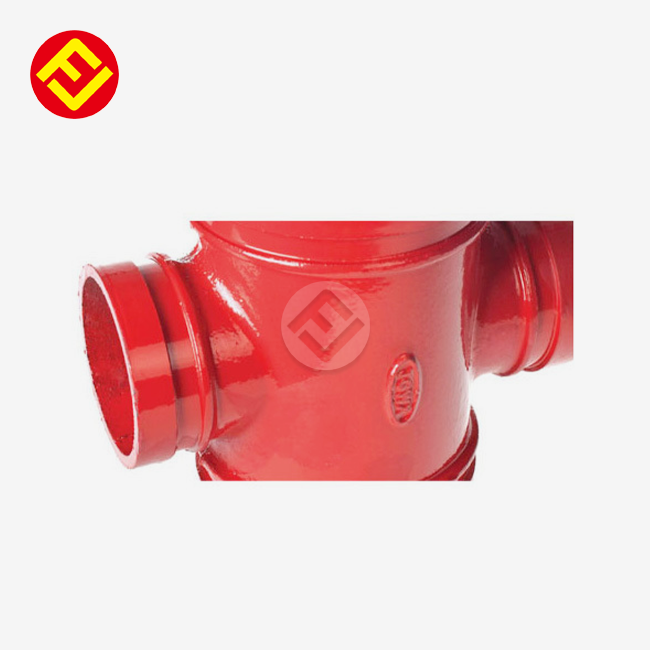
Grooved Blind Flanges serve as final sealing devices placed at the ends of grooved pipe sections. The part is made up of a solid disc made of ductile iron, stainless steel, or carbon steel that has a hole cut around the outside. This setup, along with a normal coupling, gasket, and fastening system, creates a seal that doesn't let air in or out, without the need for through-welds or big bolt patterns. When installing, the mechanical benefit is immediately clear: alignment problems that are common with flanged systems are almost completely eliminated, and assembly times drop by a huge amount.
Critical Dimensional Parameters and Pressure Ratings
Dimensional similarity tells you if your pipeline system will work reliably or fail in a terrible way. ANSI/AWWA C606 rules say that the groove shape has to stay within very tight limits. To make sure the gasket fits correctly in the coupling housing, the "A" dimension (groove diameter) and "B" dimension (groove width) need to be checked using calibrated go/no-go gauges. Even small changes of 0.5 mm can weaken the seal, allowing water to leak through or causing the whole thing to blow out when pressure is applied.
Different types of couplings and materials have very different pressure ratings. Standard grooved end caps can usually handle working pressures between 300 and 500 psi. Some heavy-duty styles can handle up to 1,000 psi. Most of the time, these values are higher than the 285 psi that ANSI Class 150 flanges can handle at room temperature. It is important to think about how the temperature affects the gasket materials when looking at pressure specifications. For example, EPDM works well in hot water up to 230°F, while nitrile rubber works well with oil-based fluids but breaks down above 180°F.
Common Industrial Applications and System Compatibility
Many different industries can use grooved termination systems because they are so flexible. These parts are used by water treatment plants as pipeline isolation points and future tie-in sites. Rapid installation is helpful for municipal distribution networks during emergency repairs that affect thousands of residents directly. Grooved Blind Flanges are used on standpipe pipes and test headers in fire protection systems. UL and FM approval makes sure that the codes are followed during checks.
With their rough slurries and corrosive poisons, mines work in some of the harshest environments. Maintenance windows are cut from hours to minutes when pieces of pipe can be removed and rotated without cutting equipment. This has a direct effect on production costs. Because grooved systems are naturally flexible, they can adapt to changes in temperature in commercial buildings. This keeps stress fractures from happening, which can happen with rigidly welded terminations. Chemical processing plants like the "cold work" benefit because it means they don't have to follow as many safety rules and stop processes.
Critical Comparison: Grooved Blind Flanges vs Other Blind Flange Types
Installation Speed and Labor Requirements
For grooved construction, you only need simple hand tools and not much training. The process includes cutting the pipe into a square shape, using a roll grooving tool or a cut grooving machine to make the groove, placing the gasket and housing pieces, and then tightening the nuts to the right level. No matter what size pipe it is, most techs can finish the job in 15 to 20 minutes. When working on big projects, the difference in labour costs gets bigger. For example, grooved methods cut the time needed to weld 100 connections from 500 hours to about 35 hours.
Sealing Performance and Maintenance Accessibility
Long-term running costs are determined by how well seals work at stopping leaks and making sure systems are available. Welded blind flanges offer a permanent seal with high pressure capabilities, but they become a problem when access needs to be gained. Cutting out a welded cap and putting in a new one takes a lot of time and wastes a lot of material. Bolted flanges can be removed, but the torque needs to be checked regularly because the joint becomes looser as the bolts rest over time. This means that re-tightening is an ongoing maintenance job.
Through a designed seal shape, the grooved coupling gasket design takes care of both issues. When there is pressure inside the housing, the C-shaped rubber profile deforms against the walls, making a pressure-assisted seal that works better when the load is increased. Because they self-energize, gaskets stay in place without having to be checked for pressure on a regular basis. It's still easy to take apart: just loosen the screws and separate the housing halves, and the pipe end is right there for inspection or modification.
Performance Limitations and Application Boundaries
The right specification is based on knowing where grooved systems work well and where they have problems. Extreme temperatures can be hard on elastomer gaskets. Long-term contact above 250°F breaks down normal compounds, so special high-temperature elastomers are needed, which raises the cost of the parts. To keep things from collapsing under negative pressure, vacuum services need flush-seal gasket designs instead of standard shapes. Even though it's harder to install, welded construction may be needed for highly acidic media or steam uses above 300 psi.
Possible also depends on the size of the pipe. When the width is between 2 inches and 24 inches, grooved systems are most common. This is because mechanical connections save money and improve performance. When the hole is less than 2 inches, threading is often more useful. When the pipe is longer than 24 inches, the connection gear gets heavy, and flanges that are welded or bolted together may be a better deal. It's also important to think about the structure. Grooved joints let the structure bend and move in a straight line, which is good in earthquake areas but could be a problem when stiffness is needed.

Material Selection and Quality Standards: Ensuring Long-Term Performance
Ductile Iron: The Workhorse Material
Because of its unique composition, ductile iron has changed the way pipe parts are made. Grey cast iron has graphite flakes that cause stress concentration points. Ductile iron, on the other hand, has spheroidal graphite nodules that form when magnesium is added during casting. This change in the metal's structure gives it a tensile strength of over 65,000 psi and an elongation value of about 12%. This gives it impact resistance that stops catastrophic brittle failure.
When looking at ductile iron Grooved Blind Flanges, make sure they meet the requirements of ASTM A536 Grade 65-45-12. It says the minimum tensile strength (65 ksi), yield strength (45 ksi), and elongation rate (12%) in the grade classification. If the nodularity is above 90%, the graphite spheroids will rule the microstructure instead of flake forms that have broken down. It is important to make sure that the carbon content is between 3.2 and 3.8%, the silicon content is between 2.2% and 2.8%, and the amounts of phosphorus and sulphur are kept under control to keep the material from becoming weak. Each batch we make at FLA Industrial & Trading Co., Ltd. goes through spectrographic testing before it can be put into production. This makes sure that the materials have properties that can stand up to tough service conditions.
Corrosion Protection: Painted vs Galvanized Finishes
Surface cleaning has a direct effect on how long something will last in different environments. Standard alkyd enamel coats, like red or orange paint, are good enough to protect things in controlled indoor settings with low humidity. The coating is usually between 2 and 3 mils thick and protects against mild atmospheric corrosion. When installing parts inside heated buildings, projects that want to save money often choose painted finishes because they cost less to buy at first.
According to ASTM A153 standards, hot-dip galvanisation makes a zinc layer that is metallurgically bound and about 3.5 mils thick. Through cathodic protection, this barrier protection system keeps the zinc layer while keeping the base iron foundation. Galvanised parts work great in outdoor locations, underwater vaults, places near the coast where they will be exposed to salt spray, and places that need to be cleaned with water and soap. The zinc layer can stand up to rough cleaning chemicals and long-term contact with water, which would quickly damage painted surfaces. Total cost of ownership calculations over a 20-year design life often show that galvanised protection is cheaper in the long run, even though it costs more up front. This is because it needs less maintenance and replacements.
Regulatory Compliance and Certification Requirements
Product approvals show that the methods used to make a product meet established quality standards. If a company has ISO9001 certification, it means that they follow strict quality management procedures that cover things like design control, process validation, inspection protocols, and systems for correcting problems. This system makes sure that the dimensions are always correct and lowers differences between production batches.
The CE mark shows that the product meets European standards for health, safety, and the environment. CE certification isn't always required by law for exports to the US, but it does show that the company has had their Products" target="_blank" style="color:blue" >products tested by a third party and keeps technical records to back up their performance claims. Extra certifications from UL (Underwriters Laboratories) and FM Global are especially important for fire safety uses where mentioned parts are required by insurance companies. AWWA conformance makes sure that the system works with local water infrastructure standards, which is very important when taking on public works projects.
Installation and Maintenance Guidelines for Grooved Blind Flanges
Proper Pipe Preparation and Groove Formation
Preparing the pipes correctly is the first step to success. To avoid gasket tension flaws that lead to leaks, the cut must be straight or within 1-2 degrees of being perpendicular. You can use grit saws, band saws, or specialised pipe cutters to cut the pipe. If you're cutting thin-wall pipe, don't use a torch because the heat will change the groove dimensions. Use a file or deburring tool to get rid of burrs and sharp edges after cutting. When gaskets are installed, sharp edges cut them, making leak paths that can't be seen until the system is pressurised.
For groove creation, you need to pay attention to the manufacturer's instructions for your connection system. For roll grooving, a powered machine with opposite wheels cuts the line without taking any material away. This method keeps the full width of the pipe wall and makes grooves that are smooth and round, perfect for closing with a gasket. Cut grooving machines use rotary cutting wheels to remove a thin band of material. These machines are good for thicker-walled pipes where the smaller cross-section doesn't affect the structural requirements. Always use special gauges to measure the final groove dimensions—a visual inspection can't pick up on the small differences that stop the coupling from engaging properly.
Assembly Sequence and Torque Specifications
Positioning the gasket is the first step in making sure there are no leaks. Place the seal on the end of the pipe and make sure it fits completely into the groove without folding or bending. The seal lip should go all the way around the pipe without any gaps. Use the coupling manufacturer's suggested oil on the gasket's outer surface. Using the wrong lubricant could cause the gasket to swell or break down over time.
Place the coupling housing segments around the gasket, making sure that the bolt holes are lined up and that the housing keys, if they are present, fit correctly into the gasket profile. Tighten the bolts or nuts until they are finger-tight, then tighten them in a star pattern to spread the clamping force out evenly. Use a calibrated torque wrench to get the torque value that was given. For small diameters, the torque value should be 75 ft-lbs, and for larger sizes, it should be 125 ft-lbs. When you overtighten, the body and seal get distorted. When you undertighten, the gasket can come out under pressure. Some manufacturers suggest a torque verification check after the first pressurisation. However, grooved systems usually don't need to be re-tightened as often as fixed flanges do.
Inspection Protocols and Preventive Maintenance
The best way to keep grooved pipe systems in good shape is to look at them visually. Check for gasket extrusion (rubber that sticks out beyond the coupling housing), corrosion on painted surfaces, and signs of coupling distortion every three months. These inspections are also important for components such as a Grooved Blind Flange, where proper sealing and connection integrity help prevent leakage and system failures. On rigid coupling designs, the housing pieces should keep metal-to-metal contact. Gaps in the contact show that the parts were not installed correctly or that the internal pressure went above the design limits.
Finding leaks around grooved joints usually means finding small leaks rather than major failures. This lets you know early on when the seal is breaking down. If there is a leak, let the system's pressure drop, loosen the coupling, look for cuts or tension set in the gasket, and make sure that rust hasn't changed the groove dimensions. Regular upkeep includes replacing the gaskets because elastomers lose their flexibility after years of being compressed and stretched and being exposed to chemicals. In FLA Industrial & Trading Co., Ltd.'s quality control tests, gaskets are put through procedures that speed up the ageing process. However, outdoor conditions are different, and gaskets should be replaced every 5 to 7 years for the best performance. As long as they are kept from rusting, the coupling housing and blind flange usually hold up forever.

Procurement Considerations: Buying and Supplier Selection Guide
Analyzing Total Cost Factors Beyond Unit Pricing
When buying something, if you only look at how much each unit costs, you might miss some high hidden costs. Transportation costs change depending on the price of fuel and the distance of the shipment. For example, local suppliers may be able to offer faster delivery at lower total landed costs than faraway sources with lower unit prices but longer lead times and higher freight. Minimum order quantities affect how much working capital is needed and how warehouse space is used. When suppliers set high MOQs, buyers have to keep extra inventory on hand, which ties up cash and creates the risk of obsolescence when specifications change.
Customisation is very important for complicated projects that need non-standard sizes or pressure ratings. Companies that have their own engineers and flexible production systems can change standard designs or come up with completely new ones. This flexibility keeps projects from being held up while off-the-shelf parts are being modified to fit specific needs. Actual costs are also affected by payment terms and volume discounting systems. For example, net-60 terms are better for cash flow than net-30 terms, and tiered pricing encourages buying from fewer suppliers.
Supplier Evaluation: Certifications and Manufacturing Capabilities
Systematic evaluation is needed to tell the difference between reliable makers and average sellers. Production ability tells you if a seller can grow to meet your needs during busy times. Facilities that handle 2,000 tonnes of stuff every year show a lot of skill and investment in infrastructure. It doesn't matter what kind of manufacturing technology is used—old casting methods cause more flaws and differences in size than new automatic systems with statistical process control.
Quality management certifications, such as ISO9001, provide written proof of structured quality procedures. However, certification by itself does not guarantee performance. For recent production runs, ask for inspection reports that include data on measuring accuracy, results of pressure tests, and material certifications. Reputable makers check the whole casting visually and pick random samples for hydrostatic shell testing at 1.5 times working pressure to find any flaws or holes that can't be seen on the surface.
Excellent sellers are different from basic parts vendors because they offer technical help. Quick quotes from engineering teams within 24 to 48 hours, 3D CAD models for design proof, and application advice all speed up project development. When problems arise during installation or operation that were not expected, having knowledgeable support resources on hand saves time and money while problems are being fixed.
Strategic Sourcing and Making the Supply Chain More Resilient
Cost optimisation and continuous risk must be balanced in order to make the supply chain more resilient. Single-source procurement gets you the biggest discounts for buying in bulk and makes managing vendors easier, but it leaves you open to problems if that supplier has production interruptions, quality problems, or limited capacity. Dual-sourcing methods divide the amount of goods bought between two or more sources, keeping a backup supply while using competition to get the best prices.
Positioning strategies for inventory depend on how often parts are used and how long it takes to get them. For standard sizes that are used a lot, vendor-managed inventory programs can help because the seller keeps consignment stock at your site. This makes them more available without you having to spend money on new inventory. Items that are made to order or don't sell very often may need longer planning spans and extra stock to cover supply gaps. Setting up framework agreements with qualified suppliers lets you negotiate prices, quality standards, and delivery terms ahead of time. This lets you buy things quickly through release orders instead of going through endless bidding cycles.
Conclusion
To choose the best Grooved Blind Flange, you have to weigh the technical specs, the material's properties, the fitting needs, and the supplier's abilities. Building with ductile iron that meets ASTM A536 standards gives it great strength and resistance to impact for most uses. The right surface treatment with galvanisation protects against corrosion in harsh environments. Knowing the AWWA C606 standards for dimensional limits and the pressure ratings that are right for your system will help you avoid expensive failures and make sure that it will work well for a long time. The mechanical coupling fitting method is much better than the welded or threaded options in terms of labour efficiency and ease of servicing access. Tough seller evaluations that look at certifications, quality control methods, and expert support skills protect procurement investments and keep the supply chain running.
FAQ
What pressure ratings should I specify for grooved blind flanges in municipal water systems?
The normal pressure for municipal water distribution is between 80 and 150 psi. However, surge pressures can reach 200 psi when pumps cycle or valves close. To give yourself enough of a safety margin, choose grooved end caps that can handle 300 psi of working pressure. Make sure that the class of the coupling system meets the pressure that the flange can handle. Couplings that are too small make the unit weak. You might want to use water hammer analysis on systems with fast-moving valves or long horizontal runs where pressure spikes are bigger than what static estimates can handle.
Can grooved blind flanges accommodate pipeline expansion and contraction?
The design of the coupling allows an angle of deflection of about 1-2 degrees and can handle thermal expansion because of the way the gasket compresses. This adaptability is useful in situations where the temperature needs to change or where there is earthquake movement. Instead of depending only on the grooved joint's natural ability to move, rigid systems that need to be perfectly aligned should use expansion joints or flexible couplings in key spots.
How does galvanized coating affect dimensions and coupling compatibility?
During hot-dip galvanisation, a zinc covering of about 3.5 mils is added to all surfaces, even the grooves. When good makers machine the metal, they take this thickness into account. This makes sure that the groove shape after galvanising meets the standards set by AWWA C606. Always make sure that galvanised parts list their post-coating dimensions instead of their base metal dimensions to make sure that they will fit together correctly and that the gaskets will seal properly.
Partner with FLA Industrial & Trading Co., Ltd. for Premium Grooved End Cap Solutions
If you don't choose the right Grooved Blind Flange supplier, your projects will either run smoothly or have costly delays and quality problems. FLA Industrial & Trading Co., Ltd. has been making specialised parts for pipelines for almost forty years and has advanced casting and milling facilities that keep tight limits on sizes and surface finish consistency. Before they can go into production, all of our ductile iron parts are put through a lot of tests, such as spectrographic analysis and mechanical property checks, to make sure they meet ASTM A536 standards.
We keep a large inventory—over 2,000 tonnes of standard sizes from 50 mm to 200 mm—so we can ship right away for urgent needs without the long lead times that come with making things to order. Our engineering team gives custom specifications the most attention and sends quotes, weight calculations, and 3D designs within 24 to 48 hours. Dimensions and combinations that aren't common are put into production within 7-15 days, meeting the specific needs of your projects.
Whether you're looking for a single replacement part or want to buy a lot of them for big construction projects, our order policies are flexible enough to accommodate any volume. Our ISO9001 and CE certifications show that we follow the rules and have good quality management systems. This is the proof you need for project specs and insurance purposes. Get in touch with us at sales@flaindustrial.com to talk about your specific Grooved Blind Flange needs and find out why Fortune Global 500 companies choose FLA Industrial & Trading Co., Ltd. as their preferred manufacturer of malleable iron pipe fittings.
References
1. American Water Works Association. (2020). AWWA C606 Standard for Grooved and Shouldered Joints. Denver: AWWA Publications.
2. ASTM International. (2019). ASTM A536: Standard Specification for Ductile Iron Castings. West Conshohocken: ASTM Technical Publications.
3. National Fire Protection Association. (2021). NFPA 13: Standard for the Installation of Sprinkler Systems - Grooved Piping Components. Quincy: NFPA Standards Division.
4. Victaulic Company. (2022). Grooved Mechanical Piping Systems: Engineering Handbook and Installation Manual. Easton: Victaulic Technical Publications.
5. Smith, Richard K. (2018). Piping Systems Manual: Material Selection, Installation Methods, and Performance Testing. New York: McGraw-Hill Professional Engineering.
6. International Organization for Standardization. (2021). ISO 9001:2015 Quality Management Systems - Requirements for Manufacturing Industries. Geneva: ISO Central Secretariat.
YOU MAY LIKE