How Can a Customized C-Clamp Solve Unique Industrial Fixture Requirements?
2026-08-24 10:18:56


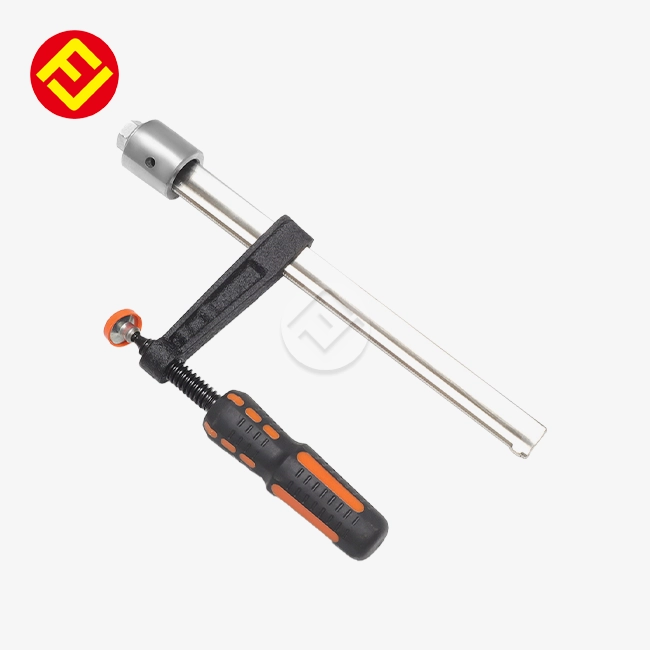
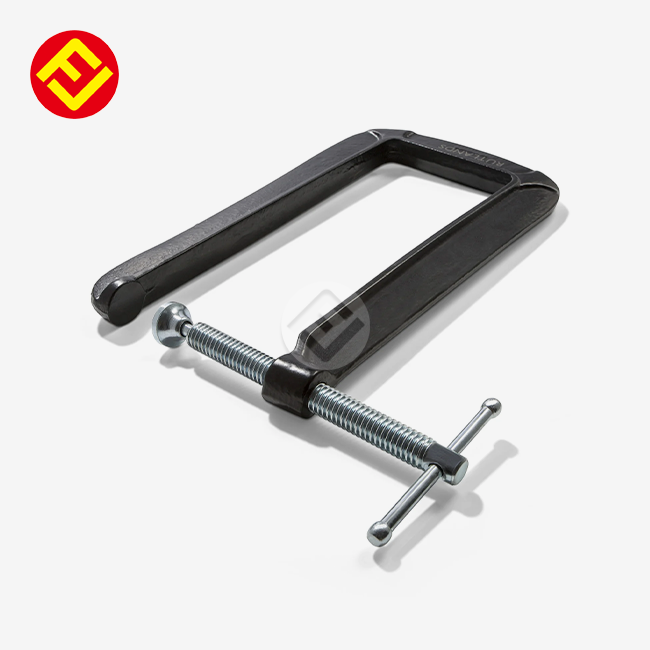
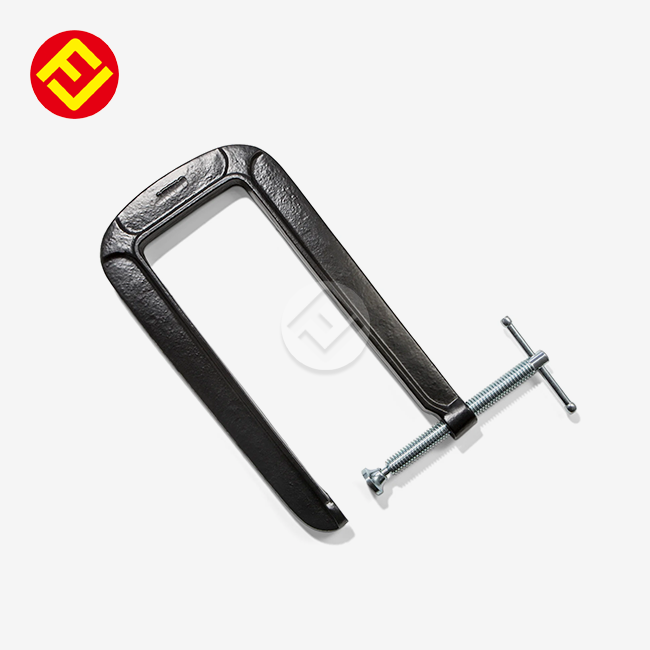
Customized C-Clamps directly address industrial fixture requirements by offering tailored throat depths, specialized swivel pad configurations, and enhanced structural integrity that standard clamps cannot provide. Through precise engineering modifications—including adjustable clamping force, non-marring surface protection, and corrosion-resistant finishes—these tools solve critical challenges such as gripping irregular workpiece geometries, securing delicate materials without damage, and maintaining alignment under demanding conditions across woodworking, metalworking, and fabrication environments.


Specification |
|||
| Specification | Depth(mm) | Maximum Opening (mm) | Overall Dimension(mm) |
| 1 Inch | 28 | 25 | 75x45x12 |
| 2 Inch | 33 | 58 | 115x53x18 |
| 3 Inch | 65 | 86 | 170x95x25 |
| 4 Inch | 70 | 110 | 204x106x28 |
| 5 Inch | 80 | 140 | 245x115x28 |
| 6 Inch | 85 | 160 | 275x120x28 |
| 8 Inch | 105 | 220 | 330x150x30 |
| 10 Inch | 105 | 260 | 375x155x30 |
| 12 Inch | 115 | 310 | 440x170x33 |
Understanding Customized C-Clamps and Their Industrial Role
For industrial tasks, clamping solutions need to go beyond standard requirements. A Customized C-Clamp is very different from regular ones because it is carefully designed by engineers to fit specific fixture profiles, load conditions, and environmental factors that standard tools can't handle.
What Makes Customized C-Clamps Different?
Standard clamps have fixed throat depths and spindle designs. Custom-engineered models, on the other hand, use iterative CAD modeling and material analysis to change the C-frame structure. At FLA Industrial & Trading Co., Ltd., we use precision casting and machining to make clamps out of high-quality cast iron and steel, making sure that every unit meets ISO9001 standards. Our manufacturing skills let us change the throat opening, spindle thread pitch, and frame reinforcement, all of which are important when we need to secure parts with surfaces that aren't parallel or get to them in hard-to-reach places during assembly.
Types of Customization Available
Adjustable frames vs. fixed frames, screw-type vs. quick-release systems, and lightweight designs vs. heavy-duty builds are some of the ways that frames can be customized. Choosing the right material depends on the job. For example, drop-forged steel has a tensile strength of over 65,000 PSI, which is great for metalworking. For outdoor building sites, finishing like powder coating or electroplating keeps the steel from rusting. Hardware distributors need a wide range of SKUs with uniform quality, while makers of woodworking tools need precision-ground swivel pads that spread pressure evenly across thin veneers without leaving marks.
Cost Efficiency Through Precision Engineering
Long-term operating costs are lower when you buy custom locking tools. Standard clamps often damage the workpiece or need extra protective materials, which drives up the cost of the project. Custom solutions get rid of these wasteful practices by building safety features right into the tool itself. For example, polyurethane-capped swivel pads are used for hardwood, and brass touch surfaces are used for polished metals. Production engineers like this method because it cuts down on waste and rework while keeping quality high across all production runs.
Identifying Unique Fixture Challenges and How Customized C-Clamps Provide Solutions
Industrial fixtures frequently present obstacles that generic clamping equipment cannot overcome effectively. Holding solutions that are designed to handle complicated shapes, different thicknesses of materials, and tight tolerances are needed.
Challenge: Insufficient Grip on Irregular Surfaces
Standard clamp jaws often slip or don't hold pressure on tapered beams or angled joints that builders come across. Customized C-Clamps solve this problem by changing the jaw shapes. For example, V-groove configurations keep cylindrical lines stable, and longer contact pads can handle areas that aren't perfectly flat. Our engineering team at FLA Industrial uses 3D modeling to look at your fixture specs and make sure that the clamp design fits the exact shape of your item.
Challenge: Material Damage During Clamping
Furniture makers are always under pressure to keep finished pieces' surfaces from getting scratched. Standard steel swivel pads can damage softwoods or scratch decorative finishes, which can be very expensive. Custom clamps fix this problem by including extra-large silicone pads that level themselves. These pads spread the clamping force over larger areas, lowering the PSI at the contact points. Electrical utility companies also benefit from shielded spindle designs that keep current from moving during high-amperage welding, which keeps the tool and the user safe.
Challenge: Misalignment and Stability Issues
When welding structural parts together, metalworking shops need to be very precise about where the parts are placed. Standard clamps with shallow throat depths can't reach deep into frame parts, so workers have to use more than one tool and run the risk of mismatch. Custom throat extensions of up to 18 inches give you the reach you need, and the strengthened I-beam frame construction keeps it from twisting under load. This was proven by Finite Element Analysis (FEA) during the design process. When procurement engineers move from normal clamping tools to tools made just for the job, productivity goes up by 20 to 30 percent.

How to Choose the Right Customized C-Clamp for Your Industrial Needs
Selecting appropriate clamping equipment requires systematic evaluation of operational parameters and performance criteria. The total cost of ownership and precise requirements must be balanced by procurement managers.
Assessing Your Application Requirements
Record the fixture's features, including the size of the object, the type of material it's made of, the binding force that's needed, and how often it will be used. A Customized C-Clamp designed for fast cycle times, such as those used in wood cabinet manufacturing, requires moderate pressure and quick-release mechanisms. On the other hand, workshops that work with structural steel need maximum holding force and screw-type spindles for precise force control. Site supervisors should check whether the work will be performed in a harsh environment. For example, coastal construction projects require hot-dip galvanized finishes to protect against saltwater corrosion, which is required by ASTM B117 standards.
Key Selection Criteria
The quality of the material is what makes a clamp work. We use AISI 1045 steel and ASTM A536 ductile iron at FLA Industrial & Trading Co., Ltd. because they have the right tensile values for tough jobs. When choosing spindle threads, you should give them a lot of thought. ACME thread profiles let you transfer more load with less work from the user than normal threads. Corrosion resistance varies a lot. A black oxide finish works well for working with wood indoors, powder coating can handle some industrial exposure, and electroplating or stainless steel builds work well in places where chemicals are processed.
Ergonomic features directly impact operator efficiency. When securing heavy metalwork, T-handle designs are useful because they let you apply more power than standard knobs. When making a lot of things, quick-release mechanisms cut down on setup time, but they can't hold as much force as full-thread screws. Product category directors should think about whether workers will be using clamps while wearing safety gloves, which could mean that the handles need to be bigger than usual.
Comparing Standard Versus Custom Solutions
Standard clamps are easy to get and don't cost as much at first, but they don't always work best for specific tasks. Custom engineering adds lead time—at FLA Industrial, it's usually 7–15 days—but it also removes workarounds and extra tools by matching capabilities perfectly. Value is increased even more by ordering in bulk; volume discounts cover the costs of customization when the amount bought matches the needs of a project or the planning cycle for inventory. Branding services, like engraving logos, help hardware wholesalers stand out in the market, which is a big plus for resale inventory.
Practical Procurement Tips
Ask for particular information, like the highest clamping force, the throat depth tolerance, and the spindle movement distance. Check that the certifications meet your quality standards. For example, ISO9001 makes sure that the manufacturing process is always the same. Check to see how responsive the provider is; technical help during the development of specifications is a sign of a reliable relationship. Logistics factors include how long the packaging will last for distribution networks and how predictable the lead time will be for planning the project.
How Customized C-Clamps Are Manufactured and Maintained
Knowing how things are made and how to maintain them helps procurement teams set realistic goals and get the most out of the equipment's lifespan.
Manufacturing Process Overview
Before making a Customized C-Clamp, engineers look over your fixture drawings, operational conditions, and performance goals as part of a collaborative design consultation. We turn your needs into accurate CAD models and often show you the models in 3D for approval before they are made. Sourcing materials is done according to strict rules. Optical Emission Spectrometry (OES) is used to check the types of steel and make sure they meet ASTM standards for alloy makeup.
The C-frame structure is made by casting, and then it is precisely machined to make sure the dimensions are correct. Spindle threads are cut to the exact pitch specifications and then tested for hardness to make sure they have Rockwell C ratings between 38 and 45, which stops the threads from stripping at full torque. Assembling something means putting in protective finishes and swivel pad mechanisms. During production, quality checks include checking with a Coordinate Measuring Machine (CMM), proof load testing at 125% of the working load limits, and Non-Destructive Testing (NDT) using magnetic particle inspection to find tiny stress cracks.
Maintenance Requirements for Longevity
Maintaining something properly can make it last longer and keep working at the same level. Regularly clean the threads to get rid of metal bits, sawdust, and welding sparks that get in the way of smooth operation. Light machine oil should be applied to the spindle threads once a month; too much lubrication can make them dirty. Check swivel pads for damage or wear; uneven pad surfaces make it harder to hold on to things and can damage workpieces.
Do not over-torque past the maximum capacity; this can damage the threads or forever deform the C-frame. Custom clamps with unique finishes need special care. For example, powder-coated surfaces should be cleaned with mild soaps instead of rough cleaners that damage the finish. Even though stainless steel models don't rust, they should still be cleaned every so often in salty sea settings. Storage practices matter; keep clamps dry to keep uncoated steel parts from rusting. When plant managers use preventive maintenance plans instead of reactive replacement plans, tools last 40% longer, according to the managers.
Procuring Customized C-Clamps: Trusted Suppliers and Bulk Purchase Strategies
A good procurement process strikes a balance between technical know-how, supplier dependability, and good business terms. To find your way around the sourcing landscape, you need to look at more than just unit price.
Evaluating Supplier Capabilities
Reliable manufacturers show they know a lot about engineering by providing case studies and technical certifications. FLA Industrial & Trading Co., Ltd. has been making things for almost 40 years, which helps us make over 1,000 different product specifications consistently. Through our partnerships with Fortune Global 500 companies, we can prove that we have the best levels of success. The people in charge of procurement should check the production capacity. Our 2,000-ton inventory and high-tech machinery make sure that we can quickly complete even the biggest projects.
The time it takes to customize something has a big effect on project schedules. Standard lead times in the industry are usually longer than 4 to 6 weeks, but FLA Industrial can deliver custom solutions in 7 to 15 days thanks to improved workflows and dedicated engineering resources. Response time for technical questions is just as important; our team responds to price and standard questions within 24 to 48 hours, which lets people make decisions quickly.
Understanding Commercial Terms
When you buy in bulk, you can get volume savings, which lower the price per unit. Framework agreements with chosen sellers make it easier to place repeat orders and may let you access lower prices. Managing cash flow is affected by payment terms and coordinating logistics. Make sure you are clear on shipping methods, packing standards for delivery networks, and how to handle special finishes that need to be wrapped in protective film.
Minimum order numbers (MOQs) change based on how complicated the design is. Forged clamps that need new dies usually need 500 to 1,000 units to make the investment in the tools worth it. Machined modifications, on the other hand, can handle batches as small as 10 to 50 units with different pricing structures. Open conversations about MOQ flexibility help you match your inventory strategies with what your suppliers can do.
Added Value Services
Branding customization transforms standard procurement into market differentiation opportunities. Custom engraving or logo printing adds minimal lead time yet creates distinctive Products" target="_blank" style="color:blue" >products for hardware distributors building private-label offerings. Technical documentation support—including installation guidelines, maintenance schedules, and performance specifications—adds value for resellers serving end users who require comprehensive product information.

Conclusion
Customized C-Clamps represent strategic solutions for industrial operations facing unique fixture challenges that standard equipment cannot address. Through tailored engineering—modified throat depths, specialized materials, protective pad designs, and corrosion-resistant finishes—these tools deliver measurable improvements in productivity, quality consistency, and operator safety. The investment in customization pays dividends through reduced rework, extended tool life, and optimized performance across demanding applications in construction, woodworking, metalworking, and electrical installation sectors. Partnering with experienced manufacturers who demonstrate technical expertise, rapid customization capabilities, and comprehensive support services ensures procurement decisions align with operational objectives and long-term value creation.
FAQ
What materials are commonly used in custom C-clamp manufacturing?
High-quality cast iron and drop-forged steel (AISI 1045) provide the strength required for heavy-duty industrial applications, offering tensile strength exceeding 65,000 PSI. Ductile iron (ASTM A536) balances durability with cost efficiency. Specialized environments may require stainless steel (304/316 grades) for chemical resistance or marine exposure.
How do I ensure correct sizing for my specific fixtures?
During the consultation phase, provide detailed fixture dimensions including workpiece thickness, required throat depth, and any irregular geometries. Manufacturers utilize CAD modeling and 3D verification to confirm fit before production. Request prototype samples when possible, particularly for high-volume orders or critical applications.
Can custom C-clamps handle high-heat welding environments?
Customization enables heat-resistant features including copper-beryllium alloy pads that conduct heat away from the clamp body and insulated spindles preventing current transfer during electrical welding. Specify your maximum operating temperature and welding amperage during the design consultation to ensure appropriate material selection and thermal management features.
Partner with FLA Industrial & Trading Co., Ltd. for Your Custom Clamping Solutions
Achieving optimal fixture performance starts with selecting the right Customized C-Clamp manufacturer and supplier. FLA Industrial & Trading Co., Ltd. combines nearly four decades of precision engineering expertise with rapid customization capabilities—delivering tailored solutions within 7-15 days that meet your exact specifications. Our ISO9001-certified manufacturing processes ensure consistent quality across every order, whether you require specialized throat configurations, protective pad designs, or corrosion-resistant finishes. With 2,000 tons of inventory and comprehensive technical support including 3D design verification, we serve hardware distributors, construction contractors, woodworking facilities, and industrial operations throughout the United States and global markets. Contact our team at sales@flaindustrial.com to discuss your unique fixture requirements and receive detailed specifications with competitive quotations. We transform complex clamping challenges into practical, cost-effective solutions that enhance your operational efficiency.
References
1. American Society of Mechanical Engineers (2023). ASME B30.20 Standard: Below-the-Hook Lifting Devices – Safety Requirements and Practices. New York: ASME Press.
2. Hoffman, E.G. (2021). Jigs and Fixtures: Design Manual for Manufacturing Efficiency. Industrial Press Inc., Third Edition.
3. Oberg, E., Jones, F.D., Horton, H.L., & Ryffel, H.H. (2020). Machinery's Handbook 31st Edition: Guide to Materials, Manufacturing Processes, and Tooling. New York: Industrial Press.
4. Society of Manufacturing Engineers (2022). Tool and Manufacturing Engineers Handbook Volume 8: Fastening, Assembly, and Finishing. Dearborn: SME Publications.
5. American Society for Testing and Materials (2024). ASTM A536-84 Standard Specification for Ductile Iron Castings. West Conshohocken: ASTM International.
6. Boothroyd, G., Dewhurst, P., & Knight, W.A. (2023). Product Design for Manufacture and Assembly: Fixture Design Principles. Boca Raton: CRC Press.