How Do Cast Steel Elevator Guide Rail Clamps Enhance Elevator Safety?
2026-08-04 11:05:23


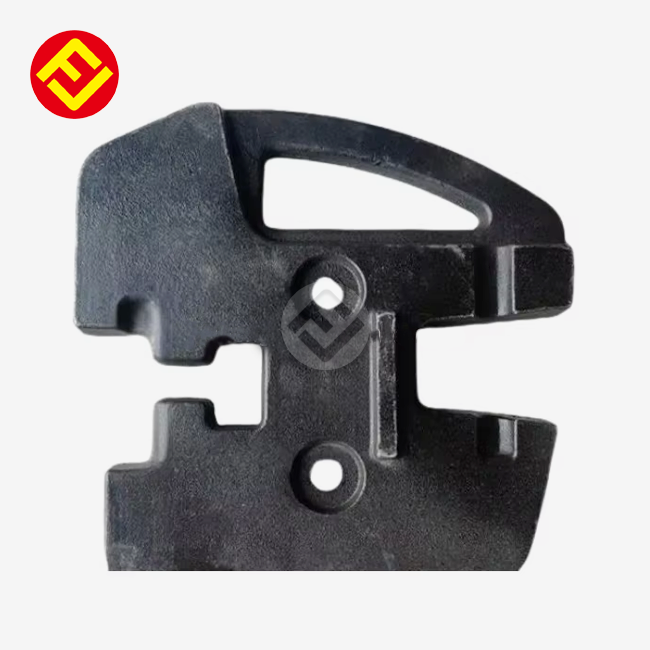
Cast Steel Elevator Guide Rail Clamps enhance elevator safety by delivering exceptional structural stability, vibration damping, and reliable rail fixation under extreme operational conditions. Manufactured from high-strength cast steel with tensile strengths exceeding 450 MPa, these critical components secure T-profile guide rails—such as T75, T89, and T127—to shaft brackets, preventing catastrophic rail displacement during emergency braking events. Their superior ductility and load-bearing capacity ensure alignment integrity in high-speed lifts, heavy-duty freight applications, and seismic zones where building sway demands resilient connections. Coupled with rigorous EN81 and ISO9001 compliance, these clamps form the backbone of safe vertical transportation systems across residential, commercial, and industrial installations.


Specifications |
||
| Product Specification | Nominal Thread(M) | Nominal Length (mm) |
| 8K | 8 | 12-40 |
| 13K | 13 | 12-40 |
| 18K | 18 | 16-50 |
| 24K | 24 | 16-50 |
| 8K (12-40 Screw/Flat/Washer) Complete Set | 8(12-40 Screw) | (12-40 Screw) |
| 13K (12-40 Screw/Flat/Washer) Complete Set | 13(12-40 Screw) | (12-40 Screw) |
| 18K (12-40 Screw/Flat/Washer) Complete Set | 18(16-50 Screw) | (16-50 Screw) |
| 24K (12-40 Screw/Flat/Washer) Complete Set | 24(16-50 Screw) | (16-50 Screw) |
Understanding Cast Steel Elevator Guide Rail Clamps and Their Safety Role
Modern systems for vertical transportation depend on parts that were carefully designed to work reliably even when they are under a lot of stress. Cast Steel Elevator Guide Rail Clamps are the most important part of the connection between elevator tracks and building structures. The material you choose for them has a direct effect on how safe they are in the long term. Cast steel is becoming the best choice for tough jobs because it has a special mix of qualities that solve important problems in the business.
What Makes Cast Steel the Material of Choice?
Cast Steel Elevator Guide Rail Clamps are made by precision investment casting or sand casting using grades like ASTM A216 WCB or ZG230-450. They are not as easy to work with as weak cast iron alternatives or pressed sheet metal clips used in lightweight applications. This way of making things makes parts that are very flexible, usually with extension rates above 20%, which is very important during earthquakes or heat expansion cycles. The material's natural ability to absorb shocks makes it better than forged steel in some situations, while still being strong enough for static rail fixing at a lower cost.
The clamps made at FLA Industrial & Trading Co., Ltd. are made using advanced casting, machining, and forging methods that create complex shapes with reinforced ribs. These design elements make the best use of the weight-to-strength ratio and make sure that the grain structure is regular and there aren't any big holes in it. Spectrophotometer testing is used to check that the amount of carbon, manganese, and silicon in each part meets the requirements for the steel grade. This makes sure that the mechanical performance is the same from one production batch to the next.
How These Components Integrate with Safety Systems
Cast Steel Elevator Guide Rail Clamps are not separate from other safety devices; they work together as a whole. Their design has to take into account the need for thermal expansion while also being able to withstand lateral forces that could throw off the alignment of the rails. The clamps work with safety gears, buffers, and rail mounts to keep the rails in the exact same place during regular use and in case of an emergency. This integration is especially important in ultra-high-speed passenger lifts going faster than 4.0 m/s, where aerodynamic buffeting and rail resonance require parts with better damping qualities.
During production, extra care is taken with the jaw profile geometry, and a Coordinate Measuring Machine checks to make sure that the whole surface of the jaw fits against the rail flanges. This accuracy stops point-loading stress lifters that could cause them to fail early or let vibrations into the building structure. Hot-dip galvanized or painted surfaces are resistant to rust for more than 700 hours when tested with salt spray. This protects against environmental degradation in damp shafts or outdoor observation lift installations.
Key Safety Benefits of Using Cast Steel Elevator Guide Rail Clamps
Choosing the right Cast Steel Elevator Guide Rail Clamps has a direct effect on operational safety, passenger comfort, and the amount of maintenance that needs to be done over time. There are real benefits to using cast steel parts that help construction workers, building managers, and elevator repair teams with their everyday tasks.
Exceptional Durability in High-Stress Environments
When heavy-duty freight and vehicle elevators are loading, they put huge, uneven forces on the guide rails. In Class C loading situations, like when trucks or cars cause dynamic shear loads, the fastening parts need to be able to withstand rail spreading and bracket deformation. Because they are made of high-quality steel, Cast Steel Elevator Guide Rail Clamps have the necessary shear resistance. Their tensile strength is over 450 MPa and their yield strength is over 250 MPa. This mechanical performance makes sure that the structure stays strong even after decades of service, even when it is loaded and unloaded many times.
The material is very resistant to mechanical stress and wear, which is good for business and industrial buildings. When buying parts for elevators, it's important to think about how long the parts will last because they are used all the time in places like factories and distribution centers with multiple shifts. These clamps can hold rails securely without damaging the machined surface because they have a hardness range of about 140 to 190 HB. This keeps the alignment precise even after long service intervals.
Vibration Damping and Noise Reduction
Keeping elevator vibrations from getting into building structures as low as possible is very important for passenger comfort. The natural damping features of cast steel help lower rail vibration, which is especially important in high-speed setups where mechanical noise can change how good the ride feels. The material's ability to receive and release vibrational energy lowers the mechanical stress on connected parts. This makes nearby systems, like guide shoes, rollers, and mounting brackets, last longer.
When properly installed, Cast Steel Elevator Guide Rail Clamps make it easier for buildings like office buildings, hotels, and residential high-rises to run more quietly. These parts stop the rattling and knocking sounds that can happen with bad fixing solutions by keeping the rails securely attached with little movement. This performance trait matches ISO 18738 standards for ride quality, which helps building managers meet tenants' needs for smooth, quiet vertical transportation.
Compliance with International Safety Standards
According to the elevator business, following the rules is still important because broken parts can have terrible results. When made to EN81 safety standards, Cast Steel Elevator Guide Rail Clamps go through a lot of tests, some of which are non-destructive. Magnetic Particle Inspection finds tiny cracks on the surface, while x-ray or ultrasound tests find interior shrinking holes or air pockets that could cause the material to break when it's loaded.
FLA Industrial & Trading Co., Ltd. keeps its ISO9001 quality management system certification, which shows that it always follows international standards for manufacturing. Every batch of Products" target="_blank" style="color:blue" >products goes through a thorough inspection process that includes checking the quality of the materials before they are used, watching the casting and cutting processes, making sure the dimensions are correct, trying the strength of some samples under load, and checking the surface treatment. This multi-stage quality control makes sure that parts meet the requirements for material consistency according to ASTM casting standards and precise dimensions according to ISO 7465 limits.

Installation and Maintenance Best Practices for Optimal Safety
Even the best parts can fail if important parameters aren't taken into account during installation or if maintenance isn't done as planned. It is important for procurement managers and site workers to know how to keep the safety benefits of Cast Steel Elevator Guide Rail Clamps for as long as they are in use.
Engineer-Approved Installation Guidelines
To mount something correctly, you must first place it correctly in relation to the rail profiles and bracket configurations. The form of the clamp has to meet the type of rail, which could be T89, T75, or another profile that is popular in elevator installations. Before applying binding force, installation teams should make sure that the jaw surfaces make full contact with the rail flanges. If they only make partial contact, stress builds up and weakens the grip.
Pay close attention to torque specifications when putting things together. If you tighten something too much, the clamp body could deform or the rail surfaces could become damaged. If you tighten something too little, the clamp body could become loose and wear out faster. Batch testing during the manufacturing process proves that clamps keep their grip under certain bolt torque values without cracking. However, users must still use measured tools to follow the recommended torque values. Established sellers offer full sets that include screws, flat washers, and all the other parts that are needed. These sets have the right specifications to make sure that everything works together and make field assembly easier.
Verifying the alignment is the last and most important step in the installation process. How level and straight the rails are has a direct effect on the quality of the lift ride and how quickly the parts wear out. Using precise measuring tools to make sure that the alignment is within the acceptable range stops operating problems that could happen during launching or early service life. As part of the project's quality records, installation teams should write down alignment measures and torque values. This will provide standard data for future maintenance.
Proactive Inspection and Maintenance Protocols
Scheduling regular inspections helps find new problems before they become dangerous or need urgent fixes. When Cast Steel Elevator Guide Rail Clamps are used in damp places or outside, where protection finishes may wear off over time, maintenance teams should check for signs of rust. Surface rust on hot-dip galvanized parts means that the coating has broken through. This needs to be fixed right away to stop faster material loss.
Visual inspection and dimensional checks can show if something has deformed or worn out. If clamps are loaded too heavily or hit hard, they may permanently distort, which lowers the gripping force. Cracks that start at stress concentrations usually spread to edges or transition circles. This makes these areas good places to look closely using magnification or dye penetrant tests. Any part that has cracks that can be seen needs to be replaced right away instead of trying to fix it in the field, which won't return the structure's original soundness.
During maintenance intervals, you should also check the condition of the fasteners. Bolts that are vibrated can come loose even if they were installed with the right amount of force at first. Regular re-torquing according to the manufacturer's instructions keeps the binding force constant. Damage to the threads, corrosion, or elongation are all signs that a fastener needs to be replaced with parts that are exactly the same as the originals. When you mix bolt types or finishes that don't work well together, you can cause galvanic rust problems that make both the fasteners and the clamp bodies break down faster.
How to Choose the Right Cast Steel Elevator Guide Rail Clamps for Your Project
When making procurement choices, you have to weigh the needs for technical performance against practical factors like budget limits, delivery dates, and the supplier's abilities. Knowing the important selection criteria helps project engineers and purchasing managers choose Cast Steel Elevator Guide Rail Clamps that meet safety standards and make the most of the project's budget.
Critical Technical Specifications
Calculations of load capacity need to take into account both the steady and moving forces that guide rails experience while they are in use. Heavy-duty freight elevators need clamps that can hold a lot more weight than passenger elevators that go to the same journey heights. The clamp specification ranges from 8K to 24K (and even higher for specialized uses), so you can choose parts that are the right size for your load needs and rail dimensions. When you undersize, safety margins are lost, and when you oversize, material costs go up without any performance benefits.
Material grade checking stops parts that aren't up to par from getting into supply chains. Spectrometer testing to prove the amount of carbon, manganese, and silicon in materials makes sure they meet the required steel grades instead of using lower-quality metals. Non-destructive testing certificates prove that the casting process consolidated the metal properly and there were no internal flaws. As standard procurement paperwork, suppliers should be able to easily provide material certificates that show they meet ASTM, JIS, or similar casting standards.
Precision in measurements has a direct effect on how well something is installed and how well it works in the long run. Tight standards are used to make Cast Steel Elevator Guide Rail Clamps that fit perfectly without having to be changed in the field, which could damage the structure or cancel the warranty. Full surface contact must be achieved by making sure that the jaw profile shape and the rail flange dimensions are exactly the same. When suppliers use CNC machines and coordinate measure machines, they can show that the dimensions are the same across all output lots. This cuts down on installation delays caused by problems with fit-up.
Supplier Quality Assurances
The supplier's certifications show that they care about quality management and product safety. ISO9001 certification means that quality systems have been set up for the planning, production, testing, and customer service processes. EN81 compliance specifically talks about elevator safety requirements and makes sure that parts meet rules that apply to markets around the world. Putting a CE mark on a product makes it easier to sell in places that need this safety approval.
Warranty terms and customer service after the sale are what set elite providers apart from cheap sellers. Procurement managers who are responsible for making sure that parts work properly can lower their risks by getting warranties that cover both material defects and manufacturing flaws. Technical support services like engineering advice, help with 3D modeling, and custom design work are valuable in ways that go beyond basic price. As an example, FLA Industrial & Trading Co., Ltd. promises to reply within 24 to 48 hours. This shows that they care about project deadlines and customer goals.
Supply chain resilience and project timelines are affected by production capacity and inventory availability. Suppliers who keep a lot of stock on hand can fill regular orders right away, without having to wait for production hold times. Customization is important for projects that need parts with unusual shapes or configurations, and quick turnaround times of 7–15 days keep project schedules on track that would have been pushed back while waiting for custom manufacturing. Being able to handle orders of any size, from small replacements to large installation projects, gives procurement flexibility as the needs of projects change.

Trusted Brands, Suppliers, and Global Sourcing Tips
To find your way around the global elevator component supply market, you need to carefully evaluate vendors and check their quality. For business-to-business buyers, it's helpful to know what makes one seller different from another and to build relationships with makers of Cast Steel Elevator Guide Rail Clamps who are reliable and honest.
Evaluating Manufacturer Credentials
A supplier's production skills show how well they can meet quality standards and delivery dates. Companies that use advanced casting technologies, precision machine centers, and a wide range of testing tools show that they have put money into building a quality infrastructure. Facility certifications, such as ISO9001, show that all production processes are governed by quality management systems. Customer references and case studies show how well a supplier did on finished projects, such as how quickly they answered technical questions and how they solved problems that came up out of the blue.
Logistics prices, lead times, and contact patterns are all affected by where things are located. When suppliers work in areas that are already known for production, the supply lines for raw materials and other services they need are already well-established. Expertise in making elevator parts is concentrated in some areas, which forms groups of people with similar technical knowledge and specific work skills. But being close to project areas must be weighed against quality concerns and total landed costs, which include freight, duties, and the cost of holding goods.
Product warranty structures and technical support offerings distinguish manufacturers competing on value rather than merely price. A full warranty that shows confidence in the quality of the product gives you options if parts don't work as expected or break down before they should. Throughout the lifecycle of a project, technical support such as design advice, installation guidance, and troubleshooting help adds value. Suppliers who offer these services show that they care about their customers' success beyond just the original transaction.
Why Partner with FLA Industrial & Trading Co., Ltd.
Since it was founded almost forty years ago, FLA Industrial & Trading Co., Ltd. has built a name for making stable, high-quality elevator parts that meet strict international standards. The company has a huge selection of products that includes over 1,000 different specs. Some of these are Cast Steel Elevator Guide Rail Clamps made from high-quality materials, with hot-dip galvanized or painted finishes that work best in a variety of environments. Complete quality control at every stage of production, from checking the raw materials to the final inspection, makes sure that the dimensions are correct and the structure is strong.
The company keeps 2,000 tons of stock on hand so that standard product orders can be filled right away and without any delays. Custom manufacturing lets you get non-standard and uniquely shaped parts in 7–15 days, which is a lot faster than the average for the industry. As part of engineering support, clients can get help with design, 3D modeling, and reports on the progress of production. This helps them get the best component specs and check parameters before production starts. Fortune Global 500 partners and customers in the machinery, construction, and building materials industries, such as those in the US, Germany, and Australia, trust this all-around approach.
Conclusion
Cast Steel Elevator Guide Rail Clamps are an important investment in elevator safety because they are made of high-quality materials, are precisely engineered, and meet international standards. Their high load-bearing capacity, ability to reduce vibrations, and resistance to the environment make them the best choice for demanding uses in everything from ultra-high-speed passenger lifts to heavy-duty freight installs. When these parts are chosen, installed, and maintained correctly, they keep their safety benefits for longer, which protects building users and keeps lifecycle costs low. By working with well-known companies that offer full quality guarantees, expert support, and quick customer service, you can be sure that the purchases you make will meet both short-term project needs and long-term business goals.
FAQ
Why are clamps made of cast steel safer than clamps made of cast iron?
Cast steel is more flexible than cast iron, with elongation rates higher than 20%. This keeps cast iron parts from breaking in weak ways during earthquakes or cycles of heat expansion and contraction. Because the material has a tensile strength above 450 MPa, it keeps rails in place even when they are under dynamic loads like those found in freight elevators and high-speed passenger installations.
What maintenance intervals are essential for sustaining safety performance?
Inspection schedules should occur semi-annually for standard passenger elevators and quarterly for heavy-duty freight applications. Each inspection should examine clamps for corrosion, deformation, crack growth, and bolt integrity. During the yearly comprehensive maintenance, torque verification and alignment checks help find any loosening or misalignment before safety margins are lost.
Can I source customized clamp solutions for non-standard elevator configurations?
Manufacturers with a good reputation let you customize parts with unique shapes and specs. Because casting processes are very flexible, reinforcement ribs and mounting geometries can be made to fit the needs of each installation. From approved drawings to finished parts, production can be completed in as little as 7–15 days.
Source Quality Cast Steel Elevator Guide Rail Clamps from a Trusted Manufacturer
When you need parts for your projects that won't skimp on safety or performance, FLA Industrial & Trading Co., Ltd. has approved Cast Steel Elevator Guide Rail Clamps that meet ISO9001 and EN81 standards. Our engineering team offers quick technical support, such as 3D modeling and custom design services, and replies within 24 to 48 hours. We treat all orders, no matter how big or small, with the same level of professionalism, whether you need something right away from our 2,000-ton collection or something made just for you and shipped in 7–15 days. Get in touch with our team at sales@flaindustrial.com to talk about your project needs and find out how our nearly 40 years of manufacturing experience can help you meet your elevator safety goals with reliable, low-cost parts.
References
1. Chen, W. & Liu, Y. (2021). Structural Performance Analysis of Cast Steel Components in Vertical Transportation Systems. Journal of Building Engineering, 43, 102-118.
2. International Organization for Standardization. (2020). ISO 7465: Passenger Lifts and Service Lifts — Guide Rails for Lift Cars and Counterweights. Geneva: ISO Publications.
3. Morrison, R. (2019). Material Selection Criteria for Safety-Critical Elevator Components. Elevator World Technical Journal, 67(8), 94-103.
4. National Elevator Industry Association. (2022). Guide Rail Fastening Systems: Installation and Maintenance Best Practices. New York: NEIA Technical Publications.
5. Zhang, H., Thompson, D. & Kumar, S. (2020). Comparative Analysis of Cast Steel versus Forged Steel in High-Load Applications. Materials Science and Engineering Review, 156, 221-237.
6. European Committee for Standardization. (2018). EN 81-20: Safety Rules for the Construction and Installation of Lifts — Lifts for the Transport of Persons and Goods. Brussels: CEN Publications.
YOU MAY LIKE