How Do Double-Head Clamps Enhance Multi-Point Workpiece Fixing?
2026-08-07 10:13:43


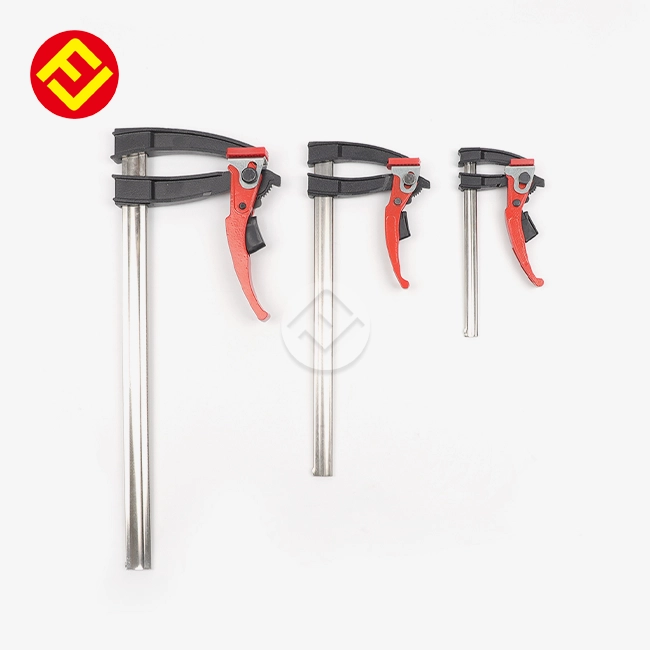
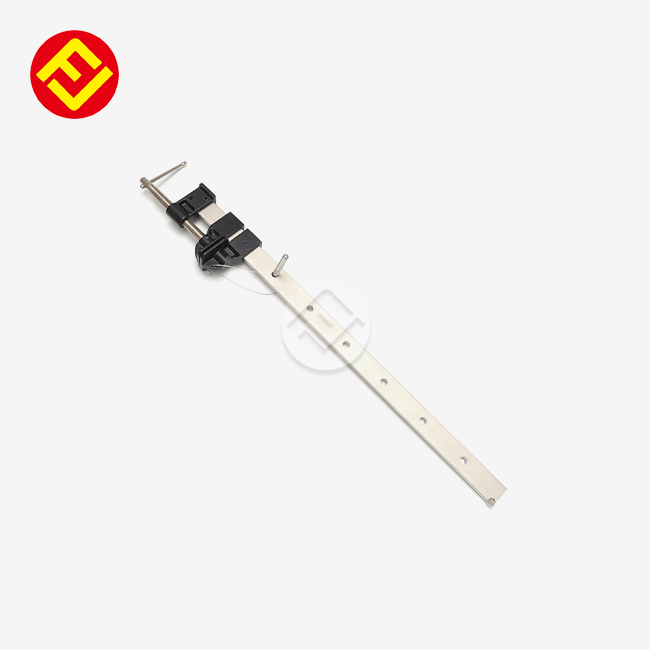
F-Clamps/double-head-clamps">Double-Head Clamps enhance multi-point workpiece fixing by featuring dual adjustable heads that distribute clamping force evenly across multiple contact points simultaneously. This dual-head configuration prevents workpiece deformation during assembly, glue-ups, or welding operations by eliminating stress concentration found in single-point clamps. The synchronized pressure application maintains precise alignment across irregular surfaces, ensuring consistent gap control and dimensional accuracy. For industrial buyers seeking efficient production workflows, these specialized tools reduce setup time while improving joint integrity in woodworking, metal fabrication, and construction applications where multiple securing points are critical to structural stability and finish quality.


Specifications |
||||
| Specification | Total Length(mm) | Total Width(mm) | Clamping Length(mm) | Clamping Width(mm) |
| 6 Inch | 248 | 110 | 160 | 60 |
| 12 Inch | 395 | 110 | 308 | 60 |
| 18 Inch | 550 | 110 | 460 | 60 |
| 24 Inch | 700 | 110 | 615 | 60 |
| 30 Inch | 850 | 110 | 765 | 60 |
| 36 Inch | 1000 | 110 | 915 | 60 |
Understanding Double-Head Clamps and Their Role in Multi-Point Fixing
What Makes Double-Head Clamps Different from Standard Clamps
What makes it different is that it has two adjustable heads, which let you change both ends of the workpiece separately. With traditional bar clamps or C-clamps, pressure is applied from only one direction. This makes it possible for pivot at points that let the workpiece move. Double-Head Clamps, on the other hand, set up two different contact zones that work together to make a stable clamping triangle. This geometric advantage is very useful when you need to hold large panels in place for edge banding or frame parts while putting together corners. When you combine the pliable cast iron with the precision steel screw rods, you get the structural stability you need to keep the pressure steady without bending under load conditions that are common in production settings.
Core Components and Functional Mechanisms
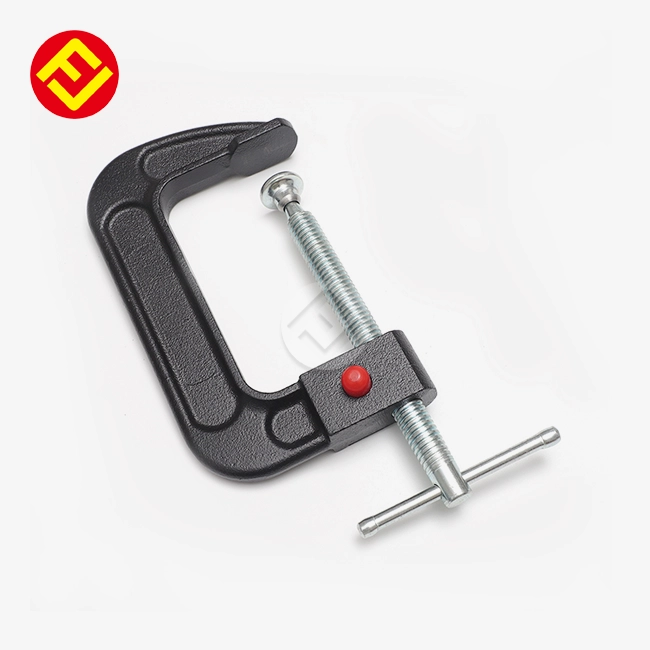
Each Double-Head Clamp assembly is made up of several engineered parts that work together. The structure's backbone is made of cast iron that can be shaped and was chosen because it can absorb vibrations while keeping its shape over many pressing cycles. The steel screw rod threads through the body with very tight tolerances that stop play during adjustment. This makes sure that the clamping position stays in place during the whole work process. Both heads have smooth contact surfaces that keep object finishes from getting damaged. These surfaces can be painted or electroplated, based on the needs of the application. The ergonomic form of the handle keeps operators from getting tired during long production runs. This lets techs get the right torque without putting too much physical pressure on their bodies. This careful engineering directly leads to more work getting done on the shop floor.
Industry Applications Across Manufacturing Sectors
These tools are used in woodworking shops to put panels together, and the edge joints must stay flush while the glue cures. Furniture makers like that they can hold complicated frame assemblies while fasteners are being put in place, which means they don't have to use any extra support fixtures. In shops that work with metal, Double-Head Clamps are used as welding fixtures that keep the gap sizes exact. This keeps the metal from warping when heat builds up in parts that aren't properly held. They are used by builders to put together formwork, where temporary links need to be able to handle the pressure of filling concrete. Educational classes are helpful because they are easy to use, so students can focus on skill instead of figuring out how to work around equipment problems. Because they can be used in many different industries, they are a good investment for distributors who serve a wide range of customers.
Advantages of Double-Head Clamps Over Traditional Clamping Solutions
Material Selection and Durability Considerations
Material makeup has a direct effect on how long it lasts and what kinds of uses it can be used for. Controlled cooling is used to shape the pliable cast iron used in high-quality Double-Head Clamps during the casting process. This makes a microstructure that doesn't break easily when shock loads are applied. This is very important in places with a lot of production, where clamps could be dropped or hit during quick changes. The steel screw rod is heated to get the right level of hardness—hard enough to keep the threads from wearing out from repeated adjustments, but flexible enough that it won't break in a catastrophic way if it's overloaded. Options for finishing the surface add extra protection. Models that are electroplated resist rust better in wet woodshops, while painted models offer cost-effective protection for metalworking uses inside. When figuring out the total cost of ownership, procurement managers should take these important benefits into account.
Pressure Distribution and Workpiece Protection
Engineers call the setup with two heads "load distribution equilibrium." When both heads clamp down on the workpiece, the clamping forces cover a bigger area than with a single-point system. This spreads out the pounds-per-square-inch contact pressure, which lowers the chance of surface damage from compression on wood or composite panels, which are lighter materials. Because it is adjustable, workers can account for small differences in thickness across a piece of work, keeping the pressure applied in a straight line instead of causing a wedge effect. This controlled pressure stops the pre-weld distortion that causes misalignment and expensive repair when it is used for welding. These traits are liked by quality control departments because they help make output more consistent and reduce the number of parts that need to be thrown away because of defects caused by clamping.
Safety Features and Maintenance Requirements
Modern Double-Head Clamps are made with features that make them safer for operators to use every day. The screw rod system lets you make adjustments carefully, without letting go all at once, which could hurt your fingers or cause workpieces to move around without warning. The handle is placed in a way that keeps your hands away from pinch points while you tighten. When it comes to upkeep, the simple mechanical design only needs to be cleaned every so often to get rid of wood dust or metal shavings, oiled screw threads every so often, and be looked at visually to see signs of wear. The ISO9001 quality management system approval makes sure that the manufacturing process is consistent, which means that replacement parts stay the same size across production runs. This standardization makes it easier for maintenance teams to keep track of inventory when they are responsible for big groups of clamps on various production lines.

How to Choose the Right Double-Head Clamp for Your Business Needs
Application-Specific Selection Criteria
Before choosing the right clamping tools, you should carefully look at how your work needs to be done. Think about the biggest pieces of work you usually have to deal with. The throat width and opening capacity must be able to handle your biggest assemblies, plus extra space in case you get a job that's too big. Load capacity ratings tell you how much force the clamp can safely apply and resist. Making sure that this number matches the type of material you are working with stops both under-clamping, which lets the material move, and over-clamping, which damages the parts. Things in the environment are also important. If you work in a shop with a lot of humidity, you should choose electroplated finishes that don't rust. On the other hand, shops with climate control may find painted models cheaper. Plant managers should include production workers in talks about selection because input from end users often shows practical issues that specs alone don't show.
Evaluating Manufacturer Quality and Support
People who work in procurement benefit from working with well-known producers whose certifications and track records show that they consistently produce high-quality goods. If a supplier has ISO9001 approval, it means they have written quality management systems that cover things like where to get materials, how to keep track of production, and how to do final inspections. This certification is especially useful when looking for long-term providers or when there are worries about liability in uses that need to be safe. Check out the manufacturer's expert help skills in addition to their certifications. Can they give me dimensional drawings so I can plan how to integrate the fixtures? Do they offer services to make changes to specific applications? What are the usual wait times for both stock items and custom orders? Companies with a lot of engineering resources can be problem-solving partners instead of just selling Products" target="_blank" style="color:blue" >products, which is more valuable than just the hardware itself.
Budget Optimization and Total Cost Analysis
The initial buying price is only one part of the total cost of acquisition. Bulk ordering usually gets you volume discounts that lower the cost per unit, but you have to weigh this against the costs of keeping inventory and the limited space in your warehouse. Durability directly affects how often something needs to be replaced. Higher-quality clamps made from better materials may cost more up front, but they last longer, which saves money in the long run. Maintenance needs are also a part of the total cost. Designs that need parts to be replaced or specialized service more often raise operational costs over time. Cost projections for multiple years should be made by procurement managers, taking into account expected usage levels, replacement cycles, and the possible costs of downtime due to equipment failure. This in-depth study often shows that mid-range quality goods are the best deal for most industrial uses because they provide reliable performance without charging high prices.
Installation, Operation, and Optimization of Double-Head Clamps in Production Environments
Proper Setup and Workspace Organization
For clamp release to go smoothly, tools need to be stored in a way that keeps them available while also keeping them safe from damage. Racks or drawer systems that are mounted on the wall keep the stacks from getting tangled, which saves time and avoids damaging the screw rods. Before clamping activities start, look at the workpieces for any debris or surface flaws that might get in the way of good contact. A quick check can save hours of fixing problems with misalignment. If you can, place the clamp along the axis of the part to make the pressure even. When using several clamps on a large assembly, put them in order of how they will be used to keep the workflow going. Production supervisors should set up regular work processes that spell out the best way to place clamps for jobs that are done over and over again. This way, even less experienced operators can get consistent results.
Optimization Techniques for Maximum Efficiency
The difference between good results and great ones is how the clamps are placed. When clamping long pieces of work, space them out evenly instead of putting a bunch of them at the ends, where the force of the pressure can bend the middle part. When joining different materials that don't compress the same way, you can make adjustments to each head's pressure to make up for it. This is something that fixed designs can't do, but Double-Head Clamps systems can because they can be adjusted separately. Instead of tightening all the clamps at once during glue-ups, do it in stages. This way, the adhesive has time to spread evenly before the maximum pressure locks everything in place. Time studies done in factories that make furniture show that improved clamping sequences cut cycle times by fifteen to twenty percent compared to ad hoc methods. This directly increases output without spending any money on new equipment.
Troubleshooting Common Operational Issues
When clamped pieces move, it's usually because the surface wasn't prepared well enough or the pressure wasn't applied evenly. As you start to tighten, make sure that both heads touch the workpiece at the same time. Contacting the workpiece in a different order creates a pivoting condition. If the screw rod gets hard to turn, don't just apply more force, which could strip the threads; instead, check to see if the threads are dirty or if there is enough oil on them. When frame systems have gaps that aren't all the same, it's usually because the clamp axes aren't straight across from the joint line. This can be fixed by making small changes to the clamp angle. When more than one operator says they are having trouble getting consistent results, the problem may not be with the equipment itself, but with the training they are getting. Short refresher sessions that focus on the right way to do things often get rid of quality differences better than buying new equipment.
Future Outlook and Innovations in Double-Head Clamp Technology
Material Science Advancements
Next-generation clamps will likely be made of composite materials, which are lighter than cast iron but as strong as or stronger than current designs. Carbon fiber-reinforced plastics have very high strength-to-weight ratios that keep the structure rigid under load and reduce operator tiredness during shifting. These high-tech materials also naturally reduce vibrations, which is helpful in precision cutting tasks where tool chatter can damage the surface finish. However, cost concerns mean that composites can only be used for specific tasks right now, rather than all-purpose tools. In the next five to seven years, it will be possible to reach a bigger market as production size goes up and material costs go down.
Smart Features and Industry 4.0 Integration
The addition of sensor technology to clamping systems is a new trend that fits with efforts to make manufacturing smarter. Prototype systems have strain gauges that measure the applied force in real time and give digital readings that make it easy to reach the desired clamping pressures. This feature is especially useful in high-quality situations where objective proof of assembly conditions is needed for paperwork reasons. For example, more advanced ideas include wireless connections that log clamping data to factory execution systems, creating audit trails that can be used to find things. These smart features are mostly used in high-value aerospace and medical device production right now. But as sensor costs go down and connectivity infrastructure grows, these features will slowly make their way into more common industrial uses.
Customization and Rapid Prototyping
Using additive manufacturing methods, it is possible to make expensive, custom clamp parts for specific uses. When standard catalog items don't quite meet specific workflow needs, 3D-printed custom heads or adapters offer custom solutions without the high costs of making tools needed for traditional manufacturing. This feature is especially helpful for OEM equipment makers who need to add clamping fixtures to automatic production cells. Custom part lead times have shrunk by a huge amount. What used to take weeks for pattern making and casting now takes days thanks to digital design and direct manufacturing. Companies that want to get ahead of the competition should work with providers that offer these quick customization services. This will give them the freedom that rigid standardization can't offer.

Conclusion
In multi-point workpiece fixing, Double-Head Clamps provide measured performance benefits through engineered pressure distribution, strong material construction, and working flexibility across a wide range of industry uses. The Double-Head Clamps make up for the basic flaws of single-point clamping systems by creating stable contact zones that keep the workpiece from moving and protect the surface finishes. When procurement workers look at these tools, they shouldn't just look at the initial buy price. They should also look at application-specific needs, manufacturer quality credentials, and total cost. The most productive results on these investments come from using the right installation methods and the best ways to run the business. As manufacturing moves toward smart plant designs, clamping technology also improves, giving manufacturers more ways to meet their goals for precision production.
FAQ
What distinguishes dual-head clamps from standard bar clamps in structural terms?
Bar clamps feature a fixed head at one end and a sliding head that travels along a rail, applying pressure in a single axis. Double-Head Clamps configurations use two heads that can be adjusted separately. This lets them work with irregularly shaped workpieces and spreads force more evenly. Because of this difference in structure, Double-Head Clamps designs are better for tasks that need pressure from different directions or on surfaces that aren't horizontal, where bar clamps would create uneven loading conditions.
What are typical lead times when ordering custom dual-head clamps?
Standard catalog items usually ship within 24 to 48 hours from well-known manufacturers who keep enough stock on hand. Custom requirements that need different sizes or finishes usually take 7 to 15 business days, but this depends on how complicated the changes are and where the production queue is at the moment. During the quotation process, procurement teams should be clear about project timelines to make sure that shipping plans match production needs. For pressing needs, you may be able to get faster handling, but there are usually extra fees.
How should maintenance teams approach preventive care for dual-head clamps?
Maintenance keeps things running smoothly and extends their useful life. In places with a lot of use, clean the screw threads once a week to get rid of the dust and debris that builds up and causes them to bind. Once a month, use a light machine oil or dry lubricant on the threads, avoiding heavy greases that attract contamination. Inspect cast iron bodies for cracks or stress indicators quarterly, removing damaged units from service immediately. Check contact surfaces for burrs or rough spots that could mar workpieces, smoothing with fine abrasive as needed. Document maintenance activities to identify units requiring frequent attention, which may indicate underlying quality issues warranting replacement.
Partner with FLA Industrial & Trading Co., Ltd. for Premium Double-Head Clamps
To fix multiple points of a workpiece consistently, you need reliable equipment from manufacturers who understand industrial demands. FLA Industrial & Trading Co., Ltd. brings nearly four decades of specialized experience in precision clamping solutions, serving hardware distributors, construction contractors, woodworking facilities, and manufacturing operations throughout the United States. Our Double-Head Clamps combine malleable cast iron durability with precision-machined steel components, all manufactured under ISO9001-certified quality systems. We maintain over 2,000 tons of inventory for immediate shipment, while our engineering team can develop custom solutions within 7 to 15 days for specialized requirements. Contact our team at sales@flaindustrial.com to discuss your specific application needs and request detailed specifications from a trusted Double-Head Clamps supplier.
References
1. Smith, J.R. (2021). Advanced Clamping Systems for Modern Manufacturing. Industrial Press Inc.
2. Anderson, M.K. & Williams, P.T. (2020). "Multi-Point Fixturing Strategies in Woodworking Production." Journal of Manufacturing Processes, 47(3), 215-228.
3. National Association of Manufacturers (2022). Quality Standards for Industrial Hand Tools and Clamping Devices. NAM Publishing.
4. Chen, L. & Rodriguez, F. (2019). "Material Selection Criteria for Heavy-Duty Clamping Applications." Materials Engineering Quarterly, 34(2), 112-125.
5. Thompson, R.D. (2023). Precision Fixturing Techniques for Metal Fabrication. McGraw-Hill Professional.
6. International Organization for Standardization (2021). ISO 9001:2015 Quality Management Systems – Requirements for Manufacturing Operations. ISO Standards Publication.