How Does a Heavy-Duty T Bar-Clamp Handle Heavy Applications?
2026-08-10 10:20:32


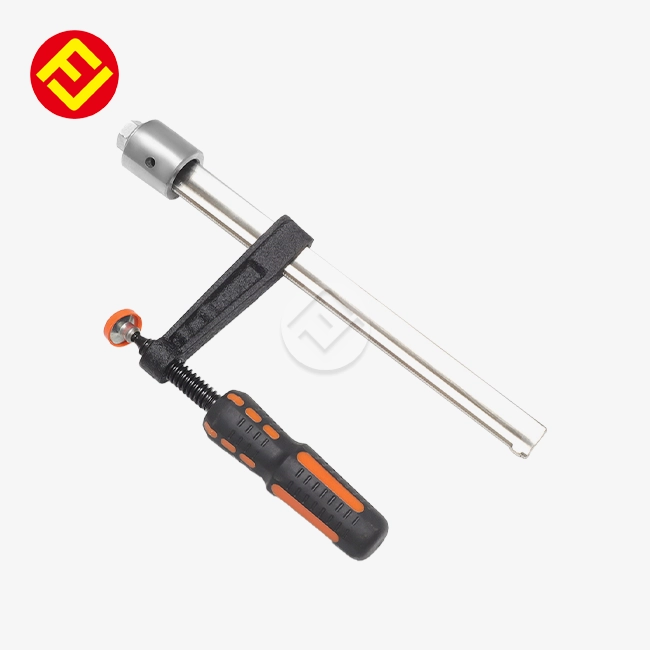
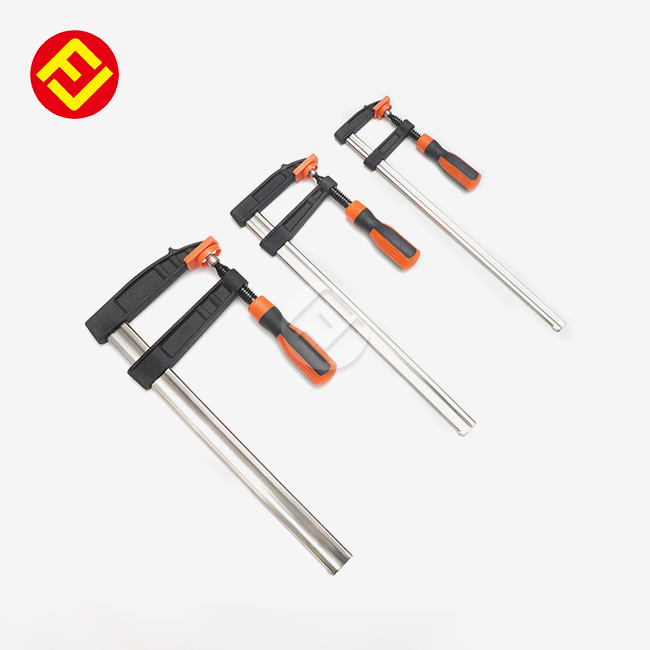
A T-Clamp/heavy-duty-t-clamp">Heavy-Duty T Bar-Clamp handles heavy applications through its specialized forged steel construction and unique T-shaped design that distributes tremendous clamping forces evenly across the entire frame. Unlike standard clamps, this tool utilizes precision-machined components and robust threading systems that maintain consistent, powerful grip strength under extreme pressure conditions. The reinforced geometry prevents frame flex and workpiece movement during critical operations, making it indispensable for demanding industrial, construction, and woodworking tasks where failure is not an option.


| Specification Model | Maximum Clamping Distance(mm) | Throat Depth(mm) | Total Length(mm) |
| HeavyDuty T-Clamp 48" | 1210 | 200 | 1210 |
| HeavyDuty T-Clamp 60" | 1520 | 300 | 1520 |
| HeavyDuty T-Clamp 72" | 1830 | 300 | 1830 |
Introduction
In environments where standard clamping tools buckle under stress, heavy-duty T bar clamps stand as reliable workhorses. Across construction sites, furniture manufacturing floors, and industrial fabrication shops throughout the United States, these specialized tools deliver the unwavering grip strength needed for challenging applications. Understanding how these clamps withstand intense pressure and repeated heavy use becomes crucial for procurement managers, project engineers, and production supervisors who depend on equipment that won't compromise during critical operations.
This guide examines the engineering principles, material science, and design innovations that enable heavy-duty T bar clamps to excel in demanding scenarios. By exploring their mechanical advantages, practical applications, and selection criteria, we provide actionable insights that support informed purchasing decisions. Whether you're outfitting a construction crew, upgrading a woodworking facility, or managing inventory for a hardware distribution business, the information ahead helps you identify tools that deliver lasting value and operational reliability.
The difference between project success and costly delays often comes down to equipment choices. When you need tools that perform consistently under pressure, understanding what separates heavy-duty T bar clamps from lighter alternatives becomes essential business intelligence.
Understanding Heavy-Duty T Bar Clamps: Definition and Core Functionalities
What Distinguishes Heavy-Duty T Bar Clamps from Standard Models
Another type of gripping tool is the Heavy-Duty T Bar-Clamp, which is designed to work well in situations with a lot of force where regular clamps don't work. The main thing that makes it unique is its strengthened T-shaped frame design, which is very different from F-Clamps' open-throat design or C-clamps' circular geometry. This T-shape makes for better load distribution by directing clamping pressure along multiple structural planes instead of concentrating stress in a few places.
The term "heavy-duty" refers to better material standards and stronger dimensions. Heavy-Duty T Bar-Clamps have thicker frame parts, bigger diameter threaded rods, and wider jaw surfaces. Standard bar clamps may use lighter gauge steel with less cross-bracing. With these specs, the tool can make and keep up much higher gripping forces—often more than 1,500 pounds of pressure—without the frame warping or breaking down mechanically.
Material Composition and Engineering Advantages
Heavy-Duty T Bar-Clamps are made from premium carbon steel and alloy steel, which makes them very strong. Because these materials are so strong when pulled apart, the frame can withstand bending and twisting forces that would break lighter alloys. The carbon content makes the material hard and resistant to wear, and the alloyed elements make it tougher and more resistant to stress after being loaded and unloaded many times.
As important as choosing the right materials is the way they are made. Forged construction, in which metal is bent under a lot of heat and pressure, makes a grain structure that runs all the way through the frame. This way of making things gets rid of the weak spots that happen with bonded or cast options, spreading the stress evenly across the part. The adjustment mechanism has machined threads that make it easy to use and precise in controlling the pressure, so it doesn't get stuck or slip when tightening.
Surface treatments greatly increase the useful life of an item. Professional powder coating makes a chemically linked barrier that stops water from getting through. This keeps rust from forming in damp workshop settings. Different paint styles offer the same level of protection against corrosion while adding visual recognition through color coding. These layers of protection are especially helpful in construction sites where tools are exposed to the weather and in woodworking shops where adhesive residues could otherwise damage the surface.
Size Variations and Application-Specific Models
Heavy-Duty T Bar-Clamps are made with a range of throat widths and reach sizes to meet the needs of different industries. Models with shallow throats (3 to 6 inches) are good for putting together furniture and cabinets, while models with deep throats (12 inches or more) are better for joining structural lumber and gluing large panels together. Reach capability, or the longest distance from the clamp head to the sliding jaw, can be as short as 12 inches for small jobs or as long as 48 inches or more for building frame and design woodwork.
Industry-specific changes make things work better for certain trades. Models made for woodworking have bigger, padded jaw sides that spread pressure evenly over smooth surfaces without leaving marks. Different types of construction have sharp mouth serrations that bite into rough wood and keep dimensional frame materials from slipping. Versions for welding and metal production have heat-resistant coats and are made of steel all the way through so they can handle sparks and high temperatures near welding zones.
How Heavy-Duty T Bar Clamps Withstand Heavy Applications
Maximum Pressure Resistance and Load Distribution
The Heavy-Duty T Bar-Clamp's design is based on basic engineering concepts that make it possible to handle heavy loads without affecting grip strength. When you tighten the threaded handle, force moves through the steel rod and into the moving jaw. This puts pressure on the part that is in compression. The rigid backbone of the T-shaped frame stops the opposite forces that try to pull the teeth apart. In C-clamps, the frame makes a bent path that can bend under heavy loads. The T-configuration, on the other hand, arranges several structural members in a triangle shape that blocks stress paths.
Forged structure is a very important part of how stress is spread. As the metal is forged, the grain structures align with the frame geometry. This makes natural reinforcement channels that direct forces along the strongest material paths. This grain flow keeps stress from building up at corners and transitions, which is where cheap tools usually break. As a result, the clamp can keep up with maximum rated pressures over and over again without deforming or cracking from wear and tear.
Spreading the load out evenly protects both the tool and the piece being worked on. The pressing force is spread over a bigger surface area by wide jaw faces. This lowers the pounds per square inch at contact points. This spread keeps the jaw from crushing pine or particle board, which are both soft materials, while still keeping a tight grip. When working with harder materials like steel or wood, the spread-out load stops any point loading that might lead to slippage or movement of the item while it is being machined or put together.
Superior Stability During Critical Operations
The T-shaped design evenly distributes force, which directly affects the steadiness of the item. If you clamp heavy timbers or large panels that aren't straight, off-center loads can make the clamps twist or cant, which lets the workpiece move. The wide base of the Heavy-Duty T Bar-Clamp resists these rotational forces, so the jaw stays in a straight line even when pressure is applied unevenly across the face of the jaw. This stability is very important for tasks like routing, drilling, or mortising, where any movement of the workpiece can ruin accuracy and put people in danger.
Another important performance factor is frame stiffness, which stops vibrations caused by bending. Standard clamps can slowly loosen while using a power tool, so they need to be tightened all the time. The strong design of the Heavy-Duty T Bar-Clamp reduces vibrations and keeps the holding pressure constant during long cutting or shaping operations. This feature lowers the need for human input and boosts output on production lines where setup time has a direct effect on flow.
Corrosion Protection and Service Life Extension
Professional surface treatments protect these tools from the problems they face every day in the world. Powder coating makes a finish that hardens at high temperatures and molecularly links with the steel base, making a shield that lasts much longer than regular paint. This coating doesn't chip when hit or worn down by rough handling, and it doesn't react chemically with wood preservatives, adhesives, or cleaning solvents that are often used in workshops.
The corrosion protection makes the tools last a lot longer, especially in building settings where they might be exposed to rain, humidity, or wet ground. Rust not only makes things look bad, but it also stops them from working properly. Corroded threads get stuck and can't be adjusted smoothly. Protected surfaces keep the smooth operation going for thousands of tightening cycles. This keeps the accuracy that makes these tools investments instead of throwaway goods.
Precision Engineering and Consistent Performance
Machined parts make sure that the tightening pressure stays the same and the process goes smoothly every time. The threaded rod is cut to very precise measurements, which makes threads that connect smoothly without binding or cross-threading. This production quality lets operators precisely control the pressure—this is very important when working with materials that need specific clamping forces to keep them from breaking or to make sure the glue sticks properly.
The moving jaw system has slots and bearings that are machined to keep play to a minimum while still letting the jaws move freely along the bar. This engineering balance stops wobble that could throw off the alignment while letting you quickly change the position. One hand can be used to move the jaw to a rough position, and then the handle can be turned smoothly to fine-tune the end pressure. This operational efficiency is very important in production settings, where the seconds saved per clamp add up over the course of dozens of operations every day.

Comparison and Selection: Choosing the Best Heavy-Duty T Bar Clamp for Your Needs
Performance Comparison Across Clamp Categories
Procurement professionals can better match the right tools to the job by knowing how Heavy-Duty T Bar-Clamps stack up against other designs. C-clamps are small, portable, and easy to set, but their curved frame design limits the most force that can be clamped and the depth of the throat. Because they are open, the stress builds up along the C-shaped frame, which makes them more likely to bend when big loads are put on them. When it comes to light metalworking and fixing small parts, C-clamps work great. But when it comes to structural assembly or gluing large panels together, they don't work so well with the constant high pressures.
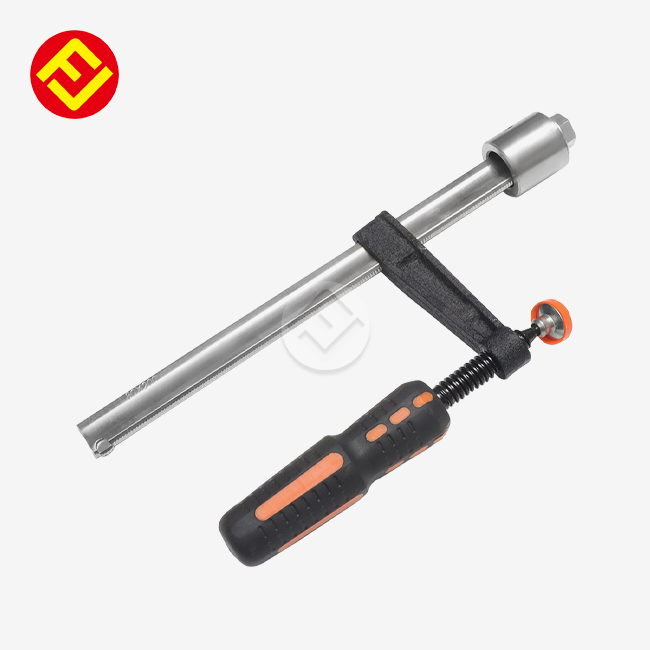
The sliding head design of F-clamps gives them great reach and a good amount of clamping force. The parallel mouth design keeps them aligned well across a range of throat holes, making them useful for a wide range of tasks. But the frame is usually made of smaller grade metals than Heavy-Duty T Bar-Clamps, which limits the most pressure that can be held for a long time. F-clamps are useful for light building and crafts, but they can bend or slip when holding heavy timbers in place or keeping pressure on for long curing times.
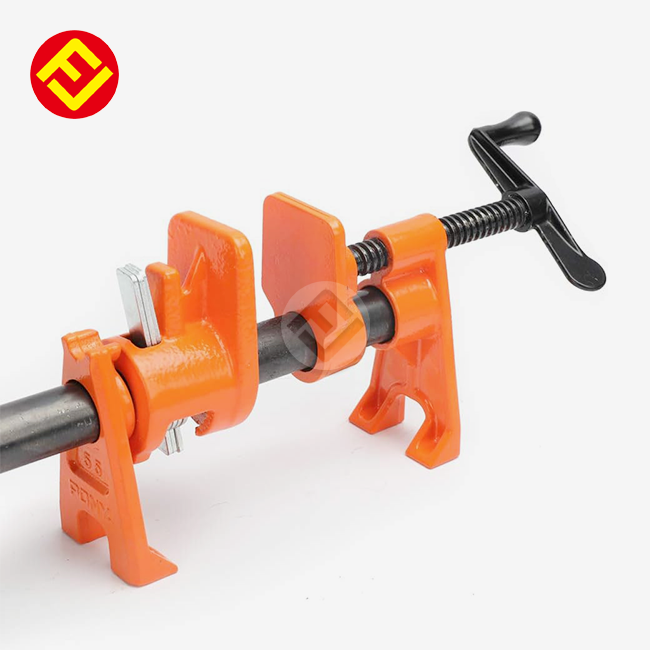
Standard threaded pipe is used as the bar in Pipe Clamps, which gives them a very long reach. This flexibility lets you add any length by connecting longer pipe pieces together. But this benefit comes at the cost of stability: pipe clamps don't have a rigid frame like Heavy-Duty T Bar-Clamps do, so they can twist when loads aren't on the center. When it comes to torsional stiffness, the circular pipe cross-section is not as good as the rectangular or I-beam shapes that are popular in Heavy-Duty T Bar-Clamp construction.
Heavy-Duty T Bar-Clamps fill a specific performance need because they can handle the most pressure, have the stiffest frames, and keep holding loads for a long time. They are the best choice when clamping forces need to be higher than 1,000 pounds, when the size of the part calls for a wide, stable pressure distribution, or when the pressure needs to stay the same for a long time. The extra money spent on stronger construction pays off in fewer setting problems, less moving of the workpiece during operations, and longer tool life even when used hard.
Evaluating Manual versus Powered Options
Heavy-Duty T Bar-Clamps that are operated by hand are most common in industrial and woodworking settings because they are easy to use, reliable, and give the user exact control. The threaded mechanism that is handled by hand lets workers fine-tune the pressure—they can feel the resistance and change the force based on the properties of the material. This feedback keeps the tension just right so that softwoods and composites don't get crushed, and makes sure that hardwoods and metals get enough pressure. Manual clamps don't need any kind of electrical system to work. They can be used anywhere and keep working properly even when power is out.
Powered clamp versions are less popular in the Heavy-Duty T Bar-Clamp design, but they are better for high-volume production settings. Pneumatic or electric-driven models make it easier on operators when they have to repeatedly tighten and loosen a lot of clamps during shifts. They provide constant, repeatable clamping forces that get rid of differences in how the machine is used or how long a production run lasts. Powered options, on the other hand, add complexity, need more upkeep, and depend on infrastructure that might not be worth the cost outside of specialized manufacturing settings.
The choice between powered and manual solutions is usually based on the amount of work being done and the operating situation. The flexibility and lack of need for power sources of manual Heavy-Duty T Bar-Clamps make them best for job sites, custom woodworking shops, and upkeep work. Powered options may be more cost-effective for factories with continuous production lines, even though they require more initial investment and ongoing upkeep.
Brand Considerations and Quality Indicators
Leading tool makers set themselves apart by using high-quality materials, making tools with great accuracy, and making sure their tools work well for a long time. Well-known brands spend money on metallurgical research to make sure their steel alloys have the best strength-to-weight ratios and resistance to fatigue. When these companies make clamps, they stick to very tight tolerances for size, so the parts fit perfectly, and the clamps work smoothly for thousands of cycles. Even though expensive companies cost more at first, their tools usually have a lower total cost of ownership because they last longer and need to be replaced less often.
Quality markers are more than just a brand's image; they also include things that can be seen about a product. Check the frame construction for even cross-sections that don't have any thin spots or obvious holes that would show a problem with the casting. When you look at threaded parts, make sure the threads are clean and sharp, with no burrs or partial cuts that could cause them to stick. Close the clamp all the way around to check the jaws' alignment. The jaws should meet evenly across their whole surface, with no gaps at the corners. Check the quality of the surface finish by looking for a coating that covers the whole surface evenly and doesn't have any thin spots, runs, or contamination.
Trustworthiness of the supplier is important, especially for business-to-business sales of goods in large amounts, where differences in quality have a bigger effect. Suppliers you can trust give you full product details, such as the highest clamping force values, material certifications, and measurements. They back up purchases with clear guarantee terms and keep enough product on hand to make sure deliveries happen on time. Hardware sellers and builders who are in charge of multiple projects are directly affected by how reliable their suppliers are, how well their businesses run, and how happy their customers are.
Procurement Guide for Heavy-Duty T Bar Clamps: Sourcing, Pricing, and Logistics
Strategic Sourcing for B2B Buyers
Hardware distributors and tool wholesalers have different priorities when it comes to buying things than end users do. For them, it's more important to have a lot of different SKU options, consistent quality across production lots, and low prices that help retailers make money. Finding makers with a wide range of Products" target="_blank" style="color:blue" >products that include different throat depths, reach sizes, and finish choices is the first step to successful buying. This variety lets distributors serve a wide range of customers through a single supplier relationship. This makes managing inventory easier and lowers the cost of running the business.
When judging a supplier, you should focus on their quality management systems and how consistent their work is. Manufacturers who follow ISO 9001 or similar quality standards write down steps to cut down on variation from lot to lot. This is very important when wholesalers need to meet guarantee claims or keep the brand's reputation. Ask for sample units from a number of different production runs and test them to make sure they are the same size, work smoothly, and have a good finish. There are big differences between the samples, which means that the process controls aren't good enough, which will lead to customer complaints and returns.
The benefits of buying in bulk go beyond lower unit costs. They also include the ability to customize packages, use private labels, and get things faster when supplies are low. When distributors make volume promises, they can often get minimum order number waivers on SKUs that don't sell very often. This lets them offer full product lines without having to keep too much inventory on hand. Talk about payment terms that work with your cash flow, and be clear about how long it will take to deliver so that you can keep your promises to retail and contractor customers.
International Shipping and Logistics Considerations
When you buy things from around the world, processes get more complicated, which affects the total cost and the dependability of delivery. Freight costs are high when shipping big steel tools, so combining containers is necessary to keep costs down. Figure out both the real weight and the dimensional weight of the Heavy-Duty T Bar-Clamps. This is because their odd forms can cause dimensional pricing, which drives up the cost of shipping. When possible, combine shipments into container-load amounts. This will greatly lower the cost of freight per unit compared to less-than-container-load shipments.
Customs classification and duty rates have a big effect on the prices of imported tools. Heavy-Duty T Bar-Clamps are usually put in Harmonized Tariff Schedule categories for hand tools or binding devices. The tax rates for these items depend on where they come from and where they are going. Hire a customs broker who has experience importing tools to make sure that the right paperwork and labeling are done. This will help you avoid delays or fines that stop the flow of goods. If you re-export goods or use them to make other goods that you send overseas, you might want to look into duty drawback programs.
Coordinating production schedules, ocean freight transit, customs clearance, and inland transportation are all parts of lead time management. Asian factories usually need 30 to 60 days to make something and another 20 to 40 days to get it to U.S. ports by sea, plus extra time for customs processing and delivery within the country. Make sure you have enough safety stock in case of delays in transport, crowded ports, or production problems that leave customers without stock. Set up vendor-managed inventory agreements with your main sellers when the volume supports the cost of consignment stock programs.
Custom OEM Opportunities and Value-Added Services
When manufacturers offer OEM customization, distributors and contractors can make their products stand out by adding their own labels, custom packaging, or changing the specifications. Private label programs help build brand value by turning common purchases into unique items that can be sold at higher prices and keep customers coming back. Custom branding usually has minimum order numbers that start at container-load volumes. This means that this approach works best for established distributors whose demand is reliable.
Specification customization lets you meet application needs that aren't fully met by regular catalog goods. For tool identification and loss prevention, contractors who do specialized work may need throat depths that aren't standard, jaw configurations that aren't standard, or finish colors that aren't standard. Manufacturers who can make things in a variety of ways can meet these requests when the number of orders is high enough to justify the cost of tools and setup. Get engineering help early on in the specification process to make sure that any changes being considered won't hurt the structure or performance.
Value-added services like kitting, custom packaging, and point-of-sale display materials help you present your products better in stores while lowering the costs of handling them internally. Pre-packaged clamp sets for specific trades, like welding, general construction, or carpentry, make it easier for contractors to decide what tools to buy. Branded display materials increase sales in stores by teaching customers about the features and uses of your products. This is like sending more of your sales team into stores without hiring more people.
Maintaining and Optimizing Your Heavy-Duty T Bar Clamps for Longevity
Routine Care and Inspection Protocols
To make Heavy-Duty T Bar-Clamps last longer, they need to be maintained regularly but not too much. Wipe down the frame's sides after each use to get rid of sawdust, metal shavings, glue residue, and any moisture that could cause corrosion. Pay extra attention to threaded parts because debris that builds up there can cause them to stick and wear out faster. Using just a brush and compressed air to clean out the thread gaps keeps things running smoothly without using oils that bring in more dirt.
The threaded rod and moving jaw mechanism should be oiled once a month to keep them from wearing out too quickly and to keep the change smooth. Apply light machine oil or dry lube to the threads and move the jaw all the way back and forth to spread the lubricant out evenly. Heavy greases should not be used in woodworking areas because they attract sawdust, which turns into gritty chemicals that wear down parts faster. If you work in a building site where clamps are often wet, you might want to think About Using lubricants that move wetness away and protect against corrosion between uses.
Routine inspections find problems before they get bad enough to stop operations. Check the jaw sides for damage like wear, chips, or warping that could weaken the grip or damage the workpieces. Check threaded rods for broken threads, bent sections, or corrosion pits that show they need to be replaced. Applying modest pressure to the clamp while it's partly open will test the frame's rigidity. If the joints bend or move, it means the structure is wearing out and needs to be looked at by a professional or retired. If these problems are found early, they can be fixed before they cause damage to the item or harm to the person using it.
Performance Optimization Techniques
Calibration of the pressure makes sure that the binding forces are right for each material and use. When you tighten something too much, it crushes soft materials and may even make it less gripping because the fibers will spring back a little. Under-tightening lets the part move during operations, which lowers the accuracy and safety of the process. Create instructions for operators that say how to tighten common materials correctly: snugly for softwoods, firmly for hardwoods, and with the most torque for metals and composites. You might want to mark the handles with visual cues that show where the right stopping points are for materials that are clamped often.
How tools are stored has a big effect on their condition and readiness for use. Keep Heavy-Duty T Bar-Clamps in dry places where the temperature and humidity stay mostly steady. This will keep condensation to a minimum, which helps prevent rust. Clamps should be hung or stored in racks that keep them from touching other tools. This keeps threads and finishes from getting damaged by impacts. If you leave the jaws slightly open while you store the frame, any residual stress that could cause the frame to warp over time will not be there. Organized storage also makes operations more efficient by making it easier to find the right tool quickly and reducing the time spent looking through jumbled bins or shelves.
Troubleshooting Common Issues
Thread binding is the most common problem that people have with Heavy-Duty T Bar-Clamps. If lubricating threaded rods doesn't help them turn, look for cross-threading damage where thread forms have been twisted by being out of line. Small thread damage might be fixable with thread files or chasers, which carefully change the shape of the thread profile. For severe damage, the rod needs to be replaced, which is an easy fix for good clamps with parts that can be swapped out. To keep things from sticking, make sure the jaws are lined up correctly when you tighten them and stay away from side-loading, which presses the rod against the frame at an angle.
Misaligned jaws cause uneven pressure, which damages the workpiece. If the jaws don't meet evenly or there is a gap at one end, check the sliding jaw bushings or guides for wear. Changing these worn-out parts fixes the position of clamps that are made for replacing parts. Misalignment in welding parts without replacement bushings could mean that the frame has been distorted by overloading or impact damage, which could mean that the tool has to be put away if it can't be fixed.
Surface rust on painted or powder-coated clamps is usually caused by damage to the covering that leaves the metal bare. Get rid of small rust spots right away by using fine abrasives to remove loose corrosion. Then, use touch-up paint or cold-galvanizing compound to fix the damage. A lot of corrosion means that the structure hasn't been maintained properly or has been exposed to harsh conditions. Check to see if the cost of changing the tool is less than the cost of hiring someone to fix it up completely. This is especially important when rust has damaged the structure or made it less useful.

Conclusion
Heavy-Duty T Bar-Clamps work very well in tough situations because they are intelligently designed with strong materials, perfect shape, and precise making. They are very useful in building, woodworking, and industry because they can apply and maintain high clamping forces without frame warping or pressure loss. These tools will last for years of tough use thanks to their forged steel construction, better load distribution, and corrosion-resistant finishes.
When making a strategic choice, you need to match the clamp's specs to the needs of the job, taking into account things like the throat depth, reach capacity, and pressure needs. Maintaining your equipment properly will make it last longer, protecting your investment and making sure it's ready to go when projects need reliable performance. Knowing what these tools can and can't do gives procurement workers and users the power to make decisions that boost output, safety, and cost-effectiveness.
FAQ
What advantages do heavy-duty T bar clamps offer over standard C-clamps or F-clamps?
Clamping forces for Heavy-Duty T Bar-Clamps are usually over 1,500 pounds, while clamping forces for normal C-clamps are only 300 to 600 pounds. The T-shaped frame spreads the weight across several structural planes, which stops the frame from bending and warping as it does in lighter designs. This higher level of stiffness keeps the pressure steady during long operations and stops the bending forces that move workpieces when clamps aren't strong enough.
How do I select the appropriate throat depth and reach capacity for my applications?
Find the farthest place from the edge of your piece of work that can reach the clamping point. Then, add two to three inches to allow for some positioning freedom. The throat depth tells you how close to an edge you can press down, and the reach capacity tells you how wide the workpiece can be at its widest point. For a variety of tasks, pick more than one size of clamp instead of making each one too big, since too much capacity adds weight and bulk that you don't need.
Can heavy-duty T bar clamps damage delicate wood surfaces?
Heavy-Duty T Bar-Clamps of good quality have wide, smooth jaw sides that spread pressure evenly and keep surfaces from getting marked. For extra protection on very sensitive surfaces, put wooden cauls or protective pads between the jaws and the workpieces. The important thing is to use the right amount of pressure—tighten until you feel strong resistance, but don't go too far.
What maintenance schedule keeps these clamps operating reliably?
Clean the clamps with a damp cloth after each use to get rid of dirt and water. If the clamp is used often, oil the threaded rods with light machine oil once a month. If it isn't used often, oil the rods before putting the clamp away. Check the jaw faces and threads every three months for damage or wear, and fix any problems right away. This routine of minimal care keeps things running smoothly and keeps parts from breaking down too soon.
Partner with FLA Industrial & Trading Co., Ltd. for Premium Clamping Solutions
FLA Industrial & Trading Co., Ltd. has everything that procurement managers and workers need when they're looking for trusted Heavy-Duty T Bar-Clamp providers. We have been making high-quality products for almost 40 years, and Fortune Global 500 companies and distributors in the US, Germany, and Australia trust us as a partner. We keep track of more than 1,000 product specs for clamps for woodworking, hand tools, electrical equipment, and pipe fittings. All of these are made under strict quality control systems that make sure every production lot is the same.
Our Heavy-Duty T Bar-Clamps are made of high-quality carbon and alloy steel and have a professional powder coating that can stand up to tough industrial settings. Machined parts give contractors the accuracy and smooth operation they need, and a reasonable price helps distributors serve both retail and professional markets with good margins. We can handle large orders because our minimum quantities are flexible, we offer custom packaging choices, and our foreign shipping is reliable and fits your inventory plan.
Email our expert team at sales@flaindustrial.com to talk about your unique application needs, get product samples, or look into the possibility of private labeling. You can look through our whole catalog at flaindustry.com and find out how our wide range of products can make your buying process easier. FLA Industrial gives you the quality and service that makes business relationships last, whether you need standard configurations or custom specifications.
References
1. American National Standards Institute. (2019). "Hand Tools - Safety Requirements for Clamps and Clamping Devices." ANSI B107.600 Standard Specifications.
2. Woodworking Industry Association. (2021). "Tool Selection Guidelines for Production Woodworking Operations." Technical Publication Series, Vol. 12.
3. National Association of Home Builders. (2020). "Construction Tool Performance and Selection Criteria for Professional Contractors." Research Center Publication.
4. Society of Manufacturing Engineers. (2022). "Workholding Devices: Engineering Principles and Application Guidelines." Manufacturing Engineering Handbook, Chapter 8.
5. International Organization for Standardization. (2018). "Hand-Operated Bar Clamps - Dimensional and Performance Requirements." ISO 9846:2018 Technical Standards.
6. Construction Industry Institute. (2023). "Tool Investment and Maintenance Best Practices for Construction Firms." Productivity Enhancement Research Report No. 347.