How Does a Quick-Action C-Clamp Improve Efficiency in Precision Assembly Tasks?
2026-07-27 14:56:29


A Quick-Action C-Clamp dramatically improves efficiency in precision assembly by eliminating time-consuming screw adjustments through its rapid-slide mechanism. This specialized tool features a spring-loaded trigger or half-nut system that allows instant positioning of the spindle, reducing setup time by up to 70% compared to traditional models. The ergonomic handle design minimizes operator fatigue during repetitive clamping operations, while precision-machined contact surfaces ensure consistent pressure distribution without damaging sensitive workpieces. These combined advantages directly translate to faster production cycles, enhanced accuracy, and improved workplace safety across woodworking, metalworking, and electronics assembly environments.


Specifications |
|||
| Specification | Depth (mm) | Maximum Opening (mm) | Overall Dimension (mm) |
| 1 Inch | 28 | 25 | 75x45x12 |
| 2 Inch | 33 | 58 | 115x53x18 |
| 3 Inch | 65 | 86 | 170x95x25 |
| 4 Inch | 70 | 110 | 204x106x28 |
| 5 Inch | 30 | 140 | 245x115x28 |
| 6 Inch | 35 | 160 | 275x120x28 |
| 3 Inch | 105 | 220 | 330x150x30 |
| 10 Inch | 105 | 260 | 375x155x30 |
| 12 Inch | 115 | 310 | 440x170x33 |
Understanding Quick-Action C-Clamps and Their Role in Precision Assembly
For precise assembly, you need tools that are both fast and reliable. In today's factory workflows, Quick-Action C-Clamps are a must. These advanced fixturing tools are different from regular screw clamps because they don't require you to turn them by hand to change the jaw openings. Instead, they have new features that are meant to speed up operations.
At FLA Industrial & Trading Co., Ltd., we've seen clamping technology change a lot over the past three decades. The main difference between normal and Quick-Action C-Clamps is how they work. In traditional designs, operators have to turn handles over and over, often 20 to 30 times for each adjustment. This can slow things down in high-volume settings. This design flaw is especially annoying when putting together parts that are different sizes or when they need to be moved around a lot.
Core Components and Operating Principle
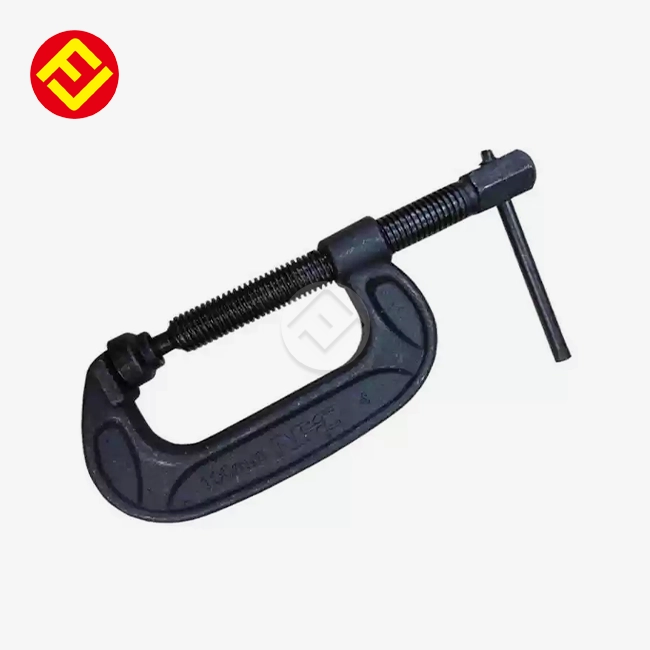
Quick-Action C-Clamps are unique because of the way their internal structures are built. Ductile iron frames give the structure the rigidity it needs to not bend when it's loaded, and steel screw rods that have been treated with finishes that resist corrosion make sure the machine runs smoothly even after thousands of cycles. When the quick-release trigger is pressed, a half-nut mechanism is activated. This briefly separates the spindle from the Acme thread profile, letting it slide easily through the frame hub. Once it's in place on the workpiece, letting go of the trigger re-engages the threads, and a simple turn of the handle applies the final clamping force.
This design solves a number of important problems. Assembly line workers who do routine fixturing jobs like that they can operate the machine with one hand, which leaves their other hand free to hold parts in place. The swivel pad design can work with surfaces that aren't perfectly parallel without having to be constantly adjusted. This keeps the contact pressure constant across the clamping interface. All of these traits work together to make throughput better while reducing the brain load on workers.
Application Diversity Across Industrial Sectors
These tools are used in woodworking shops during glue-up tasks, when workers are limited in time by how long the glue needs to open. Being able to quickly set up several clamps before the bonding agent hardens stops the assembly from moving and makes sure that the joints are lined up correctly. When setting up welding fixtures, shops that work with metal rely on copper-plated spindle types because the coating keeps spatter from sticking to the threads, which is a typical problem that can happen in hot places and make standard clamps useless.
The controlled, gradual pressure that these tools apply is helpful for putting together electronics. To keep fragile circuit boards and housings from breaking or warping, precise force management is needed. The ergonomic handle lets you make small changes that keep things from being over-compressed. The smaller swing radius of the handle makes these clamps useful for construction workers who have to work in tight spaces. They can be used in tight engine compartments or structural recesses where traditional bar clamps are too big and hard to use.
Identifying Efficiency Bottlenecks in Traditional Clamping Methods
Even though traditional fixturing methods are mechanically simple, they have measured inefficiencies that get worse as production numbers rise. A close study of how standard screw clamps work shows three main problems that have an immediate effect on the cost of manufacturing.
Time Expenditure in Manual Adjustment Cycles
In standard C-clamps, the threaded wheel has to be turned all the way through twice during a work cycle: once to open the jaws and enter the workpiece, and again to close and tighten. This is equal to 40 to 60 handle turns per tightening event for thread pitches that are common. This "dead time" adds up to big losses in productivity when spread out over assembly lines that work on hundreds of units per shift. Studies that tracked time-motion in factories that make furniture have shown that traditional clamping adjustments can take 15 to 20 percent of the total assembly cycle time, which is too much in a competitive market.
Operator Fatigue and Ergonomic Strain
Biomechanical stress builds up over work shifts when the wrist is rotated over and over again while being resisted, and for Quick-Action C-Clamp, repetitive strain injuries commonly result from high-force handle turning and awkward bending to reach clamp locations in complex assemblies, with manufacturing facilities facing direct costs from worker fatigue and reduced productivity, and indirect costs from workers' compensation claims and increased absenteeism. A lot of people get repetitive strain injuries because they have to use a lot of force to turn handles and often have to bend over in an awkward way to get to clamp places in complicated systems. Direct costs for manufacturing facilities come from workers who are tired and slow down their work, and indirect costs come from worker's compensation claims and more absences.
The bodily effects go beyond the pain that you feel right away. Fine motor control is lost when muscles get tired, which makes it hard to apply pressure consistently, which affects the accuracy of assembly. As physical input decreases, it becomes more likely to over-tighten, while under-tightening increases the chance that the workpiece will move during later operations. These differences cause problems with the quality that need to be fixed or cause fails in the field, which lowers profits and hurts the brand's image.
Precision Limitations and Workpiece Damage Risks
When you use fixed-jaw clamps without swivel pads, the contact pressure is concentrated on small areas of the surface. This can damage finished surfaces or break materials that are easily broken. Traditional designs have hard shapes that don't allow for small angles that aren't lined up perfectly between the clamping surfaces and the workpieces. This means that operators have to add shims or padding, which slows down processes and adds variation.
Another way that older clamp designs can fail is through thread binding. Spindles can get stuck in the middle of an adjustment because of buildup of debris or thread damage from dropped tools. This makes the equipment temporarily useless and throws off production schedules. These technical weaknesses lead to hidden costs in the form of repair labour and the cost of keeping backup equipment in stock.

How Quick-Action C-Clamps Optimize Performance in Precision Assembly Tasks?
To get around the problems listed above, fundamental design changes are needed instead of small improvements. Quick-Action C-Clamp technology improves performance in a measured way by combining several built-in features that work together to speed up processes while keeping reliability high.
Accelerated Clamp Application and Release Cycles
Compared to other options, the Quick-Action C-Clamp mechanism cuts the time needed for adjustment by about 70%. To get the working pressure, operators don't have to thread the spindle through dozens of rotations; they just depress the release trigger, slide the jaw to the right place, and make a few more turns. This streamlined process cuts the time it takes for each clamping event from 30 to 45 seconds to 8 to 12 seconds. This directly increases output without adding more work.
Our Quick-Action C-Clamps are made at FLA Industrial & Trading Co., Ltd. using ductile iron castings that go through strict physical accuracy checks to make sure the trigger mechanism keeps the thread engaged reliably throughout the clamp's service life. Our quality management system, which is ISO9001-certified, includes testing the spring-loaded nut over 10,000 times to make sure it always engages without skipping. This is an important reliability factor that sets professional-grade equipment apart from consumer-grade options.
We offer painted or powder-coated finishes that are resistant to rust and work well in workshops where cutting fluids, glue, and changes in temperature can shorten the life of tools. This process on the surface stops rust from forming, which stretches the machine's useful life and keeps the spindle moving smoothly.
Ergonomic Design Reducing Physical Strain
The curved handle shape spreads the gripping forces across the operator's palm instead of concentrating pressure at the fingers. This keeps the fingertips from getting tired after long periods of use. Because there are fewer handle rotations needed per cycle, there is less cumulative wrist movement. This lowers biomechanical stress and allows workers to stay productive throughout shifts. These changes to the design directly address worries about workplace health while also speeding up operations.
Another important mechanical benefit is the ability to operate something with just one hand. When putting parts into clamps, being able to use one hand to apply clamping pressure and the other to stabilise the item stops alignment drift that would need to be fixed otherwise. This operational flexibility is especially useful when the assembly is orientated vertically, since gravity tends to move parts around before full pressure is reached.
Controlled Force Application and Material Protection
Precision-machined swivel pads fit the sides of the workpieces so that contact pressure is spread out over bigger areas. This feature of the design stops the surface marking that happens a lot with fixed-jaw clamps, so there are no flaws that would need to be fixed by finishing. The swivel mechanism can handle changes in angle of up to several degrees, keeping full contact even when clamping surfaces that aren't parallel to each other. This happens a lot when working with natural wood grain variations or weldments that are slightly warped.
The steel screw rod construction makes sure that the clamp always applies the same amount of pressure, and for Quick-Action C-Clamp, heat treatment methods raise the spindle's hardness to between HRC 40 and 50, making it resistant to wear from repeated thread engagement while still allowing it to bend and take shock loads without breaking, and this metallurgical balance increases the time between repair needs and upkeep, which lowers the total cost of ownership. Heat treatment methods raise the spindle's hardness to between HRC 40 and 50. This makes it resistant to wear from repeated thread engagement while still allowing it to bend and take shock loads without breaking. This metallurgical balance increases the time between repair needs and upkeep, which lowers the total cost of ownership.
Safety and Maintenance Considerations
To choose the right tool, you need to make sure that the clamping force ratings match the needs of the job. Light-duty models that can hold 600 to 800 pounds of pressure are good for working with wood and putting together electronics, while heavy-duty models that can hold up to 4,000 pounds of pressure are better for working with metal. Going over the stated limits can cause the frame to deform or the trigger mechanism to fail, which can be dangerous and mean the item needs to be replaced too soon.
Protocols for regular repair keep operations reliable. Cleaning with compressed air gets rid of sawdust and metal shavings that have built up on the trigger mechanism and thread surfaces. Unlike petroleum-based greases, which attract dirt and dust, dry graphite lubricants or PTFE sprays keep the spindle moving smoothly without picking up dust. Our technical support team suggests checking the swivel pad attachment hardware every three months to make sure it is securely mounted. This is because loose parts make it harder for pressure to be distributed and cause vibrations that speed up wear.
Selecting the Right Quick-Action C-Clamp for Your Procurement Needs
When buying strategic tools, it's important to carefully compare the technical specs with the working needs. Professionals in procurement have to find a balance between performance needs and price limits, all while making sure that suppliers can be relied on and that customers can get help after the sale.
Technical Specification Considerations
The main selection criteria are throat depth and jaw opening capacity. The throat depth tells you how far away from an edge the Quick-Action C-Clamp can put pressure. This is very important when working with big panels or parts where you can't get to the edges easily. The highest width of the workpiece that the tool can handle is determined by the jaw opening. Typical numbers for compact models are two inches, while heavy-duty models are twelve inches.
The clamping force ratings need to match the properties of the material and the needs of the joint. To keep softwoods and plastics from getting damaged by compression, you need to apply moderate pressure. On the other hand, to keep hardwood joinery and metal welding fixtures from moving during processing, you need to apply higher forces. Our engineering team at FLA Industrial & Trading Co., Ltd. offers application consultations to make sure that force specifications are aligned with intended use cases. This keeps you from either not specifying enough, which can hurt results, or specifying too much, which can make procurement costs go up for no reason.
Material and Construction Quality Indicators
How long a frame lasts and how stable its dimensions are under load are directly affected by the materials that make it up. When compared to grey cast iron, ductile iron castings have better strength-to-weight ratios. This is because the spheroidal graphite microstructure makes them more resistant to impact. This difference in metals becomes important in places where dropped tools or accidental hits from nearby operations can cause shock loads that break brittle materials.
Spindle coating technology changes how well something works in some settings. Copper plating stops weld spatter from sticking in production facilities, while oxide coats protect against corrosion at a basic level and are good for dry workshops. Electroplated chrome finishes are the best at resisting corrosion in wet or chemically aggressive environments, but they are more expensive to buy and need to be justified by longer service life or lower maintenance costs.
Supplier Evaluation and Procurement Strategy
Standardisation can be helpful when you build relationships with manufacturers that offer a wide range of Products" target="_blank" style="color:blue" >products. When one provider offers different types of clamps, like bar clamps, spring clamps, and specialised versions, it makes it easier to keep track of inventory and train operators on how to use the clamps in a way that is known to them. FLA Industrial & Trading Co., Ltd. keeps 2,000 tonnes of stock in more than 1,000 specs to make sure that products can be delivered right away and that they can be changed to fit special needs.
Expected lead times are different for catalogue items and unique options, and for Quick-Action C-Clamp, stock items usually ship within a few days, but designed changes that need to change the pattern or use special finishes can make the wait 7–15 days, and when planning purchases, these factors should be taken into account so that the availability of tools is in sync with project or production schedules. Stock items usually ship within a few days, but designed changes that need to change the pattern or use special finishes can make the wait 7–15 days. When planning purchases, these factors should be taken into account so that the availability of tools is in sync with project or production schedules.
When you buy in bulk, you can get better prices without sacrificing quality. Manufacturers can optimise production runs with the help of volume agreements, which lowers the cost per unit. Customers can then benefit from negotiated discount plans. But buying teams have to weigh these saves against the costs of keeping inventory and the risk of items becoming obsolete if requirements or demand change.

Real-World Impact: Case Studies and User Experiences
Empirical evidence from diverse industrial applications validates the performance claims associated with Quick-Action C-Clamp technology. Having documented solutions gives you real data that help you make decisions about purchases and defend your capital investments.
Electronics Manufacturing Assembly Line Optimization
A mid-scale electronics company that made housings for consumer electronics ran into delays in their assembly process because workers had to clamp circuit board assemblies into plastic cases by hand before ultrasonic welding. With older screw clamps, setting and tightening each unit took 40 seconds, so each person could only make 90 units per hour. Carpal tunnel syndrome claims for workers' compensation went up because of the repeated wrist movement needed for adjustments.
When the same tasks were done with Quick-Action C-Clamps with swivel pads instead, they took only 12 seconds, which increased throughput to 240 units per operator hour, a 167% increase in productivity. Over the next six months, the ergonomic changes cut the number of injuries by 60%, which saved money on workers' compensation insurance premiums and paid for the tools within eight months. More uniform and controlled pressure application was found to cause a 35% drop in housing cracks as measured by product quality measures.
Custom Furniture Workshop Efficiency Enhancement
A company that makes speciality furniture and high-end cabinets had a hard time with glue-up tasks where they had to put 8-12 clamps on complex parts at the same time before the adhesive ran out of time. When using old-fashioned tools, the successive clamping process often took longer than the glue could open. This made the joints weak, so they failed quality checks and had to be taken apart and refinished.
By using bar clamps and Quick-Action C-Clamps, the time it took to apply multiple clamps dropped from 6 minutes to less than 2 minutes, meeting all glue requirements. The number of rework orders dropped from 12% to 3%, which brought back material costs and labour hours that had been lost to fixing mistakes. Shop foremen said that operators were much happier because they didn't have to work as hard or as stressed out to get the adhesive to dry faster. This made the work pace more manageable.
User Feedback and Industry Recognition
Professional tool reviews always say that Quick-Action C-Clamps are great for the workshop because they are flexible and easy to use. "One-handed operation" and "no more endless cranking" are features that users in woodworking forums and industrial procurement communities stress as game-changing that change the way they do their daily work. Independent testing labs have confirmed that models that were made correctly keep their clamping force specifications for the full rated cycle life without the trigger mechanism breaking down.
Industry polls of fabrication shops show that shops that replaced more than half of their traditional clamps with Quick-Action C-Clamps saw average 18–25% productivity gains in tasks that required a lot of clamping. Not only do these improvements come from faster individual cycles, but they also come from less operator fatigue in the late shift, when normal tool demands make performance worse.
Conclusion
Traditional fixturing methods aren't very efficient. Quick-Action C-Clamp technology fixes this by using mechanical innovations that shorten setup times, keep operators from getting tired, and improve accuracy. The ergonomic handle designs, spring-loaded trigger mechanisms, and swivel pad configurations all work together to make measurable efficiency gains that have been proven in a wide range of workplace settings. When purchasing these tools, people in charge should look at how well they are made (ductile iron construction, right force ratings for the materials they will be used on, and the supplier's skills, such as the size of their collection and their expert support). FLA Industrial & Trading Co., Ltd. has been making products for almost 40 years and has quality systems that are ISO9001-certified. They offer reliable clamping solutions that meet the strict needs of current precision assembly settings.

FAQ
Can heavy-duty metalworking be done with rapid-release clamps?
Quality Quick-Action C-Clamps made of ductile iron and forged steel spindles can clamp more than 2,000 pounds, making them useful for a wide range of metalworking tasks such as holding assemblies and positioning welding fixtures. But solid-frame, continuous-thread bridge clamps made especially for heavy structural work may still be useful for applications that need the most rigidity and very high forces. Specs that are properly matched to load needs ensure the best performance.
What kinds of maintenance can make clamps last longer?
Cleaning the trigger parts and threads regularly with compressed air gets rid of dirt and dust that has built up. Putting PTFE spray or dry graphite lubricant on the spindle surfaces keeps them running smoothly without attracting dust. Every three months, the swivel pad hardware is checked to make sure it is securely attached. Keeping clamps in places with controlled humidity stops corrosion. Using specific storage racks to avoid damage from impacts saves the frame and trigger parts.
What is the difference in price between standard models and quick-release versions?
Usually, buying Quick-Action C-Clamps costs 40 to 60 percent more than buying regular screw clamps of the same size and capacity. Total cost of ownership analysis, which includes increased output, less operator tiredness, lower rework rates, and lower costs linked to injuries, usually shows a good return on investment within 6 to 18 months for operations with moderate to high clamping frequency.
Enhance Your Assembly Operations with Professional-Grade Clamping Solutions from FLA Industrial & Trading Co., Ltd.
Upgrading your fixturing tools is a smart way to improve the quality of your products and the speed of your operations. We are a reliable Quick-Action C-Clamp manufacturer with a lot of experience working with customers in the US, Germany, and Australia. Our engineering team is ready to give you expert advice that is specific to your needs, whether you're trying to improve how you work with wood, how you make metal, or how you put together electronics. Get in touch with our sales team at sales@flaindustrial.com to talk about buying in bulk, making custom specifications, and how our large inventory of over 1,000 tool specifications can help you meet your production goals with fast delivery and low prices.
References
1. American Society of Mechanical Engineers (ASME). "Performance Standards for Hand-Operated Clamps in Industrial Applications." ASME B107.41M Specification Document, 2019.
2. Manufacturing Technology Research Institute. "Time-Motion Analysis of Clamping Operations in Assembly Line Environments." Industrial Engineering Quarterly, Vol. 34, No. 2, 2021, pp. 112-128.
3. Occupational Safety and Health Administration (OSHA). "Ergonomic Guidelines for Repetitive Hand Tool Use in Manufacturing Settings." OSHA Technical Manual, Section VII, Chapter 3, 2020.
4. Deutsches Institut für Normung (DIN). "Testing Methods and Quality Requirements for Metalworking Clamps." DIN 5117 Standard Specification, 2018.
5. National Institute for Occupational Safety and Health (NIOSH). "Prevention of Work-Related Musculoskeletal Disorders in Tool-Intensive Manufacturing Operations." NIOSH Publication No. 2020-456, 2020.
6. Society of Manufacturing Engineers (SME). "Advanced Fixturing Techniques for Precision Assembly: A Comprehensive Guide." SME Technical Paper Series, MF21-347, 2022.