How to Select Elevator Rail Clamps for Reliable Performance
2026-07-03 15:26:47


Choosing the right elevator rail clamps is important for safety, precise alignment, and reducing vibrations in systems that move things up and down. These fastening systems hold guide rails to hoistway frames. This has a direct effect on how well the elevator works and how safe the passengers are. When purchasing elevator rail clamps, buyers need to check that the clamps are the right size for the rail profiles (T89, T75, T114, etc.), that the material will last (cast iron, ductile iron, or steel), that the elevator rail clamps can handle heavy loads or standard loads, and that they meet EN 81-20/50 or ASME A17.1 standards. The right choice cuts down on noise transfer, allows for heat expansion, and guarantees long-term reliability in a variety of installation settings.


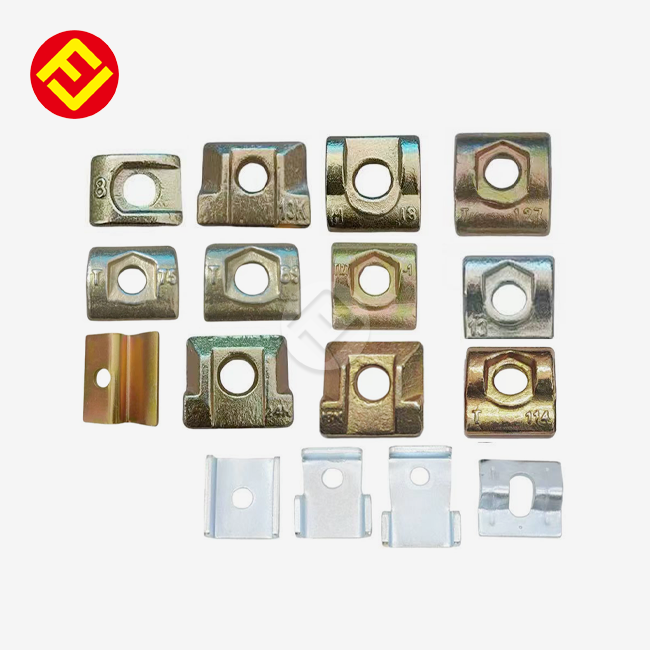
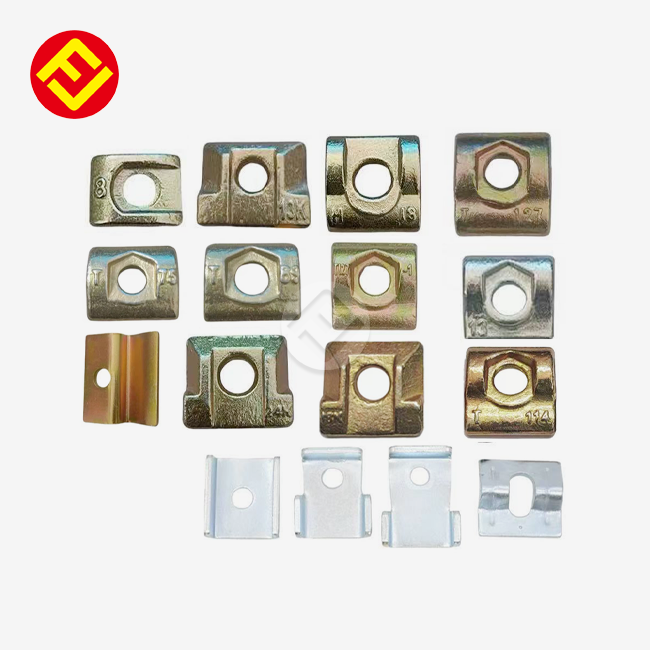
Specification |
||
| Product Specification | Nominal Thread (M) | Nominal Length(mm) |
| 8K | 8 | 12-40 |
| 13K | 13 | 12-40 |
| 18K | 18 | 16-50 |
| 24K | 24 | 16-50 |
| 8K(12-40 Screw/Flat/Washer) Complete Set | 8K(12-40 Screw) | (12-40 Screw) |
| 13K (12-40 Screw/Flat/Washer) Complete Set | 13K(12-40 Screw) | (12-40 Screw) |
| 18K(16-50 Screw/Flat/Washer) Complete Set | 18K(16-50 Screw) | (16-50 Screw) |
| 24K(16-50 Screw/Flat/Washer) Complete Set | 24K(16-50 Screw) | (16-50 Screw) |
Understanding Elevator Rail Clamps: Function, Types, and Materials
Core Function and Mechanism
Elevator rail clamps are important parts of vertical transportation systems that hold guide rails in place on mounting frames that are attached to the walls of the hoistway. These mechanical devices are more than just fasteners; they connect the building's static frame to the moving parts of the elevator. They do two main things: they tightly align the rail to make sure it is straight and vertical for ride quality according to ISO 7465 standards; and they allow for vertical movement caused by steel tracks expanding and contracting due to temperature changes and natural building settlement.
Some of the biggest problems in the industry are rail buckling (when tracks grow without being able to relax) and vibration transmission (when roller guide noise gets into the building or car area because of bad damping). These elevator rail clamps fix these problems. They make sure the safety gear system works right by keeping the rail gauge distance the same when emergency brake loads are applied.
Common Clamp Types and Applications
The elevator business uses a number of different elevator rail clamp designs, each one best suited to a certain set of working needs. Sliding clamps, which are sometimes called spring clips, have elastic or spring-steel parts that let the vertical rail slide smoothly, which reduces heat stress. These are especially useful in high-rise buildings where changes in temperature cause the rails to expand a lot. Solid elevator rail clamps offer permanent attachment for low-speed or short-travel tasks where heat movement is minimal.
If there is a small difference between where the brackets are and where you want the rails to go, swivel elevator rail clamps can be adjusted to fit. Adjustable elevator rail clamps let you change the dimensions while installing. This is especially helpful when working with non-standard hoistway sizes or retrofit jobs where the original fixing points can't be perfectly copied. Each type solves a different kind of installation problem while still meeting the basic need for secure train placement.
Material Selection and Performance Characteristics
Because they are made of graphite inside, cast iron elevator rail clamps, especially those made from Grey Cast Iron (HT200/ASTM A48 Class 30) or Ductile Iron (QT450-10), are better at reducing vibrations. This makes it much harder for noise and vibrations to travel from the rail to the building, which is very important for high-end home and business projects. Grey iron works great when it is compressed, but it can break when it is stretched. Spheroidal Graphite (Ductile) Iron clamps have the same elasticity and tensile strength as steel, but they still have the benefits of casting. This means they can be used in high-impact situations like when safety gear is engaged quickly at high speeds.
Carbon steel options, usually made from Q235B or Q345 types, have a high yield strength that can handle the side forces that happen when a freight elevator is loaded or the safety gear is engaged. Cast iron elevator rail clamps may not transmit vibrations as well as steel elevator rail clamps, but steel elevator rail clamps are better at holding tension. Stainless steel choices are better at resisting corrosion and are better for outdoor panoramic lifts or places with a lot of humidity, but they cost more. In order to choose the right material for a job, you have to weigh things like weight, sound damping, tensile strength, corrosion protection, and your budget.
Key Selection Criteria for Reliable Elevator Rail Clamps
Dimensional Compatibility and Precision Matching
Making sure that the elevator rail clamps and elevator rails are exactly the same size is very important for the safety and efficiency of the system. Elevator rail clamps need to be able to fit certain T-profiles, like T45, T50, T70, T75, T89, T90, T114, T127, and T140, as well as hollow guide rails. Each design has a different flange thickness and shape, so elevator rail clamps with the right jaw sizes are needed. Using Go/No-Go gauges during quality control makes sure that the jaws of the elevator rail clamp fit tightly with the guide rail flange, which stops any movement or alignment drift during operation.
You can't say enough about how important this accuracy is. Even small differences in size can cause uneven load distribution, faster wear, more shaking, and even safety gear that doesn't work. Because the flanges are not all the same thickness, an elevator rail clamp made for a T89/B cut rail might not fit a T75/3 cold-drawn rail exactly. Professionals in procurement should always make sure that the elevator rail clamp specifications exactly match the rail designation given in the design paperwork for their elevator system. They should also make sure that the rail measures strictly follow ISO 7465 standards.
Regulatory Compliance and Safety Certifications
When making purchases, people need to think about certifications like EN 81-20/50, ISO standards, and ASME A17.1 that protect quality and safety. These certificates affect project approvals and legal exposure. These certificates show that elevator rail clamps have been through strict tests to make sure they are structurally sound, can hold enough weight, and are made of good materials. Random sampling batches should be put through destructive testing to make sure that the elevator rail clamp and its pin meet the minimum Newton load standards set by safety codes. This is to make sure that they don't break when the safety gear is deployed.
When working with regulatory officials during elevator installation checks or modernization projects, compliance paperwork is very important. If elevator rail clamps don't have the right approval, they could cause delays in the job, failed checks, or liability issues if they break. After the initial certification, buying teams should check that makers keep up quality management systems like ISO 9001, making sure that every batch of Products" target="_blank" style="color:blue" >products meets the same high standards that got the initial certification.
Load Capacity and Durability Assessment
Load capacity analysis tells you which elevator rail clamps are best for heavy-duty or light-duty jobs. This is backed up by lifetime testing and long-term reliability measures. This makes sure safe operation under operating stress, which is very important for elevators in high-rise buildings or areas with a lot of traffic. Tensile and shear strength tests show that elevator rail clamps can handle the forces that happen during emergency stopping, guide shoe friction, and building movement without breaking or deforming.
Dynamic speed is much more important than static load scores. Elevator rail clamps must be able to hold tightly even after being vibrated thousands of times without breaking down or deforming. Testing spring-steel clips for Rockwell hardness makes sure that the part stays flexible over a long period of time. People who are in charge of buying things should ask for proof of the results of fatigue tests, especially for heavy-load or high-speed uses where cycle stress is more intense. By understanding these performance parameters, you can make sure that the elevator rail clamp specs meet the needs of the job. This keeps you from over-engineering, which can be expensive, or under-engineering, which can be dangerous.

Comparing Elevator Rail Clamp Solutions in the Market
Material Performance: Cast Iron versus Steel Options
When looking at different types of materials, cast iron elevator rail clamps are the best at reducing vibrations, while steel elevator rail clamps are the best at tensile strength. The graphite structure inside cast iron naturally absorbs vibrations and lowers noise transfer to the building structure. This is especially useful in home and hotel settings where guest comfort is very important. Grey cast iron is very good at holding loads in compression, but it breaks easily when stretched, which means it's not as good for uses that need to handle strong impact forces.
When made from Q235B or Q345 carbon steel, steel elevator rail clamps have a higher yield strength and work better when pulled apart. Because of these qualities, steel is better for freight lifts and other places where safety gear needs to connect with a lot of force. But because steel is better at transmitting sound, extra noise-dampening steps may need to be used in places where noise is a problem. Recent market trends in 2024 show that ductile iron elevator rail clamps are becoming more popular. These elevator rail clamps have the vibration-damping properties of cast iron and the tensile properties of steel, making them perfect for a wide range of uses.
Coating and Corrosion Protection Strategies
Surface cleaning requirements have a big effect on how long an elevator rail clamp lasts, especially in harsh environments. Standard zinc plating (galvanized finish) protects against rust well enough for climate-controlled indoor shafts, usually meeting the testing needs for 24 to 48 hours of neutral salt spray. Places with a lot of humidity, like coastal installations, outdoor panoramic lifts, or hoistways that don't get enough air flow need stronger defense. Hot-dip galvanizing or Dacromet coats make things more resistant to rust. Depending on the coating thickness (measured in microns against ASTM standards), they can usually withstand salt spray tests for more than 72 to 96 hours.
Environmental exposure studies should be used to tell procurement workers what kind of coating is needed. Standard black oxide finishes are cheap, but they should only be used on climate-controlled shafts that don't get wet very often. By buying better coatings up front, you can avoid corrosion-related breakdowns that happen too soon and require expensive repairs and service interruptions. Checking the coating thickness during quality control makes sure that elevator rail clamps bought meet the required levels of rust resistance. This protects the long-term value of the asset and lowers the total cost of ownership.
Evaluating Manufacturer Reliability and Support
Some of the biggest companies in the world, like Thyssenkrupp, Schindler, Otis, KONE, and Mitsubishi, have built their names on offering certified products, strong contracts, and good customer service. Most of the time, these names offer a lot of scientific information, engineering help for custom applications, and a stable supply chain. Their goods are usually priced higher than others on the market, but you can be sure that they will always be of high quality and follow all regulations.
Authorized wholesalers and specialized component makers are two other ways to get elevator rail clamps parts. They often offer competitive benefits in terms of price freedom, custom specs, and quick service for smaller orders. When buying teams look at suppliers, they should look at certification paperwork, ask for sample tests, confirm warranty terms, and see how well the suppliers can help with technical issues. The name of the manufacturer is very important for elevator parts because they directly affect how the building works and the safety of its occupants.
Practical Guide: Procurement and Installation of Elevator Rail Clamps
Strategic Sourcing and Procurement Optimization
Finding the right buying outlets is the first step to effective procurement. Direct manufacturers offer benefits like the ability to customize, expert help, and maybe even better terms for orders that are placed in big quantities. Specialized wholesalers make sure that there is stock on hand, that orders with multiple parts are shipped together, and that customers can get help locally. Online B2B sites make it easier for buyers to find suppliers, but they need careful checks of quality qualifications and compliance paperwork.
By taking advantage of big discounts, lower shipping costs per unit, and easier management of the buying process, bulk purchasing can save you a lot of money. Procurement pros should talk to suppliers about more than just unit prices. They should also talk about payment terms, warranty coverage, access to expert support, and the availability of stock for future orders. The length of time it takes to get elevator rail clamps depends a lot on whether they are regular catalog items or special orders that need tooling changes. Standard goods usually ship in two to four weeks, but special orders may take six to twelve weeks, based on how complicated the making process is.
Installation Best Practices and Common Mistakes
To get the best design performance from quality elevator rail clamps, it's important to place them correctly. Different types of elevator rail clamps have different installation steps, but the main ones are making sure the dimensions are compatible before installing, using the right amount of torque on the bolts, and making sure the elevator rail clamps stay in the right place during the whole process. The torque settings rely on the type of elevator rail clamp and whether the point is stable or moves. Usually, the bolts are M12 or M16. To allow for thermal expansion, sliding points need to be torqued in a certain way, usually with double nuts or spring washers. Fixed points, on the other hand, are torqued to give strength according to load charts from the maker.
Some common installation mistakes are overtightening bolts, which can deform elevator rail clamps or cause stress clusters that cause them to fail early, and not aligning things correctly, which can make the load distribution uneven or stop expansion joints from moving as intended. If you use the wrong elevator rail clamp type for a mounting location—for example, if you put in solid elevator rail clamps where slide elevator rail clamps are supposed to go—the rail could buckle from the heat. Professional construction and regular upkeep keep elevator systems safe to use and extend their life, protecting the large investment made in them and avoiding costly service interruptions.

Conclusion
To choose elevator rail clamps, you have to weigh technical requirements, safety requirements, environmental concerns, and cost factors. The choice affects not only the success of the initial installation, but also the long-term dependability of the system, the amount of upkeep needed, and the safety of operations. Procurement pros can get the best performance and value by carefully checking dimensions, material properties, load capacity, and legal certifications.
To choose the right elevator rail clamp, you must first know what your application needs, such as the height of the building, the type of lift, the surroundings, and the performance you expect. Partnering with trustworthy providers who offer full expert support, clear paperwork, and on-time delivery guarantees that purchases will lead to successful installations and happy stakeholders.
FAQ
How do I determine the correct clamp size for my elevator rail?
To find the right size elevator rail clamps, you need to accurately measure the rail dimensions and make sure they are compatible. Find the exact name of your guide rail on technical plans or on current rail markings (T45, T75, T89, T114, etc.). Using tools, measure the rail flange's width and compare it to the dimensions set out in ISO 7465. The specs for an elevator rail clamp should make it clear which rail types it can work with, and the jaw sizes should match the flange thickness within certain limits. When you're looking for elevator rail clamps, make sure you get dimensional models that show the important contact measurements and compare them to the rail specifications you gave them. Using Go/No-Go gauges during the receiving check makes sure that the parts fit correctly before they are installed.
What are typical lead times for bulk elevator clamp orders?
Lead times change depending on whether you're buying something from a store or making something to your exact specs. Standard elevator rail clamps in popular shapes (T75, T89) usually ship in two to four weeks from well-known companies that keep stock. Depending on the making process and current production plans, custom orders that need special materials, coatings, or changes to the size may take six to twelve weeks. Lead times may be extended even more for large orders that are bigger than normal production batches. When planning procurement, be clear with sellers about when things need to be delivered and ask for guaranteed delivery dates in writing. Also, make sure that project plans include enough extra time to cover any unexpected delays.
When should I choose stainless steel over cast iron clamps?
Stainless steel elevator rail clamps are much more resistant to corrosion than regular coatings, so they are needed for outdoor panoramic lifts, sites near the coast, or places with a lot of humidity where regular coatings aren't enough to protect. When it comes to cost-effectiveness and sound damping, cast iron is the best material for climate-controlled internal installs. Look at the specific things that are exposing you to the environment, like salty air, high humidity, extreme temperatures, and the chance of being exposed to chemicals. Stainless steel is worth the extra money when the long-term security against corrosion is worth more than the initial investment. This usually happens in harsh settings or situations where upkeep is hard to get to and part longevity is very important.
Partner with FLA Industrial & Trading Co., Ltd. for Quality Elevator Rail Clamp Solutions
Picking a trustworthy elevator rail clamps supplier has a direct effect on the success of your project and the safety of your operations in the long run. FLA Industrial & Trading Co., Ltd. has been making high-quality metal parts for almost 40 years and has over 1,000 product standards backed by cutting-edge technology and strict quality management systems. Our elevator rail clamps go through a lot of quality control checks, such as checking for measurement errors, testing their tensile and shear strengths, and making sure they don't rust, to make sure they meet EN, ISO, and ASME standards.
We offer fair prices, consistent quality, and quick expert help to Fortune Global 500 partners and distributors in the US, Germany, and Australia. Whether you need regular T-profile elevator rail clamps or ones that are made to order for a specific job, our engineering team will help you every step of the way, from choosing the right ones to installing them. You can talk to our sourcing experts about your project requirements, get full technical paperwork, or set up a sample evaluation by emailing sales@flaindustrial.com. You can look through our whole catalog at flaindustry.com and learn how our dedication to innovation and quality can help your vertical transportation projects.
References
American Society of Mechanical Engineers (2019). ASME A17.1: Safety Code for Elevators and Escalators. New York: ASME Standards Committee.
European Committee for Standardization (2020). EN 81-20: Safety Rules for the Construction and Installation of Lifts - Lifts for the Transport of Persons and Goods. Brussels: CEN Technical Committee.
International Organization for Standardization (2018). ISO 7465: Passenger Lifts and Service Lifts - Guide Rails for Lift Cars and Counterweights - T-Type. Geneva: ISO Technical Committee 178.
Strakosch, George R. and Caporale, Robert S. (2010). The Vertical Transportation Handbook, Fourth Edition. Hoboken: John Wiley & Sons.
Al-Sharif, Lutfi and Peters, Richard (2020). Elevator Mechanical Design: Principles and Concepts, Third Edition. Elevator World Educational Services.
National Elevator Industry Inc. (2021). Guide Rail Bracket and Fastener Installation Standards for Traction Elevators. Salem: NEII Technical Standards Division.