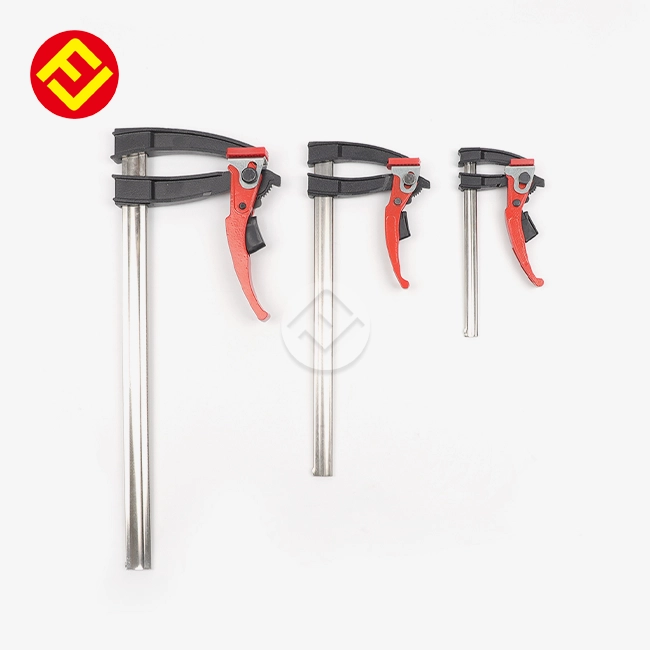
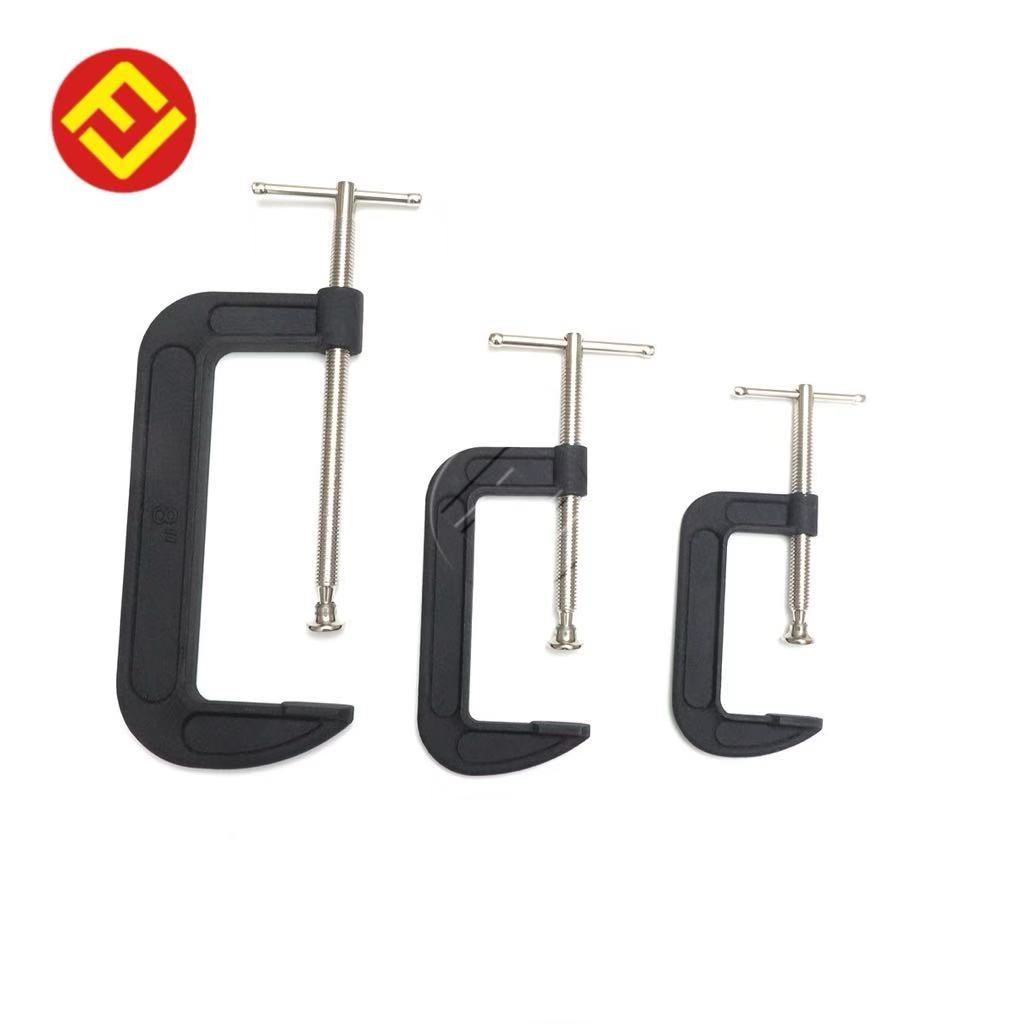
Spanish-Style Pump Clamp for Reliable Pipe Support Systems
2026-07-16 14:41:41


When you need to secure high-pressure pipe systems in tough industrial settings, picking the right locking method is very important. This is a special heavy-duty binding tool called the Spanish-Style Pump Clamp. It was made for situations where regular worm-drive clamps just won't work right. This strong industrial fastener is different from most perforated band clamps because it has a solid, non-perforated band and a high-tensile bolt-and-nut mechanism, which usually includes a strengthened bridge or welded body. This unique design architecture lets professionals apply much more torque without damaging hoses or compromising the integrity of the seal. This makes it an important part of reliable pipe support systems in many fields, such as plumbing, chemical processing, construction, and agricultural irrigation.


Specification |
|||
| Specification Model | Maximum Clamping Distance (mm) | Throat Depth (mm) | Total Length (mm) |
| Spanish-Style Pump Clamp 90x300 | 300 | 90 | 410 |
| Spanish-Style Pump Clamp 90x400 | 400 | 90 | 510 |
| Spanish-Style Pump Clamp 90x500 | 500 | 90 | 610 |
| Spanish-Style Pump Clamp 120x300 | 300 | 120 | 425 |
| Spanish-Style Pump Clamp 120x400 | 400 | 120 | 524 |
| Spanish-Style Pump Clamp 120x500 | 500 | 120 | 623 |
| Spanish-Style Pump Clamp 120x1000 | 1000 | 120 | 1118 |
| Spanish-Style Pump Clamp 120x1500 | 1500 | 120 | 1613 |
Understanding Spanish-Style Pump Clamps: Features and FunctionalityWhat Defines Spanish-Style Pump Clamps?
The main thing that makes Spanish-Style Pump Clamps different is the way they are built. These clamps solve three major problems that procurement managers and site engineers face every day: they stop hoses from blowing off in environments with pulsating pressure; they stop hoses from extruding or shearing through bevelled or rolled band edges; and they make hoses last longer in places with a lot of vibration. The solid band design evenly distributes radial force around the whole circumference. This makes a hermetic seal that stops leaks at connection points, which is a common way for traditional perforated designs to fail.
Material Composition and Grade Options
Choice of material has a direct effect on efficiency, durability, and fitness for use. There are two main types of Spanish-Style Pump Clamp. The W1 version is made of zinc-plated carbon steel, which is a cost-effective choice for general industrial uses where moderate corrosion resistance is enough. The Cr3+ passivation process that these clamps go through goes beyond what is required by ISO 4042. They can also withstand salt spray tests for 72 to 96 hours according to ASTM B117 standards. The W4 grade is made of AISI 304 stainless steel, which is designed to withstand harsh corrosion conditions in marine environments, chemical plants, and underground installations. High-quality W4 clamps don't let red rust form for more than 240 hours, which makes them perfect for long-term use in tough conditions.
Structural Design and Load-Bearing Capacity
When you look at the structural parts of the Spanish-Style Pump Clamp, you can see how they are better suited for mechanics. These clamps don't use thread contact with perforated holes. Instead, they use a high-strength hexagonal bolt (usually Grade 8.8 or higher) that acts through a strong trunnion or welded housing assembly. This design lets you tighten torques ranging from 8Nm to over 25Nm, based on the diameter. This is a lot more than the 4-6 N · m that normal hose clamps can handle. The rolled edge is very important for safety because it stops the "cookie-cutter effect," which happens when sharp metal edges cut through the support layers of expensive industrial tubes when they are compressed. Band widths are usually 18mm, 20mm, or 25mm, and thicknesses are kept within ±0.1mm to make sure they work with standard industrial fittings.
Benefits and Applications of Spanish-Style Pump Clamps in Industrial Settings
Superior Durability and Performance Advantages
In industrial settings, fastening methods need to be able to handle harsh conditions without lowering safety or efficiency. There are real benefits to using Spanish-Style Pump Clamps, like lower downtime and lower operating costs. Because they are built so well, they can take rapid pressure spikes (also called "water hammer") that would break or loosen most clamps. The high-friction locking system keeps the seal in place even when it's vibrating all the time, which is very important for mobile equipment and pump installs. These clamps also work great in thermal cycling situations; they can withstand temperatures from -40°C to +150°C without losing their clamping force.
Because of these main performance benefits, Spanish-Style Pump Clamps are a must-have for tough jobs:
- Enhanced Seal Reliability: The solid band design with rolled ends makes the hose's diameter uniformly compressed, so there are no weak spots where leaks usually happen when pressure changes.
- Reusability and Maintenance Efficiency: The threads on perforated worm-drive clamps deform after repeated use, but the bolt-and-nut design doesn't wear out. This makes the clamps good for places with a lot of upkeep, where lines need to be replaced often.
- Higher Torque Capacity: The solid band and reinforced housing can handle installation torques 30% higher than the stated specs. This gives you important safety gaps during field installation and lets the product expand and contract without coming loose.
These benefits directly address the operational problems that site managers and procurement engineers face when they try to keep tools up and running and make sure that assets will last for a long time.
Industrial Applications Across Multiple Sectors
The usefulness of Spanish-Style Pump Clamps can be seen in many different workplace settings where failure can have major effects on safety and operations. Heavy-duty thermoplastic and lay-flat hoses linked to diesel water pumps need these clamps to keep them in place. Weaker fastening methods would not work with the quick changes in pressure that happen when the pump starts up and stops. These clamps are used by construction companies in temporary dewatering systems that need to be reliable while foundation work is being done or when responding to an emergency flood.
The conditions in chemical processing plants and slurry transfer processes are very tough. In these situations, thick-walled suction hoses that carry thick fluids or chemicals that eat away at metal need to be both chemically resistant and strong. The versions made of W4 stainless steel can stand up to chemical attacks and still keep their seals when heavy fluids move through them. Spanish-Style Pump Clamps are used in the automotive and heavy machinery industries for connections between intercoolers and intake systems. If air leaks out, the power goes out right away, or the emission controls stop working. The clamps hold the reinforced silicone hoses in place. During their service life, the hoses will be subjected to extreme engine vibration and temperature cycles.
Maintenance Strategies for Extended Lifespan
To get the best return on investment, you need to follow systematic repair procedures that are designed to work in your unique working conditions. Scheduled eye checks should happen every three months in normal situations, and every month in high-vibration or corrosive settings. During inspections, maintenance teams should make sure that the band surfaces don't have any signs of corrosion breaking through. They should also use calibrated torque wrenches to check the bolt torque specifications and look for signs of cutting or too much compression on the hose surfaces at contact points. If you replace clamps that are showing signs of wear on time, you can avoid catastrophic failures that cost a lot of money and could cause safety issues.

Comparing Spanish-Style Pump Clamps with Traditional and European-Style Clamps
Design and Performance Differentiators
Knowing the technical differences between clamping styles helps you make smart buying decisions that meet the needs of your specific application. Traditional worm-drive clamps made in the United States have open bands with built-in screw systems that work well for general-purpose low-pressure tasks. However, their design flaws become clear in harsh industrial settings where higher gripping forces and resistance to shaking are needed. In heavy-duty situations, European-style clamps still can't match the performance of Spanish-Style Pump Clamps with their pressed tooth mechanisms, which are better than basic worm drives.
This heavy-duty hybrid design is in the Spanish-Style Pump Clamp style and was made for situations where fail-safe reliability is needed under stress. The wider band with no holes spreads the clamping pressure more evenly, which lowers stress buildups that damage the hose. The bolt-and-nut assembly gives a positive mechanical advantage, which lets installation staff get exact torque specs that can be checked with calibrated tools. This is a very important factor for situations where strict safety compliance standards must be met.
Application-Specific Suitability
Matching the clamp style to the needs of the application improves both performance and cost-effectiveness. For low-pressure ventilation ducts, light-duty water lines, and temporary links where replacements are easy to get, traditional worm-drive clamps are still a good value. European-style versions work well in medium-pressure car settings and process pipes that are subject to mild vibration. For situations involving high-pressure pump discharge lines, heavy-wall industrial hoses, pulsating pressure, high-vibration environments, or critical connections where failure could cause safety risks or major operational problems, Spanish-Style Pump Clamps are the best choice.
Long-Term Value and Return on Investment
While the initial purchase price is important, a full cost analysis must take into account all of the costs of owning the equipment over its entire life. Spanish-Style Pump Clamps usually cost more per unit than standard options because they are made with better materials and are built to last longer. But the real value comes out when you look at the long-term return on investment (ROI). These include longer service life, less upkeep work, no more emergency replacement costs, no more downtime costs, and no more hose damage from bad clamps. Bulk buying programs from well-known companies often offer bulk savings that bring down the price difference while keeping quality high across large installations.
How to Choose the Right Spanish-Style Pump Clamp for Your Project
Assessing Critical Selection Parameters
To choose the right Spanish-Style Pump Clamp, you must first carefully look at the needs and working conditions of the project. For load requirements, the maximum operating pressure plus a safety margin must be taken into account. This safety margin is usually calculated at 150% of the normal working pressure to account for surge conditions. Pipe and hose width requirements need to be measured accurately to ensure the right fit and the best spread of clamping force. The right material grade between W1 and W4 versions is chosen based on environmental factors like extreme temperatures, chemical exposure, UV radiation, and the state of the dirt for buried uses.
Evaluating Material Quality and Design Compatibility
Quality control procedures keep systems safe from faulty Products" target="_blank" style="color:blue" >products that aren't up to par. Manufacturers with a good reputation give detailed material certifications that include measurements of plating thickness, salt spray test results, and the steel grade composition. Dimensional accuracy verification checks that the band's width and thickness are within the acceptable ranges, proving that the Spanish-Style Pump Clamp can be used with common industrial fittings. During the receiving inspection, quality can be seen in design elements like the quality of the rolled edges, the strength of the welds at the housing attachment points, and the grade markings on the bolts.
Supplier Selection and Procurement Considerations
It turns out that working with dependable providers is just as important as choosing the right products. Manufacturers with a history of quality show their dedication to the Spanish-Style Pump Clamp by getting ISO 9001 quality management systems and product-specific approvals from well-known testing groups. Customer feedback from related businesses can tell you a lot about how well a supplier is doing in the real world and how quickly they respond to your needs. A thorough review of a provider should look at the terms of the guarantee, the availability of technical support, the reliability of shipping for both standard and urgent orders, and the ability to make changes for unique uses that need non-standard sizes or materials.
Logistics of procurement have a big effect on how quickly and cheaply projects are completed. Clear pricing structures that break down base costs, volume discount levels, and shipping costs make it possible to accurately plan a budget. Lead time guarantees are very important for projects that need to be done quickly and don't have much room for delays in the construction schedule. Field teams can get the job done right the first time by using technical documentation, torque specs, and application guidance to help with installation. Customisation choices, such as using different materials, making the design smaller or bigger, or adding new features, can help with pipe support problems that normal catalogue items can't.

Conclusion
Spanish-Style Pump Clamps are an important part of pipe support systems that need to work well in tough industrial settings. Their strong, solid-band design, high torque capacity, and superior longevity provide real operating benefits such as less downtime, longer equipment life, and better safety compliance. When engineers and procurement managers look at tightening options in terms of their long-term performance needs and total ownership costs, Spanish-Style Pump Clamps always show that they are the best value. Investing in good fastening systems pays off because they keep expensive failures from happening, don't need emergency fixes, and keep working reliably in a wide range of industries, from chemical processes to farming irrigation.
FAQ
What makes Spanish-style pump clamps different from standard hose clamps?
Not like most clamps, which have a perforated band and worm screw, Spanish-Style Pump Clamps have a solid, non-perforated band with a bolt-and-nut system. This design lets you apply a lot more torque—usually 8–25Nm compared to 4-6Nm for standard clamps—without damaging the hoses. The rolled edge design keeps the hose support from cutting when it's compressed, which makes the hose last longer in tough situations.
Can Spanish-style pump clamps be reused after hose replacement?
Because they are made with a strong bolt-and-nut design, Spanish-Style Pump Clamp can be used over and over again. The system stops threads from deforming and wearing out, so the clamping works after many installation rounds. This ability to be used again and again is especially helpful in places that need a lot of maintenance and where hoses need to be replaced often. This lowers the long-term cost of fastening.
Which material grade should I specify for underground irrigation applications?
Because the soil is acidic and always wet, W4 grade stainless steel (AISI 304) is needed for installations that go underground. W1 zinc-plated versions cost less at first, but they rust over time when they're buried, which causes system breakdowns that need costly excavation and repair. Because W4 clamps are more resistant to corrosion, the investment is worth it because they work reliably for a long time in deep settings.
Partner with FLA Industrial for Your Spanish-Style Pump Clamp Supply Needs
For your industrial fixing needs, FLA Industrial & Trading Co., Ltd. has been making high-quality products for almost 40 years. As a well-known company that specialises in hardware tools and pipe support systems, we keep track of over 1,000 product specs. One of these is a full line of Spanish-Style Pump Clamps in both W1 and W4 material types. With our advanced production technology and strict quality management methods, we make sure that every clamp meets the high-performance standards that Fortune Global 500 companies trust for important tasks. Our prices are reasonable, and we offer savings for large orders. We also send reliably to markets in the US and around the world. Our technical team can help you choose the best binding options for your project by giving you project-specific advice. Talk to our sales team at sales@flaindustrial.com about your needs for Spanish-Style Pump Clamp manufacturers and find out how our tried-and-true solutions can make your pipe support system more reliable.
References
1. American Society for Testing and Materials. (2019). ASTM B117-19: Standard Practice for Operating Salt Spray (Fog) Apparatus. ASTM International.
2. International Organization for Standardization. (2017). ISO 9227:2017 Corrosion tests in artificial atmospheres — Salt spray tests. ISO Standards Catalogue.
3. Peterson, J.R. (2021). Industrial Pipe Support Systems: Design, Selection, and Installation. McGraw-Hill Professional Engineering.
4. Thompson, M.A. & Richards, D.L. (2020). Mechanical Fastening Systems for Industrial Applications. John Wiley & Sons.
5. European Industrial Fasteners Institute. (2018). Technical Guidelines for Heavy-Duty Hose Clamping Systems in Process Industries. EIFI Technical Publication Series.
6. National Association of Corrosion Engineers. (2022). Corrosion Prevention in Industrial Piping Systems: Material Selection and Best Practices. NACE International Standards.