Stainless Rope Clamp Ensures Secure Cable Fixing in Marine and Industrial Applications
2026-07-24 11:35:37


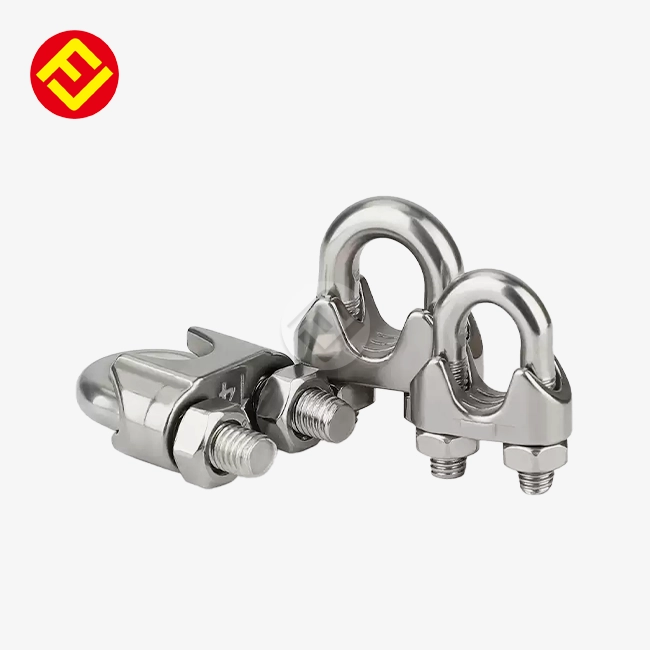
When wire rope security matters most, professionals turn to stainless steel wire rope clamps—precision-engineered fastening devices that deliver reliable termination strength in saltwater, chemical exposure, and high-load environments, and for Stainless Rope Clamp, manufactured from marine-grade stainless steel alloys like 304 and 316, these clamps prevent corrosion while maintaining structural integrity under demanding operational conditions, whether securing lifelines on vessels, anchoring architectural cable systems, or fastening rigging in construction projects. Manufactured from marine-grade stainless steel alloys like 304 and 316, these clamps prevent corrosion while maintaining structural integrity under demanding operational conditions. Whether securing lifelines on vessels, anchoring architectural cable systems, or fastening rigging in construction projects, properly selected and installed rope clamps provide the confidence that critical connections will hold when it counts.


Specification |
||||||||
| Specification | Pitch (P) | Total Height (L) (mm) | Hole Diameter (a) (mm) | Screw Diameter (A) (mm) | Shank Diameter (d) (mm) | Clip Height (h1) (mm) | Hexagon Opposite Side (S) (mm) | Applicable Wrench (mm) |
| M2 | 0.4 | 17.1 | 4.5 | 3 | 2.5 | 9 | 5.4 | 5.5 |
| M3 | 0.5 | 20.3 | 5.3 | 4 | 3.4 | 8.6 | 6.9 | 7 |
| M4 | 1.25 | 22.7 | 6.6 | 4 | 3.4 | 9.8 | 6.9 | 7 |
| M5 | 0.8 | 26.7 | 7.1 | 5 | 4.3 | 9.4 | 7.8 | 8 |
| M6 | 1 | 32.3 | 7.1 | 6 | 5.2 | 11 | 9.8 | 10 |
| M8 | 1.25 | 34.5 | 10.1 | 6 | 5.2 | 15 | 9.8 | 10 |
| M10 | 1.5 | 44.8 | 10.1 | 8 | 7.1 | 15 | 12.5 | 12.5 |
| M12 | 1.75 | 51.2 | 14.8 | 10 | 8.5 | 18.1 | 15.8 | 16 |
| M14 | 2 | 56.3 | 14.4 | 10 | 8.6 | 21.3 | 15.8 | 16 |
| M16 | 2 | 64.6 | 18.6 | 12 | 10.5 | 24 | 17.8 | 18 |
| M18 | 2.5 | 73.6 | 20.1 | 12 | 10.7 | 29.5 | 17.8 | 18 |
| M20 | 2.5 | 73.9 | 20.5 | 12 | 10.7 | 29.8 | 17.8 | 18 |
| M22 | 2.5 | 76.5 | 25.1 | 12 | 10.7 | 32.5 | 17.8 | 18 |
| M24 | 3 | 79.9 | 27.1 | 12 | 10.7 | 33 | 17.8 | 18 |
| M26 | 3 | 86.6 | 27.8 | 12 | 10.7 | 35.6 | 17.8 | 18 |
| M30 | 3.5 | 100.3 | 33.3 | 16 | 14.1 | 35.6 | 23.8 | 24 |
| M32 | 3.5 | 100.3 | 33.6 | 16 | 14.5 | 35.6 | 23.8 | 24 |
Understanding Stainless Rope Clamps: Types, Materials, and Applications
What Makes Marine-Grade Stainless Steel Essential?
After just a few months in saltwater, the difference between regular steel and marine-grade stainless steel becomes painfully clear. At FLA Industrial & Trading Co., Ltd., we only use AISI 304 and 316 stainless steel to make our Stainless Rope Clamps. The 316 type has 2% to 3% molybdenum added to it, which makes it much more resistant to pitting and crevice corrosion caused by chloride. This alloy is high in chromium and makes a passive oxide layer that fixes itself when scratched. This keeps the metal below it safe from damage from the environment. Precision machining and sanding give the surface a bright, glossy look that not only looks better but also gets rid of any surface contaminants that could damage the protective chromium oxide layer.
When purchasing materials, purchasing managers should know that 304-grade Stainless Rope Clamps work well in mild outdoor settings and freshwater uses, while 316-grade Stainless Rope Clamps are needed for installations along the coast, offshore platforms, and wastewater treatment plants where harsh chemicals are used every day.
Key Clamp Types and Their Specific Applications
Knowing the differences between Stainless Rope Clamp types can help you choose the right tools for your needs. The U-bolt design is still the most common. It has a cast collar that holds the live wire rope and a U-shaped bolt that holds the dead end in place. This shape gives the best contact area to keep grip power while preventing strand breaking. Double saddle versions spread the clamping force more evenly across both rope sections, so they can be used in situations where a more efficient termination is needed.
Heavy-duty types have U-bolts with a bigger diameter and thicker saddles to support heavier loads. At FLA Industrial, we use precise casting and forging methods to make sure that the dimensions are exact and fit the sizes of the ropes perfectly. This is very important because grooves that are too big make it harder to grip, and channels that are too small crush wire strands and weaken the rope. Because they aren't made by standard makers, our engineering team can make custom special-shaped configurations that will work with any mounting problems or structure changes your project needs.
Sizing Fundamentals for Safety and Performance
The right size of Stainless Rope Clamp has a direct effect on both safety margins and service life. The required Stainless Rope Clamp size is based on the diameter of the wire rope. Each Stainless Rope Clamp is rated for a certain range of rope diameters. If you use the wrong-sized Stainless Rope Clamp, it can break at dangerous points. If it's too small, it will crush the rope, and if it's too big, it will slip under load. According to industry standards, ropes with a diameter of 3mm to 6mm need at least three Stainless Rope Clamps, while ropes with a diameter of 8mm to 19mm need at least four Stainless Rope Clamps. With each extra Stainless Rope Clamp, the termination works better, bringing the whole thing closer to the wire rope's minimum breaking load rating.
Temperature also plays a role in choosing the right Stainless Rope Clamp. Our Stainless Rope Clamps work well in temperatures ranging from -40°C to +200°C, and they can handle heat expansion and contraction without breaking or becoming loose. This temperature range includes Arctic offshore sites and industrial boilers, so buying teams can be sure that performance will be stable no matter how extreme the conditions are.
Installation and Safety Best Practices for Maximum Reliability
Step-by-Step Installation Protocol
If you use the right installation methods, your wire rope termination will either work at 80–90% of its potential or break down early. It is important for riggers to remember the basic rule, "Never saddle a dead horse." This means that the U-bolt should go over the dead (cut) end of the rope and the saddle should always be on the live (load-bearing) side. If you change this orientation, the grip becomes less effective by up to 40%, and the load-bearing strands get crushed, making a dangerous weak spot.
Before making the loop or thimble, the installation starts by putting the right number of Stainless Rope Clamps onto the wire rope. The Stainless Rope Clamps should be equally spread. The first Stainless Rope Clamp should be one saddle width from the loop, the second should be about six rope diameters away, and so on until the cut end of the rope. Tighten the nuts on each U-bolt one at a time until they reach the torque values recommended by the manufacturer. These values are usually between 15 and 30 foot-pounds, but can change depending on the size of the Stainless Rope Clamp. Our quality control method at FLA Industrial includes full torque specifications with every shipment. This way, you can be sure that the people who install the parts have the exact values they need for the best results.
Critical Post-Installation Requirements
When wire rope is first tensioned, it settles down and slightly shrinks in width. This is called "necking." This means that retightening is not only a safety suggestion, it is also a must. After adding the first load, let the system rest for 24 hours. Then, tighten all the Stainless Rope Clamp nuts again to the recommended pressure. Check this again after the first week of work and after the first full load run. Making a written maintenance schedule for these retightening intervals protects both the safety of the workers and the investment in the equipment.
Our ISO9001 and CE certifications show that we meet international safety standards for manufacturing, such as DIN 741 and US Federal Specification FF-C-450 Type 1. These guidelines spell out the required material makeup, allowed size differences, and load testing procedures that make sure everything works the same way every time. When looking for Stainless Rope Clamps, make sure that the providers you choose can provide certification paperwork and a record of where the materials came from. FLA Industrial does a great job in both of these areas by providing full documentation from the certification of raw materials to the final review.
Maintenance and Inspection Protocols
When Stainless Rope Clamps are inspected on a regular basis, they are caught before they become safety incidents. A visual check should be made for corrosion (which should not happen too often with good stainless steel), wear on the rope where it contacts the Stainless Rope Clamps, and any loosening of the nuts that hold the rope in place. We suggest inspections every three months in marine environments because saltwater speeds up wear mechanisms. In industrial settings where there is vibration or thermal cycling, checks may need to be done every month.
Some signs of wear are fraying wire strands near the Stainless Rope Clamp saddle, holes that can be seen between the saddle and the rope, and any discoloration that could be caused by galvanic rust between metals that are not the same. Because our Stainless Rope Clamps can be used again and again, they can be taken apart for close inspection without damaging the assembly. But if there is damage to the rope near where the Stainless Rope Clamps touch or if the nuts show thread damage from being over-torqued, replacement is required and not just a possibility.

Comparing Stainless Steel Clamps Against Alternative Fastening Solutions
Corrosion Resistance: The Decisive Advantage
Corrosion resistance is the main benefit. Galvanized steel Stainless Rope Clamps are cheaper at first, but they break very easily in chemical and saltwater conditions. The zinc covering that protects galvanized steel from rust is only a few thousandths of an inch thick. It breaks down in the environment and through galvanic action when mixed with stainless wire rope. We have proof of failures in the field where galvanized Stainless Rope Clamps started to rust after only six months in coastal sites, but nearby 316 Stainless Rope Clamps from FLA Industrial were still structurally sound after five years of constant saltwater exposure.
The corrosion resistance of alloyed stainless steel goes all the way through the material, not just on the outside. Scratches and abrasions that would cause galvanized steel to rust right away only let the protective chromium oxide layer of stainless steel form back up. This basic change in the way the metal is made means that it will last a lot longer and cost a lot less to maintain.
Load-Bearing Capacity and Long-Term Performance
When it comes to high-stakes situations, mechanical testing shows differences in ability that matter. If you install Stainless Rope Clamps correctly, they can terminate wire ropes at almost 90% of their minimum breaking load. This means that the Stainless Rope Clamp system breaks at almost the same load that would break the rope itself. This works so well because the saddle's precise shape spreads clamping pressure evenly across the rope's cross-section, protecting individual wire strands from being crushed.
A comparison of lifecycle analyses shows that even though Stainless Rope Clamps cost more to buy at first, they are much cheaper to own in the long run thanks to lower total costs. Maintenance times are increased from months to years, replacements are done much less often, and premature failure-related downtime is eliminated, which saves so much money that it more than makes up for the small price difference. Hardware stores that serve the building and marine industries are stocking more and more stainless steel options because they know that their customers value dependability over short-term cost saves.
When Alternative Methods Make Sense
Swaged sleeves offer fixed terminations that are a little more efficient, but they need to be pressed with special hydraulic tools and can't be adjusted in the field. The semi-permanent nature of Stainless Rope Clamps makes them very useful for setups that need to be taken apart or adjusted on a regular basis. When used with our Stainless Rope Clamps, thimbles keep the wire rope from wearing down at the places where it is attached. They also keep the freedom that fixed swaged terminations can't provide.
Strategic Procurement: Selecting the Right Supplier and Product Specifications
Evaluating Supplier Credentials and Capabilities
To keep project budgets and schedules on track, procurement managers need suppliers who provide uniform quality, keep enough inventory on hand, and offer expert help throughout the lifetime of a Stainless Rope Clamp. There are three important checks that separate trusted manufacturers from average sellers. The paperwork for material approval should include a spectrochemical study that proves the amounts of chromium, nickel, and molybdenum that make up real 304 or 316 alloys. Portable X-ray fluorescence testing done during receiving inspection finds fake goods before they get into your supply chain.
If normal Products" target="_blank" style="color:blue" >products don't work for your application, a supplier's manufacturing process skills show if they can make products to your unique needs. Our 40 years of experience in manufacturing at FLA Industrial includes precision casting, forging, cutting, and polishing—the whole process chain that makes sure our goods are the right size and have great finishes on the outside. Our engineering team works on projects from the first design consultation all the way through 3D modeling, prototype development, and production optimization. They give project managers the technical support they need when requirements change during the design phase.
Volume Considerations and Lead Time Planning
In the industrial tools sector, buying in bulk is a trend that rewards smart planning. Minimum order amounts usually lower unit costs by a large amount, and savings for larger orders get bigger at 500, 1,000, and 5,000 pieces. Setting up blanket purchase orders with planned releases is helpful for construction companies handling infrastructure projects that will last for more than one year because it locks in good prices and keeps inventory flexible. We can make anything at FLA Industrial, from small custom runs of ten pieces to production volumes of over 10,000 units. This means we can meet the needs of both one-off projects and large-scale projects.
When project schedules get tight, lead time management is very important. Because we keep a lot of standard sizes in stock, we can ship common configurations right away. However, unique requirements usually take 15 to 25 days from the time the design is approved until production is finished. By building relationships with manufacturers before you need them, you can avoid the higher costs and lower quality that come with sourcing in a hurry.
Quality Verification and Ongoing Partnership
The buying process doesn't end when the Stainless Rope Clamp goods are delivered. When Stainless Rope Clamp inspection methods come in, they should use calibrated measuring tools to check the accuracy of the dimensions, looking at the saddle groove radius, the quality of the U-bolt threads and the general fit-finish. According to ASTM B117 standards, salt spray testing proves that corrosion resistance claims are true. After 1,000 hours of salt fog contact, real marine-grade stainless steel still didn't show any red rust formation.
Long-term partnerships with suppliers are more valuable than single transactions. At FLA Industrial, we're committed to providing full after-sales support, which includes help with installation, troubleshooting, and warranty coverage. This long-term technical relationship is especially helpful when applications change or when problems arise in the field that your engineering team and our manufacturing specialists need to work together to solve.

Why FLA Industrial Delivers Superior Wire Rope Fastening Solutions?
Manufacturing Excellence Backed by Four Decades of Experience
Since we began, FLA Industrial & Trading Co., Ltd. has built a name for consistently high quality and precise manufacturing. Our ISO9001-certified quality management system oversees every step of the production process, from checking the raw materials to doing the final inspection. This makes sure that every Stainless Rope Clamp that leaves our plant meets the highest standards. Some of the strict tests that are done are load verification to make sure the rated capacities are met, dimensional accuracy checking to make sure the product works with the specified rope sizes, and corrosion resistance testing that goes above and beyond what is required by the industry.
Material tracking is another important part of our dedication to quality. There is full documentation for every part, from the certified raw materials used in production to the final packaging. This gives the audit trail that is needed for project documentation and regulatory compliance. This openness helps you meet your quality assurance needs and shows the honesty in production that sets premium sellers apart from commodity vendors.
Customization Capabilities That Solve Unique Challenges
Common uses work well with standard goods, but unique projects need solutions that are made just for them. Our engineering team is very good at making special configurations that meet specific mounting needs, load sharing issues, or requirements for connecting to proprietary systems. Our design and manufacturing skills can make engineering problems into production realities, whether you need non-standard sizes, changed saddle shapes, special coatings for harsh chemical environments, or load ratings that go above and beyond what is listed in the Stainless Rope Clamp catalogue.
Before we start production, we do 3D modeling and design testing to make sure that there are no costly Stainless Rope Clamp changes needed and that the unique parts we make will work perfectly with your existing systems. FLA Industrial has partnerships with Fortune Global 500 companies in the construction, marine engineering, and industrial sectors, where accuracy and dependability can't be compromised, because they work together.
Global Reach with Responsive Local Support
To serve foreign markets like the US, Germany, and Australia, you need to be able to do more than just make things. You also need to be able to coordinate logistics, communicate quickly, and provide technical help across time zones. Our well-established distribution networks offer low shipping costs and reliable transit times. Our multilingual technical team helps with Stainless Rope Clamp installation, specifications, and fixing problems so that your projects keep moving forward.
Marine builders, architectural fabricators, and industrial maintenance teams have all told us success stories that show not only how well our products work but also how we work with our clients to complete difficult projects. When things change in the field, when specifications need to be changed, or when technical questions come up during installation, our team answers with useful solutions based on a deep understanding of how things are made and a real desire to see you succeed.

Conclusion
Stainless Rope Clamps are important safety parts whose quality, accuracy in measurements, and the right way to place them directly affect the safety of workers and the structure. Marine-grade 316 stainless steel is better at resisting corrosion. When paired with properly designed saddle shape and confirmed load capacity, it provides termination efficiency close to 90% while withstanding harsh environmental conditions that destroy weaker options. Your wire rope systems will work reliably for as long as they are used if you focus on strategic buying that includes certified suppliers, full expert support, and written quality management. FLA Industrial has been making high-quality products for 40 years and is dedicated to building partnerships with our customers. This makes us the go-to company for tough marine and industrial cable fixing jobs.
FAQ
How do I determine the correct size stainless rope clamp for my wire rope?
The size of the Stainless Rope Clamp depends on the diameter of the wire rope and the type of material used. Using calipers, find the exact diameter of your rope, and then choose Stainless Rope Clamps that are rated for that size range. Our expert team at FLA Industrial has detailed size charts and can tell you how many Stainless Rope Clamps you need based on your load needs and safety concerns.
Can I reuse stainless steel rope clamps after removing them?
Quality Stainless Rope Clamps can be used again and again as long as the threads stay intact and the saddle holes don't change shape. Before putting the part back together, carefully check each one for wear, thread damage, or rust. The small cost of new hardware far outweighs the risk of termination failure, so replace any Stainless Rope Clamps that show signs of structural damage.
What maintenance schedule should I follow for marine installations?
For saltwater environments, inspections every three months are the bare minimum. Look for signs of rust, rope wear at the places where they touch, and that the torque is being properly maintained. If necessary, tighten again to the stated torque, and write down all the results of the check. Boost the number of inspections for systems that are constantly being loaded or that are exposed to harsh environments.
Why does my installation require retightening after initial use?
When wire rope is first loaded, it gets a little tighter as the individual strands settle into the best position. This necking slightly lowers the diameter of the rope, which makes the Stainless Rope Clamp system less tight. Retightening after the first load and again after a week makes sure that the grip strength stays high and that the device doesn't slip when it's working with weight on it.
Secure Your Operations with FLA Industrial's Premium Stainless Rope Clamp Solutions
To get reliable wire rope fastening, you should start by choosing a Stainless Rope Clamp manufacturer that is dedicated to the success of your project. FLA Industrial & Trading Co., Ltd. offers precise manufacturing that is ISO9001-certified, as well as a wide range of customization options and quick expert support. Our marine-grade stainless steel Stainless Rope Clamps, which come in 304 and 316 alloys, can hold a lot of weight and won't rust. They're perfect for demanding applications. Email our team at sales@flaindustrial.com to get full specifications, talk about your unique needs, or get volume discounts that are made to fit your buying needs. We can ship anywhere in the world and offer great savings for buying in bulk, so we're ready to become your trusted partner in safe cable fastening options.
References
1. American Society for Testing and Materials. (2021). Standard Specification for Wire Rope Clips. ASTM F1667-21, West Conshohocken, PA: ASTM International.
2. European Committee for Standardization. (2020). Terminations for Steel Wire Ropes—Safety—Part 5: U-bolt Wire Rope Grips. EN 13411-5:2020, Brussels: CEN.
3. Deutsches Institut für Normung. (2019). Wire Rope Terminations—Wire Rope Clips. DIN 741:2019, Berlin: DIN Standards.
4. U.S. General Services Administration. (2018). Federal Specification—Clip, Wire Rope. FF-C-450D, Washington, DC: GSA.
5. International Organization for Standardization. (2022). Steel Wire Ropes for General Purposes—Minimum Requirements. ISO 2408:2022, Geneva: ISO.
6. National Association of Corrosion Engineers. (2020). Corrosion Resistance of Stainless Steels in Marine Environments. NACE Publication 34108, Houston, TX: NACE International.
YOU MAY LIKE