The Complete Guide to Welding Table Clamps for Faster, More Accurate Setups
2026-06-16 15:55:44


When dates for fabrication get shorter and tolerances get smaller, it's impossible to avoid fixing the workpiece correctly. Welding table clamps, especially the flexible F-Clamps/16mm-welding-table-clamps">16mm welding table clamp system, turn regular workbenches into precise fixturing platforms that cut setup time by up to 60% and get rid of alignment mistakes. These special clamping devices fit right into standard hole shapes on modular welding tables. This makes it easy to move things around and keeps them in place during TIG, MIG, and stick welding. Purchasing managers and fabrication engineers can choose options that increase productivity by knowing how they are designed, how they are used, and how to buy them.


Understanding 16mm Welding Table Clamps: Key Concepts and Uses
What Defines a 16mm Welding Table Clamp?
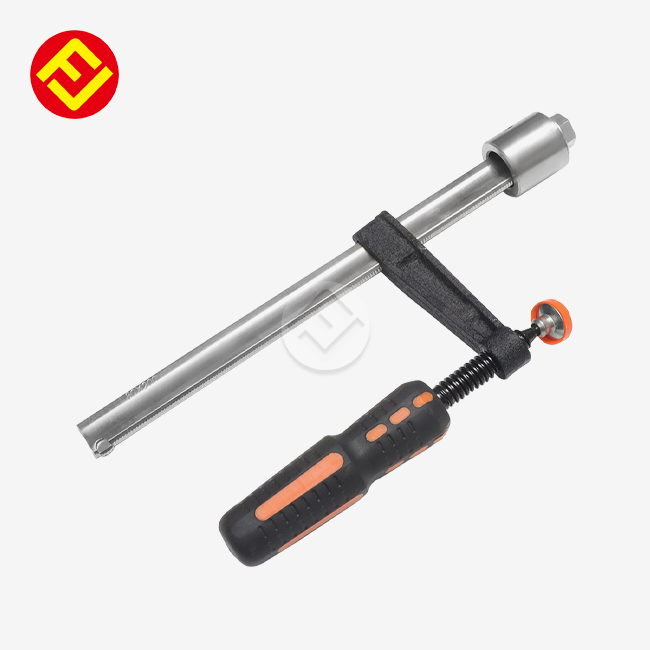
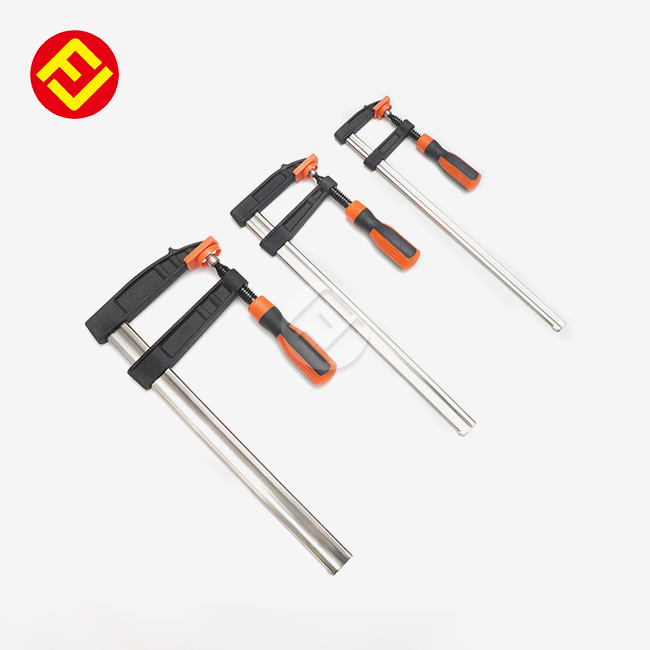
A 16mm welding table clamp is a special kind of fixturing tool made for the System 16 modular table system. This item's "16mm" label refers to its shaft width, which is made to fit perfectly into table grid holes that are usually spaced 50mm apart. These clamps are made from carbon steel or cast iron that can be shaped. They have trapezoidal thread mechanisms (usually Tr 12x3) that turn rotational force into controlled gripping pressure between 2.5 and 3.0 kilonewtons.
The main idea behind how it works is a vertical shaft that drops through holes in the table and is held in place by movable parts below. Above the table, swivel pads or adjustable arms touch the workpiece and spread the pressure out equally so that surfaces don't get damaged. This setup gives you a lot of options for placing in three dimensions while keeping a firm hold even when the workpieces heat up and expand during welding. The enclosed spindle design keeps weld spatter away from the thread mechanisms, which is a big plus compared to open clamp types that often seize up in hot places.
Core Applications Across Industries
Fabrication shops use these clamps to hold solid steel parts in place while they are being welded together. Repeatable angles make sure that the weld is symmetrical. The controlled clamping force keeps thin-walled aluminium or stainless steel parts from bending because of heat, which can happen during precision work. Woodworking shops use the same clamps on drill-pattern workbenches for both routing and sanding. The quick-release feature of these clamps speeds up group processing.
These tools are popular with schools for job training programs. The simple twist-lock mechanism doesn't need much training, so students can focus on learning how to weld instead of figuring out how to set up complicated fixtures. Utility companies' maintenance shops use portable welding tables with these clamps for repairs in the field, where being able to change to different part shapes is very useful. The standard 16mm interface makes sure that different table types can work together, so you don't have to worry about vendor lock-in.
Material and Design Variations
Different types of carbon steel offer affordable strength that is good for medium-duty jobs where rusting isn't likely to happen. Paint coats are a cheap way to protect things in workshops, and zinc-plated finishes make things last longer in damp places. Alternatives made of malleable cast iron are better at withstanding impact, which is important in high-volume production settings where dropped tools or parts that swing around could hit clamping hardware.
Plasma nitriding is used to treat the surfaces of high-end models, making them harder than 750 Vickers. This thermochemical diffusion process makes a layer that doesn't wear down easily and doesn't let molten metal stick to it or scratch it with rough materials. Swivel-pad designs can handle workpieces that are at an angle by spreading pressure across curved surfaces instead of putting stress in one place. With quick-release handle mechanisms, operators don't get tired during high-frequency clamping cycles. This makes repeated production settings more ergonomic.
Comparing 16mm Welding Table Clamps for Optimal Choice
Size and Capacity Considerations
The choice between 16mm and 20mm clamp systems depends on the needs of the job. The 16mm versions are great for precise work with thinner materials like sheet metal fabrication, putting together electronics chassis, or building aluminium frameworks. The 20mm versions, on the other hand, can handle heavy structural loads. Different clamping forces are important. 16mm clamps usually have a maximum force of about 3.0 kN, which is enough for most precision welding jobs. 20mm systems, on the other hand, have a maximum force of 5–7 kN, which is enough to hold thick-section steel bars or cast parts in place.
Table compatibility plays a role in this choice. Facilities that already use System 16 grid patterns would have to pay a lot to switch to 20mm infrastructure, which requires replacing tables or drilling new holes, which weakens the structure. Instead, looking at normal workpiece weights and material thicknesses is helpful for coming up with new fabrication layouts. 16mm systems have smaller footprints and finer adjustment steps, which makes it easier to place workpieces on the table. This is especially helpful for shops that mostly work with automotive parts or sheet metal.
Material Trade-Offs and Performance
As a result of casting and machining, carbon steel clamps offer solid performance at reasonable prices, making them a good choice for businesses on a budget or with low volume needs. The zinc-plated finish protects well against corrosion in climate-controlled areas, but chloride from being close to the coast or cutting fluid leftovers will eventually get through this layer.
Instead of breaking into projectiles when hit, malleable cast iron alternatives can handle higher impact loads without catastrophic failure; cracked parts bend instead of breaking into pieces. This trait is important in job shops that are a mess and where moving crane loads or falling materials could cause accidents. The naturally damping properties of the material also lower the passage of vibrations when clamped workpieces are used for plasma cutting or grinding. Surface treatments become very important differentiators. Simple painted finishes are fine for clean areas, but nitrided surfaces are worth the extra money spent on high-throughput welding cells where spatter builds up every day and causes upkeep headaches.
Quick-Release Mechanisms Versus Standard Operation
Traditional threaded-spindle welding table clamps need to be rotated several times in order to engage or release, which takes seconds each time. During a production shift with hundreds of clamp changes, this adds up to a lot of work that doesn't add value. Quick-release cam-lever designs make operation as simple as flipping the lever once to release and then again to lock the workpiece. This process works especially well in template-based production, where the same parts need to be clamped in the same place over and over again.
The trade-off is between cost and mechanical difficulty. Cam-lever systems have extra pivot points and springs that can break in different ways, especially when they come into contact with weld spatter or grinding debris. Maintenance plans need to include regular checks and greasing of these moving parts. Businesses that make a lot of different custom pieces don't gain as much from quick-release speed advantages because positioning time takes up most of the setup time. In these situations, standard threaded clamps are easy to use and reliable, with fewer parts to keep up and lower repair costs when they break.
Installation, Safety, and Maintenance for 16mm Welding Table Clamps
Proper Installation Procedures
Achieving maximum clamping performance begins with table hole condition. Holes must maintain true 16mm diameter with H7 tolerance—typically +0.000mm to +0.018mm—to ensure perpendicular shaft alignment. Laser-cut holes often exhibit rough edges and heat-affected zones that prevent proper clamp seating. Reaming operations restore dimensional accuracy while removing burrs that damage shaft finishes. Verify hole perpendicularity using precision squares; misaligned holes create angular loading that reduces effective clamping force and accelerates wear.
Insert the clamp shaft fully through the hole until the locking mechanism seats below the table surface. Thread engagement should feel smooth without binding or excessive play. Position the upper swivel pad or adjustable arm to contact the workpiece at the optimal angle—ideally perpendicular to clamping surfaces to distribute pressure evenly. Tighten incrementally in a cross-pattern when using multiple clamps, similar to wheel lug nut torquing procedures. This balanced approach prevents workpiece distortion and ensures uniform hold across all contact points.
Critical Safety Protocols
Never exceed recommended clamping force specifications, as overtightening risks component failure or workpiece deformation. Carbon steel shafts loaded beyond 3.0 kN may experience plastic deformation, permanently bending the shaft and compromising perpendicularity. Similarly, excessive force on thin-walled workpieces creates localized stress concentrations that propagate cracking during thermal cycling from welding heat input.
Avoid grounding welding circuits through clamp assemblies. While steel components conduct electricity, high-amperage current passing through swivel mechanisms or threaded interfaces causes micro-arcing. This internal arcing welds movable components together, seizing the clamp in its current position and requiring destructive disassembly. Always attach ground clamps directly to the workpiece or table frame, bypassing fixturing hardware. Inspect clamps before each use for visible damage—bent shafts, cracked castings, or seized threads signal retirement from service to prevent catastrophic failure during operation.
Maintenance Procedures for Longevity
Establish daily cleaning protocols to remove weld spatter, grinding dust, and metal shavings from clamp mechanisms. Wire brushes effectively clear threads without damaging machined surfaces, while compressed air purges debris from enclosed spindle housings. Apply anti-spatter spray to exposed surfaces before welding operations, creating a sacrificial barrier that prevents molten metal adhesion. This proactive measure reduces cleaning time and protects underlying finishes from thermal damage.
Lubricate threaded components weekly using high-temperature anti-seize compounds rated for continuous exposure above 500°C. Standard oils volatilize under welding heat, leaving dry friction surfaces that accelerate wear. Examine swivel pads for cracking or mushrooming from repeated impact loading. Premium clamps feature replaceable pressure pads secured by retaining pins—a consumable approach that extends overall tool life by allowing targeted component replacement rather than complete clamp disposal. Maintain calibration records for high-precision operations, verifying clamping force output quarterly using calibrated load cells to ensure consistent quality control.
Procurement Insights: Buying 16mm Welding Table Clamps for Your Business
Evaluating Suppliers and Distributors
Reliable sourcing begins with assessing manufacturer certifications. ISO9001 quality management system validation indicates established process controls and traceability protocols—critical for industries requiring documentation trails such as aerospace or medical device manufacturing. Suppliers offering CE certification demonstrate compliance with European safety directives, relevant for businesses exporting fabricated Products" target="_blank" style="color:blue" >products to international markets or operating multinational facilities requiring standardized tooling.
Lead time consistency separates exceptional suppliers from adequate ones. Manufacturers maintaining substantial inventory—2,000 tons or more in finished goods—ship standard configurations within 48 hours, preventing production stoppages when clamps fail unexpectedly. Custom configurations requiring non-standard dimensions or specialized coatings typically extend lead times to 7-15 days. Evaluate supplier engineering support capabilities by requesting 3D CAD models or custom fixture design assistance. Responsive technical teams that provide drawings within 24-48 hours accelerate project planning and reduce procurement cycle friction.
Understanding Cost Structures and Volume Benefits
Pricing structures reflect material choices, manufacturing complexity, and order quantities. Basic carbon steel clamps with zinc-plated finishes occupy the entry tier, suitable for shops prioritizing initial cost containment. Mid-range malleable iron variants command premiums of approximately 20-35% over basic models but deliver superior impact resistance justifying the investment in demanding environments. Premium nitrided-surface welding table clamps represent the upper tier, priced 50-80% above baseline options while offering multiples of service life in high-throughput welding operations.
Volume purchasing unlocks substantial per-unit savings, though minimum order quantities vary widely among suppliers. Distributors serving small job shops typically accommodate orders of ten to fifty units, while manufacturers preferring direct relationships with high-volume buyers establish minimums of several hundred pieces. Mid-volume purchasers benefit from distributor partnerships offering warehousing services and consignment inventory programs that reduce capital tied up in tooling supplies. Evaluate total cost of ownership rather than unit price alone—cheap clamps requiring frequent replacement ultimately cost more than durable alternatives with higher acquisition costs.
Customization Capabilities and Technical Support
Standard catalog offerings suit approximately 70% of industrial applications, leaving significant demand for specialized solutions. Suppliers with in-house engineering teams develop custom shaft lengths for extra-thick table plates, modified swivel arm geometries for unusual workpiece shapes, or proprietary thread patterns matching legacy fixturing systems. Assess prototyping capabilities by requesting sample production of modified designs before committing to full production volumes. This risk-mitigation approach prevents costly inventory of incompatible tooling.
Technical support extends beyond initial design consultation. Comprehensive suppliers provide installation training for maintenance teams, troubleshooting assistance when field issues arise, and application engineering guidance for optimizing clamp layouts on new welding tables. Warranty terms reveal manufacturer confidence—standard coverage spans one to two years against defects, while premium brands offer extended protection reflecting superior quality control. Clarify warranty exclusions for wear items like swivel pads or provisions for expedited replacement shipments minimizing downtime during warranty claims.
Maximizing Welding Efficiency and Accuracy with the Right Clamps
Quantifying Setup Time Reduction
Traditional fixturing methods—welded tabs, adjustable jigs, or improvised blocking—consume 15-30 minutes per setup for complex assemblies. Modular clamp systems reduce this to 3-5 minutes by eliminating custom fabrication requirements and leveraging repeatable hole-pattern positioning. Over a typical fabrication shop's annual output of 500 unique assemblies, this time savings translates to approximately 200 hours of productive capacity returned to value-added welding activities rather than fixturing preparation.
The repeatability advantage compounds these gains. Once engineers establish optimal clamp positions for a given assembly, operators reproduce the setup precisely for subsequent units by referencing recorded hole coordinates. This consistency eliminates the trial-and-error adjustment cycles inherent in non-modular fixturing, where each setup requires iterative measurement and modification. Batch production benefits prove even more pronounced—after the initial setup investment, successive units require only workpiece placement and clamp tightening, reducing unit-to-unit cycle times below one minute.
Precision and Quality Control Benefits
Dimensional accuracy directly impacts weldment quality and post-weld rework requirements. Rigid clamping prevents workpiece movement during thermal expansion, maintaining joint fit-up as weld heat input raises local temperatures above 800°C. This stability proves critical for automated or robotic welding operations where programmed torch paths assume fixed workpiece geometry. Any shifting during welding creates inconsistent joint penetration or missed seams requiring costly repair.
The controlled clamping pressure of properly specified clamps prevents distortion in thin-section materials. Sheet metal assemblies clamped with excessive force exhibit local buckling or oil-canning deformation that compromises aesthetic appearance and structural performance. Conversely, insufficient clamping allows vibration-induced movement that creates porosity in weld beads or incomplete fusion defects. Calibrated clamps delivering consistent force eliminate these variables, supporting stringent quality management systems and reducing scrap rates in high-value fabrication.
Real-World Application Case Study
A mid-sized agricultural equipment manufacturer faced persistent quality issues with welded frame assemblies. Traditional bar clamps provided inadequate rigidity, allowing frames to shift during multi-pass welding sequences. The resulting dimensional variations required extensive post-weld straightening, consuming 2.5 hours per unit and yielding 8% scrap rates from assemblies exceeding tolerance windows.
After transitioning to a modular table system with 16mm welding table clamps, setup time dropped from 22 minutes to 4 minutes per frame. Rigid fixturing eliminated in-process movement, reducing straightening time to 0.3 hours per unit—an 88% improvement. Scrap rates fell below 1% as dimensional consistency improved. The total productivity gain, accounting for setup reduction and quality improvements, increased effective welding capacity by 35% without additional labor hours. Investment payback occurred within seven months through scrap reduction alone, with ongoing labor savings providing continuous return.
Conclusion
Selecting appropriate welding table clamps directly influences fabrication efficiency, quality consistency, and operational costs. The 16mm system offers an optimal balance of precision, versatility, and cost-effectiveness for operations spanning light structural welding to complex assembly tasks. Procurement decisions should weigh material durability, clamping force requirements, and supplier technical support capabilities against total cost of ownership rather than initial price alone. Proper installation procedures, routine maintenance protocols, and adherence to safety standards maximize tool longevity while protecting personnel and workpieces. As fabrication demands evolve toward greater precision and faster turnaround, modular fixturing systems represent strategic investments delivering measurable competitive advantages through reduced setup times and improved dimensional control.

FAQ
What advantages do 16mm welding table clamps offer over improvised fixturing methods?
Modular clamps provide repeatable positioning accuracy within 0.1mm, impossible to achieve with welded tabs or adjustable jigs. The standardized hole pattern enables documented setups that operators reproduce exactly, eliminating trial-and-error adjustments. Quick reconfiguration supports diverse job mixes without permanent table modifications.
Can these clamps handle the thermal stress from prolonged welding operations?
Quality clamps manufactured from heat-treated steel maintain structural integrity at temperatures exceeding 500°C. Zinc-plated finishes withstand intermittent exposure, though nitrided surfaces provide superior protection in high-duty-cycle environments. Position clamps outside the immediate weld zone when possible to minimize direct flame impingement.
How do I prevent weld spatter from damaging clamp mechanisms?
Apply anti-spatter aerosol coatings before welding to create a barrier preventing molten metal adhesion. Enclosed spindle designs protect thread mechanisms from contamination. Clean clamps immediately after each shift using wire brushes, removing solidified spatter before it bonds permanently to surfaces.
What maintenance schedule extends clamp service life?
Implement daily cleaning to remove debris, weekly lubrication of threaded components with high-temperature anti-seize compound, and monthly inspection for shaft straightness and pad wear. Replace consumable pressure pads when cracking or mushrooming appears. Quarterly load testing verifies clamping force remains within specification.
Partner with FLA Industrial & Trading Co., Ltd. for Your Clamping Solutions
Achieving faster setups and higher precision demands reliable tooling backed by proven manufacturing expertise. FLA Industrial & Trading Co., Ltd. brings nearly four decades of specialized experience producing professional-grade 16mm welding table clamps that meet exacting ISO9001 standards. Our carbon steel and malleable cast iron constructions deliver the durability construction contractors and fabrication shops require, while zinc-plated and painted finishes ensure lasting corrosion protection even in demanding environments.
As a trusted 16mm welding table clamp manufacturer serving Fortune Global 500 partners across the United States, Germany, and Australia, we maintain over 2,000 tons of inventory for immediate shipment of standard configurations, with custom orders fulfilled in just 7-15 days. Whether your operation requires ten clamps or ten thousand, our scalable production capacity adapts to your volume requirements. Our engineering team provides responsive technical support—including 3D CAD models and custom fixture design assistance—typically within 24-48 hours of inquiry. Contact our team at sales@flaindustrial.com to discuss your specific fixturing requirements and discover how our comprehensive warranty support and competitive pricing structure can optimize your welding operations.
References
Johnson, M. & Stevens, R. (2021). Modern Fixturing Systems for Production Welding. Industrial Press Technical Publications.
Peterson, K. (2020). "Thermal Management in Precision Welding Fixtures," Journal of Manufacturing Processes, Vol. 47, pp. 234-251.
Williams, D. (2022). The Modular Welding Table Handbook: Design, Setup, and Optimization. Fabrication Technology Press.
Anderson, T. (2019). "Comparative Analysis of Clamping Force Distribution in Modular Fixturing," Welding Research Quarterly, Vol. 33, No. 2, pp. 112-129.
Martinez, L. & Chang, H. (2023). Industrial Tooling Procurement Strategies for Manufacturing Excellence. Supply Chain Management Institute.
Roberts, E. (2021). "Surface Treatment Technologies for Welding Fixture Longevity," Materials Performance and Engineering, Vol. 18, pp. 67-84.