The Essential Guide to Grooved Equal Tee Pipe Fittings
2026-07-09 11:08:33


The grooved equal tee is an important part of your pipe system if you need solid three-way branching options. This mechanical fitting uses grooved mechanical coupling technology instead of traditional welding or threading to efficiently distribute or align fluid flow across three pipeline sections with the same width. These fittings are mostly made of ductile iron that meets ASTM A536 standards. They have great tensile strength and impact resistance, and they can be installed much faster because they don't need to be heated. Modern infrastructure projects need grooved equal tees because they are easy to install, easy to maintain, and reliable over time. They are great for fire protection networks, HVAC hydronic systems, and industrial process pipe.


Specification |
|||
| Nominal Diameter (mm) | Pipe Fitting Outer Diameter D (mm) | Nominal Pressure (MPa) | Basic Outline Dimension L (mm) |
| 32 | 42.4 | 2.5 | 60 |
| 48.7 | 2.5 | 60 | |
| 50 | 57 | 2.5 | 70 |
| 50 | 60.3 | 2.5 | 70 |
| 65 | 76.1 | 2.5 | 76 |
| 80 | 88.9 | 2.5 | 35 |
| 100 | 108 | 2.5 | 95 |
| 100 | 114.3 | 2.5 | 95 |
| 125 | 133 | 2.5 | 110 |
| 125 | 139.7 | 2.5 | 110 |
| 150 | 159 | 2.5 | 120 |
| 150 | 165 | 2.5 | 120 |
| 150 | 168.3 | 2.5 | 120 |
| 200 | 219.1 | 1.6 | 165 |
| 250 | 139.7 | 1.6 | 215 |
| 300 | 323.9 | 1.6 | 230 |
| 350 | 377 | 1.6 | 280 |
Understanding Grooved Equal Tee Pipe Fittings
What Makes Grooved Equal Tees Different?
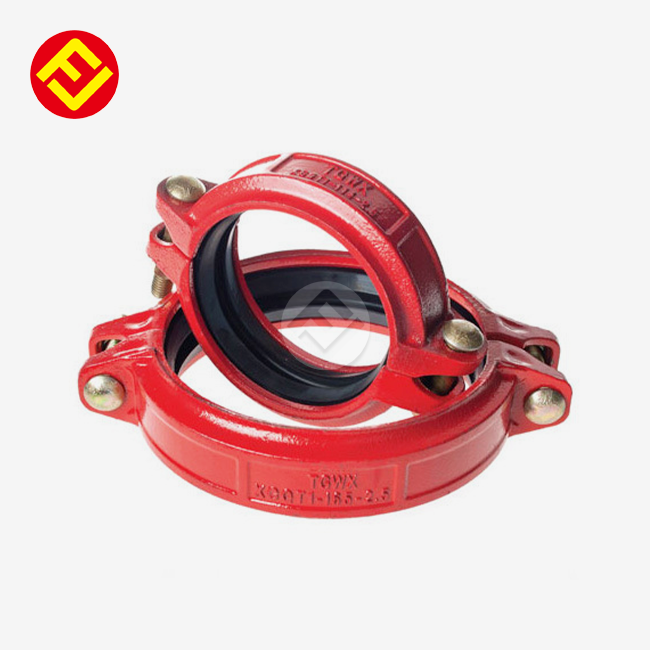
The main difference between grooved equal tee mechanical pipe and other types is how it is put together. Instead of bonding or connecting pipes together forever, grooved systems use pipe ends that are either roll-grooved or cut-grooved and lock into place with housing and gasket assemblies. This style of link solves a number of important problems that project engineers and buying managers face every day.
The fastest installation is the most obvious benefit right away. Traditional welding tee connections need skilled welders, people to watch over the work, hot work permits, and a lot of time to cool down before they can be tested for pressure. Unlike welded connections, grooved connections can be put together quickly and easily with simple hand tools, which cuts down on labor costs by about 50%. This time savings is especially helpful for repair projects that are happening in buildings that are already occupied and where fire risks from welding are not acceptable.
Material Specifications and Standards Compliance
Because it has better mechanical qualities, ductile iron is the main material used to make grooved equal tee fittings. This material meets the requirements of ASTM A536 Grade 65-45-12 and has a minimum tensile strength of 65,000 psi and a minimum yield strength of 45,000 psi. Because of these features, the fitting can handle both internal pressure stresses and outward physical hits that are typical on building sites.
The ANSI/AWWA C606 standards for dimensional correctness spell out exact limits for groove width, depth, and diameter. These measurements make sure that the product is compatible with all common mechanical couplings, no matter who made them. However, it is still a good idea to make sure that the product is compatible before using it in important situations that need UL or FM approval.
For general uses, you can treat the surface with a red alkyd enamel finish. For harsh settings, you can use hot-dip galvanizing that meets ASTM A153 standards. Which finish you choose depends on where the system is going to be installed. Galvanized coatings work best for outdoor installations, places near the coast, or chemical processing plants where corrosion from the air is a risk to the system's life.
Pressure Ratings and Performance Parameters
Pressure capacity changes depending on the type of connection and the order of the pipes. Standard setups can handle working pressures of 300 psi to 1,000 psi, which is enough for most business and industry uses. When specifying the fitting, it's important to think about its flow geometry. Standard radius patterns keep hydraulic efficiency at its best with the least amount of pressure drop, while short pattern configurations work best in small mechanical areas where small dimensions are more important than minor flow limits.
Grooved systems are great at handling dynamic loads as well as static pressure rates. The mechanical joint can handle changes in temperature, fluid expansion, and angular movement without putting damaging pressure on the pipe wall. This flexibility is very helpful in systems that are subject to changes in temperature or earthquakes, as it stops the stress cracks that happen in rigidly welded setups.
Types and Applications of Grooved Equal Tees
Classification by Design and Pressure Rating
Grooved equal tee fittings come in a number of different shapes and sizes to meet different operating needs. Standard pattern tees have a large center-to-outlet space that makes flow better and makes installing couplings easier. Short pattern versions lower this spacing for placements where space limitations mean there isn't much room for clearance. When properly connected, each pattern keeps the same pressure rating, but when flow rates are high, the efficiency of the flow changes in a way that can be measured.
Specialty designs meet the needs of specific systems. Some makers make eccentric grooved equal tees that can be used when the location of the exit needs to work around existing pipe routing issues. Others make extra-heavy wall thickness versions for uses that need higher pressure ratings or to handle media that wears down quickly. Knowing about these differences helps sourcing teams choose the exact right part for each job instead of over-engineering with fits that are too strong for the job.
Fire Protection System Applications
Fire hydrant networks are the most difficult situation for grooved equal tee fittings to work in. In this case, dependability isn't just about stopping leaks; it's also about making sure water gets to fire heads in situations that could happen decades after the system was installed. UL and FM approvals show that parts have been tested thoroughly to make sure they can withstand long-term use.
When it comes to fire safety, grooved equal tees are especially useful because they reduce vibrations. When fire pumps are turned on, they send out strong hydraulic shock waves and mechanical vibrations. These dynamic forces are absorbed by grooved equal tees instead of being sent through the pipe network. This protects threaded parts and stops wear failures that weaken systems over time.
HVAC and Hydronic System Implementation
Grooved equal tee systems are very good at managing heat, which is very useful for networks that distribute chilled water and heat. Pipe sizes are always changing because the temperature of the water changes between the source and return processes. Grooved equal tee links let this movement happen without putting stress on the building or the equipment that is attached to it.
Another important benefit of machinery rooms is that they are easy for maintenance staff to get to. When it's time to repair a chiller or make changes to the system, grooved equal tee fittings can be taken apart without cutting the pipe or messing up connections that are close by. This flexibility cuts down on downtime and repair costs by a large amount compared to systems that need a lot of cutting and rewelding to make changes.
Industrial Process and Municipal Infrastructure
Grooved equal tee fittings make installation faster and give manufacturers more system freedom, which is great for places that work with water, oils, or chemical solutions. Downtime in production costs a lot of money, so making quick changes or fixes to pipes is essential for the business. Being able to make links in minutes instead of hours has a direct effect on how profitable a business is.
More and more, municipal water distribution systems require transmission mains and distribution branches to have grooved equal tee connections. If the parts are properly coated, they won't rust and will last for decades in underground or exposed placements. They are more durable than fixed links because they can handle ground settlement without breaking. This is important in places where the soil isn't stable.

Grooved Equal Tee vs Alternative Pipe Fittings: Making the Right Choice
Comparison with Welded Connections
Welded tee fits make joints that are solid, rigid, and very good at keeping air in. But this longevity becomes a problem when the system needs to be fixed or changed. Cutting out welded parts costs a lot of money and wastes a lot of material. Needing qualified welders and hot work permits makes projects more difficult, especially in buildings that are already occupied or that handle dangerous materials.
Grooved equal tee joints have similar leak resistance and pressure values without these problems. Installation goes smoothly without any fire risks, and if changes need to be made in the future, they only need to remove the connection instead of cutting it out. Grooved equal tee fittings generally cost more to buy than soldered ones at first, but when labor rates and project timelines are taken into account, the total cost of installation usually works out better for grooved systems.
Threading and Flanging Alternatives
Threaded tee connections work well for small-diameter uses where being able to take things apart is important. But threading isn't useful for theoretical sizes bigger than two inches because the wall thickness needs to be so thick and the force needs to be so high during assembly. It's also possible for shaking or temperature cycling to damage thread engagement stability. This makes threaded systems difficult to use in changing service conditions.
Flanged tees are great for taking things apart and work well with large diameter uses. Because they are so big and heavy, they are hard to move around during installation. Pay close attention when tightening the bolts so that the gaskets are compressed evenly. As the gaskets soften over time, you may need to re-torque them from time to time. When it comes to removal, grooved equal tee systems are just as useful as flanges, but they are much lighter and don't need any bolt upkeep.
Material Selection Considerations
Most grooved equal tees are made of malleable iron, but stainless steel and carbon steel are also available for specific uses. Stainless steel parts can handle harsh chemicals and work well in places that need to be clean, like food processing or pharmaceuticals. Because they are more expensive, they can only be used in services where material matching needs make the investment worth it.
Carbon steel grooved equal tee fittings can be used in high-temperature situations where ductile iron can't. Carbon steel stays strong at high temperatures, which is good for steam systems and heating oil circuits. Choosing the right surface covering for carbon steel is important to keep it from oxidizing, which can affect how it looks and how accurately it measures.
Installation, Maintenance, and Best Practices
Step-by-Step Installation Protocol
The right way to put something starts with properly preparing the pipes. Whether you use the roll-grooving or cut-grooving method, use the right tools to make sure the groove dimensions meet ANSI/AWWA C606 standards. When it comes to joint integrity, groove depth is especially important. If the groove is too thin, the grooved equal tee coupler won't connect properly, and if it's too deep, the gasket could get damaged during assembly.
Before putting the parts together, clean the grooves very well to get rid of any cutting fluids, dirt, or rust that might get in the way of the seal fitting. Place the seal around both ends of the pipes, making sure it stays flat and in the middle. Some workers use a thin film of oil to make installing the couplings easier, but before they do, they make sure that the lubricant is compatible with the gasket. Some compounds make the gasket swell, which weakens the seal.
Place pieces of the housing around the seal and start by hand-threading the bolts or nuts. Tighten the screws slowly in a cross pattern, moving each one forward one at a time instead of fully tightening it before moving on to the next. This method makes sure that the seal is compressed evenly and keeps the housing from warping. Different coupling sizes and manufacturers have different torque specifications, so check the installation directions instead of thinking that these are the normal values.
Routine Maintenance and Inspection
Grooved equal tee systems don't need as much care as other ways of joining things, but they should still be checked on a regular basis to make sure they keep working well. A visual check should be done to make sure that the connecting housings are still in the right place and that there are no signs of bolts coming loose or housings separating. Any gap that can be seen between the housing pieces means that the bolt pressure is too low and needs to be fixed right away.
Check for signs of wetness around gaskets, which could mean that leaks are starting to form before they get worse. Retorquing the bolts often fixes minor weeping, especially in systems that are subject to temperature cycling or shaking during their first few months of service. If the leak keeps happening even after applying the right amount of force, it could mean that the gasket is damaged and needs to be replaced.
Monitoring for corrosion is especially important for sites that are outside or underground. Every year, check the stability of the covering and fix any damaged areas by painting them or applying a corrosion-resistant wrap. In harsh settings, galvanized coats usually last longer than painted finishes. However, even galvanized surfaces need maintenance after the protective zinc wears off.
Troubleshooting Common Installation Issues
The most common mistake in construction is pinching the gasket while installing the grooved equal tee coupler. This happens when different parts of the housing press on the gasket in different ways, causing the rubber to fold or stick out past the gap. To avoid pinching, you need to be very careful when placing the housing for the first time and gradually tightening the fasteners in a balanced way as you put the unit together.
Incompatible groove lengths make fitting hard, which leads to leaks. When cut-grooving tools are used on pipe schedules that are smaller than what the maker recommends, grooves are made that are deeper than what is allowed. In the same way, old roll-grooving tools make tracks that are too small or the wrong shape, which stops the coupling from engaging properly. These standard changes can be avoided by regularly calibrating tools and checking gauges.
When a coupling bolt breaks while being tightened, it's generally because the torque wasn't applied correctly or the fastener threads are broken. Using calibrated torque tools keeps you from over-tightening, and checking the threads of screws before installation finds broken ones before they damage the joint. Use the right anti-seize powder to grease the bolt threads and bearing surfaces to make sure force is transferred correctly and to make disassembly easier in the future.
Procurement and Supplier Insights for Grooved Equal Tees
Evaluating Manufacturer Capabilities
When looking for the right providers, you need to look at more than just unit price. Quality control methods in manufacturing grooved equal tee Products" target="_blank" style="color:blue" >products have a direct effect on how consistent and reliable a product is over time. Manufacturers with a good reputation test production samples in a number of ways, such as checking the dimensions, applying hydraulic pressure, and checking how well the coating sticks. During the evaluation of the provider, ask for written proof of these quality processes.
Having a certification shows that you are committed to meeting accepted standards. Getting ISO9001 certification shows that you use systematic quality control techniques all the way through the producing process. Independent testing is used to make sure that UL and FM approvals are valid for fire safety. CE marking shows that a product meets European safety standards, which is important for businesses that do business abroad or buy goods from other countries.
Custom Manufacturing and Engineering Support
Standard store items work well for most uses, but sometimes complicated projects need unique solutions. Manufacturers that offer engineering partnership services can help with non-standard sizes, special materials, or custom grooved equal tee designs that work with certain fitting limitations. When piping systems need to be changed to fit new structures or meet odd service needs, this expert support is very helpful.
Response time is very important when a job is being carried out. Suppliers who offer quick quotes, detailed specifications, and help with 3D models shorten the time it takes to validate designs and buy materials. If there are any technical questions during installation, being able to get help from the maker stops expensive delays and changes that need to be made in the field because of unclear specifications.
Volume Considerations and Lead Time Management
Different providers have very different levels of inventory available. Distributors who keep common sizes in stock can quickly fill standard orders, but for less common combinations, manufacturing wait times for grooved equal tee fittings may be several weeks. Just-in-time delivery and project schedule risks need to be carefully balanced. This can only be done if procurement teams and providers talk about what actual fulfillment standards are.
Volume price systems give discounts for bigger orders, but they need more space and money to set up. Total cost of ownership analysis looks at more than just unit price. It also considers store holding costs, risks of obsolescence, and the costs of buying things. Setting up blanket purchase orders with planned releases can help you get better prices on large orders while also reducing the amount of inventory you need to keep on hand. This is possible by timing deliveries to match the progress of the building project.

Conclusion
These grooved equal tee fittings are very useful for many different types of pipe jobs because they are easy to install, simple to maintain, and reliable for a long time. Procurement pros and project experts can safely select these parts when they know the material specifications, pressure ratings, and correct installation methods. Whether it's for fire protection, HVAC distribution networks, or industrial process systems, grooved mechanical piping is a much better way to join pipes than the old ways. Buying high-quality fittings from reliable companies pays off in the form of less work needed for installation, more system freedom, and years of trouble-free service.
FAQ
Can grooved equal tee fittings handle high-temperature applications?
Standard grooved equal tee valves with EPDM covers work well for water lines that are cold or moderately cold. For steam or high-temperature thermal fluids, you need special gaskets that can handle high temperatures. These are usually made from silicon-based materials or fluoroelastomers. Before selecting grooved systems for use above 180°F, make sure you check the temperature limits for the fitting material and the suitability of the gasket. Choosing the wrong material can cause the seal to break down early and the system to fail.
What distinguishes short pattern from standard grooved tees?
Short pattern tees have small center-to-outlet sizes that save space in mechanical rooms that are already full or in upgrade situations where headroom is limited. Standard pattern grooved equal tees keep their bigger spacing, which improves hydraulic flow by lowering pressure drop and noise. When the design of your system is limited by the pump's head size, common patterns help keep friction losses to a minimum. When actual room limitations are the most important factor, short designs provide the necessary compactness even though they slightly lower flow efficiency.
How does seismic activity affect grooved piping systems?
Rigidly soldered systems can't handle bending and moving along a straight line, but grooved equal tee mechanical joints can. It's not damaging shear forces that go through pipe walls during earthquakes; grooved equal tee connections bend and spin instead. Because it is flexible, it doesn't break in huge ways like stiff pipes do during aftershocks. For earthquake design to work right, you need to choose flexible couplings and make sure that the pipe supports are spaced out so that the structure can move without putting too much stress on any one link.
Partner with FLA Industrial & Trading Co., Ltd. for Premium Grooved Equal Tee Solutions
The grooved equal tee seller FLA Industrial & Trading Co., Ltd. has been making high-quality products for almost 40 years and is known around the world for them. Our ductile iron fittings go through strict quality control measures, such as measuring and testing for hydraulic pressure. They are also backed by ISO9001, CE, and UL/FM standards that show they are reliable in important situations. We can meet both urgent completion needs and unique project requirements because we keep over 2,000 tons of inventory on hand and can make non-standard setups within 7–15 days. Get in touch with our technical team at sales@flaindustrial.com to talk about your unique needs and find out how our engineering help can turn difficult piping problems into simple ones.
References
American Water Works Association. (2020). ANSI/AWWA C606-20: Grooved and Shouldered Joints. Denver: AWWA Standards.
ASTM International. (2019). ASTM A536-84: Standard Specification for Ductile Iron Castings. West Conshohocken: ASTM Committee A04.
National Fire Protection Association. (2021). NFPA 13: Standard for the Installation of Sprinkler Systems. Quincy: NFPA Publications.
Factory Mutual Research Corporation. (2018). FM Approval Guide: Pipe Fittings and Couplings for Fire Protection Service. Johnston: FM Approvals.
Underwriters Laboratories. (2020). UL 213: Standard for Rubber Gasketed Fittings for Fire-Protection Service. Northbrook: UL Standards.
Mechanical Contractors Association of America. (2019). Grooved Mechanical Piping Systems: Design and Installation Guidelines. Rockville: MCAA Technical Publications.