The Future of Industrial Grooved Piping in Mining & HVAC
2026-07-06 10:42:45


In the future, industrial grooved piping will change quickly in the HVAC and mining industries. This is because of the need for sustainability, technology, and stricter safety rules. Grooved mechanical pipe systems are becoming more popular as a way for procurement managers and engineers to deal with new business problems. These systems are easy to install, easy to maintain, and reduce overall costs. This guide talks about how improved coupling technologies, corrosion-resistant materials, and predictive maintenance put industrial grooved piping at the center of infrastructure development. This helps decision-makers make sure that their buying plans are in line with standards that are ready for the future.

Specification |
|
| Model | Model |
| DN50xDN25(60x33) | DN100x80(114x89) |
| DN65x25(76x33) | DN125x25(140x33) |
| DN65x32(76x42) | DN125x32(140x42) |
| DN65x40(76x48) | DN125x40(140x48) |
| DN65x50(76x60) | DN125x50(140x60) |
| DN80xDN25(89x33) | DN125x65(140x76) |
| DN80xDN32 (89x42) | DN125x80(140x89) |
| DN80xDN40 (89x48) | DN150x25/32/40/50 (OD 165) |
| DN80xDN50(89x60) | DN150x65(165x76) |
| DN100x25(114x33) | DN150x80(165x89) |
| DN100x32(114x42) | DN200x25/32/40 |
| DN100x40(114x48) | DN200x50/65(219x60x76) |
| DN100x50(114x60) | DN200x80(219x89) |
| DN100x65(114x76) | |
Understanding Industrial Grooved Piping in Mining & HVAC
Industrial grooved piping is a revolutionary way to move fluids because it uses mechanical connection systems instead of traditional welds and threading. These designed solutions use coupling housings, elastomeric seals, and recessed holes that are machined or rolled onto the ends of pipes to make safe connections that respond to pressure. The basic structure gets rid of the risks of hot work while keeping the structure's stability in harsh operating circumstances.
Core Components and Material Engineering
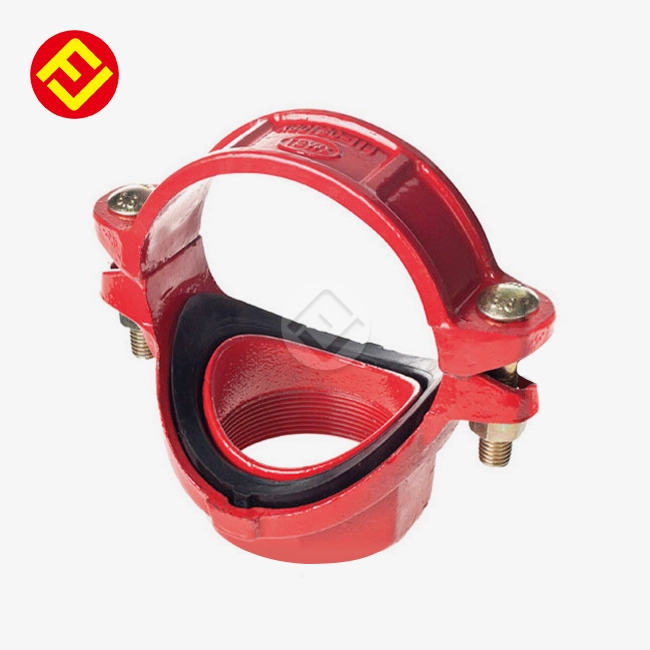
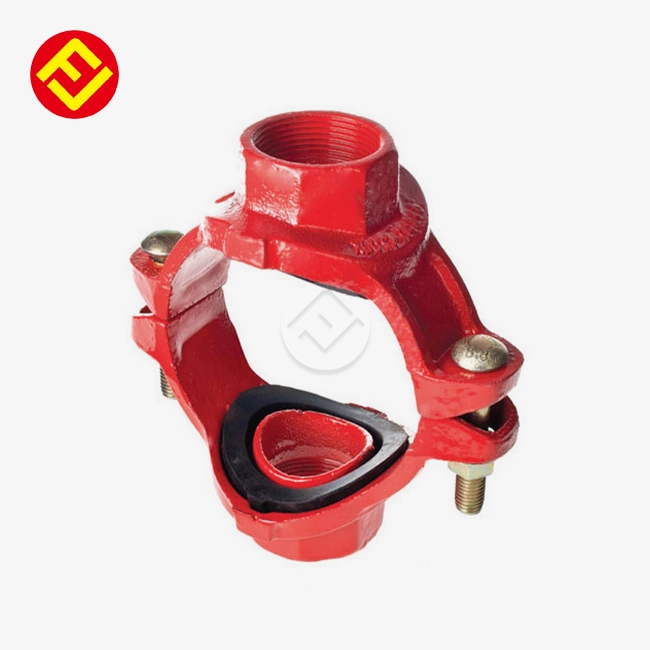
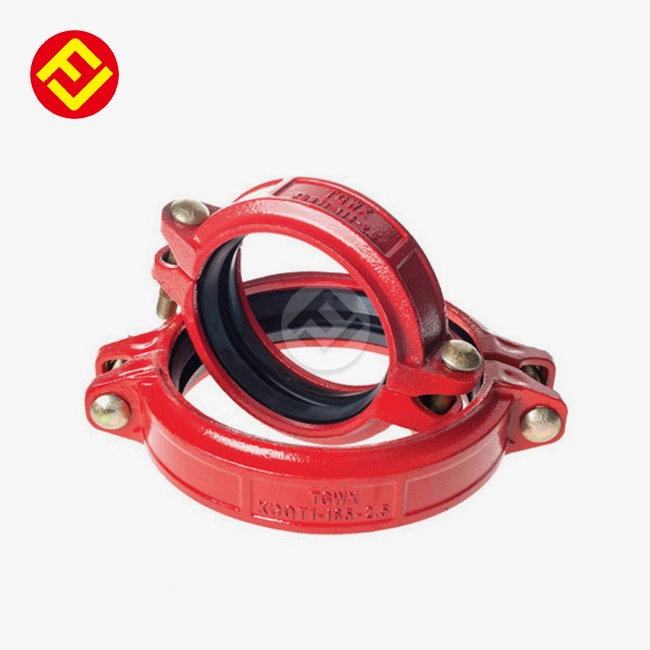
There are three main parts that make up grooved systems: grooved joints, mechanical links, and gasket technology. Grooved elbows and crosses are usually made from ductile iron that meets ASTM A536 Grade 65-45-12 standards. They have a tensile strength of over 65,000 psi and a stretch of 12%, which makes them resistant to changes in temperature and mechanical stress. The joint is held together by bolted pressure on the coupling body, and EPDM or nitrile seals provide dynamic sealing from -30°F to +230°F. This mix makes it possible to put things that can withstand rotational motion, thermal expansion, and seismic movement without affecting the stability of the system.
Standards Compliance and System Categorization
International standards like ANSI/AWWA C606, ISO 14001, and UL/FM certifications make sure that measurements are correct and safety standards are met. These are important for mine dewatering systems and HVAC cold water loops. Roll-grooved systems work well with Schedule 10 and 40 lines for lighter-duty tasks, while cut-grooved systems provide accuracy for high-pressure settings up to 1,000 psi working pressure. Knowing these differences helps buying teams choose systems that are right for the project's pressure ratings, fluid types, and environmental exposures, which are common in places like business HVAC installations and mine excavation sites.
Advantages of Industrial Grooved Piping Over Traditional Systems
Industrial grooved piping has benefits that can be measured and directly affect project timelines and budgets. Installation speed is about 50% faster than welded connections. This helps with the lack of skilled workers and lowers the risks that come with open flames and heat-affected zones on the job site. When shafts are expanded, mining companies can quickly make changes to their systems, and HVAC workers can get buildings up and running faster by streamlining connections.
Operational Flexibility and Cost Efficiency
Due to their inherent flexibility, industrial grooved piping coupling grooved systems can be taken apart and put back together without damaging the parts. This is a huge benefit during equipment upgrades or yearly maintenance shutdowns. Industry study shows that a medium-sized HVAC renovation job got rid of all welding costs, putting the money saved toward more energy-efficient pump upgrades. This operating flexibility lowers the total cost of ownership by cutting down on downtime and making inventory management easier. Standardized fittings can handle different pipe schedules without having to be made to order.
Performance Validation Through Case Evidence
Mining operations in Australia's mineral-rich areas adopted industrial grooved piping for tailings transport. Installation was 40% faster than with flanged options, and there were no leaks in three years. There are uses for elastomeric gaskets in pharmacy facilities that use their ability to reduce vibrations to keep the clean environment intact by blocking noise from pumps. These real-world tests show that the system works well in difficult continuous-duty cycles, where the ability to do repair directly affects the amount of time that production is up..

The Future Trends Shaping Industrial Grooved Piping in Mining & HVAC
Innovation paths in industrial grooved piping technology come together around smart infrastructure, big steps forward in material science, and changes in regulations. These trends change how buying decisions are made, and they require providers to show they can adapt to new needs.
Advanced Material Technologies
Next-generation grooved fittings have metal coats that are better than standard galvanization, and ceramic-enhanced epoxy finishes that make them more resistant to sulfuric acid in mine slurry systems. Stainless steel types that meet ASTM A312 Grade 316L standards can handle corrosive HVAC condensate conditions, which means they can last longer than 30 years in marine setups. Manufacturers spend money on testing methods that simulate rapid corrosion cycles. This gives specifiers reliable performance data for lifecycle analysis.
Digitalization and Predictive Maintenance
Putting Internet of Things (IoT) monitors inside coupling housings is a big step toward condition-based upkeep. Wireless sensors that measure pressure and temperature send real-time information to cloud-based servers. There, machine learning algorithms look for trends that don't make sense, which could mean that the seal is breaking down or the bolt is loosening. Mining companies use these systems to cover large underground networks. They get alerts ahead of time that stop catastrophic breakdowns during peak production times. Building management systems for HVAC systems talk directly to sensors in industrial grooved piping, which automatically change valves based on formulas that find the best flow rates.
Sustainability and Regulatory Compliance
Tougher environmental rules change how industrial grooved piping materials are chosen and how they are installed. In order to meet the requirements for LEED certification, grooved systems must have smaller carbon footprints. This is achieved by reducing welding smoke and shipping weight through compact coupling designs. More and more, regulatory bodies want vital infrastructure to be resistant to earthquakes. Building sway requirements are naturally met by flexible grooved connections, which are better than hard welded systems. As sustainability becomes a requirement for buying things, suppliers who offer Environmental Product Declarations (EPDs) and third-party certified lifecycle studies gain a competitive edge.
How to Choose the Right Industrial Grooved Piping Solution for Your Procurement Needs?
To choose the best industrial grooved piping options, you need to carefully look at them from different angles and make sure that the technical requirements are met while also taking into account the supplier's abilities. To lower long-term risks, procurement workers need to know how to deal with certifications, material suitability, and service infrastructure.
Certification Verification and Quality Assurance
Priority verification includes getting ISO 9001 recognition for quality management, CE marking for projects in Europe, and UL/FM permission for fire safety uses. Ask for test results from a third party that show how long the gasket can withstand being compressed and pushed, as well as how well the coating sticks to the surface. It is imperative for Fortune 500 companies handling multi-site rollouts that suppliers follow tracking standards that keep records of material certifications from the foundry to the finished fitting. This ensures responsibility throughout the supply chain.
Application-Specific Material Matching
For example, mining draining systems need ductile iron valves that can withstand wear from abrasive slurry, and HVAC glycol loops need seals that can work with antifreeze solutions that have been blocked. In geothermal mining, where temperatures can reach 250°F, high-temperature EPDM is needed. On the other hand, synthetic rubber that stays flexible at -40°F is needed in cold storage facilities. Detailed chemical compatibility plots that are cross-referenced with operating fluid research keep seals from failing too soon.
After-Sales Support Infrastructure
Check out what the seller can do besides just listing Products" target="_blank" style="color:blue" >products. Full construction training programs, approved by groups like the Mechanical Contractors Association of America (MCAA), cut down on mistakes in the field that cancel warranties. Technical support teams that help with torque specifications, expansion joint formulas, and earthquake bracing designs show that they are dedicated to the success of the project. Preferred sellers keep regional distribution centers running so that emergency repair needs can be met within 48 hours. This is common in mining operations that are open 24 hours a day, seven days a week.
Best Practices for Installation, Maintenance, and Troubleshooting
For industrial grooved piping to last as long as possible, it needs to be installed according to tried-and-true methods and maintained in a responsible way. Failure rates of less than 0.1% per year are reported by engineering teams that use these methods, which proves that the method works.
Installation Procedure Essentials
To begin, prepare the pipe by checking the groove sizes with go/no-go gauges that meet ANSI/AWWA C606 standards and making sure they are compatible with the coupler specs. Place seals evenly inside coupler housings and make sure they fit properly against the raised shoulder in the groove before engaging the bolt. Use accurate torque tools to follow the manufacturer's recommended torque sequence, which is usually between 30 and 35 ft-lbs for 2-inch couplings and goes up proportionally with width. This will keep the gasket from coming out or not being compressed enough. Avoid common mistakes like using seals that are only meant to be used once, over-tightening bolts that deform the case, and not checking the alignment, which causes stress to build up.
Maintenance and Inspection Routines
Set up eye checks every three months to keep track of the tightness of the connecting bolts, the extrusion of the gaskets, and the integrity of the coating. In mining settings, parts that are exposed to erosive flows need to be ultrasonically tested every month to find wall thinning before it gets too bad. Every year, durometer gauges are used to check the hardness of the gaskets in HVAC systems, and seals that show permanent set exceeding 25% should be replaced. Thermal imaging studies find changes in temperature in certain areas that could mean internal corrosion or flow limits.
Troubleshooting Leak and Integrity Issues
Most leaks are caused by three things: bad fitting at the start, gasket materials that don't work with each other, or bolts that loosen up during heat cycling. Check the torque specs and state of the gaskets on the leaked seals and replace them if the compression set goes over the manufacturer's limits. Joint separation means there isn't enough contact; check the groove depth to make sure it meets factory standards before reinstalling. If a system keeps breaking down, you should do a vibration analysis to find the pump-induced harmonic frequencies that need to be changed by adding damper connections or pipe restraints.
.

Conclusion
The development of industrial grooved piping in the HVAC and mining industries is in line with larger goals for modernizing infrastructure that focus on making it more efficient, environmentally friendly, and compatible with smart technology. Traditional methods can't compare to mechanical coupling systems when it comes to speed of installation, operating freedom, and ease of upkeep. As material science progresses, corrosion-resistant metals are created, and IoT sensors make predictive maintenance possible. Procurement workers who adopt these new technologies will give their companies a long-term competitive edge. Strategic buying choices based on checking certifications, choosing materials that are right for the job, and the ability to work with suppliers to form partnerships ensure that systems work reliably in tough working settings.
FAQ
Understanding important differences between industrial grooved piping and other options makes buying decisions easier. These questions are meant to answer common worries that tech teams and buying managers have when they are looking at system conversions.
Why does grooved piping outperform welded systems in maintenance scenarios?
Industrial grooved piping joints make it possible to take parts apart and put them back together without cutting or fitting. This means that equipment can be rotated, valves can be replaced, or systems can grow in hours instead of days. Welded systems need to be taken apart in a way that damages the pipes and then be put back together by certified welders. These steps can't be done during the short repair windows that are common in working facilities.
How do lifecycle costs compare between grooved and flanged systems?
Industrial grooved piping gets rid of the need to store flange gaskets, cuts the number of bolts needed by 60%, and makes storage easier by standardizing coupler sizes. Installation work costs go down by 40–50% because parts can be accessed more quickly, and upkeep costs go down because parts can be accessed more quickly. A 10-year lifetime study of several projects shows that grooved systems save 25–30% on total costs for uses bigger than 4 inches in diameter.
Which suppliers provide certified customized solutions with comprehensive warranties?
Reliable sellers keep their ISO 9001 certification up to date, offer custom groove machining for pipe plans that aren't standard, and back their products with at least a 5-year warranty that covers any problems that happened during production. Before signing a procurement deal, make sure that sellers keep inventory in the area, offer technical help through qualified engineers, and show examples of past projects they've completed in similar situations.
Partner with FLA Industrial & Trading Co., Ltd. for Reliable Grooved Piping Solutions
Choosing the right industrial grooved piping provider can make or break a project by providing quality guarantees and technical know-how. FLA Industrial & Trading Co., Ltd. has been making high-quality products for almost 40 years and offers over 1,000 different types of grooved fittings, joints, and moldable iron parts for the mining and HVAC industries. Our ductile iron grooved elbows and crosses are made to meet ASTM A536 standards, and they won't rust even in the toughest conditions thanks to our advanced coating technologies. Fortune Global 500 companies in the US, Germany, and Australia trust us to offer low prices on large orders without lowering the quality. Email our engineering team at sales@flaindustrial.com to talk about your buying needs, get technical specs, or set up on-site training for installation. Find out today how our approved solutions can help you get the most out of your infrastructure investments.
References
American Water Works Association (2021). ANSI/AWWA C606 Standard for Grooved and Shouldered Joints. Denver: AWWA Publications.
Ductile Iron Pipe Research Association (2020). Grooved Mechanical Joint Systems: Design and Installation Guide for Mining Applications. Birmingham: DIPRA Technical Report Series.
ASHRAE (2022). HVAC Piping Systems: Installation and Maintenance Best Practices. Atlanta: American Society of Heating, Refrigerating and Air-Conditioning Engineers.
International Code Council (2023). International Plumbing Code: Mechanical Joining Systems Compliance Requirements. Washington, D.C.: ICC Publications.
National Institute of Standards and Technology (2021). Predictive Maintenance Technologies in Industrial Piping Systems. Gaithersburg: NIST Special Publication 1500-202.
Mining Industry Safety Association (2022). Fire Prevention and Cold Work Technologies in Underground Operations. Denver: MISA Annual Technical Conference Proceedings.