What Is a 32mm Pressure Reducing Valve and Why Do I Need One?
2026-06-11 14:19:59


It is a hydraulic control part called a 32mm pressure reducing valve that lowers the high, changing inlet pressure to a steady, lower exit pressure, even if the flow rate or upstream pressure changes. This valve size crosses the gap between the flow needs of homes and light businesses by acting as the key link between high-pressure municipal mains and delicate internal piping systems. Pressure reducing valves eliminate water hammer that breaks pipes, prevent catastrophic appliance failures, and fix uneven flow in multi-story buildings by stabilizing pressure zones. They also protect downstream equipment from overpressure damage while keeping reliable flow rates.
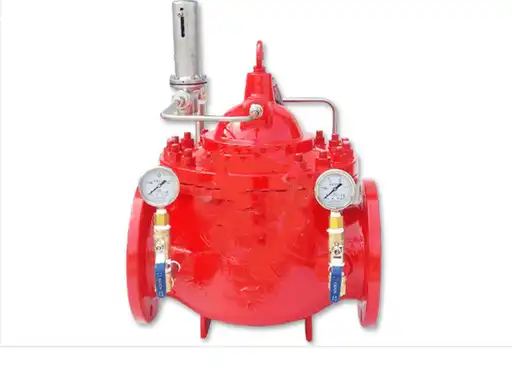
Understanding the 32mm Pressure Reducing Valve
Core Function and Working Principle
This part's main job is to keep the pressure further downstream stable, even when conditions at the outlet change a lot. Inside the valve body, outlet pressure is constantly checked by a spring-loaded diaphragm device. When pressure downstream goes below the set point, like when fixtures open, the diaphragm loosens up and lets more fluid pass through. When demand goes down and pressure goes up, on the other hand, the diaphragm pushes against the seat, stopping flow. This self-regulating loop happens right away and keeps your whole system safe without any extra power or controls.
This well-balanced seat design shows why quality is important. High-performance units made by skilled makers stay accurate within ±10% deviation even when the flow conditions change. This makes sure that the equipment works safely. Continuous pressure modulation keeps pipe joints from putting stress on them, makes appliances last longer, and lowers repair costs over time.
Technical Specifications That Matter
When looking at methods for lowering pressure, a number of factors determine how well they will work. Connection standards usually have DN32 numbers, which are 1-1/4-inch nominal sizes in threaded BSP, NPT, or flanged forms. With a pressure rating like PN16 or PN25, you know that the valve can handle inlet pressures of up to 16 or 25 bar, which is safe enough for most commercial and municipal uses.
Another important feature is the adjustment range. Standard types come with settings ranging from 1.5 bar to 6.0 bar, so they can meet the needs of a wide range of downstream applications, from delicate control systems to tough industrial processes. The flow coefficient, which is given as a KV number between 5.8 and 9.0 m³/h, tells us how much volume can pass through while keeping the pressure stable. This has a direct effect on the system's ability to handle high demand.
Material Selection and Durability
The composition of a material has a big impact on how long it lasts and how well it works in different settings. For standard water applications, brass construction is very resistant to corrosion, and it is still the most cost-effective choice for business installations. Dezincification-resistant brass formulas stop the selective leaching that weakens the structure in harsh water chemistry.
Cast iron bodies work well in industrial settings where they need to be strong enough to handle physical impacts and harsh working circumstances. 316-grade alloys and other types of stainless steel are better at handling chemicals and keeping things clean, which makes them perfect for use in medicinal, food processing, and marine settings. Different types of materials are given different surface treatments, like nickel plating or industrial coatings, that make them even more resistant to rust and make them last longer than usual. These engineering decisions have a direct effect on the total cost of ownership by balancing the original investment with how often the product needs to be maintained and how often it needs to be replaced.
Applications and Maintenance of 32mm Pressure Reducing Valves
Fire Protection Systems in High-Rise Buildings
Pressure reducing valves are crucial safety features of fire suppression pipelines in multi-story business buildings. Without proper control, pressure caused by gravity rises by about 1 bar for every 10 meters of drop in elevation. Putting these devices at key branch lines makes sure that the pressure further downstream stays within the ranges set by sprinkler systems' release valves. This stops leaks that would make the system less ready. The valve keeps the pressure high enough to put out fires effectively in emergencies and protects sensitive fire safety equipment, meeting the strict FM and UL certification requirements that insurance companies expect.
Industrial Process Cooling Applications
To protect sensitive equipment, factories need to have consistent water flow for cooling. When pressure spikes happen, seals blow out on injection molding machines, heat exchangers, and hydraulic systems. This is a frequent problem with direct municipal feeds. Putting in the right-sized pressure-reducing valve guarantees a steady 3 to 4 bar supply, even if the pressure upstream changes. This consistency keeps production from stopping, stretches the life of seals, and keeps temperatures precisely controlled, which is important for product quality. Process engineers like it when parts that have been tried and meet ISO9001 manufacturing standards are reliable.
Municipal and Irrigation Networks
These valves are used in public building projects to control pressure zones at different heights. Misting is a problem on golf courses, in parks, and in farms because too much pressure at the spray heads wastes water and makes coverage uneven. Stepping down the main line pressure through carefully placed valves makes sure that the water is distributed evenly. This cuts water use by about 30% while making irrigation more effective. In these industries, purchasing managers put durability and field serviceability at the top of their lists. They know that remote sites need parts that work reliably with little maintenance over long periods of time.
Maintenance Protocols for Longevity
To make valves last longer, you need to stick to maintenance plans instead of making repairs when something goes wrong. Visual inspections are done every three months to look for rust on the outside, leaks around the seals, and correct gauge readings. Cleaning the built-in filters—usually a stainless steel mesh about 0.25 mm thick—every six months should be part of the routine maintenance. These filters keep dirt from damaging the seat seal. Every year, complete testing with calibrated tools makes sure that the set point is accurate and that the valve keeps the desired outlet pressure across the entire flow range.
Pressure creep is a common operational problem where the outlet pressure slowly rises above the set point. This is generally a sign of diaphragm wear or spring fatigue. Chattering noise means that the downstream capacity is not enough or the size is wrong for the purpose. Taking care of these symptoms right away keeps connected devices from getting damaged in the future. Keeping detailed maintenance logs helps find trends and set the best inspection times based on how things are actually working, not on general suggestions. FLA Industrial has strict quality control measures in place, such as testing the shell's strength at 1.5 times its rated pressure and making sure the seat is tight. This helps them make parts that require much less upkeep in the field.
Choosing the Right 32mm Pressure Reducing Valve for Your Needs
Evaluating Material Composition
To make a choice, you must first match the properties of the material to the conditions and qualities of the fluid you are working with. The cost-effectiveness and corrosion resistance of brass construction make it a good choice for normal potable water systems. Brass valves meet the needs of municipal workers and building services teams while also being affordable for large-scale installations.
In heavy industrial settings, where strength is more important than weight, cast iron bodies are used. Cast iron is durable and thermally stable, which is especially useful in high-temperature uses. This is especially true for factories with process water systems. Stainless steel is needed when working with chemically aggressive fluids, pharmaceutical-grade water that needs to be kept clean, or marine settings where salt quickly breaks down brass. Understanding these differences stops mistakes before they happen and lowers the costs over the life of the product.
Comparing Valve Sizes for System Demands
Comparing sizes next to each other makes sure that the best performance, even though 32mm is a good size for many medium-capacity uses. A 25mm valve is good for residential multi-unit buildings with smaller flow needs because it has enough capacity and lower material costs. On the other hand, 40mm models can handle higher volumes in light industrial settings or business HVAC systems that need to cool down more.
The DN32 name fills in the blanks between these two extremes, making it a good flow coefficient for systems that need 15 to 30 liters per minute of steady flow. Site supervisors and project engineers evaluate peak demand scenarios against pressure drop calculations, ensuring selected pressure reducing valve sizing won't become a bottleneck during maximum consumption times while avoiding oversizing that compromises pressure regulation accuracy.
Brand Features and Certification Standards
Reputable makers set themselves apart by adding features that make their Products" target="_blank" style="color:blue" >products more useful and easy to fix. Field workers can fine-tune outlet pressure without having to replace parts because the settings can be changed. This lets the system adapt to changes over time. Built-in gauge interfaces let diagnostic tracking happen in real time, which helps maintenance teams find problems before they get worse.
Certification compliance backs up claims of performance and makes sure that regulations are followed. UL approval lets products reach markets in North America, while CE marking proves that they follow European safety rules. FM approval is important for projects that need to be approved by insurance underwriters because it directly covers fire protection applications. These validations by a third party give procurement managers trust that parts meet certain standards. This lowers concerns about liability and speeds up the approval process. Along with CE, UL, and FM approvals, FLA Industrial keeps ISO9001 quality management certification. This shows a dedication to international quality standards that B2B buyers need for important infrastructure projects.
Procurement Considerations for B2B Buyers
Hardware distributors and tool wholesalers rate suppliers based on the number of SKUs they offer, the depth of their inventory, and the quality of their packaging, which keeps goods safe during shipping. Reliable manufacturers keep enough stock on hand to handle quick-turn orders and can also make changes to meet unique needs. Construction companies put availability first because they know that backorders cause projects to be delayed, which costs a lot more, and they look for suppliers who have a history of on-time delivery.
Warranty terms and how quickly technical help responds are what set professional suppliers apart from commodity vendors. Access to engineering advice during the development of specifications, quick responses to technical questions, and help with installation problems after the sale all add value that goes beyond the component itself. By looking at these things along with durability and compliance, procurement teams can build relationships with makers that help projects succeed instead of just selling products.
Installation and Integration Best Practices
Proper Installation Guidelines
Correct installation fundamentally determines whether a pressure reducing valve performs as designed or becomes a maintenance liability. Begin by confirming flow direction matches the arrow cast or stamped on the valve body—reversed installation prevents operation entirely. Position the valve horizontally with the adjustment mechanism accessible, typically requiring 300mm clearance above for servicing.
Install isolation valves immediately upstream and downstream, allowing future maintenance without system drainage. Place a pressure gauge on the outlet side, positioned where operators can easily monitor performance during commissioning and routine checks. Adequate straight pipe runs—minimum five diameters upstream and three diameters downstream—prevent turbulent flow from affecting regulation accuracy.
Thread connections demand proper sealant application using PTFE tape or pipe dope rated for your operating temperature and fluid type. Over-tightening brass bodies causes cracks, while insufficient torque creates leak paths; follow manufacturer specifications precisely. Flanged connections require proper gasket selection and bolt tensioning patterns that distribute stress evenly around the joint. After installation, open isolation valves slowly, allowing the system to pressurize gradually while checking all connections for weeps that indicate improper sealing.
Distinguishing Pressure Reducing Valves from Regulators
Terminology confusion between pressure reducing valves and pressure regulators causes specification errors. While both control downstream pressure, subtle differences affect application suitability. Pressure reducing valves typically feature simpler diaphragm-actuated designs optimized for larger flow capacities and broader pressure differentials. They excel in building services, fire protection, and industrial water distribution where robust performance matters more than precision.
Pressure regulators often incorporate more sophisticated mechanisms including pilot operation and multiple sensing points, providing tighter control tolerances for instrumentation systems and process applications requiring ±2% accuracy. Regulators generally cost more and require cleaner fluids to prevent fouling of intricate components.
Understanding these distinctions helps engineering teams specify appropriate devices. Municipal contractors installing building mains require the reliability and capacity that pressure reducing valves deliver. Process engineers designing pharmaceutical manufacturing lines might specify regulators for critical quality control points. Selecting the right category prevents over-specifying expensive components where simpler solutions suffice, or under-specifying where precision matters.
Common Installation Mistakes to Avoid
Incorrect orientation represents the most frequent installation error, completely preventing valve operation. Double-checking flow arrows against system direction before securing connections saves embarrassing callbacks. Omitting adequate filtration upstream allows debris to lodge in the seat, causing leakage and pressure creep. Even new piping contains installation debris—welding slag, pipe thread cuttings, and flux residue—that migrates during commissioning.
Improper sizing creates operational problems that no amount of adjustment corrects. Oversized pressure reducing valves hunting and chattering because the seat modulates across too narrow an opening range. Undersized valves fully open under normal flow, providing no regulation capability. Conducting proper flow calculations during design prevents these costly mistakes that require component replacement.
Neglecting downstream expansion volume causes pressure spikes when thermal expansion occurs in heated water systems. Installing expansion tanks or other accommodation prevents pressure reducing valves from fighting thermal forces, extending component life and maintaining stable system operation.
Procurement Insights and Buying Guide
Sourcing from Reputable Manufacturers
B2B procurement success begins with identifying manufacturers demonstrating genuine capabilities rather than trading companies rebranding commodity products. Established manufacturers maintain in-house engineering teams capable of customization, technical documentation including 3D models for project coordination, and production facilities with quality systems validated through certification audits.
FLA Industrial & Trading Co., Ltd. exemplifies this manufacturing depth with nearly 40 years of specialized experience in Industrial Components. Operating with over 1,000 product specifications and advanced casting, machining, and assembly capabilities, the company serves Fortune Global 500 partners across domestic and international markets. This operational scale provides inventory availability supporting urgent project timelines while maintaining the flexibility to accommodate custom specifications.
Customization Options for Specific Projects
Standard catalog items satisfy many applications, but complex projects often require modifications addressing unique constraints. Custom port configurations accommodate space-limited installations where standard orientations don't fit. Special materials like duplex stainless steel handle exceptionally corrosive environments beyond standard alloy capabilities. Extended pressure ranges serve applications with unusual operating conditions.
Manufacturers offering genuine customization provide engineering support from initial concept through production optimization. Receiving preliminary designs within 24 to 48 hours, detailed 3D models for coordination approval, and prototype production in 7 to 15 days demonstrates responsive capabilities that keep projects on schedule. This agility particularly benefits construction contractors managing aggressive timelines and design-build teams integrating mechanical systems with architectural constraints.
Pricing Factors and Volume Considerations
Component pricing reflects material costs, manufacturing complexity, certification expenses, and order volume. Brass valves cost less than stainless steel alternatives due to raw material prices and machining characteristics. Certification to multiple standards—CE, UL, FM—requires testing investments that manufacturers amortize across production volumes, affecting unit pricing structures.
Volume discounts reward larger commitments, recognizing reduced transaction costs and production efficiency from batch manufacturing. Distributors purchasing mixed SKU pallets for inventory stocking negotiate different terms than contractors buying quantity for single projects. Understanding these dynamics helps procurement managers structure orders optimizing total cost while meeting delivery requirements.
Quality assurance investments—dimensional inspection, pressure testing, leak detection—separate manufacturers committed to reliability from those competing purely on price. Lower-cost components failing in service generate far greater expenses through callbacks, reputation damage, and potential liability than modest savings justify. Evaluating suppliers based on total cost of ownership rather than purchase price alone leads to better long-term outcomes.
Warranty Coverage and After-Sales Support
Warranty terms indicate manufacturer confidence in product quality and commitment to customer satisfaction. Standard coverage typically spans 12 to 24 months from installation or 18 months from shipment, protecting against manufacturing defects and material failures. Extended warranty options demonstrate additional confidence and provide procurement teams greater risk mitigation.
After-sales support responsiveness proves equally important. Access to technical specialists who understand field conditions and can troubleshoot installation issues prevents minor problems from escalating. Spare parts availability ensures maintenance teams can service 32mm pressure reducing valves efficiently without extended downtimes waiting for components. Manufacturers maintaining substantial parts inventory and global distribution networks deliver the support that facility managers and maintenance supervisors require for critical infrastructure applications.
Conclusion
Selecting the appropriate pressure reducing valve protects your fluid systems while ensuring reliable performance across diverse operating conditions. The 32mm size specifically addresses medium-capacity requirements in fire protection, HVAC, industrial processing, and municipal applications where precise pressure control prevents equipment damage and optimizes efficiency. Material choice, proper sizing, certified compliance, and correct installation determine whether components deliver years of trouble-free service or become maintenance burdens. Partnering with established manufacturers offering engineering support, customization capabilities, quality certifications, and responsive after-sales service creates value extending far beyond the component itself. Procurement decisions balancing technical specifications against total cost of ownership—rather than focusing solely on initial pricing—result in systems that perform reliably, protect downstream investments, and support operational success throughout extended service lifecycles.
FAQ
How long does a 32mm pressure reducing valve typically last?
Service life depends on operating conditions, maintenance frequency, and component quality. Properly installed valves in clean water systems with regular maintenance typically function reliably for 10 to 15 years. Aggressive water chemistry, high particulate loads, or extreme temperature cycling can reduce this to 5 to 8 years. Quality manufacturing using corrosion-resistant materials and precision machining extends longevity significantly. Following manufacturer-recommended maintenance schedules—including annual inspections and filter cleaning—maximizes service life and prevents premature failures.
What inspection intervals should maintenance teams follow?
Visual inspections checking for external corrosion and leakage should occur quarterly. Semi-annual maintenance includes filter cleaning and pressure gauge verification. Annual comprehensive testing validates set point accuracy and diaphragm condition. Systems operating in harsh environments or critical applications benefit from more frequent attention. Documenting inspection results helps identify degradation trends and optimize intervals based on actual conditions rather than generic schedules.
Can I use a 32mm valve for residential applications?
While technically feasible, residential installations typically require smaller sizes matching lower flow demands. The 32mm designation suits multi-unit buildings, light commercial properties, or large residential structures with substantial fixture counts. Single-family homes generally use 20mm or 25mm valves providing adequate capacity without unnecessary cost. Proper sizing calculations considering peak demand scenarios ensure optimal performance and regulation accuracy.
Partner with FLA Industrial & Trading Co., Ltd. for Reliable Pressure Control Solutions
Your search for a dependable 32mm pressure reducing valve supplier ends with manufacturers who combine decades of expertise with certified quality and responsive service. FLA Industrial & Trading Co., Ltd. brings nearly 40 years of specialized manufacturing experience to every component, producing pressure reducing valves in brass, cast iron, and stainless steel configurations that meet ISO9001, CE, UL, and FM standards. Our engineering team responds to technical inquiries within 24 to 48 hours, providing detailed specifications, 3D models, and customization options that address your unique project requirements. With over 2,000 tons of standard products in stock and rapid custom production capabilities, we support procurement timelines from emergency replacements to large-scale project installations. Contact our team at sales@flaindustrial.com to discuss your specific application and discover how our pressure control solutions protect your systems while optimizing operational efficiency.
References
Smith, J. R., & Anderson, M. L. (2021). Hydraulic Control Systems: Design and Application of Pressure Reducing Valves. Industrial Press.
International Association of Plumbing and Mechanical Officials. (2022). Uniform Plumbing Code: Standards for Pressure Control Devices. IAPMO Publications.
Chen, W., & Roberts, P. (2020). "Performance Analysis of Pressure Reducing Valves in High-Rise Building Water Distribution Systems." Journal of Building Services Engineering Research and Technology, 41(4), 445-462.
National Fire Protection Association. (2023). NFPA 13: Standard for the Installation of Sprinkler Systems. NFPA Press.
Thompson, K. D. (2019). Industrial Valve Selection and Maintenance: A Practical Guide for Engineers. McGraw-Hill Professional.
European Committee for Standardization. (2020). EN 1567: Industrial Valves—Pressure Reducing Valves and Pressure Regulators for Gas and Liquid Applications. CEN Publications.