A Guide to Mechanical Grooved Tees in Modern Piping Systems
2026-07-01 15:40:58


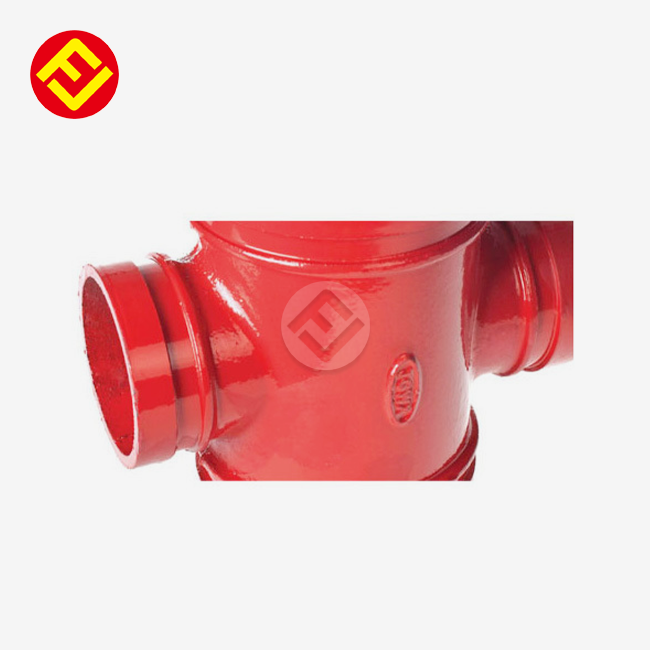
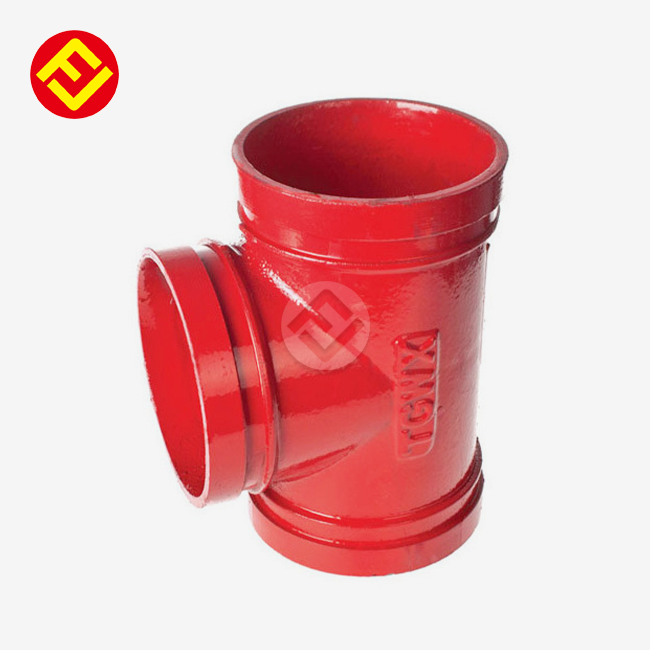
When modern pipe infrastructure needs to be put together quickly and without the risk of welding, mechanical grooved tees become the best way to connect branches. These special fittings use groove technology that completely changes how fast and reliably systems for fire protection, HVAC, and industry are installed. Mechanical grooved tees, which are mostly made of ductile iron or carbon steel, make safe T-shaped joints in minutes instead of hours. This means that you don't need a hot work permit and they can handle a lot of pressure over their entire service life.

Specification |
|
| Model | Model |
| DN50xDN25(60x33) | DN100x80(114x89) |
| DN65x25(76x33) | DN125x25(140x33) |
| DN65x32(76x42) | DN125x32(140x42) |
| DN65x40(76x48) | DN125x40(140x48) |
| DN65x50(76x60) | DN125x50(140x60) |
| DN80xDN25(89x33) | DN125x65(140x76) |
| DN80xDN32(89x42) | DN125x80(140x89) |
| DN80xDN40(89x48) | DN150x25/32/40/50(OD 165) |
| DN80xDN50(89x60) | DN150x65(165x76) |
| DN100x25(114x33) | DN150x80(165x89) |
| DN80xDN32(89x42) | DN200x25/32/40 |
| DN100x40(114x48) | DN200x50/65(219x60x76) |
| DN100x50(114x60) | DN200x80(219x89) |
| DN100x65(114x76) | |
Understanding Mechanical Grooved Tees: Definition, Design, and Applications
What Makes Grooved Technology Different
Branching connections were changed forever by grooved pipe systems, which introduced a coupling-based joint method that doesn't need flame or fusion. Each exit end of the mechanical grooved tee has carefully machined or roll-formed holes that fit into coupling housings and rubber gaskets. When the coupling halves are tightened around the grooved pipe and fitting ends with bolts, the gasket presses into the gap, making a seal that can withstand the pressures that are common in business and industrial settings.
This way of designing solves important problems in the field. There is no longer a need for certified welders on site, fire watches are no longer needed, and system changes can be made without shutting down neighbouring operating zones. With visual proof of proper assembly, inspectors can check the soundness of the joint at a look, which is not possible with welded connections that are covered by insulation.
Material Options and Performance Characteristics
Ductile iron is still the most common choice for installations because it is strong for its weight and has been shown to last for a long time in both underground and exposed situations. Different types of carbon steel are used for particular tasks that need higher pressure levels or to work with certain process fluids. Protective coatings—painted finishes for general use or advanced anti-corrosion treatments for harsh environments—are put on both materials to make them last much longer than bare metal options.
FLA Industrial uses casting and machining to make sure that the dimensions are correct, which is important for proper joint contact. There are very strict rules about the depth, width, and gasket mounting areas of grooves. Deviations as small as 0.5 millimetres can damage the seal or make it impossible to connect the joint at all. When procurement managers place orders for multiple shipments, they count on precision manufacturing that is backed by ISO9001 certification to be consistent.
Where These Fittings Shine
Fire alarm systems are probably the most difficult to use. UL and FM approval rules require specific ways to test for pressure and keep track of materials. Mechanical grooved tees that are used in these systems have to be able to handle water hammer events, which are quick rises in pressure when pumps are turned on, without breaking. Shocks are absorbed by the mechanical link through a small amount of gasket tension. Welded joints, on the other hand, put more stress on the area that is affected by heat.
When used with these mechanical grooved tees, flexible grooved connections allow for thermal movement, which is good for HVAC systems. When the temperature changes, high-rise cooled water rises get bigger and smaller. Grooved systems let you control the angle of deflection at each joint, which reduces the total size and material costs. Traditional fixed connections need expansion loops or flexible tubes.
The ease of upkeep that grooved systems provide is important for moving industrial fluids like process water, compressed air, and slurry. When a branch line needs to be moved or a mechanical grooved tee needs to be replaced because it's worn out, workers just loosen the coupling nuts, take out the broken part and put in a new one. Cutting out welded parts and re-welding replacements takes more time than this modular method.
Mechanical Grooved Tee vs. Traditional Fittings: Making the Right Choice
Installation Efficiency Analysis
Studies of time show that grooved joints cut down on work hours by 50–60% compared to welding alternatives. A normal welded tee joint needs the pipe to be cut, bevelled, fit up, soldered multiple times, cooled, and x-rayed in important services. It takes 8 to 12 minutes to make the same connection with a mechanical grooved tee: cut the pipe, roll or cut the groove, apply lube, place the mechanical grooved tee, join the coupling, and tighten the nuts to the right level.
This speed grows when working on big jobs. Grooved technology saves about 400 hours of work on a 500-joint pipe system. At current union rates in major U.S. cities, this means big cost savings, and that's before you even think about the costs that aren't there anymore, like welding gas, electrodes, fire watches, and hot work permits.
Material Performance Under Stress
When it comes to impact strength, mechanical grooved tees made of ductile iron are better than threaded fittings because the stress is concentrated at the thread roots. The shape of the groove spreads the coupling forces around the whole circle. This stops stress clusters that lead to threaded joint failures when they are vibrated or heated and cooled.
Corrosion protection rests a lot on the quality of the coating, not just the base material. When applied to ductile iron, premium anti-corrosion treatments work as well as or better than standard carbon steel in most situations. When connecting copper or stainless steel parts using the right gasket materials, the protected layer stops electrical reactions between metals that are not the same.
When put together correctly, the pressure capacity is the same as or higher than soldered options. Working pressures for standard grooved couplings range from 300 psi (20 bar) to 500 psi (34 bar), based on size and service. This range is enough for most industrial uses. For specific industrial processes, high-pressure versions of these pumps go above 750 psi (52 bar).
Total Cost of Ownership Perspective
Most of the time, grooved joints cost more to make than soldered ones at first, but they are cheaper in the long run. Less construction work quickly cancels out the initial costs. Over decades, lower upkeep costs add up—checking a grooved joint only takes minutes, while checking welds with x-rays takes hours. When pipes are grooved, changes to the system that would need expensive shutdowns when pipes are soldered become regular maintenance tasks.
Insurance companies know about these safety benefits. Some insurance companies lower the rates of buildings that use grooved fire protection systems because they are easier to install and have been shown to work. When looking at the overall cost of a project, procurement managers should figure out how much these indirect saves add up to.

Installation and Maintenance Guide for Mechanical Grooved Tees
Proper Assembly Procedures
The right setup of the pipes is the first step to a successful fitting. Whether you use cut grooves or roll grooves, the groove sizes must exactly fit the connection requirements. Cutting tools need to be calibrated on a regular basis to keep their tolerances. To keep from over-rolling, which makes the pipe wall too thin, operators of rolling tools need to be trained.
Once the groove is done, clean the groove and the end of the pipe very well. Metal chips or cutting fluid residue can stop the seal from fitting properly. Use the lubricant that the maker suggests on the gasket. This will make sure that the compression is even when the coupling is installed and will make it easier to take apart for future repair. Set the mechanical grooved tee in the position you want, and then slide the coupler housings over the joint. Use a calibrated torque wrench to tighten nuts in a star design to the required torque values. Too much tightening can damage seals, and too little tightening can cause leaks.
A visual check shows that the connection is correct. The housings of the couplings should touch evenly all the way around, with no gaps. The bolt pads need to be flat on top of each other. Any misalignment means that the groove depth is wrong, there are broken parts, or there is foreign matter that is stopping full contact.
Maintenance Best Practices
Regular checks look at three important factors: the state of the gasket, the tension of the bolts, and the stability of the grooves. When gaskets are pushed past their elastic limit, they permanently change shape or crack. Most uses only need to be inspected once a year, but settings that are corrosive or services that use a lot of vibration should be checked every three months.
Torque tools are used for bolt tension checking to make sure that fasteners keep the preload that was set. Nuts can become loose over time due to thermal cycling and shaking. Retightening stops issues before they happen, which is a much more cost-effective method than fixing problems after they happen.
When systems are properly designed, groove integrity doesn't change much. However, erosive services or mechanical damage can change groove shape. Depth gauges make sure that the groove's measurements stay within the required range. Grooves that are damaged need to be taken off the pipe end and either re-prepared or replaced.
Certification and Compliance Verification
Product certification lets you know that the parts you buy meet efficiency standards. For vital services, application-specific approvals are more important than ISO9001 certification, which shows that quality control is in place for manufacturing. Fire safety systems need to be approved by UL or FM. For uses that use potable water, materials need to be NSF-61 certified to show that they are safe. Type approvals from classification societies like ABS or DNV are needed in marine settings.
Professionals in charge of buying things should ask for mill test results that list the chemical and mechanical qualities of the materials. These certificates can be traced back to the casting heat number, which makes people responsible if problems happen in the field. Measurement reports show that the shape of the grooves fits the models that were used for specifications. This paperwork helps with following the rules and makes it easier to file an insurance claim if needed.
Procurement Insights: How to Source the Best Mechanical Grooved Tees
Supplier Evaluation Criteria
The most important thing to look at when evaluating a certification is how real it is. Reliable sellers give out certificates from well-known testing labs that can be checked. Check the validity of certificate numbers by comparing them to the organisations that issued them. Sometimes fake licenses get into supply lines, especially when there aren't many bids, so verification guards against liability.
Lead times depend on how much material is kept and how much can be made. Suppliers who keep a lot of stock can ship basic versions within days. Delivery times are longer when materials or sizes that aren't normal are used. FLA Industrial keeps more than 2,000 tonnes of stock in standard sizes and shapes, so they can quickly fill both small orders and big projects. Custom designs, such as parts with special shapes for different pipe lengths, ship 7–15 days after engineering approval.
Support after the sale is what sets good providers apart from average ones. Costly changes in the field can be avoided with technical help during system planning. Getting quotes back within 24 to 48 hours is an example of responsive communication that helps keep projects on track. Three-dimensional CAD models and thorough specification sheets make the job of engineers go faster. When questions come up during installation, skilled support staff answer them right away instead of sending them to different offices.
Brand Comparisons and Market Positioning
There are a few well-known companies that control the mechanical grooved tee market, and each one has its own benefits. Global names like Victaulic have a lot of Products" target="_blank" style="color:blue" >products and are well known, which makes it easier to get approval from engineering firms and inspectors. Their high price tag comes with cost structures that may make it hard to stick to budgets on competitive-bid jobs.
When it comes to big orders, regional suppliers often offer better prices and similar performance. Manufacturing in places where prices are lower doesn't always mean the quality is lower—modern quality systems and foreign standards make sure that the quality is the same everywhere. FLA Industrial has been making things for almost 40 years, so they can make goods that meet foreign standards and keep their prices low so that both contractors and distributors can benefit.
Bulk Procurement Strategies
Making promises to buy in bulk can save you a lot of money. Suppliers offer different prices based on how many items you buy, with bigger savings for orders over a certain number of items, usually 500 pieces. Annual blanket buys with planned releases give budget stability and make sure that materials are available for longer project lengths. The seller holds on to the stock until it is needed, which lowers the cost of keeping it on hand.
For international buying to work, you need to carefully plan your operations. Landed costs are greatly affected by things like proper paperwork, container consolidation, and tax classification. Suppliers with a lot of experience can handle these problems and give delivered prices that cover all costs. They also handle quality checks before shipments, so it doesn't cost a lot of money to find out after shipping that something doesn't meet standards.
Terms of payment depend on the agreement and the size of the order. Customers who have been paying on time for a long time can usually get longer terms or progress payments that are tied to project goals. Letters of credit or deposits are usually needed to start a new business relationship. This is a normal practice in foreign trade that keeps everyone safe.

Conclusion
Modern pipe infrastructure relies on link technology that strikes a mix between how quickly it can be installed, how reliable it will be in the long term, and how cheap it is overall. Mechanical grooved tees meet all three requirements. They get rid of the dangers of welding while providing joints that allow the system to move and make upkeep easier over many years of use. Material quality, accurate measurements, and the right certification are the building blocks of reliable performance. That's why choosing the right provider is such an important procurement choice that affects the success of the project long after the initial installation is complete.
FAQ
What pressure ratings do grooved tees typically support?
Standard mechanical grooved tees with rigid connections can handle 300 to 500 psi of working pressure, based on the size and type of material. For specific industry uses, high-pressure versions with stronger couplings increase the values above 750 psi. The real pressure capacity depends on the type of coupling. Because they can bend, flexible couplings usually have lower pressure numbers than rigid ones.
Can these fittings work in high-temperature environments?
Mechanical grooved tees can handle temperatures up to the melting point of their base material. For example, ductile iron works well in normal designs from -20°F to 250°F. The temperature limits of the system are set more by the material of the gaskets than by the metal parts. Most HVAC and water uses can use EPDM seals up to 230°F. For steam and thermal fluid services, high-temperature elastomers can handle temperatures up to 300°F or higher.
How does maintenance downtime compare to welded systems?
Maintenance tasks that use grooved connections are done in a lot less time than those that use soldered systems. Grooved technology makes it possible to replace a broken mechanical grooved tee in 15 to 20 minutes, while cutting out and re-welding takes several hours. When you get rid of the need for cooling time, inspection delays, and hot work permit processes, you save a lot of money over the life of a facility. This is especially true in 24/7 production settings where downtime directly affects revenue.
Partner with FLA Industrial & Trading Co., Ltd. for Your Grooved Tee Requirements
How long your job takes, how much it costs, and how reliable the system is in the long run will all depend on which mechanical grooved tee provider you choose. FLA Industrial & Trading Co., Ltd. has been making fittings for almost 40 years and uses advanced casting and cutting techniques along with strict quality control standards in everything they do. Our ISO9001 and CE certifications show that we are committed to meeting international quality standards. Our large collection of over 2,000 tonnes means that we can quickly supply both standard setups and custom solutions. Whether you need competitive bulk prices for distribution, custom sizes for specific uses, or technical help during system design, our team gets back to you within 24 to 48 hours with accurate quotes, sizes, and engineering advice. Please email us at sales@flaindustrial.com to talk about your unique needs with skilled experts who know what current piping systems need.
References
American Water Works Association. (2020). AWWA C606: Grooved and Shouldered Joints. Denver: AWWA Standards.
Underwriters Laboratories. (2019). UL 213: Standard for Rubber Gasketed Fittings for Fire Protection Service. Northbrook: UL Standards & Engagement.
Factory Mutual Research Corporation. (2021). FM Approval Guide: Pipe Fittings and Components for Automatic Sprinkler Systems. Johnston: FM Approvals.
American Society of Mechanical Engineers. (2018). ASME B31.9: Building Services Piping. New York: ASME Press.
International Organization for Standardization. (2017). ISO 3545: Steel Tubes and Fittings - Symbols for Use in Specifications. Geneva: ISO Central Secretariat.
National Fire Protection Association. (2022). NFPA 13: Standard for the Installation of Sprinkler Systems. Quincy: NFPA Publications.