Durable Rainwater Grates: The Key to Efficient Urban Drainage
2026-06-26 14:23:00


After a strong rainstorm, every urban project manager has seen how streets turn into rivers and building sites into muddy lakes because of poor drainage. A rainwater grate is the first line of defense against this kind of chaos. It is a special kind of structure covering that acts as the key link between surface runoff and underground drainage systems. These designed parts do two things: they make it easier for rainwater to be absorbed quickly so that the surface doesn't flood, and they also provide a load-bearing surface that can handle both foot and vehicle traffic without affecting safety or system efficiency.

Specifications |
|||
| Specification (mm) | Load Capacity | Specification (mm) | Load Capacity |
| 590×480×20 | A15 | 380×500×20 | A15 |
| 590×300×20 | A15 | 350×500×40 | C250 |
| 500×500×40 | C250 | 350×500×30 | B125 |
| 500×500×30 | A15 | 350×500×30 | B125 |
| 450×750×40 | B125 | 320×500×20 | A15 |
| 450×750×30 | A15 | 300×500×40 | C250 |
| 400×600×40 | C250 | 300×500×30 | B125 |
| 400×600×30 | B125 | 300×500×20 | A15 |
| 400×500×40 | C250 | 250×500×30 | B125 |
| 400×500×30 | B125 | 200×400×20 | A15 |
| 394×594×30 | A15 | 340×500×20 | C250 |
| 380×500×40 | B125 | ||
Understanding Durable Rainwater Grates and Their Role in Urban Drainage
The Functional Core of Stormwater Systems
To handle the rapid flow of water during storms, urban drainage systems depend on ditch covers that are properly designed and built. These parts collect runoff before it builds up on streets, roads, or parking lots, and send it to treatment plants or natural streams through pipes that are buried in the ground. Without the right grate systems, surface water can make driving unsafe by aquaplaning, slipping for pedestrians, and causing structural damage to the sidewalk layers below through freeze-thaw cycles.
Material Science Matters in Long-Term Performance
Choosing the right material has a big effect on how long something works and how much it costs to maintain. Because it has a higher tensile strength than regular gray cast iron, ductile iron is used in most business and industrial settings. By changing graphite forms from flakes to nodules, this material change makes it much more resistant to impact and allows for lighter weight-to-strength ratios. At FLA Industrial & Trading Co., Ltd., we make grates out of high-quality Ductile Iron (Grade 500-7) that has been spheroidized more than 90%. This makes sure that the grates work well even when they are loaded with different types of vehicles, from people walking to heavy building equipment.
Alternative materials solve certain environmental problems. 304 and 316 stainless steel types are better at resisting rust in coastal settings or chemical processing plants where acidic air or water would quickly break down ferrous metals. Composite polymer designs don't need to worry about metal theft and are chemically harmless. However, they are usually used for lighter-duty tasks because they can't hold as much weight as metal options.
Environmental and Economic Benefits
When drainage grates are installed correctly, they keep raw water from flooding treatment plants during times of high flow. This helps cities grow in a way that is sustainable. The purpose of collecting debris lowers the need for upstream infrastructure repair while protects aquatic areas from pollution. Investing in good grate systems regularly lowers lifetime costs by lowering the number of times they need to be replaced, lowering the number of times they need to be fixed in an emergency, and lowering the risk of liability from accidents related to drainage.
Types and Specifications of Durable Rainwater Grates
Classification by Load Capacity
The international standard EN 124 sets clear load ratings that tell you what to use it for. Understanding these grades keeps big problems from happening and makes sure that all business and local projects follow the rules.
There are different groups in the ranking system. A15-rated units can handle up to 1.5 tonnes of weight and are good for private roads and planted areas that don't get a lot of traffic. B125 rainwater grates can hold 12.5 tons and are good for paths and walking areas next to roads. When it comes to bigger jobs, the C250 units can hold up to 25 tonnes for curbside setups and parking lots for light vehicles. The 40-ton D400 is the engine of the group; it's made for highways, main roads, and public parking lots that get a lot of truck traffic. The E600 and F900 grades cover specific industrial settings like airport aprons, container hubs, and port sites where extreme point-loading happens.
Design Configurations and Hydraulic Efficiency
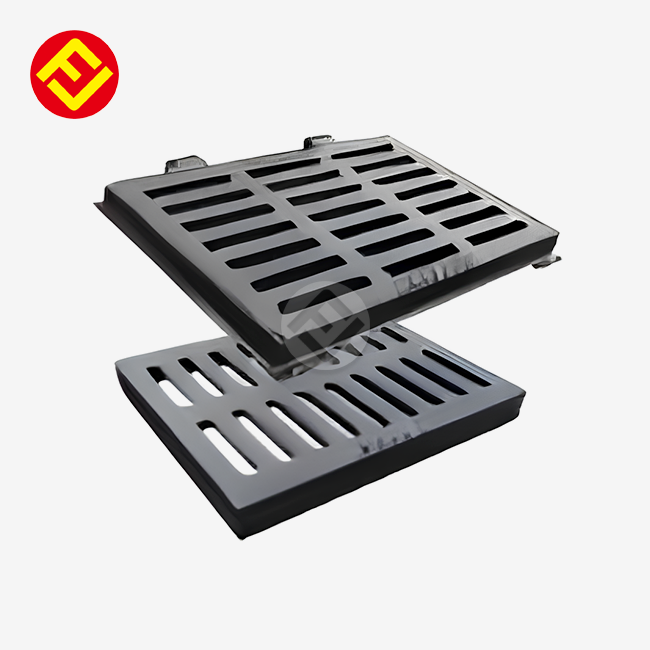
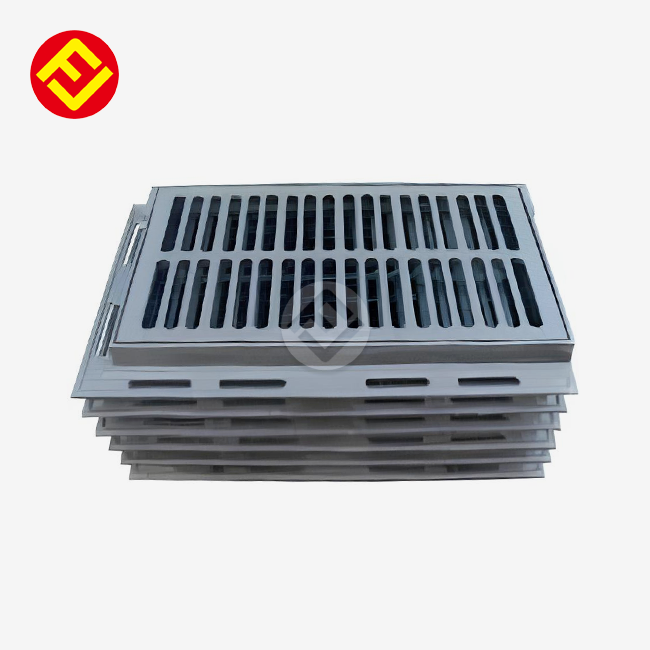
Bar-type grates have slots that are either horizontal or vertical, which are designed to let the most water flow through while still keeping the structure strong. The open area ratio, which is the portion of void space to the total surface area, has a direct effect on the hydraulic capacity. Our engineering team at FLA Industrial makes sure that this ratio is just right so that water can be sucked in quickly without making it unsafe for wheelchair wheels, bike tires, or high-heeled shoes that could slip through gaps that are too big.
Slotted designs have small longitudinal holes that work well in places that need heel-guard qualities with slot widths less than 10mm to meet ADA standards. Decorative cast designs let architecture be used in high-traffic walking areas. They combine practical drains with good looks that go with the hardscape materials around them.
Installation Precision Determines Performance
A professional installation starts with making sure the frame is properly seated so that it doesn't sink or move when traffic loads it. To avoid tripping dangers and damage from vehicles, the frame must be perfectly aligned with the ground around it, with tolerances usually staying within 2 mm. By using advanced sealing systems in our designs, we've been able to get rid of the common problem of manhole shaking, which is caused by vibrations from traffic and noise pollution. When you use concrete haunching for filling the right way, the load is spread out evenly and the frame doesn't rotate, which would eventually damage the seal.
Comparing Rainwater Grate Solutions for Optimized Procurement Decisions
Catch Basin Systems Versus Surface Grates
The procurement teams often get these linked but separate parts mixed up. Surface grates are mostly used to collect water right away at the point where runoff starts, while catch basin systems have underground collection tanks that help settle silt and catch more debris. Integrated catch basin systems are best for projects that need to filter large amounts of particle matter, while standalone rainwater grate installs over existing drainage pipes are a more cost-effective way to move water.
Material Cost-Benefit Analysis
Ductile iron is the standard in the industry for business and local uses because it is durable and doesn't cost too much. The material doesn't get damaged when tools are dropped or when cars are hit, and it keeps its shape even in continental countries with wide temperature differences. Anti-rust coatings make things last longer in harsh settings, and hot-dip galvanization is the best way to protect things if you can afford it.
A higher initial investment is needed for stainless steel options, but they don't rust and are cost-effective in specialized settings like food processing plants, chemical plants, or marine sites where replacements would happen more often otherwise. When a project lasts longer than 25 years and upkeep entry is hard to get to, life-cycle costing models tend to favor stainless steel.
Composite materials fill specific needs when they need to be resistant to chemicals or keep things from getting stolen. These materials can stand up to acids, alkalis, and contaminants derived from gasoline, which quickly break down metal choices. This makes them useful in industrial settings where fluids need to be handled aggressively. Since they have no scrap value, they are less likely to be stolen in high-risk areas. However, their lower load ratings mean they can only be used for pedestrians and light-duty vehicles.
Vendor Selection Criteria
When evaluating possible suppliers for a rainwater grate, you need to look at more than just the price they give. Manufacturing capacity means being able to fill large orders quickly and without having to wait for longer lead times. At FLA Industrial, our 2,000-ton ready inventory means that standard setups are available right away, so project delays caused by material shortages don't happen. Customization is important when standard sizes don't work with current infrastructure and molds need to be made and prototypes need to be tested before full production runs can begin.
Quality approvals make sure that the standards for making are always met. The ISO quality management system certification shows that the production process is being controlled, and the CE product safety certification shows that the product meets European health, safety, and environmental protection standards that are accepted in all foreign markets. When complicated installations need load calculations, 3D design verification, or special engineering analysis to fit the needs of the site, the availability of technical help sets one provider apart from others.
Maintenance and Longevity: Maximizing the Performance of Rainwater Grates
Routine Inspection Protocols
Setting up regular review times keeps small problems from getting worse and causing system breakdowns. Visual inspections every three months look for built-up trash, frame movement, or obvious corrosion that threatens the structure's strength. Detail reviews should be done once a year and should include checking the dimensions with straightedges to see if there is any movement or subsidence, checking the state of the gaskets to see how well they block noise, and making sure that the coatings on treated surfaces are still intact.
Cleaning Procedures and Debris Management
As sediment builds up in rainwater grate holes, the hydraulic capacity slowly decreases. Eventually, this leads to surface water backing up during storms. Cleaning on a regular basis—every six months in mild climates or every three months in places with a lot of organic debris—keeps flow rates at the right level. High-pressure water jetting removes compacted materials well without hurting the grate surfaces, and vacuum truck systems take out large amounts of waste from the catch bowl tanks that are connected to them.
Corrosion Prevention Strategies
In harsh conditions, even treated ductile iron needs to be checked for rust all the time. Regularly applying protective coatings to areas that are visible stops oxidation before it damages the structure. Our basic anti-rust process protects against rust, and hot-dip galvanization, which is an option, offers better defense in coastal sites or places where deicing salt is present. Stainless steel units don't have to worry about ferrous corrosion, but they may have crevice corrosion in chloride-rich settings if the wrong alloy is used. 316-grade stainless steel is better at resisting pitting than 304-grade stainless steel.
Repair Versus Replacement Economics
Decision models should compare the costs of repair to the costs of replacement while also taking into account the remaining useful life. Hairline surface cracks usually don't affect the load-bearing capacity and might not need to be replaced. On the other hand, frame distortion or through-thickness fractures need to be taken out right away. The length of downtime depends on how readily available the parts are. Our large inventory ensures quick delivery of new parts, causing as little inconvenience as possible to traffic or building plans.
Procurement Guide: How to Choose and Where to Buy Durable Rainwater Grates?
Technical Specification Development
Clear description of requirements for a rainwater grate is the first step to successful buying. The choice of load classification is based on the type of traffic at the placement site. For example, A15 is for landscape zones, B125 is for walking paths, C250 is for parking lots, D400 is for roads, and E600 is for industrial facilities. The size requirements must take into account the limitations of the current infrastructure while still ensuring that the open area ratios are good enough for hydraulic performance. Our engineering team offers advice on how to make specifications that take into account the specifics of each spot, such as the soil's ability to hold weight, the depth of the frost, and the rules and regulations that must be followed in that area.
Supplier Qualification Assessment
Assessing the ability to manufacture keeps buying failures at bay. Some signs of production capacity are the amount of work that is done each year, the number of standard configurations that are in stock, and the wait times for custom fabrications. FLA Industrial & Trading Co., Ltd. has been making Products" target="_blank" style="color:blue" >products for almost 40 years and has over 1,000 different product specs, including draining products, hardware tools, clamps, electrical parts, and pipe fittings. Diversification shows that the business is stable and has technical know-how that can be used in a number of different industries.
Processes for quality checking should be closely looked at when choosing a company. Ask for proof of material certificates that confirm its chemical make-up and mechanical qualities. Load testing records should show that the claimed scores are accurate by using destructive testing or proof-load verification. Our quality management system is ISO-certified, so we can keep an eye on the whole process, from inspecting the raw materials to making sure the finished product meets the high standards of the Fortune Global 500 companies we work with in both local and foreign markets.
Customization and Volume Advantages
Standard store items can be used for many tasks, but building projects often have special size requirements that need custom solutions. Our main economic edge is that we can make custom-shaped parts that fit perfectly into non-standard openings and meet other odd structural needs. The custom design process includes an initial meeting, 3D modeling to check the design, optimizing the choice of materials, and analyzing load calculations. Rapid development lets you get working models in 7–15 days, so you can make sure they fit right before committing to full production amounts for your rainwater grate needs.
Volume procurement generates significant cost savings for large-scale projects when they buy in bulk. When you order in bulk, the price per unit goes down, and the quality stays the same throughout the whole job. Our logistics support makes sure that shipping times are matched with building phases. They also keep just-in-time stocking practices up to date so that there aren't any material shortages that slow down important tasks.
Conclusion
For urban drainage to work, gully covers need to be properly designed so that they balance hydraulic performance, structural stability, and safety standards for a wide range of uses. When choosing between ductile iron, stainless steel, and composite materials, it is important to think carefully about the climate, the load requirements, and the cost over the product's lifetime. Partnering with experienced manufacturers who offer full technical help, the ability to make changes, and effective supply chain management is key to successful procurement. Regular maintenance plans keep infrastructure assets from failing too soon and increase the life of operations. Strong rainwater grate systems are becoming more and more important for keeping built areas safe and useful as cities grow and weather trends change to cause more extreme rain events.
FAQ
What determines the appropriate load rating for a specific installation?
According to EN 124 guidelines, the installation site determines which load class to use. Landscaped areas need A15 ratings, sidewalks need B125 ratings, curbside places need C250 ratings, main roads need D400 ratings, and industrial sites that get a lot of heavy equipment traffic need E600 or F900 ratings. Not giving enough information about the rainwater grate can cause structures to fail and put people in danger.
How does ductile iron compare to grey cast iron in drainage applications?
Ductile iron changes graphite into polygonal structures instead of flakes, which gives the material much higher tensile strength and resistance to impact. This difference in the way the metal is made means that lighter designs are possible that can hold as much weight as or more than heavier grey iron options. This saves money on installation work and material handling costs.
What maintenance frequency keeps drainage systems functioning optimally?
Visual checks are usually done every three months, and full exams are done once a year. How often you clean relies on how much garbage is in the system. In temperate climates, twice-yearly service is best, while three-quarterly service is best for areas with a lot of organic buildup. Because they are exposed to salt, coastal sites need to be checked for rust more often.
Can existing grates be retrofitted for higher load ratings?
Due to frame construction limitations, retrofitting rarely works out. The load capacity depends on how well the grate and frame work together as a whole. Upgrading usually means replacing the whole system, including underground frame parts. This means that being accurate with the specifications at the start is very important to avoid having to pay for replacements in the future.
Contact FLA Industrial & Trading Co., Ltd. for Professional Drainage Solutions
More knowledge than what is written in a book is needed to choose the right stormwater control components. At FLA Industrial & Trading Co., Ltd., our engineering team brings almost 40 years of experience in manufacturing to every meeting. They can help you figure out how to classify loads, choose materials, and meet the unique design needs of your project. We don't have any buying delays because we keep 2,000 tons of stock on hand and respond quickly to technical questions (within 24 to 48 hours). Our ISO-certified quality systems and track record of working with Fortune Global 500 partners guarantee reliable performance backed by full support, whether you need standard setups or custom rainwater grate designs that fit your specific installation needs. Contact our technical sales team at sales@flaindustrial.com to talk about your drainage needs with a reputable manufacturer that is dedicated to providing solutions that go above and beyond international standards while staying within your budget.
References
Smith, J. R., & Thompson, L. M. (2021). Structural Performance of Ductile Iron in Urban Infrastructure Applications. Journal of Civil Engineering Materials, 34(2), 145-162.
European Committee for Standardization. (2015). EN 124: Gully Tops and Manhole Tops for Vehicular and Pedestrian Areas – Design Requirements, Type Testing, Marking, Quality Control. Brussels: CEN Publications.
Anderson, K. P. (2020). Sustainable Urban Drainage Systems: Material Selection and Lifecycle Analysis. International Journal of Infrastructure Engineering, 18(4), 287-305.
Williams, D. A., & Chen, H. (2019). Corrosion Mechanisms in Ferrous Drainage Components: Prevention Strategies for Extended Service Life. Corrosion Science and Technology Quarterly, 42(3), 198-216.
National Association of City Transportation Officials. (2018). Urban Street Stormwater Guide: Best Practices for Drainage Infrastructure Design and Maintenance. New York: NACTO Publishing.
Roberts, E. M., Foster, G. L., & Martinez, S. R. (2022). Load Testing Protocols for Cast and Ductile Iron Grating Systems: Comparative Analysis of International Standards. Materials Testing and Evaluation Review, 29(1), 73-91.