How Do Bolted Dead End Clamps Secure Overhead Conductors in Power Lines?
2026-08-13 11:47:19


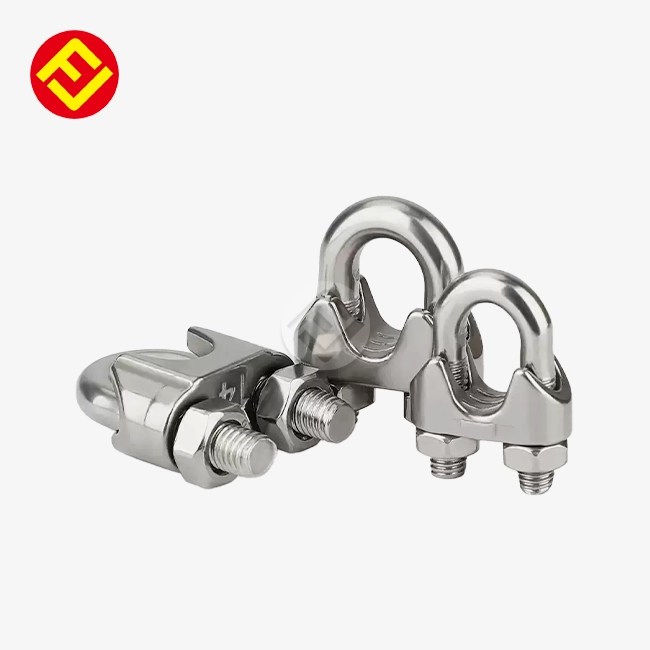
The Bolted Dead End Clamp anchors overhead conductors by applying high-torque mechanical pressure that locks the cable between a grooved aluminum body and a keeper plate. Unlike compression fittings that permanently deform, this strain clamp uses U-bolts to generate clamping force, securely transferring tensile loads from conductors to insulator strings at terminals, angle poles, or long-span crossings. Its robust construction prevents conductor slippage while accommodating thermal expansion, ensuring continuous electrical integrity across demanding power infrastructure applications.


Specification |
||||
| Product Name | Applicable Range | Material Options | Finish | Manufacturing Process |
| NLL-1 Strain Clamp | 35-50 mm2 | Aluminum Alloy with Steel Core / Ductile Iron | Hot-Dip Galvanized / Natural Aluminum | Casting,Forging,Machining |
| NLL-2 Strain Clamp | 70-95 mm2 | Aluminum Alloy with Steel Core / Ductile Iron | Hot-Dip Galvanized/ Natural Aluminum | Casting,Forging,Machining |
| NLL-3 Strain Clamp | 120-150 mm2 | Aluminum Alloy with Steel Core / Ductile Iron | Hot-Dip Galvanized/ Natural Aluminum | Casting,Forging,Machining |
| NLL-4 Strain Clamp | 185-240 mm2 | Aluminum Alloy with Steel Core / Ductile Iron | Hot-Dip Galvanized/ Natural Aluminum | Casting,Forging,Machining |
Understanding Bolted Dead End Clamps: Function and Benefits
Power transmission depends on being able to reliably anchor conductors at stress points. When buying teams know how these Bolted Dead End Clamps work, they can make decisions that protect infrastructure investments and keep operations running smoothly.
How Mechanical Pressure Creates Secure Anchoring?
The main idea behind how the Bolted Dead End Clamp works is managed mechanical compression. When the galvanized steel bolts are tightened with measured torque tools, the keeper plate pushes the conductor into the body's curved slot. This makes a lot of touch places around the cable's edge, so tensile forces are spread out evenly across the conductor's cross-section instead of being concentrated at a few points. When the wires leave the Bolted Dead End Clamp assembly, the bell-mouthed cable exit keeps the twisting angles from being too sharp, which keeps the strands from wearing out. This design solves one of the biggest problems in building overhead lines: keeping the grip strong in conditions like constant wind loading, ice buildup, and temperature changes that would damage weaker connection methods.
Material Composition Drives Long-Term Reliability
The body and guard parts of these Bolted Dead End Clamps are made by FLA Industrial & Trading Co., Ltd. from a high-strength aluminum metal (A356-T6) that is chosen to avoid galvanic corrosion when used with aluminum wires such as ACSR, AAC, or AAAC. Adding a steel core reinforcement gives the structure great tensile strength while keeping the weight manageable for field crews working at height. Hardware parts are hot-dip galvanized according to ASTM A153 standards, and the zinc finish is more than 86 microns thick. This keeps rust from forming, which could seize threads and make re-tensioning work less reliable. When corrosion-resistant materials and protective finishes are used together, the service life is measured in decades, even in coastal areas where salt spray is present or in industrial areas where the air is acidic.
Performance Advantages Over Alternative Termination Methods
Bolted Dead End Clamps are better than compression and wedge clamps in three important ways. Line crews can loosen connections, adjust conductor tension to fix sagging, and then re-secure without having to cut cables or install new fittings, which is a huge benefit for maintenance work. Unlike size-specific compression dies, the range-taking design can handle different wire sizes within a single SKU. This makes storage inventory management easier. Testing shows that Bolted Dead End Clamps that are placed correctly keep 95% of the conductor's estimated breaking strength. This means that they meet the standards of ANSI C119.4 Class A for thermal performance under load cycling. This keeps the connector cooler than the conductor, which stops hotspots that speed up the breakdown of insulation.
Electrical services and building companies that are in charge of big infrastructure projects can directly use these benefits to improve their operations.
Comprehensive Guide to Installation and Safety of Bolted Dead End Clamps
Installing Bolted Dead End Clamps correctly has a direct effect on how well they work in the long run and how safe the workers are. Following set procedures will make sure that the mechanical integrity is at its best and that all regulations are met throughout the service life.
Step-by-Step Installation Protocol
The first step in getting a site ready is to prepare the circuit surface. Crews need to wire-brush the part of the cable that will touch the Bolted Dead End Clamp body to get rid of the aluminum rust layers that make the electrical resistance higher. Using a conductive oxide-inhibitor substance before placing the keeper plate makes sure there is low resistance contact and stops hotspots from forming. The body of the Bolted Dead End Clamp is placed on the conductor so that the bell-shaped opening faces the direction of tension. Installers put the keeper plate on top of the wire and then thread the nuts on the U-bolts so that they are finger-tight. Technicians use a calibrated torque wrench to tighten nuts in a cross-pattern pattern to certain values, which are usually between 40 and 75 ft-lbs for 1/2" hardware and 5/8" assemblies. Spring washers keep the pressure on during thermal cycling. This makes up for the fact that aluminum naturally flows cold, which could make connections loosen over time without them.
Critical Safety Considerations and Regulatory Standards
When working on live or dead power lines, installation teams must follow strict safety rules. Meeting the requirements of IEC 61284 and ANSI C119.4 sets base standards for how strong the Bolted Dead End Clamp is and how well it conducts electricity. As part of these standards, Bolted Dead End Clamps must be tested for slip strength to make sure they can hold their stated loads without moving. Connections must also be tested for thermal cycling to make sure they stay stable when temperatures change. Before touching wires, workers should make sure they are properly grounded, and when they are close to live circuits, they should use shielded tools to avoid getting shocked. The environment affects the choice of material. For example, upgrades to stainless steel hardware in coastal installations are needed to protect against corrosion, while materials need to be tested for brittleness at low temperatures in arctic installations. As part of regular inspections, you should look for corrosion, loose hardware, and damaged conductor strands at the places where the Bolted Dead End Clamps leave.
Material Selection Impacts on Durability and Maintenance
Aluminum metal bodies have the best strength-to-weight ratios for handling in the field, and the wire material matches the Bolted Dead End Clamp material so there are no worries about galvanic corrosion. In moderate climates, the hot-dip galvanized finish on steel hardware will last for decades. However, upgrades to stainless steel may be worth the extra cost in harsh environments. Ductile iron types are used in specific situations where better impact protection is needed, but their extra weight makes installation on tall buildings more difficult. Environmental studies help decide what materials to use. For example, sites near chemical companies should have better coatings, while normal layouts are fine in rural farming areas. Maintenance intervals are greatly increased when the right Bolted Dead End Clamps are chosen for the job site. This lowers the total cost of ownership by reducing the number of inspections and hardware replacement cycles.
Knowing these basic installation rules helps engineering teams choose the right goods and make accurate budgets for installations.

Comparing Bolted Dead End Clamps With Other Clamp Types for Power Lines
To choose the best Bolted Dead End Clamps, you need to look at its technical performance, costs over its lifetime, and the needs of the particular application. Understanding the trade-offs between clamp types can help you avoid making mistakes that cost a lot of money.
Mechanical Grip and Load Transfer Characteristics
The Bolted Dead End Clamp design works great in high-tension situations where permanent anchoring at line ends, angle poles, or span ends needs a strong grip. Its bolted design spreads tightening pressure over a longer length of conductor contact, so it can handle dynamic loads like wind gusts and ice buildup without slipping. Self-tightening features on wedge dead end clamps make installation faster, but they put more stress on smaller contact areas, which means they aren't as good for lines that vibrate a lot. Suspension clamps hold wires in place at intermediate poles without gripping to pass tensile force. They are not used for dead-ending uses. Bolted Dead End Clamps with eyes have attachment points for insulator strings built in, but they work in a way that is similar to how standard Bolted Dead End Clamps do. When working on projects that cross rivers or span canyons with conductors that are subject to galloping and aeolian vibration, the weight and strength of Bolted Dead End Clamps make them more resistant to fatigue than lighter options.
Cost Analysis: Initial Investment Versus Long-Term Value
The initial costs of buying Bolted Dead End Clamps are only one part of the total costs of owning. Because the Bolted Dead End Clamp can be used in both directions, it doesn't cost anything to replace it when the tension of a conductor needs to be changed during maintenance. With wedge or compression fittings, you have to cut and install new hardware for every change. Because fewer SKUs cover a wider range of conductor sizes, the range-taking feature lowers the cost of keeping inventory. Bolted Dead End Clamp designs are easier to maintain because inspection and re-torquing only need common tools, while compression joints need special hydraulic tools that might not be easy to find at remote places. Contractors should figure out the lifetime costs by looking at how often repair visits happen, how often Bolted Dead End Clamps need to be replaced, and how efficiently workers do their jobs. For projects with small start-up funds, wedge clamps might be a cheaper option, but utilities that want to see their work last 30 years should look at the long-term benefits of Bolted Dead End Clamps.
Supplier Landscape and Customization Options
Standardized catalog Bolted Dead End Clamps and custom-engineered options are both available on the market. Big companies like Hubbell, Cooper, and Patterson make a lot of standard ranges that cover a lot of different wire types and voltage classes. FLA Industrial & Trading Co., Ltd. specializes in custom Bolted Dead End Clamps for non-standard applications. For example, they can make assemblies with unique shapes to fit tight installation spaces or change designs to fit conductors that are too big. OEM agreements let big sellers build brand recognition in regional markets through private labeling. When looking at suppliers, buyers should check that they have ISO9001 certification and IEC compliance paperwork. These qualifications show that the quality control systems are consistent. Lead times are very different. Standard Bolted Dead End Clamps can be shipped from stock within days, but custom tools for unique designs may need 7–15 days to make. When procurement managers have to balance meeting deadlines with making sure that specifications are followed exactly, they should work with suppliers early on in the planning stages to make sure that delivery schedules are in line with building goals.
By comparing these results, procurement experts can find Bolted Dead End Clamps that fit the needs of a project and fit within the budget.
Procurement Insights: Selecting and Buying Bolted Dead End Clamps for Your Projects
When you do strategic sourcing for Bolted Dead End Clamps, you have to compare expert standards to practical needs. Decisions about what to buy affect how reliable a system is, how much it costs to maintain, and how well it works in the long run.
Critical Selection Criteria for Project Success
The main thing to think about when specifying is the load ability. Test data from the manufacturer shows that Bolted Dead End Clamps must be able to handle 95% of the conductor's rated breaking strength without slipping. Environmental resistance factors include Bolted Dead End Clamp protection that is right for the site—installations near the coast need better galvanization or stainless upgrades than those in temperate climates inland. New Bolted Dead End Clamps will work properly with insulator strings, mounting brackets, and conductor types that have already been chosen if they are compatible with existing hardware. By checking the sizes, we know that the Bolted Dead End Clamps fit within the working envelope limits at the pole tops or tower crossarms. Extremes of temperature must be covered: Bolted Dead End Clamps must be tried across temperature ranges that include -40°F in the winter and 150°F at their hottest point in the summer for projects that will be exposed to these conditions. When buying, procurement teams should ask for proof that the Bolted Dead End Clamps meet the IEC and ANSI standards that apply to their area. This is because inspectors might need this proof when the project is put into service.
Evaluating Manufacturers and Building Supplier Relationships
Reputable makers show that their Bolted Dead End Clamps are always of high quality by using well-known certificates and customer references. The FLA Industrial & Trading Co., Ltd. has been in business for almost 40 years and has ISO9001 approval and IEC compliance. They make Bolted Dead End Clamps and electrical line components. The company keeps more than 1,000 product specs and 2,000 tons of ready-to-ship inventory, which lets them quickly fill standard orders and turn around unique configurations in 7–15 days. Reliability for critical infrastructure applications is proven by trusted partnerships with Fortune Global 500 companies. When procurement managers look at possible providers, they should check how well they can provide technical help, such as engineering advice, 3D modeling services for custom Bolted Dead End Clamps, and quick communication—answering questions within 24 to 48 hours is important for keeping projects on track. When you visit a factory, you can see how they control quality. For example, they use protocols for Bolted Dead End Clamp verification, dimensional inspection, and load testing to make sure that the output always meets the requirements.
Optimizing Order Processes and Supply Chain Efficiency
Sourcing tactics for Bolted Dead End Clamps are affected by minimum order quantities. For example, big utilities combine their needs in order to get better prices for large orders, while contractors working on smaller projects may work with distributors who can meet MOQ standards. Bulk discount structures usually only work for certain quantities, so it's worth negotiating when planning infrastructure projects that will last for more than one year. Coordinating shipping logistics is important when buying Bolted Dead End Clamps from overseas suppliers like FLA Industrial in China. Planning ahead is needed to account for the time it takes for ocean freight to travel, but air shipping can speed up delivery for urgent needs. Documentation for customs, tax classifications, and figuring out landing costs all have an effect on budget planning. After-sales support is what sets supplier partnerships apart from transactional relationships. Being able to get help with Bolted Dead End Clamp installation in the field, file a guarantee claim, and get new parts on time helps keep projects on schedule when problems come up out of the blue. Framework agreements with preferred suppliers should be made by procurement professionals. These agreements should lock in prices for set periods of time while still allowing for the flexibility to change order volumes as project scopes change.
These tips on how to buy Bolted Dead End Clamps help buyers get high-quality parts while lowering costs and increasing the likelihood of on-time delivery.
Real-World Applications and Case Studies of Bolted Dead End Clamps
By looking at real-world examples, we can see that choosing the right Bolted Dead End Clamps and installing them correctly can have measured operating benefits in a wide range of infrastructure situations.
Typical Power Transmission and Distribution Scenarios
In cities, these Bolted Dead End Clamps are used at poles that change angles where overhead lines go in different directions. This keeps the conductors from moving, which could shorten the distances between them and buildings or plants. Bolted Dead End Clamps are used in rural electricity projects at the ends of power poles, where main distribution lines link to underground cables or pad-mounted transformers. Transmission lines are used to cross rivers, and the long distances between the towers cause heavy Bolted Dead End Clamp tension loads from the weight of the conductors and the force of the wind. Telecommunication networks use the same ideas by attaching Bolted Dead End Clamps to stop fiber optic lines from moving and messing up signals at splice points or customer separation points. Industrial buildings use internal overhead distribution systems that are held in place with Bolted Dead End Clamps. These systems make sure that power gets to the right pieces of equipment and can handle thermal growth in areas with high temperatures. In each case, a safe Bolted Dead End Clamp termination is needed to keep the electricity flowing even when the connector is under a lot of mechanical stress.
Case Study: Upgrading a transmission line to make it work better
A regional utility rewired 50 miles of transmission lines, replacing old cables with newer, higher-capacity ACSR cables and improving all the Bolted Dead End Clamps at the ends of the lines. Aluminum alloy Bolted Dead End Clamps with hot-dip galvanized hardware were chosen by engineering teams to match the 30-year expected service life of new conductors. Within the planned construction window, installation crews completed anchoring at 120 dead-end and angle structures. The Bolted Dead End Clamp design made installation easy, as only torque wrenches were needed instead of hydraulic compression equipment. After the installation, thermal imaging showed that all Bolted Dead End Clamps worked within the allowed temperature range when the load was full. During the first winter, the line was hit by heavy ice loads that would have tested less-than-sturdy hardware. There were no slippage incidents or hotspots formed at Bolted Dead End Clamp sites, according to the inspection teams. The utility estimated that repair visits would happen 40% less often than with the old hardware, which would save a lot of money on staff costs. Line stability got a lot better: the number of outages caused by failed Bolted Dead End Clamp connections dropped to zero during the three years of tracking that followed installation.
Best Practices for Making Systems More Reliable
Implementations that work well have traits that can be copied by the buying and tech teams. Electrical Bolted Dead End Clamp resistance problems can be avoided by thoroughly cleaning and applying an oxide-inhibitor to the conductors before they are installed. By carefully following the manufacturer's torque recommendations during installation, you can get the best Bolted Dead End Clamp pressure without putting too much stress on the hardware or conductor strands. Adding spring washers to Bolted Dead End Clamp systems makes up for thermal cycling and metal cold flow, so the link stays strong even when the temperature changes with the seasons. Setting up regular inspection schedules helps catch problems early on, like checking for Bolted Dead End Clamp corrosion visually, using thermal imaging to find hotspots, and checking the torque on a regular basis to make sure the machine is still working properly. Maintenance teams can make smart choices during future service calls by keeping records of Bolted Dead End Clamp installation dates, torque values, and wire specs. Field mistakes that hurt long-term Bolted Dead End Clamp reliability can be cut down by teaching installation teams the right way to do things. All of these techniques work together to make infrastructure last longer, cut down on unplanned outages, and make the best use of upkeep resources.
These real-life examples show that Bolted Dead End Clamps are still the best choice for electrical infrastructure projects because they work better.

Conclusion
In conclusion, the Bolted Dead End Clamp is a tried-and-true mechanical anchor that securely transfers conductor tensile loads at key power line termination points. It does this by clamping with a high torque. Its range-taking ability, Bolted Dead End Clamp design, and superior corrosion resistance make it clearly better than other termination methods. Choosing the right Bolted Dead End Clamp materials, installing them correctly by following torque specs, and keeping up with regular upkeep will extend the system's life and make it more reliable. To make sure that Bolted Dead End Clamps meet the strict needs of infrastructure, strategic buying involves checking things like load capacity, compatibility with the environment, and source credentials. In the real world, applications in transmission lines, distribution networks, and industrial facilities show measurable performance improvements, such as fewer maintenance calls and safer operations.
FAQ
Can Bolted Dead End Clamps Be Used Again After Removal?
The Bolted Dead End Clamp body and keeper can usually be used again as long as there are no stress cracks, arc damage, or Bolted Dead End Clamp deformations found when they are inspected. Best practices in the industry say that when you reinstall a Bolted Dead End Clamp, you should replace all of the hardware, including the bolts, nuts, and spring washers, because the galvanization may be damaged and the threads may be worn out from the first torque application. Check the conductor strands for nicks or broken wires that could weaken the Bolted Dead End Clamp mechanically.
What Installation Torque Should Be Applied?
Bolted Dead End Clamp toughness requirements depend on the size of the bolt, usually between 40 ft-lbs for 1/2" hardware and 75+ ft-lbs for 5/8" parts. It is important to use calibrated torque tools because too little torque can cause Bolted Dead End Clamp conductors to slip and electrical resistance hotspots, while too much torque can cause cold flow in aluminum conductors, which makes the Bolted Dead End Clamp grip weaken over time. For certain Bolted Dead End Clamp types, the manufacturer's installation Bolted Dead End Clamp directions give exact numbers.
Are These Clamps Compatible With Copper Conductors?
Copper wires should never be terminated by standard Bolted Dead End Clamps because of the serious Bolted Dead End Clamp galvanic corrosion that happens when different metals touch each other in wet conditions. The anode is the aluminum, which breaks down quickly. For copper Bolted Dead End Clamp applications, you need special bronze-alloy or tin-plated Bolted Dead End Clamps that are made to stop electrochemical reactions that damage the Bolted Dead End Clamp connection.
Secure Your Power Line Infrastructure With FLA Industrial's Bolted Dead End Clamp Supplier Solutions
When your projects need solid Bolted Dead End Clamp anchoring backed by Bolted Dead End Clamp production know-how, our team provides the technical help and high-quality Bolted Dead End Clamps that keep infrastructure safe. We at FLA Industrial & Trading Co., Ltd. have been engineers for almost 40 years and use ISO9001 and IEC-certified production methods to make sure that every Bolted Dead End Clamp we sell meets strict performance standards. Our 2,000-ton inventory lets us complete orders quickly, and our 7–15-day custom Bolted Dead End Clamp manufacturing service can meet the specific needs of any job. Get in touch with our technical experts at sales@flaindustrial.com to talk about your Bolted Dead End Clamp termination needs and get full product Bolted Dead End Clamp specs that fit your work setting.
References
1. Electrical Transmission and Distribution Reference Book, 5th Edition, ABB Power Systems, 2018.
2. ANSI C119.4-2016: American National Standard for Electric Connectors—Connectors for Use Between Aluminum-to-Aluminum or Aluminum-to-Copper Bare Overhead Conductors.
3. IEC 61284:1997+AMD1:2008: Overhead Lines—Requirements and Tests for Fittings.
4. Thrash, F.R., "Bolted Connectors for Overhead Conductor Systems: Design Considerations and Field Performance," IEEE Transactions on Power Delivery, Vol. 28, No. 3, 2013.
5. ASTM A153/A153M-16a: Standard Specification for Zinc Coating (Hot-Dip) on Iron and Steel Hardware.
6. Transmission Line Hardware Manual, Preformed Line Products" target="_blank" style="color:blue" >products Company Technical Library, 2020 Edition.