How Do Deep Throat G Clamps 250mm Support Precision Clamping in Metalworking?
2026-08-19 14:33:05


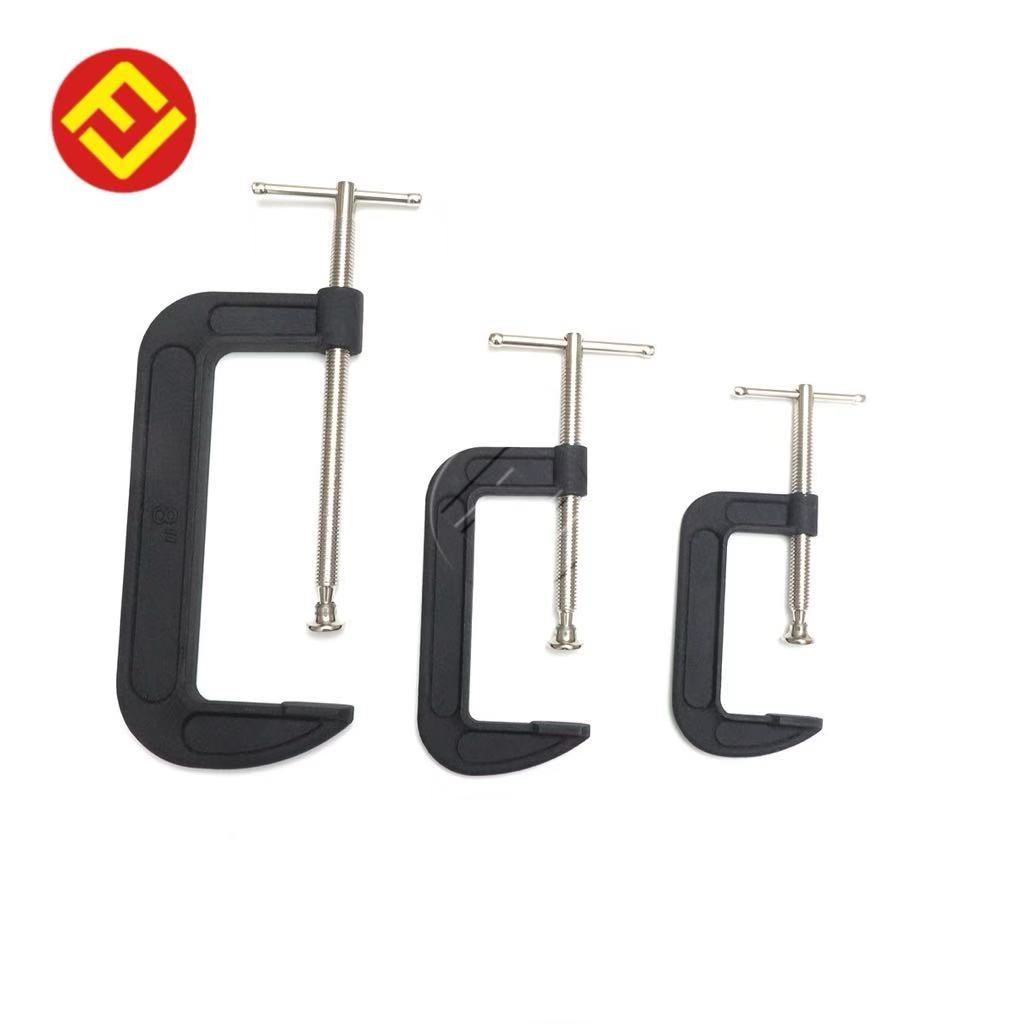
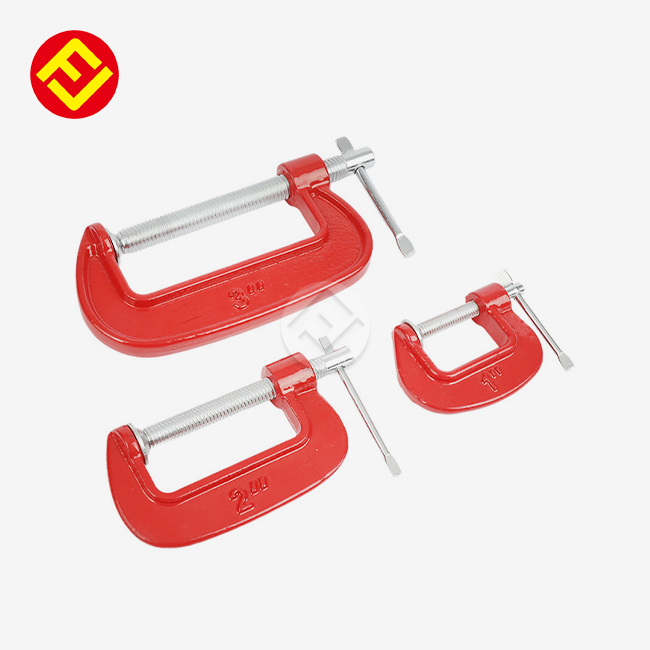
Deep Throat G Clamps 250mm support precision clamping in metalworking through their extended throat design, which reaches deeper into workpieces than standard clamps. This extended reach—typically 120mm to 200mm beyond the jaw opening—enables technicians to apply uniform pressure toward the center of wide panels, structural beams, and fabrication assemblies. Manufactured from drop-forged carbon steel or alloy steel with reinforced ribbing at stress concentration points, these clamps deliver clamping forces between 800kg and 1200kg without frame distortion. The result is consistent contact pressure across welding joints, lamination surfaces, and assembly fixtures, eliminating edge-only compression that causes material warping during metalworking operations.


Specification |
||
| Type | Model | Throat Depth x Jaw Opening |
| Deep Throat Clamp | Deep Throat 1.5 Inch | 35mmx110mm |
| Deep Throat Clamp | Deep Throat 2 Inch | 46mmx140mm |
| Deep Throat Clamp | Deep Throat 3 Inch | 82mmx110mm |
| Deep Throat Clamp | Deep Throat 3 Inch | 85mmx185mm |
| Deep Throat Clamp | Deep Throat Large 3 Inch | 95mmx250mm |
| Deep Throat Clamp | Deep Throat 4 Inch | 105mmx186mm |
| Deep Throat Clamp | Deep Throat Large 4 Inch | 110mmx305mm |
Understanding Deep Throat G Clamps 250mm and Their Specifications
Long-reach clamping tools have changed how metalworking shops make things that are complicated. Standard G-clamps worked well in workshops for many years, but today's manufacturing needs tools that can get to hard-to-reach places without weakening the hold.
What Makes These Clamps Different From Standard Models?
The throat depth measurement, which is the distance from the screw centerline to the frame's inner edge, is what makes the difference. Standard G-clamps have a throat depth of 80mm to 100mm, which means they can only be used for edge work. Depending on the type, our Deep Throat G Clamps 250mm have throat sizes that range from 120mm to 200mm. Because of this difference in architecture, fabricators can place the screw contact point much farther from the edge of the workpiece. This helps with what engineers call the "clothespin effect," which happens when pressure builds up only around the edges.
Drop-forged steel, not cast iron, is used to build the frame. This was done on purpose because it has better grain structure and flexibility. Drop forging lines up the grain flow of the steel with the stress patterns of the clamp. This makes a tool that bends slightly when it's overloaded instead of snapping in two. This engineered deformation acts as a warning system, letting operators know when permanent damage is about to happen.
Core Specifications That Matter for Industrial Applications
Material composition has a direct effect on how well it works and how long it lasts. These clamps are made by FLA Industrial & Trading Co., Ltd. from high-quality carbon steel and alloy steel. The surfaces are treated with nickel finishing and industrial-grade paint finishes. Nickel plating is better at resisting rust in cutting fluid and metal shaving situations, while painted finishes work well in most workshop settings. According to ASTM B117 standards, both processes are tested with salt spray to make sure they can handle industrial solvents and wetness from the environment without breaking down.
Another important parameter is the thread shape. When compared to normal V-threads, our clamps' cold-rolled Acme threads need fewer turns to reach their full compression. This design makes it easier to control the amount of pressure that is applied and keeps the user from getting tired after doing the same tightening tasks over and over. A black oxide finish on the spindle keeps the threads from galling and the machine running smoothly even after being exposed to metal dust for a long time.
The load limit numbers show the actual safety gaps. Proof load testing is done on each clamp up to 1.5 times its safe working load (SWL). This means that a clamp that is supposed to hold 800 kg has been directly tried to hold 1200 kg without permanently changing shape. This safety factor keeps clamping devices safe from short-term overloads that can happen in production settings where vibration, thermal expansion, or impact forces briefly put more stress on them.
Pay close attention to the shape of the swivel pad. Our clamps have hardened steel ball-joint swivel pads that can move to fit surfaces that aren't flat up to 35 degrees. This joint makes sure that the contact patch stays straight on top of the applied force vector. This stops the object from slipping and creates stress points that can damage finished surfaces. Instead of a threaded connection, the swivel mechanism uses a crimped retention design. This gets rid of the typical failure mode where vibrations loosen threaded parts.
How Deep Throat G Clamps 250mm Enhance Precision Clamping in Metalworking?
When working with metal, accuracy depends on keeping the part in the exact same place during the whole process of cutting, welding, or putting it together. Even very small movements during these steps can cause mistakes in measurements that get worse over multiple production runs.
Achieving Uniform Pressure Distribution Across Wide Workpieces
The shape of an extended throat changes the way pressing force moves through materials in a basic way. A standard clamp placed at the edge of a 300 mm wide steel plate makes a moment arm that lifts the plate's center. This is done to secure the plate for welding. This levering effect is greatly reduced by the Deep Throat G Clamps 250mm design, which moves the screw contact point 150 mm or more toward the center of the plate. Studies in the field of metallurgy have shown that this central pressure application cuts down on springback distortion in medium-carbon steel sheets by as much as 40% after welding.
Because the throat curve is strengthened with ribs, the frame doesn't bend when it's loaded. Without this support, the longer frame works like a cantilever beam that bends when clamping pressure is applied. This means that some of the power you apply goes into frame distortion instead of workpiece compression. Our engineering team figured out how stresses would be distributed and strategically placed material reinforcements where finite element analysis said the stresses would be highest. Because of this care for structural physics, at least 95% of the force that is applied actually hits the item and not just bends the frame.
Real-World Applications in Structural Steel Fabrication
When structural steel shops weld I-beams, they often run into the problem of how to clamp stiffener plates to the beam web when the flanges get in the way of normal clamps. The longer throat goes over the width of the flange, which lets the screw touch the stiffener plate exactly where the joint will be welded. This exact setting keeps the plate from moving during the first tack welds. This cuts down on the need for repair that happens when plates move before full welding.
When changing floor pans or inner fenders, these clamps are used by auto body shops that are repairing classic cars. Technicians can clamp new panels to factory mounting flanges that are hidden behind the body's outer contours thanks to the long reach. This access means that welding isn't needed when taking the car apart, so the original spot weld sites are kept and the structure stays strong, which is good for safety and the value of the car.
Marine fabrication has its own problems, like the need to keep applying pressure to the whole bonding surface of thick composite panels while they are being laminated. When boat makers are making transoms or gunwales, they use these clamps to put pressure in the middle of stacks of multiple layers of fiberglass and core material. The 250mm capacity can handle panels that are up to 240mm thick, including caulk plates. The deep reach makes sure that the pressure reaches the center plane of the laminate, which is where delamination holes usually appear.
Mechanical Advantages in Jig and Fixture Work
Workholding fixtures that keep the position of parts within microns are essential for CNC machining centers and automatic assembly lines. Heavy-duty jigs often have mounting rings or registration blocks that make it hard for normal clamps to move. These things don't get in the way of the deep-mouth design, which lets you securely mount fixtures straight to worktable T-slots or precision-ground mounting surfaces. Machine shops say that fixtures held in place with the right-sized deep throat clamps can withstand cutting forces and coolant flow pressures without moving. This means that fewer parts are scrapped because they don't fit the tolerances.

Selecting the Right Deep Throat G Clamp 250mm for Your Business Needs
When buying industrial tools, people have to weigh the needs of the current project against the costs of running the business in the long term and the dependability of the supply chain.
Comparing Throat Depths and Jaw Capacities
When you match the clamp's specs to the needs of the job, you avoid both overspending on too much capacity and underperforming because the reach is too short. The 250mm number means the widest opening of the jaws, but the most important number for metalworking is the throat depth. Our line of Products" target="_blank" style="color:blue" >products has models with throat depths ranging from 95 mm and openings of 250 mm for general production to 110 mm and openings of 305 mm for heavy plate work.
One useful way to evaluate something is to measure your most common part combinations. For makers who mostly weld 50mm to 150mm pieces of structural tube, models with 95mm to 105mm throat depths give them the most options without the extra cost and weight of bigger frames. Even though they cost more, shops that do architectural metalwork and often use 200mm or wider plate components should buy the Deep Throat G Clamps 250mm variants with 110mm throat depth. This is because renting specialized tools or outsourcing operations creates ongoing costs that quickly exceed the initial investment.
Evaluating Manufacturer Quality and Certification Standards
When buying industrial tools, it's important to make sure that the companies that make them have regular quality processes, and for Deep Throat G Clamps 250mm, FLA Industrial & Trading Co., Ltd. is certified by ISO 9001, which shows that they have organized control over the whole manufacturing process, from checking the raw materials to making sure the finished product works, and this approval isn't just paper work; it's audited proof of material traceability, dimensional inspection routines, and corrective action processes that keep customers from getting bad goods. FLA Industrial & Trading Co., Ltd. is certified by ISO 9001, which shows that they have organized control over the whole manufacturing process, from checking the raw materials to making sure the finished product works. This approval isn't just paperwork; it's audited proof of material traceability, dimensional inspection routines, and corrective action processes that keep customers from getting bad goods.
CE compliance is another thing that sets global procurement apart. This approval shows that the clamps meet European safety standards for things like mechanical strength, material make-up, and features that keep the user safe. People who don't live in Europe can still benefit from CE approval because it shows that the company has paid for a third party to check the safety of the product instead of just depending on its own quality claims.
When tools are going to be used in important tasks, material certifications are important. If you ask for mill certificates for the steel that is used in clamp frames, you can see in writing what the material is made of, how strong it is, and how it was heated. These documents are important proof for quality checks, especially in fields like making aircraft parts or pressure vessels, where a broken tool could affect the safety of the finished product.
Procurement Strategies for Bulk Orders and Inventory Management
There are chances to negotiate terms that go beyond unit pricing when you buy in bulk. FLA Industrial keeps more than 2,000 tons of finished goods in stock, which lets them fill large orders right away without the long wait times that come with making tools to order. This inventory depth helps contractors who are working on projects with tight deadlines and where the availability of tools directly affects those deadlines and penalty clauses.
When setting up a new plant or adding to what it can do, mixed model sales should be taken into account. Instead of buying only 250mm capacity clamps, look at the mix of sizes you've used in the past and spread your order across the sizes you'll need. If you use this method, 60% of your order might be the 250mm models for main tasks, 25% would be the smaller 185mm models for fine details, and 15% would be the bigger 305mm models for heavy plate jobs that are unique to your business. This distribution makes the most of both your initial investment and your operational flexibility, without tying up your money in specialty tools that you only use once in a while.
Supplier technical support capabilities influence total cost of ownership. Can your provider give you engineering advice when you need it for a job that goes beyond what a normal tool can do? FLA's team can respond within 24 to 48 hours to requests for unique specs, 3D design verification, and changes to tools that are used in particular situations. Because of this professional relationship, you won't have to worry about buying tools that won't work for your operations.
Proper Usage, Safety, and Maintenance of Deep Throat G Clamps 250mm
When operators don't have the right training or maintenance routines, even high-end tools break down early. Setting up clear processes saves both your employees and your money.
Positioning and Tightening Techniques for Optimal Results
The position of the clamp affects both the safety of the workpiece and the life of the tool. As much as possible, the screw should touch the workpiece perpendicularly. Contact at an angle causes side-loading, which speeds up thread wear and can make the workpiece slip when it vibrates. Before putting full pressure on a rotating pad that is clamped on an uneven surface, let it self-align. When you force the clamp into place while the swivel mechanism is locked, stress builds up that will break the pad's ball joint retention.
To tighten torque, an operator's skill is needed instead of mechanical force. The right amount of pressure is when the piece of work can't be moved by hand plus 15 to 20 percent. Over-tightening doesn't help with productivity and speeds up thread wear. It can also damage workpiece surfaces or cause stress cracks in brittle materials like cast iron. Shop managers should teach workers that the best way to keep clamps secure is to make sure they are in the right place and make good contact with the surface.
Safety Considerations That Prevent Accidents and Tool Damage
These clamps are only made to hold things in place when they are compressed. They are not rated for pulling or moving loads. They can suddenly and catastrophically fail if they are used as lifting points because they create shear forces across the frame and screw system. This safety rule also applies to impact loading: clamps should never be left on workpieces that will be hit by hammers, hydraulic presses, or drop forges.
By inspecting things on a regular basis, problems can be found before they become major ones. Check frames for cracks or bends that can be seen, especially at the throat curve where stress builds up. Check to see if the screw moves all the way freely through its full motion range. If it gets stuck, has too much play, or has obvious thread damage, the tool needs to be replaced. Check the holding of the swivel pad by making sure that it can turn easily but isn't too loose, which would let it move laterally.
The most common reason why clamps fail can be stopped by load limit adherence. The safe working load that is rated takes into account the static compression force when everything is perfect. In real life, things like vibration, changing temperatures, and heavy loads that last for days or weeks lower the safe capacity. Conservative practice says that loads that are held for more than 8 hours should be lowered by 25%. This means that a Deep Throat G Clamps 250mm rated for 800kg should not be loaded with more than 600kg for glue-ups that last all night or assembly jobs that take more than one day.
Maintenance Schedules That Extend Service Life
Cleaning on a regular basis keeps metal particles, welding spatter, and cutting fluid residue from building up, which speeds up wear. Wipe the threads and touch areas clean with a mineral spirits-dampened lint-free cloth after each use in places with a lot of dirt. Avoid cleaners made from gasoline, which leave behind residue that dust and grindings can stick to.
Consumer tools are oiled in different ways. The fine metal dust that is common in fabrication shops sticks to oils and greases that are still wet, making an abrasive paste that wears down threads faster than when it is dry. Molybdenum disulfide-based dry film lubricants are the best mix because they reduce friction and stop galling while also letting contaminants slide off instead of sticking to the surface. Dry lubricant should be used every 40 to 50 hours of operation or once a month in areas with a lot of use, whichever comes first.
Tools' readiness and lifespan are affected by how they are stored. When you store clamps, make sure the jaws are only partly closed. This way, the screw won't get a lasting compression set in the threads. Hang clamps or put them away in drawers instead of putting them in bins where frames can bump into each other and damage thread starts or swivel pads. For long-term keeping, controlling the environment is important. Humidity levels above 60% can cause rusting even on plated surfaces, and changes in temperature can cause condensation that speeds up rust in thread valleys.
Future Trends and Innovations in Deep Throat Clamping Solutions
Manufacturing technology is always changing, and clamping systems have to change too to support new materials and ways of making things.
Material Science Advances Creating Lighter, Stronger Tools
New research into improved steel materials shows that clamps can be made that are just as strong but lighter. Micro-alloyed steels that contain vanadium, niobium, or titanium have yield strengths that are 20–30% higher than regular carbon steels. This means that frame weight can be reduced without affecting load capacity. This weight reduction is very important for technicians who work with Deep Throat G Clamps 250mm above their heads or in tight spaces, where tool fatigue can hurt both safety and productivity.
Integration With Industry 4.0 and Smart Manufacturing
Industrial sites on the cutting edge use the idea of clever clamping systems. During an operation, load cells and wireless monitoring in prototype systems keep track of the real clamping force. This data integration lets quality management systems check that the required clamping pressure was kept during important operations. This makes automated documentation for ISO quality audits so that records don't have to be kept by hand.
In high-mix production settings, automated clamping systems with quick-change interfaces and servo-controlled actuators cut down on the time it takes to set up. Traditional clamps are still operated by hand, but new interface standards for robotic work cells will probably change how hand tools are made. This could lead to quick-adjustment systems that cut down on the number of turns needed to switch between workpiece sizes.
Supply Chain Considerations for Strategic Sourcing
Global changes in manufacturing affect the tools that are available and how they are bought. Along with traditional factors like price and quality, procurement professionals are increasingly looking at how resilient a supplier is. Manufacturers who keep a large stock of finished goods and a variety of production methods are less likely to be affected by supply problems. With a 2,000-ton inventory buffer and almost 40 years of constant operation, FLA Industrial has built up the steadiness that makes just-in-time shipping and project planning possible.
As goods become more specific, the ability to customize them becomes a way to stand out from the competition. When suppliers offer modification services, like custom throat depths, unique pad configurations, or application-specific frame shapes, makers can get the best tools for their own processes without having to spend a lot of money on fully custom tooling. FLA's custom part production timeline of 7–15 days allows for iterative prototyping and small production runs before committing to full standardization.

Conclusion
For precision welding, you need tools that are easy to use, have good staying power, and last a long time. Standard edge-access clamps can't solve some of the most important problems that come up in manufacturing. But Deep Throat G Clamps 250mm can. The longer throat design lets you apply center pressure to wide workpieces, so damage from edge-only compression is avoided. The drop-forged steel construction, reinforced stress zones, and precise thread machining make it reliable for industrial loads of more than 800 kg. These special clamps have the reach and steadiness that directly affect the quality of production and the speed of operations. They can be used to hold down structural steel assemblies, composite laminates, or precision fixtures.
FAQ
What is the maximum weight capacity of a deep throat G clamp 250mm?
Load capacity varies by model and producer, but safe working loads of 800 kg to 1200 kg are common for quality Deep Throat G Clamps 250mm with jaws that open to 250 mm. This capacity shows the standing compression force when the load is applied perpendicularly. FLA Industrial's models are proof tested up to 1.5 times their rated capacity. This makes sure that the structure stays strong even when it's temporarily overloaded. In real life, a 25% derating factor should be used for loads that are sustained for more than 8 hours or when there is vibration and thermal cycling.
What kinds of jobs are different between a deep throat G clamp 250mm and a C clamp?
People often use the terms for the same thing, but deep throat variants are designed for applications that need more reach than standard edge access. Deep throat C-clamps have a throat depth of 120–200mm, which is better for getting to the center of a workpiece and clearing obstruction flanges. Standard C-clamps have a throat depth of 80–100mm, which is good for edge work. This longer reach is very useful for making structural steel, laminating naval steel, and fixing fixtures where central pressure keeps the steel from distorting. The way the materials are put together is also different. For example, deep throat clamps usually use drop-forged steel instead of cast iron because it is more flexible when the frame is expanded and moment forces grow.
Can I buy deep throat G clamps 250mm in bulk with fast shipping and discounts?
You can buy in bulk from well-known makers and wholesalers that serve industrial markets. FLA Industrial & Trading Co., Ltd. accepts big orders without minimums and keeps a large inventory that lets them ship right away. When you buy in bulk, you can usually discuss terms that cover unit price, logistics planning, and payment schedules. Buyers should ask for quotes that include the amount they need, when they need it, and any customizations they need. The company's response time for procurement questions is 24 to 48 hours, which helps with planning projects and making budgets.
Partner With FLA Industrial & Trading Co., Ltd. for Your Precision Clamping Solutions
Reliable tools made by skilled makers are the first step in making good woodworking. Every deep throat G clamp that FLA Industrial & Trading Co., Ltd. makes is backed by nearly 40 years of engineering know-how. Our 250mm types are made of drop-forged steel, have precise Acme thread cutting, and follow strict ISO 9001 quality standards. We serve hardware stores, building companies, and fabrication shops all over the United States with the dependability that Fortune Global 500 partners expect. We have over 1,000 product standards in production and 2,000 tons of inventory ready to ship right away. Within 7 to 15 days, you can get setups that are made just for your application. Email our team at sales@flaindustrial.com to talk about your binding needs and get personalized suggestions that will improve both performance and the efficiency of your purchase. Find out why major companies choose FLA Industrial as their Deep Throat G Clamps 250mm supplier.
References
1. American Welding Society. (2021). "Workholding and Fixturing for Precision Fabrication." Welding Journal, Volume 100, Issue 3, pp. 45-52.
2. Hoffman, R.T. (2020). "Material Selection and Heat Treatment for Drop-Forged Hand Tools." Journal of Manufacturing Processes, Volume 58, pp. 892-904.
3. Institute of Industrial Engineers. (2022). "Clamping Force Distribution in Extended Reach Mechanical Fixtures." IIE Transactions on Manufacturing, Volume 54, Issue 8, pp. 712-726.
4. National Institute of Standards and Technology. (2019). "Dimensional Stability in Metalworking Fixtures Under Thermal Cycling." NIST Technical Report 1891.
5. Society of Manufacturing Engineers. (2023). "Quality Assurance Protocols for Industrial Hand Tool Manufacturing." SME Blue Book Series, Manufacturing Engineering Reference Guide, pp. 234-248.
6. Thompson, J.M. & Anderson, K.L. (2021). "Comparative Analysis of Clamping Systems in Structural Steel Fabrication." Construction Engineering Journal, Volume 47, Issue 2, pp. 156-171.