How Does an HSS Adjustable Pipe Threading Die Improve Threading Accuracy?
2026-08-19 14:32:59


A High Speed Steel Adjustable Pipe Threading Die improves threading accuracy through its unique combination of superior material hardness, thermal stability, and real-time adjustability. The high-speed steel composition maintains cutting edge integrity even under sustained friction and heat, preventing dimensional drift that commonly occurs with softer materials. The adjustable mechanism allows operators to fine-tune thread depth and pitch diameter during operation, compensating for material variations or tool wear. This capability ensures consistent thread profiles that meet strict tolerance requirements, reducing misalignment issues and preventing leak-prone connections in critical piping systems across plumbing, HVAC, and industrial applications.


Specification |
||||
| Specification | Product Type | Product Size (cm) | Material | Applicable Pipe Diameter (mm) |
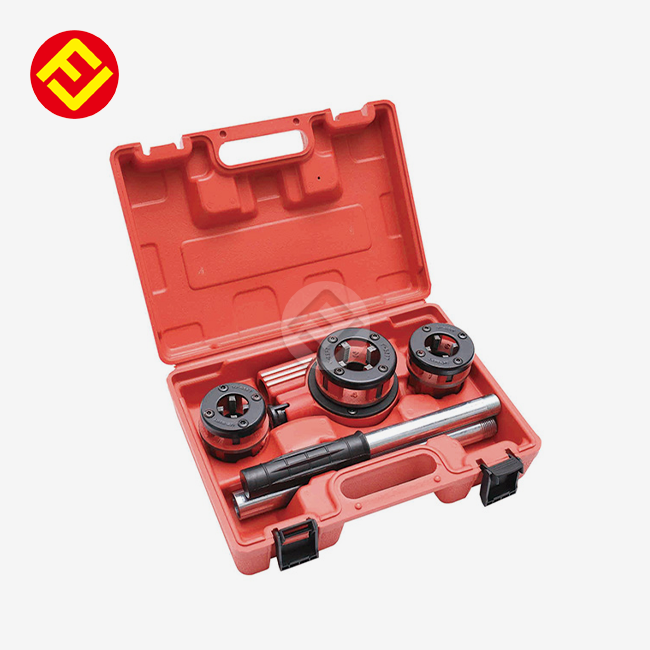
| American Standard 62A Type | 3-head(1/2,3/4,1") | 39x21x10 | Alloy Steel/ High-Speed Steel | 15-25 |
| American Standard 62B Type | 4-head(1/2,3/4,1",1-1/4") | 39x21x10 | Alloy Steel/ High-Speed Steel | 15-32 |
| American Standard 62C Type | 5-head (3/8,1/2,3/4,1",1-1/4") | 39x21x10 | Alloy Steel/ High-Speed Steel | 10-32 |
| American Standard 62D Type | 6-head(1/4,3/8,1/2,3/4,1",1-1/4") | 39x21x10 | Alloy Steel/ High-Speed Steel | 6-32 |
Introduction
Thread accuracy is often what makes the difference between a safe link and an expensive failure in industrial pipe systems. Precise pipe threading is still necessary whether you're in charge of a construction site, a factory, or the infrastructure for public utilities. Thread flaws cause leaks, system breakdowns, and costly rework that can delay projects and cost more than planned.
Professionals who won't settle for less than the best now choose High Speed Steel Adjustable Pipe Threading Dies over other options. Traditional carbon steel alternatives wear out quickly and don't always work right. HSS dies, on the other hand, last a very long time and thread perfectly in tough manufacturing environments. The element that can be adjusted gives you even more power and lets you make changes in real time, which is not possible with fixed dies.
This piece talks about how High Speed Steel Adjustable Pipe Threading Dies improve accuracy by looking at the qualities of the material, the benefits of their design, and real-world uses. We'll look at the technical factors that affect thread quality, contrast HSS dies with other options, look at real-world performance data, and give B2B buyers looking for improved threading solutions advice on how to buy them. If you know how to use these tools, you can make smart decisions that affect your bottom line, whether you're a purchasing manager looking at large orders or a site supervisor trying to improve the quality of installations.
Understanding Adjustable HSS Pipe Threading Dies and Their Role in Precision
Material Properties That Define Performance
Compared to standard carbon steel drilling dies, high-speed steel is a big step forward in the field of metals. Tungsten, molybdenum, and vanadium are often found in alloys; they make hard carbides that are spread out in the steel structure. The Rockwell Hardness Scale gives this structure a rating of 63 to 66 HRC, which is much better than carbon steel options, which usually have ratings of 45 to 55 HRC.
Another important benefit is what metallurgists call "red hardness"—the ability to keep the cutting edge solid at high temperatures. At the cutting contact, friction causes a lot of heat during threading processes. When temperatures go above 200°C, carbon steel dies soften and lose their shape, but HSS stays hard up to 600°C. This thermal stability means that the thread sizes stay the same over long production runs. This is especially helpful in high-volume manufacturing settings where changing tools often slows down work and lowers profits.
Another defining feature is its resistance to wear. Hard carbides in HSS can stand up to wear and tear from pipe scales, surface coatings, and harder metals like stainless steel. In the lab, it was shown that HSS dies can make 5–10 times as many threads as carbon steel dies before they start to wear out and lose their ability to keep accurate measurements. This longer service life means that it doesn't needs to be replaced as often, which cuts the total cost of ownership even though it costs more at first.
Adjustable Versus Fixed Die Design
The feature that lets you change things drastically changes how threading operations deal with real-world variables. With traditional fixed dies, threads are cut at a set depth and width that can't be changed. If the pipe diameter changes slightly because of manufacturing errors, differences in coating thickness, or differences in material grade, fixed dies cut threads that are either too shallow (which leads to weak connections) or too deep (which causes interference between fittings).
The split design of adjustable dies includes a precision adjustment screw that lets users change the size of the die opening by about 0.1 to 0.3 mm. This range, which may not seem very big, has big effects on the quality of the thread. By slowly closing the die as the cutting edges wear down, operators can make up for differences in pipe diameter, achieve certain fit classes (Class 2A for standard applications or Class 3A for tight-tolerance assemblies), and increase the service life of the die.
When used in work settings, the effect is clear. When connecting galvanized pipe, the coating width changes from batch to batch and even along the lengths of different pipes. An adjustable die lets workers keep the same thread engagement depth even when these things change, which guarantees a reliable seal. This adaptability cuts down on the amount of work that needs to be redone and gets rid of the need to keep large stocks of fixed dies in different sizes to accommodate different types of material.
Real-Time Dimensional Control
The precision of threading rests on a number of geometric factors, such as the thread angle, pitch diameter, major diameter, and root radius, and for High Speed Steel Adjustable Pipe Threading Die, any change from the specs puts the integrity of the link at risk, and adjustable HSS dies give workers direct control over pitch width, which is the most important measurement for making sure threads connect properly with fittings. Any change from the specs puts the integrity of the link at risk. Adjustable HSS dies give workers direct control over pitch width, which is the most important measurement for making sure threads connect properly with fittings.
Precision thread ring gauges are used by workers during the initial setup to make sure that the cut threads are within acceptable error bands. The mechanism for adjusting lets you make small changes until the threads pass inspection. As the product is being made, workers can make small changes to account for gradually worn-out tools. This keeps the dimensions consistent in a way that set dies can't. This feature comes in handy when threading hardened materials that wear down quickly, or during long production runs where keeping tolerances tight for the whole batch makes sure that the quality of each assembly is the same.

Key Factors Affecting Threading Accuracy in HSS Adjustable Dies
Tool Wear Patterns and Their Impact
Even if they are very resistant to wear, all cutting tools break down over time. Most of the wear on an HSS threading die happens on the cutting teeth, especially the lead chamfer teeth that start the thread cutting process. As these edges wear down, cutting forces rise, surface finish gets worse, and the accuracy of the measurements moves beyond what is reasonable.
Knowing how wear happens lets you make changes before accuracy is lost. When you look closely, you can see clear signs like rounded edges, surface pits, and built-up edges where material sticks to the cutting teeth. Using precise tools to measure thread dimensions gives solid proof of dimensional shift. When measures of the pitch width get close to the limits of error, closing the adjustable die slightly makes up for wear and extends the service life. This method makes the best use of the tools and keeps the thread quality high throughout the die's life.
Quality of cut threads is another sign of tool health. Rough surface finishes, torn thread roots, or thread profiles that don't match up properly are all signs of too much wear that can't be fully fixed by adjusting. At this point, the die needs to be sharpened or replaced. Knowing these signs of wear helps purchasing managers set replacement schedules that are based on real performance data instead of just picking random times.
Alignment and Setup Procedures
When the pipe axis and die cutting plane are not lined up correctly, it causes a number of accuracy issues. When angles aren't lined up right, threads cut deeper on one side than the other. This makes a curved thread that won't seal properly. When parallel offset mismatch happens, threads have different depths all around the circle. Both of these situations cause connections to fail and parts to be rejected.
Using the right setting steps gets rid of these problems. Making sure the pipe is securely clamped in a pipe vise or threading machine stops it from turning or moving while it's being cut. To get the die in the right place, center it on the pipe using the guide edge before applying cutting pressure. Uniform thread geometry is made by applying steady, moderate pressure while keeping the orientation perpendicular. Many threading problems that are blamed on "poor quality dies" are actually caused by mistakes in the way the tool was set up and used by the user, which even the best tools can't fix.
During the initial setup, threading machine operators should use machinist's squares or special alignment fixtures to check that the machine is straight. This focus on detail leads to less rewriting and higher quality rates on the first pass. The results are better when training programs focus on correct method are used instead of just buying better tools and ignoring basic setup steps.
Material Characteristics and Selection
Different pipe materials react differently to threading operations, which changes how accurate the work needs to be and which die to use. Soft metals like aluminum and brass are easy to cut with little tool wear, but they leave behind long, stringy chips that can get in the way of the cutting action. Medium-carbon steel pipe is the standard material that threading dies are made for because it is easy to machine and has a good tool life.
Stainless steel and harder metals are very hard to work with. Their work-hardening properties make the material right in front of the cutting edge harder than the rest of the material, which speeds up tool wear. For these tasks, you need to use HSS dies because carbon steel can't keep its edge quality for long enough to make good threads. Even when using HSS, workers must use the right cutting fluids and slow down the cutting speed to keep the tool from getting too hot and to keep the accuracy of the cuts.
When threading important uses, material approval is important. Pipe that says "316 stainless steel" on the label might actually be made of lower-grade metals that work differently when machined and give random results. Checking the material specs before threading makes sure that the dies, cutting parameters, and quality control procedures used are the right ones for the real material properties, not just guesses.
Maintenance Practices That Preserve Accuracy
Systematic maintenance keeps the threading accurate and extends the life of the die. Die cleaning should be done with solvent or compressed air after each use to get rid of metal chips, cutting fluid leftovers, and other things that can cause rust. Having debris build up in thread holes changes the shape of cutting and makes the surface finishes of later threads bad.
Using the right oil when threading does more than one thing. Good thread cutting oil lowers the friction between the cutting edges and the material being cut, which lowers the cutting temperatures that could soften HSS. The lubrication film stops materials from sticking together, which would tear threads instead of cutting them. Cutting oils that are sulfurized or chlorinated and are made specifically for threading work better than general-purpose machine oils or makeshift alternatives like motor oil.
How the die is stored affects how it works between uses, and for High Speed Steel Adjustable Pipe Threading Die, die sets should be kept in safe boxes or tool storage areas that keep the edges from getting damaged by other tools, and putting on a thin layer of rust-preventative oil before storing something keeps it from rusting in damp places, and by following these easy steps, you can protect the precise geometry that affects drilling accuracy and keep your investment in high-quality tools safe. Die sets should be kept in safe boxes or tool storage areas that keep the edges from getting damaged by other tools. Putting on a thin layer of rust-preventative oil before storing something keeps it from rusting in damp places. By following these easy steps, you can protect the precise geometry that affects drilling accuracy and keep your investment in high-quality tools safe.
Comparative Insights: HSS Adjustable Dies Versus Alternatives
HSS Versus Carbon Steel Performance
When you compare HSS and carbon steel threading dies, you can see that they don't work as well as each other. At first, carbon steel dies are much cheaper, which makes them a good choice for light-duty or occasional use. They rarely last longer than 100 to 200 threads when cutting medium-carbon steel pipe, though, and they quickly break when cutting stainless steel or harder materials.
HSS dies keep cutting well through 1,000 to 2,000 threads or more, depending on the material and how it is used. Even though it costs three to five times more at first than carbon steel, the longer service life means that the cost per thread is cheaper in industrial settings. The lifecycle economics of HSS dies are better than those made of disposable carbon steel because they can be sharpened and used more than once.
The HSS edge is strengthened by concerns about accuracy. As the edges of carbon steel dies wear down, they lose their shape quickly and need to be replaced often to keep the thread quality high. HSS thread profiles stay the same over the course of its service life, especially when workers use the adjustment tool to make up for wear that happens over time. Even though it costs more up front, HSS works better in production settings where quality needs to be uniform across big batches.
Adjustable Dies Versus Die Heads
Die heads are an alternative way to thread that uses cutting chasers that can be replaced and are mounted on a rotating head. When hundreds or thousands of pipes need to be threaded every day by automated machinery, these systems work great. Die heads are easy to set up, can control the thread width automatically, and give stable results even in high-volume settings.
In some situations, though, flexible hand dies are still better. Being portable lets you fix things in the field, where machines wouldn't be useful. Because hand dies are cheaper to make, small shops and workers who don't need die heads can afford to use them. Because hand tools are so simple, they don't need as much upkeep and don't need to rely on specialized parts or repair services.
Threading precision is more dependent on how skilled the user is and how well the machine is maintained than on the technology itself. When used correctly, flexible HSS dies make threads that meet the same size requirements as die head systems. The choice is based on the amount of production, the need for mobility, and the capital budget, not on differences in capability. Portable hand dies are popular with construction companies, while die head systems are the best way for factories to make things.
Performance Data From Industrial Applications
Field performance data from plumbers shows that High Speed Steel Adjustable Pipe Threading Dies make a meaningful difference in accuracy. One mechanical contractor kept track of the number of repair jobs that were done before and after they switched from carbon steel dies to HSS dies for fitting galvanized steel pipes. Rework needed to fix connections that were loose or leaking went down from 12% to less than 3%. This was possible because the thread sizes stayed the same throughout the die's service life.
The threading on refrigerant lines has gotten better according to HVAC installation companies. Because HSS doesn't wear down easily and can be adjusted, techs can keep the tight limits needed for pressure-tight connections in systems running at 400 PSI or more. Thread gauging data shows that 95%+ of threads are accepted when HSS adjustable dies are used properly, compared to 80% to 85% when carbon steel dies are used instead.
Even more dramatic differences are seen in factories that thread stainless steel parts. When cutting 304 and 316 stainless metals, production managers say that HSS dies last 8–12 times longer than carbon steel options. This longer service life directly leads to lower tooling costs and fewer production stops for tool changes, which improves both quality measures and operating efficiency.

Practical Applications and Case Studies Demonstrating Accuracy Improvement
Construction Site Threading Challenges
Construction sites have special sewing problems that test the powers of tools, and for High Speed Steel Adjustable Pipe Threading Die, for the plumbing system in a big commercial building project, more than 2,000 galvanized steel pipe connections had to be threaded, and when carbon steel dies were used for the first threading, there were unacceptable differences in the quality of the threads, and about 15% of the joints failed pressure tests because the threads were not consistent.
An investigation showed that differences in the coating layers on zinc pipe were leading to issues with its dimensions. Some parts of the pipe had a thick zinc coating that made them 0.15 to 0.20 mm wider, while other parts had a thinner coating. Fixed carbon steel dies couldn't handle this difference because the threads cut on the heavy-coated parts were too shallow to fit properly.
Changing to High Speed Steel Adjustable Pipe Threading Dies that could be adjusted fixed the issue. The operators measured each piece of pipe and made small changes to the dies to account for differences in the finish. This method made sure that the thread depth stayed the same no matter how thick the coating was. Failure rates in pressure tests dropped to less than 2%, which saved a lot of money on rework and kept the project on track. The project manager found that even though the dies cost more, the overall savings from less work and fewer delays were more than 8% of the budget for the plumbing installation.
HVAC System Installation Precision
An HVAC contractor who specializes in business refrigerator systems had trouble connecting the refrigerant lines over and over again. During system setup, small leaks at threaded connections were often found and had to be fixed before the system could be turned on. For field threading of refrigerant lines, the company used carbon steel dies because they thought that using the right method would lead to good results.
An analysis showed that tool wear was causing the dimensions to shift over the course of each workday. As the cutting edges got duller, dies that cut good threads in the morning made threads that didn't meet the requirements by the afternoon. The builder set up a system that used High Speed Steel Adjustable Pipe Threading Dies that could be adjusted and checked and adjusted the gauges several times a day.
The results were clear right away. The number of leaks during system setup dropped by 89% in the first three months after the system was put in place. Inspections with a thread gauge showed that the dimensions stayed accurate throughout the whole shift. Because HSS dies last longer, tools only needed to be replaced every three months instead of every week, which cut down on costs even though the units cost more. The number of customer calls about refrigerant leaks went down by a lot, which helped the company's image and cut down on repair costs.
Manufacturing Facility Quality Control
A company that makes pipe fittings with NPT threads for industrial fluid systems had a hard time keeping the thread sizes the same from one production batch to the next. The refusal rate for quality control was between 6 and 8 percent. This was mostly because of differences in pitch width that made threads fail gauge inspection. The company used fixed carbon steel dies that were changed at set times, no matter how worn they were.
Using gauge-based monitoring with adjustable HSS dies changed the quality results. Every 50 pieces, operators checked the thread dimensions and made any necessary changes to the dies to keep the specifications. Statistical process control data showed that dimensional variation went down by a huge amount, and standard deviation went up by about 60%. Rejection rates dropped below 1.5%, which cut scrap costs by a lot and made customers happier.
In addition to better quality, the manufacturer listed other benefits. Even though HSS prices went up, die replacement costs went down because dies were changed based on how worn they were instead of on random dates. Increasing the service life of the die also cut down on the time needed to change tools, which increased productivity by about 4%. The investment in the HSS die paid off within three months thanks to improvements in quality, cost, and productivity.
Procurement and Supplier Insights for High-Speed Steel Adjustable Pipe Threading Dies
Specification Considerations for B2B Buyers
When purchasing threading dies for an organization, procurement professionals should look at more than just the dies' size compatibility, and for High Speed Steel Adjustable Pipe Threading Die, it is important to check that the dies are made from real high-speed steel and not lower-grade tool steel that is sold in a false way, and specifications for hardness should confirm a grade of 63 to 66 HRC, which means it will be strong enough for demanding uses. It is important to check that the dies are made from real high-speed steel and not lower-grade tool steel that is sold in a false way. Specifications for hardness should confirm a grade of 63 to 66 HRC, which means it will be strong enough for demanding uses.
Pay close attention to thread standard compatibility. American Standard pipe threads (NPT and NPTF) are not the same size as British Standard (BSPT and BSPP) or metric threads. The dies you use must match the thread standard that your applications need. Multi-head die sets that can accommodate different pipe sizes are more flexible and reduce the need for extra inventory. They also make sure that workers have the right tools for the different pipe diameters they will normally meet on the job.
The quality of the adjustment device affects how long it can be used. Precision adjustment screws with secure locking features keep their settings even when cutting loads are applied, so dimensions don't change accidentally while the machine is running. Some makers use hardened adjustment screws that don't wear out easily and keep the die's tuning accurate over time. These details set professional-grade tools apart from cheaper options that might not live up to their promises, even if they seem good at first.
Supplier Evaluation Criteria
Choosing dependable suppliers lowers the risks of procurement and guarantees consistent product quality. ISO9001 certification means that quality management practices are used consistently throughout the manufacturing process. This certification makes sure that all production batches of a product meet the standards. This is very important for companies that need consistent performance in many places or with a lot of tools.
Transparency in the manufacturing process helps buyers figure out how good a product is. When it comes to performance, dies made by forging, controlled heat treatment, and precise machining work better than dies made by casting or not heating them properly. Reliable suppliers don't just make vague marketing claims; they give detailed information about how their Products" target="_blank" style="color:blue" >products are made, how their materials are certified, and how they check the quality of their products.
In competitive markets, providers who can offer technical help set themselves apart. Organizations can get the most out of their tools by getting help with applications, fixing, and user training from suppliers. This help is especially useful when threading difficult materials or starting to use new threading methods. Transactional buying based only on unit price is less valuable than building long-term ties with suppliers based on technical expertise.
Customization and Volume Considerations
Companies that need specific threading standards benefit from providers that can make their products. Custom die production is often needed for thread shapes that aren't standard, pipe specs that aren't open to the public, or unusual size combinations. Suppliers with engineering resources and flexible manufacturing can make custom solutions that meet exact needs, so customers don't have to settle for products from a catalog.
Strategies for buying in bulk should weigh the costs of inventory against the benefits of lower prices. Suppliers usually give different prices based on how much you order, with big savings for buying in bulk. But businesses have to weigh the benefits of discounts against the costs of keeping inventory, the risk of items becoming obsolete, and their capital allocation priorities. Setting up vendor-managed inventory programs can help you get better prices on large orders while reducing the amount of stock you need to keep on hand by coordinating replenishment with your suppliers.
Planning for purchase is affected by lead times, especially when buying from other countries. Standard items usually get shipped within a few days, but custom items may take a few weeks. Organizations should build ties with more than one supplier to make sure they always have supplies, and they should be able to negotiate faster production choices for urgent needs. Keeping a strategic safety stock of critical sizes can protect you from supply disruptions without requiring you to buy too much inventory.
Conclusion
The accuracy of the threads decides how well pipe links work or how badly they fail, and for High Speed Steel Adjustable Pipe Threading Die, adjustable HSS pipe threading dies improve accuracy by having better material qualities, the ability to change dimensions in real time, and a longer service life that stays the same after thousands of threading operations, and high-speed steel that doesn't wear down easily and precise adjustment mechanisms work together to let workers account for differences in materials and tool wear, making sure that thread sizes stay within specifications during production runs. Adjustable HSS pipe threading dies improve accuracy by having better material qualities, the ability to change dimensions in real time, and a longer service life that stays the same after thousands of threading operations. High-speed steel that doesn't wear down easily and precise adjustment mechanisms work together to let workers account for differences in materials and tool wear, making sure that thread sizes stay within specifications during production runs.
Companies that care about quality know that choosing the right threading die has effects on more than just the initial cost of the tool. A strong return on investment is achieved through lower costs for consumables, fewer link failures, less rework, and higher output. Long-term value is higher for construction companies, factories, and industrial maintenance operations when decisions about what to buy are based on technical knowledge rather than price alone.
FAQ
How long do HSS adjustable threading dies typically last compared to carbon steel?
Most of the time, HSS dies can make 5–10 times more threads than carbon steel dies before they need to be replaced. Actual service life depends on the material being threaded, how the operator does their job, and how well they take care of the machine. Threading soft metals like brass makes the die last longer, while threading stainless steel makes it wear out faster. Proper lubrication and regular cleaning greatly increase the useful service life of any material. Companies should keep track of the threads that are made per die to set standard expectations for their own materials and applications.
Can I sharpen worn HSS threading dies to restore cutting performance?
Professional cleaning with special grinding tools can bring back the cutting ability of an HSS die more than once during its lifetime. To keep the thread form accurate, the method needs to keep the right rake angles and thread relief shape. But sharpening takes away material until the die's minimum measurements are reached and it can't cut threads properly anymore. Most industry users find that changing worn dies is cheaper than sharpening because of the cost of labor and the need for special tools. However, high-volume processes may need dedicated sharpening facilities.
What thread standards do adjustable HSS dies accommodate?
Specific thread standards, such as American NPT, British BSPT and BSPP, and metric thread forms, are used to make Threading Tools. For each standard, there are different thread angles, pitch requirements, and size requirements. Dies can't be switched between standards; for example, using an NPT die to cut BSPT threads makes connections that don't work. To make sure the right die is chosen and to avoid expensive compatibility issues, buyers must specify the exact thread standard they need for their applications.
Partner With FLA Industrial & Trading Co., Ltd. for Premium Threading Solutions
The quality of your threading has a direct effect on the results of your project, the stability of your system, and your bottom line. We've spent almost 40 years at FLA Industrial & Trading Co., Ltd. improving the ways we make things so that our threading dies work so well. Our flexible HSS pipe threading dies are made from high-quality alloy steel and are precision-machined and quality-controlled to make sure they are always the same size and meet the strictest requirements.
We keep more than 2,000 tons of inventory on hand so that common setups can be shipped right away, avoiding delays that could affect your business. Our engineering team offers full technical support, such as application analysis, custom product development, and materials for training operators. Whether you're a hardware store looking for a dependable High Speed Steel Adjustable Pipe Threading Die supplier, a construction company needing long-lasting field tools, or a manufacturer trying to make threading operations more efficient, we can help you.
Email our team at sales@flaindustrial.com to talk about your threading needs. Within 24 to 48 hours, you'll get full product specifications, reasonable quotes, and delivery times. Let our 40 years of experience threading help you succeed.
References
1. American Society of Mechanical Engineers (2019). ASME B1.20.1: Pipe Threads, General Purpose (Inch). ASME International Standards.
2. Boyer, Howard E. & Gall, Timothy L. (2018). Metals Handbook: Properties and Selection of Tool Steels and Special-Purpose Metals. ASM International Materials Reference Series.
3. Machinery's Handbook Editorial Staff (2020). Machinery's Handbook 31st Edition: Guide to Threading Technology and Applications. Industrial Press Inc.
4. Stephenson, David A. & Agapiou, John S. (2016). Metal Cutting Theory and Practice: Threading Operations and Tool Materials. CRC Press Manufacturing Engineering Series.
5. Society of Manufacturing Engineers (2021). Fundamentals of Tool Engineering: Threading Die Design and Material Selection. SME Technical Publications.
6. International Organization for Standardization (2017). ISO 7-1: Pipe Threads Where Pressure-Tight Joints Are Made on the Threads - Part 1: Dimensions, Tolerances and Designation. ISO Threading Standards Collection.