Import Guide: Grooved Coupling Clamps from China
2026-05-25 09:53:14


Finding reliable pipe connection solutions shouldn't be difficult. To confidently import grooved pipe fittings from China, you must grasp coupling clamp grooved technology. These mechanical pipe joining methods have changed how contractors, hardware dealers, and HVAC specialists approach piping installations. coupling clamp grooved systems are flexible and easy to install, unlike hot work permits and specialist manpower. This complete guide covers everything your procurement team needs, from technical specs to supplier verification, to ensure your investment returns lasting, code-compliant outcomes that satisfy U.S. market standards.


Understanding Grooved Coupling Clamps – Design, Function & Benefits
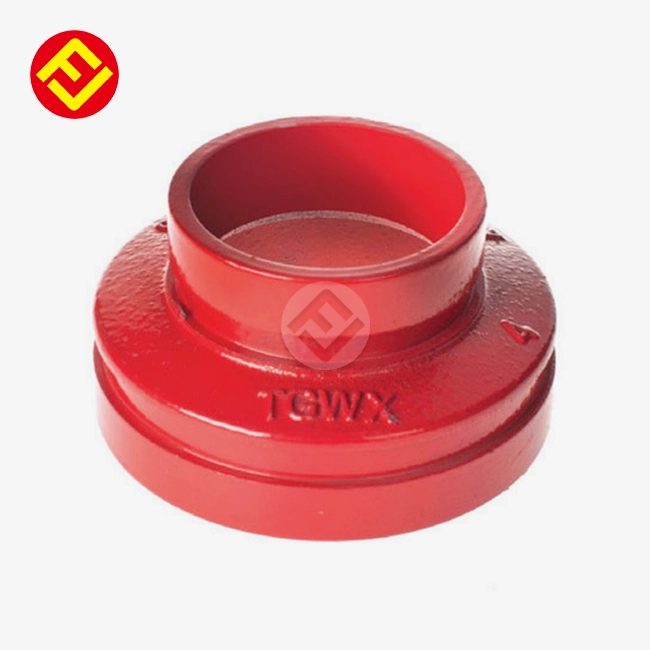
coupling clamp grooved technology joins pipes by a circumferential groove machined or rolled onto pipe ends. The system requires ductile iron housing pieces and a pressure-responsive elastomeric gasket. Coupling keys engage with pipe grooves and the gasket seals the housing segments when bolted together.
Core Design Elements
Housings commonly employ ASTM A536 Grade 65-45-12 ductile iron with 65,000 psi and 12% elongation. This material is durable for high-pressure applications and flexible during heat cycling. The coupling's grip strength and pipe schedule appropriateness depend on its groove profile—roll- or cut-grooved.
Gasket Technology and Sealing Performance
Due to its -29°C to 110°C temperature endurance, EPDM rubber gaskets dominate water and HVAC applications. The C-shaped cross-section design compresses the gasket more closely against the pipe surface as internal line pressure rises, improving seal integrity. Coupling clamp grooved systems self-energize, unlike flanged connections that need regular retorquing.
Comparative Advantages Over Traditional Methods
Welded joints need certified welders, fire watchers, and hot work licenses, which increase labor costs and delay completion. coupling clamp grooved systems reduce these needs. Installation speed is 50% faster than threading or flanging. The flexibility allows thermal expansion without expensive expansion loops, and the simplicity of disassembly facilitates maintenance and system adjustments. HVAC mechanical rooms and industrial process pipelines need vibration attenuation to safeguard sensitive equipment upstream.
How to Choose the Right Grooved Coupling Clamp for Your Project
Matching product specs to project requirements distinguishes successful and problematic installations. Operating circumstances, industry requirements, and long-term performance objectives must be considered during selection.
Material Compatibility Considerations
Excellent strength-to-weight ratios make ductile iron housings suitable for most applications. Carbon steel improves tensile characteristics in high-vibration settings like mining slurry lines. Painted finishes are good for interior installations, epoxy coatings manage minor corrosion, and hot-dip galvanized surfaces resist chemical and marine conditions. The gasket material is also important: EPDM works well with water and steam, whereas NBR handles petroleum and hydraulic fluids.
Pressure and Temperature Ratings
Working pressure ratings vary by size and connection design, including coupling clamp grooved, although conventional systems can reach 300 PSI (2.07 MPa). Rigid couplings mimic welded joints with tongue-and-groove interfaces that limit pipe movement. Flexible variations allow linear and angular displacement without system failure during seismic activity and thermal expansion. Most industrial fluid transfer demands, from chilled water systems to low-pressure steam, fall within the -29°C to 110°C temperature range.
Certification Requirements for U.S. Markets
Construction and electrical utility procurement teams need UL/FM-approved fire safety devices. CE marking ensures product safety for worldwide conformance, while ISO9001 certifies manufacturing quality. Dimensional accuracy and performance testing follow ASTM F1476 and AWWA C606. Verifying these certificates protects your company from liability and ensures interoperability with industry-standard infrastructure.
Importing Grooved Coupling Clamps from China – Practical Guide for B2B Buyers
Advanced casting technology and strict quality control enable China's industrial environment to make affordable coupling clamp grooved fittings. Strategic supplier evaluation and negotiation are needed for successful sourcing.
Supplier Credibility Verification
Request certification—ISO9001, CE, and UL/FM certifications indicate serious production. Reliable suppliers allow third-party factory audits to assess production and quality control. Check chemical composition and mechanical properties in material test results. Customer references from completed projects verify performance. Supplier reaction to technical queries generally indicates large-scale fulfillment dependability.
Strategic Negotiation Approaches
Minimum order numbers vary per manufacturer, but volume commitments improve pricing. For coupling clamp grooved options, standard sizes have 30-45 day lead periods, while bespoke sizes take 60-90 days. Payment conditions are usually 30% deposit and 70% balance against bill of lading, however established connections may provide better terms. Sample testing before bulk ordering prevents specification mismatches. FOB terms throw logistics on purchasers, whereas CIF terms include freight and insurance in the quoted price.e.
Customization Through OEM Services
Most applications use 1" to 48" sizes, but unusual jobs require custom solutions. Chinese manufacturers now provide OEM services such non-standard sizing for customized systems, material composition adjustments for chemical resistance, and bespoke coating formulas for specific environmental exposures. Design changes address unexpected installation or performance requirements. Before production scaling, engineering support assures the finished product satisfies exact requirements from 3D design confirmation to prototype testing.
Installation, Maintenance & Troubleshooting of Grooved Coupling Clamps
Installation and maintenance processes improve system dependability and reduce operational downtime. Although simple, construction demands attention to detail for best performance.
Step-by-Step Installation Procedure
Pipe groove depth must match coupling requirements to avoid the most common installation problems. Clean all sealing surfaces to remove mill scale, dirt, and oil that damage gasket sealing. Place the gasket around one pipe end with the lip facing out. Minimize pipe end gaps. Place housing segments over the joint and align coupling keys with pipe grooves. To avoid gasket pinching, gradually tighten bolts in a cross pattern. Tighten until housing pads meet—this pad-to-pad contact indicates good assembly. Specific torque settings (60-80 ft-lbs for lower sizes) assure constant gasket compression without bolt damage.
Routine Maintenance and Inspection
Quarterly visual checks spot problems before they become system breakdowns. Check gasket extrusion, bolt loosening, and housing corrosion. To check joint integrity, pressure test new installations at 1.5 times operating pressure. Semi-annual bolt torque check reduces loosening-related leaks in vibrating systems. Record inspection results to track deterioration and estimate maintenance. Replace compressed, cracked, or chemically degraded gaskets. Corrosion and severe coupling key wear need housing segment replacement.
Common Issues and Effective Solutions
Insufficient groove depth permits the coupling to fall off under pressure, dirt on sealing surfaces produces leak routes, and poor installation causes pinched gaskets. Verifying the pipe's groove-to-end dimension versus manufacturer specs fixes depth issues. Re-cleaning and gasket replacement remove contaminants. Complete disassembly, gasket relocation, and cautious reassembly fix pinching. Unusual noise or vibration indicates loose bolts requiring retorquing or system pressure surges above design parameters necessitating engineering study.
Conclusion
Hardware dealers, building builders, and industrial purchasers benefit from cost-effective, quality-certified coupling clamp grooved systems from China. Traditional techniques lack speedy installation, vibration resistance, and maintenance flexibility compared to coupling clamp grooved technology. Supplier verification, market-relevant certifications, and clear communication about specifications and performance criteria are key to successful sourcing. Chinese manufacturers with ISO9001, UL/FM, and CE certifications may satisfy international requirements and offer customisation and technical assistance. coupling clamp grooved decreases labor costs and timetable demands while ensuring durability and safety compliance for fire protection systems, HVAC installations, and industrial process piping.
FAQ
1. What distinguishes rigid from flexible grooved couplings?
Rigid couplings act like welded connections with tongue-and-groove interfaces that limit pipe movement. Flexible connections provide linear expansion and controlled angular deflection without positive contact. This flexibility allows temperature cycling and seismic activity without joint failure.
2. How do I select between EPDM and NBR gasket materials?
EPDM gaskets work in water, sewage, and steam up to 230°F but deteriorate quickly in petroleum Products" target="_blank" style="color:blue" >products. NBR gaskets handle oil-based fluids, hydraulic systems, and hydrocarbon exposure well but have lower temperature resistance than EPDM.
3. Can grooved couplings work with thin-wall piping?
Instead of cut-grooving, roll-grooved systems accept thin-wall pipes. Roll grooving cold-forms the groove by displacing metal rather than removing it, retaining Schedule 10 or Schedule 5 pipe wall thickness.
4. What causes most grooved coupling leaks?
Most leaks are caused by installation mistakes. Insufficient groove depth permits housing pressure slipping. Debris between gasket and pipe causes leaks. Poor installation technique pinches gaskets, compromising seal integrity. Careful surface preparation and groove dimension verification prevent most issues.
Partner with FLA Industrial & Trading Co., Ltd. for Your Grooved Coupling Clamp Supplier Needs
Project success and operational dependability depend on coupling clamp grooved supplier selection. FLA Industrial & Trading Co., Ltd. has ISO9001, CE, and UL/FM product certifications and over four decades of manufacturing experience. Our superior casting and machining capabilities manufacture coupling clamp grooved solutions from 1" to 48" in ductile iron and carbon steel with painted, epoxy-coated, or hot-dip galvanized finishes to meet your environmental needs. We know hardware wholesalers need competitive price and consistent quality across SKUs, while building contractors need reliable availability and safety compliance. For application-specific advice, bespoke sizing, and timely procurement help, contact our technical team at sales@flaindustrial.com.
References
1. Johnson, M. R., & Peterson, K. L. (2021). Mechanical Pipe Joining Systems: Design Principles and Applications. Industrial Press.
2. American Water Works Association. (2020). AWWA C606-20: Standard for Grooved and Shouldered Joints. Denver: AWWA Publications.
3. Thompson, R. E. (2019). Fire Protection System Components: Selection and Installation Best Practices. Journal of Fire Safety Engineering, 34(2), 145-162.
4. Zhang, W., & Liu, H. (2022). Quality Evolution in Chinese Industrial Manufacturing: A Case Study of Pipe Fitting Production. International Journal of Manufacturing Technology, 118(5), 1567-1584.
5. Underwriters Laboratories. (2018). UL 213: Standard for Rubber Gasketed Fittings for Fire Protection Service. Northbrook: UL Standards.
6. Mitchell, P. D. (2020). Piping Systems: Installation, Maintenance and Troubleshooting Guide for Commercial and Industrial Applications. McGraw-Hill Professional.
YOU MAY LIKE