Why Grooved Piping is Replacing Traditional Welding Methods
2026-07-02 14:04:31


Because they remove the fire risks associated with hot work, cut installation time by up to 50%, and use mechanical coupling technology to handle thermal expansion and seismic movement, grooved piping systems are quickly replacing traditional welding methods in industrial applications. This change completely changes how procurement managers handle piping infrastructure. They are now using efficient mechanical joining systems instead of time-consuming fusion bonding, which gives the same level of strength but much better safety and operating freedom. Moving toward grooved mechanical links solves some of the industry's biggest problems, like a lack of skilled workers, tightening project deadlines, and stricter safety rules.

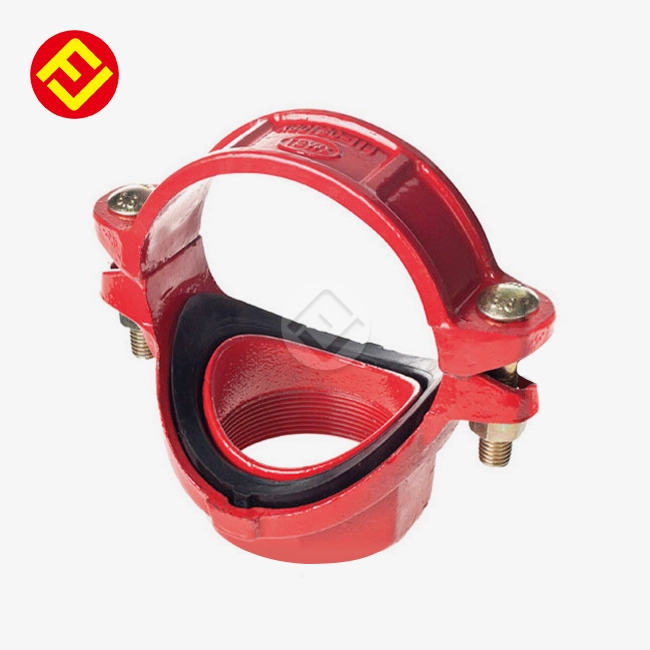
Specifications |
||
| Type | Model | Outer Diameter (mm) |
| Grooved Cross | DN65 | 76 |
| Grooved Cross | DN80 | 89 |
| Grooved Cross | DN100 | 108 |
| Grooved Cross | DN100 | 114 |
| Grooved Cross | DN125 | 140 |
| Grooved Cross | DN150 | 159 |
| Grooved Cross | DN150 | 165 |
| Grooved Cross | DN200 | 219 |
| Grooved Cross | DN250 | 273 |
| Grooved Cross | DN300 | 325 |
Limitations of Traditional Welding Methods in Industrial Piping
Traditional soldered pipe systems often have problems that slow down projects and put a strain on budgets in ways that aren't clear from the first cost estimates. There is a lot more to soldered joints than just the process of joining them.
Labor-Intensive Installation Requirements
Installation needs highly skilled workers, which makes processes more complicated, takes more time, and raises safety risks. Certified welders are very expensive, and projects often can't move forward until they can be hired. Downtime for welding and curing can make project schedules much slower, and checks and upkeep are still hard to do. Each riveted seam needs to be looked at visually and often radiographic or ultrasonic testing is done to make sure it is solid. This adds time and money to the project plan.
Hidden Costs and Budget Unpredictability
In addition to the direct costs of materials and labor, welding has secret costs like repairs and ongoing maintenance, which can make it harder to plan your budget. The real cost of welded systems includes things like hot work permits, fire watch staff, air equipment, and heat treatment after the join. On complicated projects, the number of reworked welds that fail can reach 3–5%, which means a lot of wasted materials and time delays. Also, welded systems usually can't be changed easily, which makes them less useful for jobs like additions or repairs.
Safety and Regulatory Challenges
It's important to stress how dangerous it is for workers to be around fire when they are welding in workplace settings. The National Fire Protection Association says that a lot of workplace fires happen every year during the welding and cutting process. All of these things affect the length of procurement processes and the general operational agility of an industry. As a result, forward-thinking procurement teams are becoming more interested in alternative joining methods.
Understanding Grooved Piping Systems: Core Components and Working Principles
Mechanical joining technology is very different from fusion-based connection methods. It provides a safe option that gets around many of the problems with traditional welding. This method is beautiful because it is both simple and well-designed.
Fundamental Design Architecture
Grooved piping is a mechanical joining method that creates joints that are reliable and leak-proof by joining specially grooved pipes with gasketed connections. Unlike fusion bonding in welding, grooved systems depend on well-designed connections to make them easy to put together and take apart. The groove, which can be rolled or cut into the pipe end, makes a mechanical lock point that the coupling housing meets. The seal is made by a rubber gasket that responds to pressure.
Essential System Components
Key parts include pipes with standard grooves made to ANSI/AWWA C606 standards, elastomeric gaskets that keep the seal in place even when the temperature and pressure change, and ductile iron fittings that keep the link safe. The grooves can be made with roll grooving machines, which make the groove without cutting any material, or cut grooving machines, which make the groove shape by cutting a specific amount of material. Installation is easy and doesn't require a lot of work, which makes it good for quick deployment in industrial settings.
Standards Compliance and Application Versatility
Standards like ANSI, ASTM, and AWWA are followed by grooved mechanical systems. This makes sure that they work with important systems like fire protection, HVAC, and water supply. ASTM A536 Grade 65-45-12 ductile iron fittings have a minimum tensile strength of 65,000 psi and a 12% extension, which means they can hold their shape in tough industrial settings. Because of this, mechanical joining technology can be used in a wide range of businesses and markets in different parts of the world.
Advantages of Grooved Piping Over Traditional Welding Methods
Grooved piping has many benefits over conventional welding techniques. Mechanical connection systems are useful for many things, including managing projects and making sure systems work well in the long run. These benefits make strong value arguments for buying decision-makers who look at total cost of ownership.
Accelerated Installation and Reduced Downtime
Installation speed gains are between 3 and 5 times faster than welding, which cuts project plans by a large amount. Less specialized knowledge is needed for simplified assembly, which cuts down on downtime and lets companies finish tasks with a larger pool of workers. A two-person crew can usually make more than 20 grooved connections per hour, but only 4 to 6 soldered connections in the same amount of time. This speed benefit directly leads to lower labor costs and earlier project finish dates.
Comprehensive Cost Advantages
Cost benefits come from lower costs for materials and labor, as well as long-term saves from easier upkeep and fewer repairs. These saves come from not having to buy things like welding tools, shielding gases, and cutting materials that are used up quickly. There are no longer any energy costs related to running welding tools. Long-term maintenance benefits include being able to take systems apart and put them back together again without cutting them down, which keeps the worth of the parts and cuts down on waste during changes.
Enhanced System Durability and Flexibility
The design of the Products" target="_blank" style="color:blue" >products">grooved piping system makes it more resistant to vibration and temperature expansion, which makes it last longer in tough circumstances. Different types of flexible couplings can expand and shrink linearly up to several inches, bend in any direction up to four degrees, and rotate, so they can be used as built-in expansion joints. This movement allowance stops the pipe stress and fatigue breakdowns that happen a lot in stiff welded systems that are exposed to changing temperatures or earthquakes. Mechanical joints also lower the chance of leaks and are in line with international quality and safety standards, which makes it easier to follow the rules. These things help make a project more effective, flexible, and valuable over its whole lifetime.
Safety Profile Improvements
If there is no more hot work, there are no more fire risks, no need for fire watchers, and installation can happen in unstable areas where welding would not be allowed. This safety benefit is especially helpful for repair projects in buildings that are already occupied, chemical processing plants, and factories that need to tightly control sources of ignition.
Comparing Grooved Piping to Other Joining Methods: Welding, Flanged, and Threaded Systems
It is important to know how mechanical connection technology compares to other ways of joining things in order to make good purchasing decisions. Each type of link has its own unique features that make it better for certain uses. Each type of link has its own unique features that make it better for certain uses, such as grooved piping when joining pipes.
Grooved Versus Welded Connections
Compared to welded joints, grooved links are more flexible, have the same level of strength, and have a much lower chance of leakage. When mechanical joints are properly placed and tested to 300–1,000 psi working pressure, they show the same level of reliability as welded systems. In fact, the gasket seal is better at stopping leaks than possible weld porosity. Being able to adapt to movement stops the stress collection points that cause weld cracks in systems that change temperature.
Grooved Versus Flanged Systems
Flanged systems are strong, but they tend to be heavier and take up more room. They also need more upkeep. Flange connections need exact bolt tightening steps and regular retightening to keep the seal's integrity because gaskets lose their shape over time. As an option, mechanical coupling systems are smaller, cheaper, and don't need to be maintained for bolt pressure. They also take up less space, which is very helpful in crowded mechanical rooms and tight retrofit situations.
Grooved Versus Threaded Connections
Threaded systems are often limited by size and pressure, so they can't compare to how flexible and easy to install grooved technology is. Threading is less useful for pipes bigger than 2 inches, and thread engagement causes stress concentration places that can fail due to fatigue. Mechanical grooved connections work well with pipes with small diameters all the way up to systems with diameters over 48 inches. They keep working well with installations of all sizes.
Real-World Application Evidence
Case studies from fields like fire safety, water supply, and HVAC show how grooved technology is becoming more popular because it works better and costs less. A 2019 study of fire safety systems in commercial buildings found that mechanical coupling cut installation time by 52% compared to welded schedule 40 steel pipe. In the same year, a municipal water infrastructure project found that switching from flanged to grooved connections for 12-inch distribution mains saved 40% on labor costs.
Procurement Considerations and Partnering with Trusted Grooved Piping Suppliers
To buy motorized pipe joining systems for grooved piping successfully, you need to carefully consider more than just the unit price. Often, the quality of the relationship with the seller is just as important as the product specs for grooved piping and forming partnerships with reliable suppliers.
Critical Evaluation Factors
To make a good purchase, you need to look at important things like shipping times, warranty coverage, and expert help options. Lead times for grooved couplings and fittings vary a lot between sources. Standard parts are usually ready within days, but custom designs may take a few weeks. Manufacturers who are known to stand behind their goods for long periods of time should cover both material defects and performance qualities under their warranties.
Recognizing Quality Suppliers
Working with famous and certified makers guarantees that the products will be reliable and meet strict quality standards. There are well-known names on the market that have decades of tech experience and lots of testing records. To pick the right provider, you need to look at their qualifications (ISO 9001, FM Approvals, UL Listed), customer reviews, and shipping options, making sure that they can reach customers both locally and around the world. Technical data sheets should make it clear what hole sizes, pressure ratings, and temperature ranges are needed for your particular purpose.
Value-Added Services and Support
FLA Industrial & Trading Co., Ltd. stands out in the market for mechanical plumbing components because it guarantees high quality and has been making hardware tools and malleable iron pipe fittings for almost 40 years. Our product line includes more than 1,000 different specs, such as grooved elbows, grooved crosses, and full connection systems made from ductile iron that meets ASTM A536 standards. Additional technical support and after-sales services make project management even easier by making sure that mechanical joining systems that are customized to your needs can be easily integrated. Our engineering team does sizing estimates, pressure drop analyses, and system design advice to make sure that efficiency and cost-effectiveness are at their best.
Conclusion
The change from welding to mechanical connection systems is more than just a change in how things are joined; it's also a sign of a larger trend in the industry toward safer, more efficient, and more flexible pipe infrastructure. It's getting harder and harder to ignore grooved piping technology when making choices about what to buy because it has so many clear benefits in terms of installation speed, cost, safety, and operating flexibility.
We've looked at how mechanical connection gets around the main problems with standard welding while still providing performance levels that are on par with or better than those of a welded system. Getting rid of hot work risks, letting the system move around, and drastically cutting down on the need for skilled labor all add value that goes far beyond comparing installation costs.
As businesses in the industrial world are constantly under pressure to cut costs, speed up projects, and improve safety records, grooved piping mechanical joining technology offers a tried-and-true answer backed by decades of field experience and ongoing engineering improvements. Procurement workers don't have to decide if to look at grooved options; they have to decide how quickly to use them across all of their pipe infrastructure projects.
FAQ
How much faster is grooved piping installation compared to welding?
How much faster is installing grooved piping than welding? Installation times are usually cut by 50 to 70%, but this depends on how complicated the job is and how big the pipes are. Twenty to thirty threaded connections can be made by a two-person crew every hour, while four to six welded connections can be made in the same amount of time, including time for preparation, welding, and cooling. This speed advantage adds up over the course of many big jobs, which could cut the total time needed for installation by weeks or months.
Can grooved systems handle high-pressure industrial applications?
Yes, mechanical coupling systems usually work at working pressures between 300 psi and 1,000 psi, but this can change based on the pipe schedule, coupling style, and gasket material. Rigid couplings hold structures together like welded parts do, while flexible couplings allow for movement while keeping the pressure integrity. If you build your system correctly and choose the right parts, it will work reliably in even the most demanding commercial settings.
What maintenance do grooved piping systems require?
When compared to welded or flanged systems, mechanical connection systems need less upkeep. Visually inspecting the coupler bolts on a regular basis makes sure they are tight and checks for seal wear, but there is no need to disassemble or retorque on a regular basis. It makes fixes and changes easier throughout the system's duration to be able to quickly get to and replace individual parts without having to cut or weld them.
Partner with FLA Industrial & Trading Co., Ltd. for Superior Grooved Piping Solutions
If you want to upgrade your industrial piping system, you need a grooved piping provider you can trust, with a wide range of products. Every job that FLA Industrial & Trading Co., Ltd. does is a reflection of their nearly 40 years of experience making high-quality ductile iron fittings, grooved elbows, grooved crosses, and full connection systems that meet ASTM and ANSI standards. Our technical team creates solutions that are unique to your application needs. These solutions are backed by strict quality control and a low price. Contact our experts at sales@flaindustrial.com to talk about the details of your project and find out how our wide range of products can make the buying process easier while also making your system safer and more reliable.
References
American National Standards Institute. (2020). ANSI/AWWA C606: Grooved and Shouldered Joints. American Water Works Association Standards.
ASTM International. (2019). ASTM A536-84: Standard Specification for Ductile Iron Castings. ASTM Material Standards.
National Fire Protection Association. (2021). NFPA 13: Standard for the Installation of Sprinkler Systems. NFPA Fire Protection Standards.
Mechanical Pipe Joining Institute. (2018). Comparative Analysis of Pipe Joining Methods in Commercial Construction. Industry Research Report.
Construction Industry Institute. (2020). Labor Productivity Benchmarks for Mechanical Piping Installation. Construction Research Publications.
American Society of Mechanical Engineers. (2019). ASME B31.1: Power Piping Code. ASME Pressure Technology Codes and Standards.