How Does a Stainless Steel Rope Clip Prevent Cable Slippage in Marine and Outdoor Applications?
2026-08-24 10:18:22


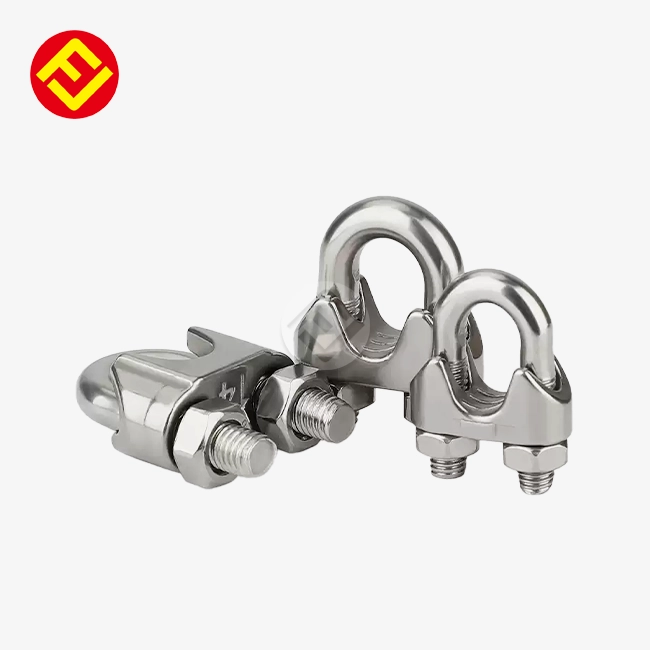
A Stainless Steel Rope Clip prevents cable slippage through its three-component clamping mechanism: a U-bolt, saddle, and dual hex nuts work together to create friction between the live and dead ends of wire rope. When properly torqued, the saddle compresses both rope strands against each other, distributing clamping force evenly across the rope's circumference. The corrosion-resistant properties of stainless steel grades 304 and 316 maintain consistent holding power even in saltwater and UV-exposed environments, eliminating the degradation that causes conventional clips to lose grip over time.


Specification |
||||||||
| Specification | Pitch (P) | Total Height (L)(mm) | Hole Diameter (a) (mm) |
Screw Diameter (A) (mm) | Shank Diameter (d) (mm) | Clip Height (h1)(mm) | Hexagon Opposite Side (S) (mm) | Applicable Wrench (mm) |
| M2 | 0.4 | 17.1 | 4.5 | 3 | 2.5 | 9 | 5.4 | 5.5 |
| M3 | 0.5 | 20.3 | 5.3 | 4 | 3.4 | 8.6 | 6.9 | 7 |
| M4 | 1.25 | 22.7 | 6.6 | 4 | 3.4 | 9.8 | 6.9 | 7 |
| M5 | 0.8 | 26.7 | 7.1 | 5 | 4.3 | 9.4 | 7.8 | 8 |
| M6 | 1 | 32.3 | 7.1 | 6 | 5.2 | 11 | 9.8 | 10 |
| M8 | 1.25 | 34.5 | 10.1 | 6 | 5.2 | 15 | 9.8 | 10 |
| M10 | 1.5 | 44.8 | 10.1 | 8 | 7.1 | 15 | 12.5 | 12.5 |
| M12 | 1.75 | 51.2 | 14.8 | 10 | 8.5 | 18.1 | 15.8 | 16 |
| M14 | 2 | 56.3 | 14.4 | 10 | 21.3 | 15.8 | 16 | |
| M16 | 2 | 64.6 | 18.6 | 12 | 10.5 | 24 | 17.8 | 18 |
| M18 | 2.5 | 73.6 | 20.1 | 12 | 10.7 | 29.5 | 17.8 | 18 |
| M20 | 2.5 | 73.9 | 20.5 | 12 | 10.7 | 29.8 | 17.8 | 18 |
| M22 | 2.5 | 76.5 | 25.1 | 12 | 10.7 | 32.5 | 17.8 | 18 |
| M24 | 3 | 79.9 | 27.1 | 12 | 10.7 | 33 | 17.8 | 18 |
| M26 | 3 | 86.6 | 27.8 | 12 | 10.7 | 35.6 | 17.8 | 18 |
| M30 | 3.5 | 100.3 | 33.3 | 16 | 14.1 | 35.6 | 23.8 | 24 |
| M32 | 3.5 | 100.3 | 33.6 | 16 | 14.5 | 35.6 | 23.8 | 24 |
Understanding Stainless Steel Rope Clips and Their Role in Preventing Cable Slippage
In nautical and outdoor settings, wire rope systems are always up against problems. Changes in temperature, salt spray, and mechanical vibration are all things that can damage cables. That's why properly made rope clips are so important.
The Mechanical Structure Behind Slip Prevention
A rope clip is made up of three carefully crafted parts that work together. The saddle is a grooved metal piece that sits against the live end. The U-bolt goes through both pieces of rope. Two hexagonal nuts hold the parts together, creating the clamping force that keeps them from moving.
The U-bolt pulls the dead end of the rope tight against the live end in the saddle's curved tube when the nuts are tightened to the required pressure. This makes a lot of friction points on the surface of the rope. The radius of the saddle is the same as the diameter of a standard rope. This makes sure that the pressure is spread evenly and doesn't crush any individual wire strands. The rope doesn't slip when it's under load because of this controlled stress.
The holding power depends on a number of things, including the number of clips used, how far apart they are, and how much torque is used to install them. According to industry standards, you need at least three to six clips, depending on the diameter of the rope, to get 80 to 90 percent of the rope's rated breaking strength.
Material Grade Selection: 304 vs. 316 Stainless Steel
Choice of material has a direct effect on performance over time. Both grades have chromium oxide passivation layers that keep them from oxidizing, but they are used for very different things.
About 18% of grade 304 stainless steel is chromium, and 8% is nickel. This mixture is very resistant to corrosion and can be used on construction sites, in architecture, and in other outdoor settings. The shiny, bright finish is good at keeping out air moisture and light industrial poisons.
Grade 316 stainless steel has an extra 2% to 3% molybdenum added to it, which makes it much more resistant to chlorides and sulfides. This means it has to be used in saltwater areas, along the coast, and at chemical processing plants. The molybdenum presence stops pitting corrosion and crevice corrosion, which are two types of failure that make holding capacity worse in marine situations.
For any use within five miles of the coast or in close contact with saltwater, procurement managers should request the 316 grade. The extra resilience makes up for the cost of the material because it lasts longer and needs to be replaced less often.
How Corrosion Resistance Maintains Holding Power
Stainless steel clips stay structurally sound throughout their service life, while galvanized steel clips rust through their zinc finish. In addition to changing the way something looks, corrosion also lowers the gripping force as the thickness of the material goes down.
When galvanized clips rust, the U-bolt threads break down, which makes nuts loosen up for no reason. The surface of the saddle gets rough and uneven, which puts extra stress on the rope. At some point, the clip stops being able to keep the friction up, and the cable starts to slip.
When oxygen is present, the passivation layer of stainless steel fixes itself when it gets scratched. In other words, the chromium oxide film can grow back even if the polished surface gets slightly damaged during installation, keeping the corrosion protection. This feature makes sure that the clamping pressure stays the same over years of use, which is exactly what is needed for safety and dependability in naval gear and outdoor cable systems.
Because of these qualities, Stainless Steel Rope Clips are perfect for situations that need both mechanical strength and environmental resistance. When you combine the right mechanical design with materials that don't rust, you get rid of the main reasons why cables fail in tough situations.
Step-by-Step Guide: How to Properly Install Stainless Steel Rope Clips to Avoid Slippage
How well your rope assembly is installed determines whether it will hold securely or break too soon. When put wrong, even the best tech doesn't work very well.
Pre-Installation Planning and Clip Selection
Make sure that the size of your clip fits the diameter of the rope perfectly before you touch any tools. Putting M6 clips on 8mm rope or 8mm rope on M6 clips creates uneven pressure, which causes the rope to slip. Check the manufacturer's chart for specifications. At FLA Industrial & Trading Co., Ltd., we offer detailed size guides from M2 to M32 to fit all common rope diameters.
Make sure the grade of the material is right for your environment. 316 grade is needed for coastal projects, ships, and wastewater treatment plants. 304 grade works well for inland building and architectural projects because it is both corrosion-resistant and cost-effective.
Figure out how many clips you need. For ropes up to 8 mm in diameter, you need at least three clips. For ropes up to 16 mm in diameter, you need at least four clips, and for larger diameters, you need at least five. The distance between clips should be about six times the width of the rope.
The Critical Installation Sequence
Here is a tried-and-true way to keep cables from slipping:
Form the rope termination loop by bending the rope back on itself until you get the eye size you want. The part that keeps going when it's loaded is called the "live end," and the short tail is called the "dead end." This difference is very important for the next step.
Position the saddle correctly using the industry rule: "Never saddle a dead horse." The saddle, which is the grooved, bent piece, must sit on the live end, which is the side that takes the work. Over the dead end, put the U-bolt. If you flip this setup around, the crushing force is concentrated on the load-bearing part. This makes the rope weaker and raises the risk of it slipping.
Install the first clip one saddle-width away from the base of the loop. The rope won't bend when it's loaded because of this spot. Thread both nuts onto the U-bolt by hand until they are finger-tight. Make sure the threads engage smoothly without crossing.
Add remaining clips at similar distances along the line. Keeping that six-diameter rule in mind, add the rest of the clips at similar distances along the line. The last clip should be placed as close to the cut end of the rope as possible so that the tail doesn't come undone.
Torque the nuts progressively. Tighten the nuts bit by bit. Pull one clip all the way tight before you move on to the next. Instead, tighten each clip several times: first to about 30% of the final torque, then to 60%, and finally to 100%. This method evenly distributes the clamping force and keeps the rope from stretching. For smaller clips, the torque wrench should be set between 15 and 20 Nm, and for bigger ones, it should be between 60 and 80 Nm.
Apply load and re-torque. Re-torque after adding load. When the working load is put on the rope assembly, the rope strands slightly compress, which lets the nuts turn even more. After the first loading cycle, tighten all of the clips back up to the required level. Within 24 to 48 hours of commissioning, set up a follow-up inspection.
Common Installation Mistakes That Cause Slippage
During quality checks, procurement managers and site supervisors should keep an eye out for these major mistakes:
When the seat is oriented wrong, it can lose up to 50% of its binding power. When the U-bolt presses down on the live end, it breaks the wire into individual strands and makes a weak spot in the rope where it will break under load.
Clips come loose when there isn't enough torque. The nuts get less tight over time because of vibration and dynamic loads. This reduces friction until the dead end slips through. Over-torquing is also a problem because too much force changes the shape of the rope beyond its elastic limit, which forever lowers its thickness and breaking strength.
When you use too few clips or the wrong spacing, stress builds up in certain areas. The end of the rope bends sharply, and if the clamping length isn't long enough, the rope can move over time.
If you don't follow the retorquing steps after the first load, the clips will never reach their full carrying capacity. When you use the saddle for the first time, the rope "sets" into it, so the nuts need to be tightened again to account for this.
These installation methods directly affect whether your cable assemblies work reliably or need to be replaced too soon. By taking the time to check each step, including the proper use of a Stainless Steel Rope Clip, you protect both your investment and the safety of your employees.

Comparing Stainless Steel Rope Clips with Other Clamping Solutions for Marine and Outdoor Use
The success of different fastening methods is not the same. Knowing these differences helps people who work in procurement choose the best solution for each situation.
Stainless Steel vs. Galvanized Steel Clips
At first, galvanized clips are cheaper, which makes them a good choice for jobs that need to stay within a budget. In mild environments, the zinc coating protects against corrosion for a short time. However, this benefit goes away quickly in marine and outdoor settings.
The limitation is shown by salt spray testing: red rust forms on galvanized clips within 72 to 200 hours of continuous salt fog exposure, depending on the thickness of the coating. Even after more than 1,000 hours, clips made of stainless steel that were tested using the same ASTM B117 methods show no signs of rusting.
The total cost of ownership is what this durability means. Galvanized clips might save you money at first, but in coastal areas, you need to change them every two to three years. Stainless steel clips keep their holding power for 10 to 15 years or longer, so you don't have to pay people to keep going back to hard-to-reach places to replace rigging hardware.
As corrosion gets worse, the difference in mechanical performance gets bigger. As rust spreads through the U-bolt, the galvanized clips lose their ability to hold things together. When thread contact gets weaker, nuts spin instead of tightening. The dimensions of stainless steel stay the same over time, which means that it always holds its shape well.
Wire Rope Clamps and Alternative Termination Methods
Swaged fittings are stronger than clips—they usually hold 90 to 95% of the breaking strength of the rope, while clips only hold 80 to 90%. But swaging needs special hydraulic tools and can't be changed once it's been put in place. Because of this, swaged terminations can't be used for changes in the field or temporary setup.
Molten zinc or resin is poured around splayed rope strands in spelter sockets to make them strong. The process needs to be carefully planned out, and safety precautions must be taken when working with molten metal. You can't fix installation errors without stopping and starting again. These fixed terminations work for long-term installations, but they aren't as flexible as clips.
Rope clips are great for situations where you need to be able to adjust them, install them in the field without special tools, or make temporary assemblies. Three people with simple hand tools can quickly and correctly install a termination. This makes clips perfect for building sites, emergency repairs, and projects where the rigging setup changes a lot.
Grade 304 vs. 316: Performance and Cost Considerations
Knowing when each grade offers enough protection helps buyers get the best deals without sacrificing safety.
Grade 304 works effectively in a variety of weather situations, such as rain, humidity, and smog from factories. Applications that are appropriate include urban architecture projects, warehouses, and construction sites in the middle of nowhere. The smaller amounts of nickel and molybdenum in 304 grade make it cheaper to buy in bulk.
When chlorides or sulfides risk the structure of the material, grade 316 is needed. 316 grade specification is needed for coastal construction up to five miles from saltwater, docks, offshore platforms, and chemical plants. Adding molybdenum stops rusting in crevices where water gathers between the saddle and rope. It also stops pitting from chloride ion attack.
Test results back this up: 316 grade stays structurally sound after being exposed to salt spray for more than 5,000 hours, while 304 grade shows some surface discoloration after 1,000 hours. Neither grade goes through the structural damage that makes galvanized clips break.
The placement setting should be carefully looked at by procurement teams. Material costs go up needlessly when 316 grade is required for every use. On the other hand, using 304 grade in marine environments causes it to wear out faster and raises safety concerns. Matching the grade of the material to its real exposure to the environment improves both performance and cost.
These comparisons give procurement professionals the technical background they need to evaluate supplier proposals and make smart choices about rigging hardware specifications, including the selection and application of Stainless Steel Rope Clip solutions.
Maintenance and Long-Term Performance of Stainless Steel Rope Clips
Even hardware that doesn't rust needs to be checked every so often to make sure it stays safe and works well. Setting up the right maintenance procedures will protect your investment and keep it from breaking down when you least expect it.
Inspection Intervals and What to Check
The severity of the working setting should determine how often inspections are done. Inspections should be done every three months on marine applications and critical load-bearing installations. Cable systems used in general construction and architecture usually need to be checked every six months. Write down the date, the results of each check, and any steps that were taken to fix the problem.
During inspections, look at the surface of the rope where it comes out of each clip. Check for broken wire strands, strange wear patterns, or a decrease in thickness that means the wire is being compressed too much. These signs show that the clip is either too tight or in the wrong place.
Use the original tightening standard to make sure that all of the nuts are tight. Hardware can become loose over time due to vibration and temperature cycling. If nuts are easy to turn, the system has lost its binding force and needs to be fixed right away. Tighten to the specs and look into what went wrong—maybe the installation didn't include the right retorquing after the first load.
Even if the parts are made of stainless steel, check the saddle and U-bolt surfaces for corrosion. Even though 316 grade is very good at resisting saltwater, crevice corrosion can happen if dirt and other things get stuck between parts. Surface discoloration is usually just for looks, but holes or material loss mean the clip needs to be replaced.
Check to see if the rope's ending loop has changed shape. The loop shouldn't change shape at the clip locations; it should stay in the same shape. If the rope is distorted, it means the clips are crushing it instead of binding it properly.
Cleaning Methods That Preserve Material Integrity
When you clean properly, you can get rid of contaminants without hurting the passivation layer, which protects against corrosion. Do not use steel wool, abrasive cleaners, or wire brushes on stainless steel because they can embed iron particles that cause rust spots on the surface.
For everyday cleaning, use light soap and clean water. A soft nylon brush works well to get rid of salt deposits and dirt. Rinse well with clean water to get rid of any soapy residue that could trap water and cause cracks to rust.
Phosphoric acid-based cleaners made just for stainless steel work well for getting rid of tough layers or light surface stains. Follow the directions on the bottle, let it sit for the right amount of time, and then rinse it off completely. These items improve the passivation layer and bring back the bright surface finish.
Once the marine installations are clean, put a thin layer of marine-grade lubricant on the threads. This stops galling, which is a type of cold welding in which stainless steel threads stick together. Anti-seize compounds based on molybdenum disulfide or nickel work well and don't cause corrosion.
When to Replace Rather Than Maintain
In some situations, replacing the clip right away is better than keeping it in good shape:
Visible corrosion that can be seen and has caused pitting, crevices, or measured material loss weakens the structure. The clip can't reliably keep the torque values that were set.
Thread damage from cross-threading, contact, or too much force can damage the threads, making it impossible for the nut to connect properly. Threads that are stripped or deformed can't reach the design clamping force.
Rope diameter reduction at clip locations means that the wire rope has been over-compressed and is now permanently deformed. Both the broken clips and the rope piece that is broken should be replaced.
Saddle deformation from overload or impact changes the shape of the bearing surface. This creates point loads that damage the rope and lower its holding capacity.
Age and service history are also important. Based on service life data, even stainless steel parts that are used in harsh settings should be changed before they break. In critical safety situations, parts might need to be replaced on a regular basis, even if they look fine.
When looking for replacement parts, check the material grade by looking at the supplier's certifications. Fake hardware made from lower-quality materials or parts that haven't been heat-treated properly can look exactly like real hardware but fail in strange ways. Working with approved makers who provide test documents and the ability to track down materials is the best way to avoid getting copies that aren't up to par.
These maintenance procedures increase the life of parts, make sure that safety rules are always followed, and give early warnings of possible problems before they cause equipment failure or injury. Regular inspections of components such as the Stainless Steel Rope Clip also help maintain secure connections and ensure reliable equipment performance during operation.

Procurement and Sourcing Guide for Stainless Steel Rope Clips
Buyers in business-to-business (B2B) need reliable ways to compare providers and make smart buying choices that balance the need for quality with the buyer's budget.
Verifying Material Authenticity and Quality Standards
Every package should have the necessary paperwork for material approval. Chemical composition analyzes in mill test reports show the percentages of chromium, nickel, and molybdenum that meet the requirements for grade 304 or 316. Reputable manufacturers keep track of where their raw materials come from and where their finished Products" target="_blank" style="color:blue" >products go.
Ask for the results of the Positive Material Identification (PMI) tests. X-ray fluorescence spectrometry checks the non-destructive makeup of elements to make sure the grade of the material meets the requirements. This checking keeps you from getting fake goods that look the same but are made from weak metals and don't fight corrosion.
If a company has ISO9001 certification, it means they have a documented quality management system with standard procedures for checking materials, checking dimensions, and doing final testing. This approval makes it less likely that you will get goods that don't meet standards.
The CE mark shows that the product meets European safety standards. CE approval shows that the company knows about international quality standards and has spent money to make sure their goods meet those standards. It is mostly important for products sold in Europe.
Reports from salt spray tests show that corrosion protection is real. Testing according to ASTM B117 for 72 hours or more without any red rust growth proves that the passivation process works. Testing every 1,000 hours or more gives marine applications confidence.
Optimizing Bulk Orders and Logistics
Volume pricing usually starts at three levels: 500 pieces for small number savings, 2,000 pieces for mid-volume pricing, and 10,000 pieces or more for the biggest price drop. To reach higher volume tiers, combine requirements from different projects.
The lead time is very different for stock items and special orders. Standard sizes from well-known brands usually ship in 7 to 10 business days. 15 to 30 days may be needed for production if the sizes, materials, or packaging are not standard. Plan your procurement schedules carefully to keep your project on schedule.
When planning projects near the coast or at sea, shipping issues are very important. Optimizing container loads cuts down on per-unit freight costs by a large amount. Depending on how it's packed, a 20-foot container can hold between 18 and 22 tons of tools. Organizing shipments with other project materials makes things run more smoothly.
Commercial invoices, packing lists, material certificates, and country-of-origin statements are some of the documents that are needed to import goods. Working with makers who have done business with other countries before makes customs processing easier and cuts down on wait times.
Customization Options and OEM Partnerships
Standard lists don't always cover the needs of unique projects. For better performance in certain situations, manufacturers who allow customization can change the sizes, add protective coatings, or create new configurations.
Custom clip sizing is sometimes needed for non-standard rope diameters to make sure the right saddle radius and U-bolt spacing. Manufacturers can come up with the right solutions if you give them thorough information about the application setting, rope construction, and diameter tolerance.
Customizing the packaging helps with managing supplies and getting work done quickly on the job site. Putting together full systems with the right number of clips for different lengths of rope cuts down on mistakes and installation time. Custom labels with project numbers or installation instructions are useful for contractors who are working on multiple projects at the same time.
Private labeling and original equipment manufacturer (OEM) manufacturing let wholesalers build brand recognition while using manufacturing know-how that is already in place. In many cases, custom packaging and branding can be worth it even if only 1,000 pieces of each SKU are made.
Picking the right manufacturing partner can affect the quality of the product, the dependability of delivery, and the overall success of the project. Manufacturers with a lot of experience, strong quality systems, and quick technical support lower the risk of procurement and help projects succeed.
Conclusion
The dependability of cable termination rests on picking the right hardware and installing it in a way that has been shown to work before. Through a mechanical clamping action that maintains constant friction between rope ends, Stainless Steel Rope Clips prevent slippage. Choosing the right material grade (304 for general outdoor use or 316 for marine environments) has a direct effect on how well it resists corrosion and holds its shape over time. For a proper fit, the saddle must be positioned correctly, the right amount of power must be applied, and the bolts must be tightened again after the first load. Regular inspections and preventative maintenance keep things in good shape and find problems before they get too bad. When buying wire rope hardware, make sure the materials are certified, look at the quality systems of the suppliers, and think about the total cost of ownership instead of just the purchase price. These steps make sure that cable systems are safe and effective, and that they work the same way for as long as they're supposed to.
FAQ
What causes rope clips to fail in outdoor environments?
Corrosion is the main way that things fail when they are not properly made. Salt spray can remove the zinc layer from galvanized clips, which can cause rust that shrinks the U-bolt's diameter and thread contact. Using grade 304 stainless steel in marine settings can lead to crevice corrosion, which happens when water gets between the parts. If the saddle is not oriented correctly or there is not enough torque, the gripping force is not strong enough, and the rope can slip under load. If you don't tighten the clips again after the first load, the rope strands will compress during the first use, and the clips will never reach their full design holding capacity.
How do I calculate how many clips I need for my application?
The number of clips is based on the rope's width. Ropes with a diameter of up to 8 mm need at least three clips. Four clips are needed for 8mm to 16mm ropes. For bigger diameters, you need at least five clips. Place clips about six rope diameters apart, with the first clip one saddle-width from the base of the termination loop. The last clip should be close to where the rope was cut. If these standards are followed and the rope is properly fitted and torqued to the manufacturer's specifications, they achieve 80 to 90% of its breaking strength.
Can I reuse stainless steel rope clips after disassembly?
Can I use Stainless Steel Rope Clips again after taking them apart? Reusability depends on the state of the thread. Carefully check the threads for damage, galling, or warping. When you fix something made of stainless steel, galling can happen. Galling is a type of cold welding that happens. If the threads are scored, have rough surfaces, or are hard to turn, you should get a new clip. Clips that are not broken and have clean, smooth threads can be used again after applying new anti-seize lubricant. But for important safety uses, new clips should be used instead of hardware that has already been used. This way, there is no doubt about the integrity of the part.
Partner with FLA Industrial & Trading Co., Ltd. for Premium Wire Rope Fastening Solutions
For reliable cable terminations, start with high-quality hardware made by Stainless Steel Rope Clip manufacturers with a lot of experience. We've spent almost 40 years at FLA Industrial & Trading Co., Ltd. perfecting precise fastening solutions for tough jobs. Our rope clips go through a lot of quality control steps, such as checking the dimensions, testing the material makeup, and making sure they can withstand salt spray. We can meet both urgent needs and unique projects that take 7–15 days to finish because we have over 1,000 product specs and 2,000 tons of ready-to-ship inventory. Our ISO9001 and CE certifications show that we follow quality standards set by other countries. Get in touch with our team right away at sales@flaindustrial.com to talk about your specific needs, ask for technical specifications, or get a detailed quote that takes your procurement priorities into account.
References
1. Smith, J. & Thompson, R. (2021). Wire Rope Technology: Modern Applications and Safety Standards. Industrial Press.
2. Martinez, A. (2020). "Corrosion Resistance of Stainless Steel Fasteners in Marine Environments." Journal of Materials Engineering and Performance, 29(6), 3847-3856.
3. American Society for Testing and Materials. (2022). ASTM B117-19: Standard Practice for Operating Salt Spray (Fog) Apparatus. ASTM International.
4. Wilson, D. & Chang, K. (2019). Rigging Handbook: Essential Equipment and Installation Practices. McGraw-Hill Professional.
5. International Organization for Standardization. (2021). ISO 9001:2015 Quality Management Systems – Requirements. ISO Standards Catalogue.
6. Peterson, M. (2020). "Comparative Analysis of Wire Rope Termination Methods for Offshore Applications." Marine Technology Society Journal, 54(3), 112-125.
YOU MAY LIKE