Stainless Steel Rope Clamps for Reliable and Secure Connections in Various Applications
2026-05-13 09:34:30


When you need to secure wire rope in tough conditions, the stainless steel rope clip is the best choice. In naval, building, and industrial settings, these precision-engineered fasteners make it easy to connect and terminate wire ropes. These clips are made from high-quality 304 or 316 stainless steel, which makes them very resistant to rust and strong. They are the best choice for procurement managers who want long-term efficiency without lowering safety standards because their polished surface keeps its professional look even in tough environments.


Understanding Stainless Steel Rope Clamps: Types, Materials, and Benefits
What Makes Wire Rope Clamps Essential?
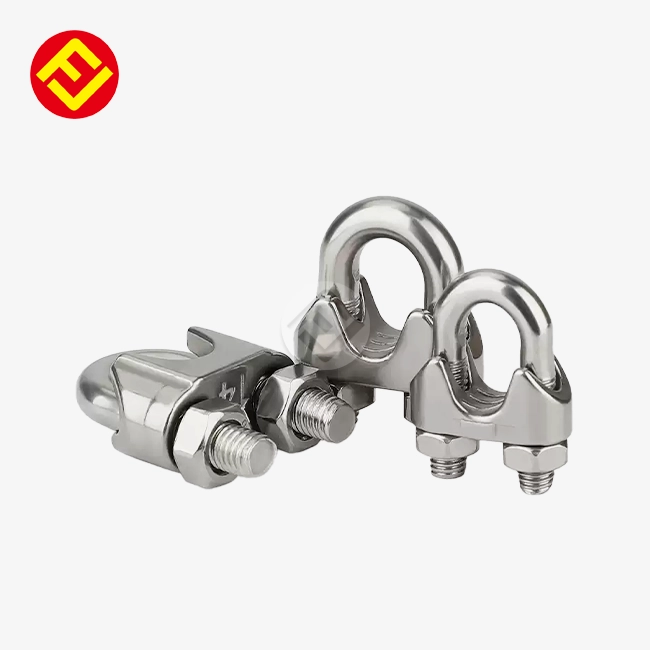
Stainless steel rope clip units are important mechanical parts that hold wire rope ends together or make load-bearing eyes in rigging systems. Each part has a U-bolt, a cast saddle, and two hexagonal nuts that work together to keep the holding strength between 80% and 90% of the rope's breaking strength. These screws solve the biggest problem in the business, which is that galvanized options rust quickly in harsh conditions. They do this by stopping oxidation and pitting from causing them to fail too soon.
The design relies on pressure between the rope's dead end and live end inside the saddle to make a safe ending point. This method is very helpful when swaging isn't possible on-site or when the project needs to be able to be adjusted.
Common Types and Their Applications
The market has a number of options that can be used to meet different operating needs:
U-Bolt Clips (Drop Forged Type) are the heavy-duty standard for moving and rigging jobs that need to be done right. The saddles on these clips are forged, which makes them stronger and more resistant to wear than cast saddles. Because the forging process makes the chemical structure stronger, these clips can handle dynamic loads and vibrations without losing their grip. This is the type that construction companies prefer to use to secure safety lines and temporary support structures that could fall and cause serious damage if they fail.
DIN 741 Standard Clips are good for lighter jobs like decorative installs and architectural wire fences. Even though they are made with cast seats, they work well enough for static loads in controlled settings. Furniture makers often ask for these clips to be used on display systems and hanging parts where both function and style are important.
Clip and Wedge Combinations are designed to hold things in place permanently and provide the most binding power. These systems spread the clamping force more evenly across the diameter of the rope. This means that there are fewer stress spots that could damage the wire.
Knowing these differences helps procurement managers choose the right gear that meets both safety and cost standards.
Material Grade Specifications
The difference between 304 and 316 stainless steel has a big effect on how well it works and how long it lasts. The metal grade 304 has about 18% chromium and 8% nickel in it. It has great protection to corrosion and can be used indoors or in gentle outdoor settings. This grade works well for making furniture and building projects where harsh chemicals are not present in large amounts.
Along with chromium and nickel, Grade 316 contains 2 to 3 percent molybdenum, which makes it much more resistant to chlorides and acidic acids. This standard is needed for marine engineering projects because it protects better against salt spray and crevice rust. Electricity businesses that work in coastal areas know that the higher cost of materials keeps expensive repair cycles and possible safety problems from happening.
A self-healing chromium-oxide layer is formed on the surface of stainless wire rope clip during the passivation method used during production. If this layer gets scratched, it grows back when it comes in contact with air, protecting the product from rusting for as long as it lasts. Having this trait is especially helpful in places where regular repair access is hard to achieve.
Core Benefits Driving Industry Adoption
These fasteners have real benefits that improve the speed of operations. Because it doesn't rust, it doesn't need to be maintained like galvanized options do, which need to be inspected and replaced often in tough settings. Plumbing companies who work on wastewater treatment plants say that less downtime and longer replacement times have saved them a lot of money.
If the temperature of an area gets as high as 425°C, these clips will still be structurally sound even though the temperature is very low. Because they are so flexible, they can be used in both cooling systems and high-temperature steam systems without losing any performance.
The bright glossy surface looks good and is useful at the same time. The smooth surface keeps dirt from sticking to it and makes it easier to check for damage or wear. This professional look is good for architectural uses because it gets rid of the need for protected coats that could mess up the accuracy of the measurements.
How to Select the Right Stainless Steel Rope Clamp for Your Application?
Load Capacity and Rope Diameter Matching
To make the right choice, you must first accurately evaluate the working load limits and line specs for each stainless steel rope clip. Each clip size fits a certain range of rope diameters, and using hardware that is too small increases the risk of dangerous failure. The people in charge of buying things should make sure that the clip they choose has enough safety factors to withstand the highest loads that could happen, such as shock loads.
To get the recommended holding effectiveness, the industry standard says to use more than one clip per termination. For ropes with a diameter of up to 8 mm, at least two clips are needed. For bigger sizes, three to four clips should be properly spaced along the dead end. This spread keeps stress from building up in one place and makes sure that the grip is the same all the way around the end.
Environmental Conditions Assessment
The operating setting has a direct effect on the choice of material grade. For marine uses, grade 316 is needed to protect against saltwater and moisture in the air. The problems on construction sites near the coast are the same, even for short-term projects that last a few months.
Chemical processing plants have to check for certain chemicals that are used in their work. Stainless steel is generally resistant to chemicals, but for some strong acids or bases, you may need special metals. Talking to technical support teams can help you figure out what specs are right for settings that are complicated.
Compliance and Certification Requirements
Standards like ASTM specifications, EN ISO guidelines, and OSHA rules must be followed for safety-critical uses. Managers in charge of buying things should make sure that sellers show proof of compliance by showing third-party testing certificates. This paperwork keeps companies from being sued and makes sure that the standard of all Products" target="_blank" style="color:blue" >products is the same.
When a stainless steel rope clip manufacturer has ISO9001 certification, it means that they have well-documented quality control systems that cover everything from checking the raw materials to doing the final review. CE marking shows that a product meets European safety standards, which is important for businesses that sell to customers in other countries.
Installation and Safety Standards of Stainless Steel Rope Clamps
Proper Installation Techniques
For safe, effective links, the right stainless steel rope clip choice is just as important as the right installation. The main rule is still "Never saddle a dead horse." This means that the U-bolt should touch the dead (cut) end of the rope and the saddle should always sit on the live (load-bearing) end. If you change this direction, the load-bearing wires get crushed, which makes the structure much less strong when it breaks.
There are specific rules for how far apart clips should be based on the thickness of the rope. In general, clips should be placed so that there is about six rope diameters of space between them. The first clip should be one rope width away from the thimble or loop, and there should be more clips spread out along the dead end.
It is important to follow the exact torque specs that come with each clip size. Overtightening breaks wire strands, while undertightening lets rope slip. Using calibrated torque tools makes sure that the fitting is the same at all terminations. Once the clips are fully loaded, they need to be tightened again because the rope will sit into the saddle holes and slightly compress.
Routine Inspection Protocols
Setting up regular inspection plans keeps problems from happening out of the blue. As you look at the U-bolt, you should look for signs of distortion, saddle damage, thread wear, and rust. Localized rust can happen to even stainless steel in some situations, especially where water gathers in cracks.
The state of the rope near the clips needs to be carefully looked at. Broken wire strands, strange wear patterns, or a rope's thickness getting smaller are all signs of possible problems that need to be fixed right away. Site managers should write down what they find during inspections and keep records that show they are doing their part to handle safety.
Compliance with Industry Standards
According to OSHA rules, lifting tasks must follow certain procedures, such as having a qualified person watch over the installation. Companies must make sure that their employees get the right training on how to place clips and know what will happen if they don't do it right.
Specifications for clip form, materials, and testing methods are spelled out in detail in EN ISO standards. Following these guidelines makes sure that foreign supply chains work together and makes it easier to check the quality of goods during the buying process. Standardized standards that make maintenance easier are especially helpful for electrical utility companies that work in more than one region.
Market Overview: Sourcing and Procuring Stainless Steel Rope Clamps Globally
Evaluating Supplier Capabilities
To be successful at buying, you need to do more than just compare prices when evaluating a stainless wire rope clip supplier. When looking for a vendor, hardware distributors should look at how well the company can make things, its quality control systems, and its expert help tools. Companies that keep a lot of stock on hand can fill pressing orders that help projects stay on schedule, and companies that offer custom manufacturing can handle unique needs that standard lists can't cover.
Certification paperwork is factual proof that a supplier can be trusted. ISO9001 systems certification shows a dedication to consistent quality management, and test results for each product prove the material's specs and how well it works. Leading makers include documents of conformity with every shipment, which can be checked by a review at the receiving end.
Customization skills set exceptional providers apart from average ones. Manufacturers who can make custom designs are helpful for projects that need non-standard rope lengths or specific load requirements. This freedom gets rid of the problems that come with pushing standard goods into uses that aren't right for them.
Quality Control and Testing Protocols
Professional purchasing needs strict ways to check the quality of the goods. Positive Material Identification (PMI) with X-Ray Fluorescence Spectrometry proves that the makeup of the material fits the grades that were given. This test looks for the use of lower-quality metals that might make the structure less resistant to rust and weaken it.
Passivation works because it passes salt spray tests according to ASTM B117 standards. Samples are exposed to neutral salt mist for at least 72 hours, and red rust shows that the corrosion protection isn't good enough. This objective testing takes away any doubts about how well the product will work in harsh settings over the long term.
Using high-precision measuring tools to check the dimensions makes sure that the threads are straight, the saddle radius matches the rope diameter limits, and the whole thing is in line with the engineering plans. Go/No-Go scales make it easy to quickly check if something passes or fails during the receiving review.
Logistics Considerations for Global Operations
When you buy something internationally, it becomes more complicated and needs to be carefully managed. When estimating lead times, it's important to take into account how long it takes to make the product, clear customs, and ship it using different methods. Total landed costs can be lowered by suppliers who offer consolidated shipping from regional storage hubs. Delivery reliability must also be maintained.
For smaller businesses or project-specific needs, minimum order amounts can be hard to meet. Building ties with distributors who keep a lot of stock gives you access to buying small amounts when you need to, though the prices per unit are usually higher than for full container orders.
The quality of the packaging has a big effect on how the product is when it arrives. The right packaging keeps the surface from getting damaged while being handled and keeps water out during ocean shipping. Suppliers with a good reputation spend money on the right packing materials to keep the quality of the product intact throughout the supply chain.
Top Rated Stainless Steel Rope Clamps and Reviews for 2026
Performance Comparisons and Testing Data
Independent testing confirms that the current market leaders have real performance benefits for every stainless steel rope clip they produce. In accelerated corrosion tests, Grade 316 clips regularly do better than 304 standards. After 1000 hours of salt spray exposure, they show minor pitting, while lower grades' surfaces show clear wear and tear. This information gives a solid reason for the higher costs of upgrading materials in coastal settings.
The ultimate tensile strength of drop-forged saddle designs is 25–30% higher than that of cast saddle designs of the same size. This difference in strength means better safety factors and a lower chance of catastrophic failure when shock loads are applied. Contractors in the construction industry who use high wiring know that this performance gap is very important for worker safety.
Thread quality has a direct effect on the uniformity of fitting torque and the ability to use the part again. Precision-machined threads keep them from galling when they're being tightened and let you use the right amount of force without sticking. The service life of premium clips with rolled threads is much longer than that of cut thread options, according to industrial repair teams.
Application-Specific Recommendations
Marine and offshore gear must meet the grade 316 standard as a minimum. Because it has molybdenum in it, it protects against chlorine attack, which quickly breaks down lower metals. Lifelines, mast stays, and mooring setups made by yacht rigging providers and marina builders always come in this grade.
Installations of architectural wire railings strike a mix between function and style. The shiny, bright finish on high-quality clips makes them look better and keeps them from rusting. When building workers choose the right materials, they can get rid of unsightly rust stains on building walls that make the property look bad and make owners unhappy.
Wastewater treatment plants are very difficult places to work because they are constantly wet and exposed to chemicals. Grade 316 clips used to secure underwater equipment work reliably for a long time, while zinc clips break after only a few months. Total cost of ownership benefits are used by procurement engineers to easily support specifying high-quality materials.
User Feedback and Industry Insights
Professionals in procurement always stress how quick a provider is as a key selection factor. Companies that give goods and expert help during the planning, installation, and maintenance stages are more valuable than companies that only sell products. This all-around method lowers the risks of the project and boosts trust in long-term supply relationships.
Hardware sellers worry a lot about making sure that products are consistent from shipping to shipment. Changes in sizes, finishes, or the qualities of materials can make customers unhappy and lead to returns that hurt profits. Reliable sellers keep tight controls on their processes to make sure that every package matches exactly what was ordered before.
Conclusion
In conclusion, stainless steel rope clip solutions have been used for years to reliably connect wire ropes in nautical, building, industrial, and architectural settings. Choosing the right type, material grade, and size guarantees the best efficiency while still meeting safety standards. Correct installation methods and regular check schedules extend service life and stop breakdowns before they happen. Working with experienced suppliers who offer full quality control, customization options, and expert help makes buying easier and makes sure that the quality of the products stays the same. These screws are the best choice for harsh settings where failure is not an option because they are highly resistant to corrosion, maintain their structural integrity, and last a long time.
FAQ
What distinguishes grade 316 from 304 stainless steel in wire rope clips?
Grade 316 has 2% to 3% molybdenum that grade 304 does not have. This makes it much more resistant to chlorides and acidic acids. Because of this, 316 is needed in marine settings and for chemical handling, while 304 works well in general industry settings with less harsh exposure conditions for a stainless steel rope clip.
How many clips should be used to connect two pieces of wire?
The needed number varies on how wide the rope is. For ropes up to 8 mm in diameter, you need at least two clips. For bigger sizes, you need three to four clips. The right distance between clips—about six rope diameters—makes sure that the load is spread out evenly and that the clips hold 80 to 90 percent of their weight.
Is it safe to use these screws again after taking them apart?
Clips can be used again if a close check shows that the U-bolts are not deformed, the saddles are not damaged, and the threads are not wearing down. The clamped rope section will be forever deformed, and it needs to be cut off before new clips can be put on to make sure there is a good grip and safety.
Partner with FLA Industrial & Trading Co., Ltd. for Premium Wire Rope Fastening Solutions
We at FLA industry & Trading Co., Ltd. know that safe and effective activities in the building, military, and industry sectors depend on strong wire rope connections. As a stainless steel rope clip maker, we can make precision-engineered fasteners from grade 304 and 316 materials using advanced casting, forging, and machining techniques. We help buying managers find the best deals on hardware without lowering quality standards. We have been making hardware for almost 40 years and have over 1,000 product specs. Our ISO9001 and CE certificates, as well as our ability to hold 2,000 tons of inventory and our 7–15 day custom production schedules, make sure that your projects stay on plan. For expert advice and cheap quotes, email our team at sales@flaindustrial.com.
References
American Society for Testing and Materials. (2023). "ASTM A48/A48M Standard Specification for Stainless Steel Wire Rope Fittings." ASTM International Standards Worldwide.
Occupational Safety and Health Administration. (2022). "Wire Rope Slings and Rigging Hardware: Safety Requirements and Inspection Protocols." U.S. Department of Labor Guidelines.
European Committee for Standardization. (2023). "EN 13411-5: Terminations for Steel Wire Ropes - Safety Requirements." CEN Technical Standards Documentation.
National Association of Corrosion Engineers. (2024). "Corrosion Resistance Properties of Austenitic Stainless Steel Alloys in Marine Environments." NACE International Research Publication.
Wire Rope Technical Board. (2023). "Installation and Maintenance Best Practices for Wire Rope Clip Terminations." WRTB Industry Technical Manual.
International Organization for Standardization. (2022). "ISO 9001:2015 Quality Management Systems for Hardware Manufacturing." ISO Standards Catalogue.