Boost Your Productivity with Quick-Action C-Clamps
2026-06-29 15:41:42


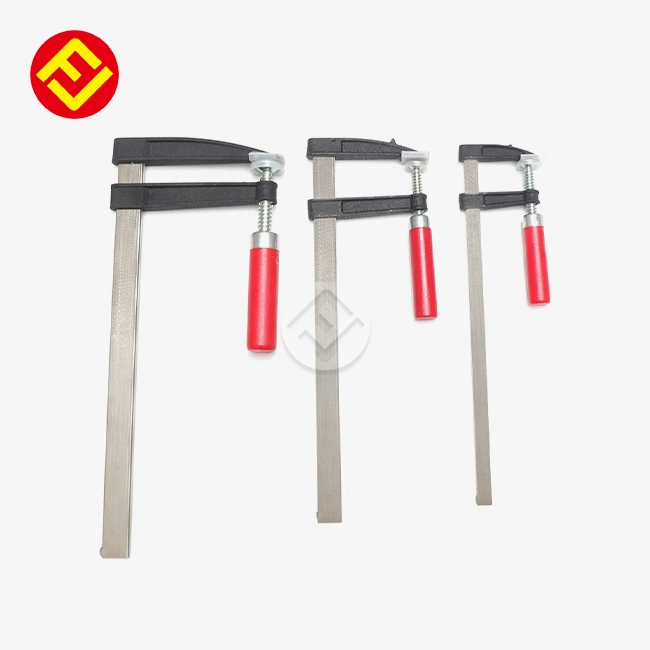
Quick-action c-clamps are a big step forward in industrial fixing technology. They have completely changed how professionals do tightening work in places with a lot of production. Unlike regular screw-adjusted models where you have to turn the handle over and over, these specialised tools have quick-release mechanisms (trigger buttons or gravity clutches) that let the threaded spindle slide easily for fast positioning. Once it's in place, all it takes to apply full binding force is a simple twist. This cuts setup time by up to 90% compared to traditional designs. This efficiency directly addresses three important problems: long cycle times in assembly tasks; tired operators from doing the same thing over and over; and alignment drift that makes it hard to place the part correctly when setting up the fixture.

Specifications |
|||
| Specification | Depth (mm) | Maximum Opening (mm) | Overall Dimension (mm) |
| 1 Inch | 28 | 25 | 75×45×12 |
| 2 Inch | 33 | 58 | 115×53×18 |
| 3 Inch | 65 | 86 | 170×95×25 |
| 4 Inch | 70 | 110 | 204×106×28 |
| 5 Inch | 80 | 140 | 245×115×28 |
| 6 Inch | 85 | 160 | 275×120×28 |
| 8 Inch | 105 | 220 | 330×150×30 |
| 10 Inch | 105 | 260 | 375×155×30 |
| 12 Inch | 115 | 310 | 440×170×33 |
Understanding Quick-Action C-Clamps: Features, Benefits, and Applications
What Sets Quick-Action Mechanisms Apart
Their ability to quickly slide is what makes these professional-grade gripping tools stand out. To open or close the jaw on a traditional clamp, you have to run the wheel through dozens of turns. An innovative half-nut system that disengages threads until contact with the object is made by a quick-action design gets rid of this useless motion. This new technical development makes industrial sectors more productive in areas where seconds matter, like when using batch processing or just-in-time assembly.
Our quick-action c-clamps have malleable iron frames and precision steel screw rods that work together to make them very strong without being too heavy. The ductile iron construction has higher tensile strength than weak cast iron options. The steel threaded rod keeps the mechanism running smoothly even when it's loaded with more than 2,000 pounds. Surface treatments like powder coating and industrial-grade paint finishes keep things from rusting in harsh workshop conditions. This extends the life of the item and makes sure it works the same way even when it's exposed to high and low temperatures and welding fluids.
Industry Applications Across Manufacturing Sectors
These quick-deployment clamps are used in woodworking shops during glue-ups, when the time it takes for the glue to set limits the time for adjustments. Being able to set up multiple clamps quickly stops glue from setting before it can evenly distribute pressure across joints. Furniture makers like the swivel pad design because it can fit uneven surfaces without damaging the final wood. This keeps the wood's appearance while holding parts in place during the doweling, edge banding, or bonding processes.
Metal forging shops use quick-action clamps to set up welding fixtures where part alignment needs to happen quickly to keep the production line running. The copper-plated spindle types are better at keeping weld spatter from sticking than normal finishes. This keeps the threads from getting dirty, which would break the quick-release mechanism. Body shops for cars use these to line up panels during spot welding, and workers in the HVAC industry use them to hold ducts in place while seaming is done. They are essential for construction companies to use for temporary structural links while putting together formwork, as the speed of the crew has a direct effect on project timelines and labour costs.
Performance Advantages in High-Volume Operations
The ergonomic handle design of the quick-action c-clamp keeps hands from getting tired after long periods of use, so workers can keep the tightening pressure the same over and over again without getting strain injuries. When workers on an assembly line use tightening tools hundreds of times during their shift, this is an especially important thing to think about. The easy-to-grip design lets you precisely control the pressure, which keeps the hold strong enough for drilling, turning, or cutting without damaging the material.
Contact surfaces that are precisely machined spread clamping force evenly across the edges between workpieces. This reduces localised stress that could dent or damage delicate materials. It is very important to have uniform contact shape when working with thin-walled aluminium extrusions, composite panels, or engineered wood Products" target="_blank" style="color:blue" >products that aren't as strong against compression as solid hardwoods or structural steel. Because of these performance traits, buying engineers are choosing quick-action models more and more when setting up new production lines or improving the ones that are already in place.
How to Use and Maintain Quick-Action C-Clamps Safely and Effectively
Proper Operating Procedures for Maximum Efficiency
To use it effectively, you must first choose the throat width and opening size that are right for your needs. Place the fixed jaw against a stable surface as a guide. Then, quickly move the mobile jaw toward the workpiece by releasing the quick-release trigger. Once the needle touches the material, turn on the threading mechanism again and use controlled handle rotation to apply the final gripping pressure. When tightening, don't use impact forces. Instead, use steady pressure. This keeps the material from breaking and increases the tool's life by lowering the shock loads on the frame and threaded parts.
When working with materials that are not all the same thickness, you need to change how you clamp them to take into account how they shrink. To get the right binding power, thermoplastics and softwoods need less torque than metals or hardwoods. When you over-tighten soft materials, they can get crushed or dented, which affects the accuracy of the measurements and the quality of the surface finish. If, on the other hand, solid materials are clamped too loosely, they can move during machining, which can be dangerous and lead to parts that aren't within specification.
Safety Protocols for Industrial Environments
Before each use, check the clamps for signs of wear, such as broken threads, frame cracks or contact pads that are no longer round. Any decline that can be seen should be taken out of service right away to avoid a major failure under load. The quick-action mechanism should work easily, without locking or too much play. If there is resistance during slide adjustment, it means that the mechanism is dirty or worn out and needs to be serviced. Replace old swivel pads right away because surfaces that are harder or uneven make it more likely that a project will slip while they are being used.
Never clamp more than what the maker says is safe. Even though ductile iron construction has a lot of safety limits, too much force can forever deform frames or strip threads, which can make future performance worse and cause failure modes that are hard to predict. Place clamps so that they don't get in the way of cutting tools, weld flames, or parts of machinery that are moving. Fix clamped parts to benches or props so they don't fall over when the clamps are taken off while the workpiece is still loaded, especially if the workpiece is tall or unstable.
Maintenance Practices for Extended Service Life
Metal chips, sawdust, and glue residue that build up in threaded areas and quick-release devices can be removed by cleaning them regularly. First, clean the thread profiles with compressed air. Then, grease the screw rod and trigger with light machine oil. Heavy greases can attract dirt and make the quick-release function less effective. Keep clamps in dry places with the jaws only partially open to release spring tension and keep the tightening mechanism from rusting.
Test the gripping power on a regular basis to make sure it stays within the limits. Use force gauges placed between the binding surfaces to measure the pressure that is created when you apply a measured torque to the handle. Losing function means that internal wear has happened and needs to be inspected by a professional or the part needs to be replaced. To support quality control systems and follow safety rules at work, keep service records that list inspection dates, upkeep tasks, and load test results.
Comparing Quick-Action C-Clamps with Other Clamping Solutions
Traditional C-Clamps and Operational Limitations
Standard screw-adjusted clamps need the handle to be turned continuously across the entire opening range. This takes up important production time during the setup and breakdown stages. This limitation is especially annoying in high-mix production settings where fixtures need to be adjusted quickly during frequent changeovers. Threading tasks require workers to move their wrists over and over again, which can lead to cumulative stress disorders in people who use these tools for long jobs. This increases the number of injuries and workers' compensation claims.
Quick-action versions fix these problems with new mechanical features that remove large adjustments from small pressure changes. The slide mechanism lets the jaws move quickly, and the threaded system lets you precisely control the force during the final closing. Compared to standard designs, this division of labour makes operators about 70% less tired, according to ergonomic studies done in car assembly plants. Because of this, production goes up because cycle times go down and people who get repetitive strain injuries miss less work.
Toggle Clamps and Application Specialization
Toggle systems work best in specific fixture uses where the clamping settings stay the same from one production run to the next. They have a great overcenter locking action that works every time, but they can't be adjusted to fit different-sized workpieces. Quick-action c-clamps are very useful in job shops and development spaces where different-sized objects need to be moved around a lot from one task to the next. The constant adjustment range can handle changes in material thickness without having to change the clamp or use a lot of different tools.
Bar clamps can hold larger panel arrays, but they are less portable and take longer to set up than c-style designs. The pressure that is spread out along the lengths of the bars works well for wide glue-ups but is too much for clamping jobs that need to be done close to edges or corners. Spring clamps can be used with one hand, but they don't have the technical edge that is needed for high-force tasks. There are different types of clamps for different uses. When making purchases, people should compare practical needs to tool skills instead of looking for one-size-fits-all solutions.
Cost-Effectiveness Analysis for B2B Buyers
Quick-action models usually cost more than basic clamp designs, but the extra money is worth it because they save money on labour costs and boost productivity. To find the real cost of ownership, you have to compare the purchase price to the expected service life, upkeep needs, and changes in output. A clamp that costs 40% more but doubles the operator's productivity and lasts three times longer is a much better deal than cheap ones that need to be replaced all the time.
These benefits are amplified by tactics that buy in bulk by taking advantage of price breaks and making sure that all production sites use the same tools. Consistent clamp specs make training easier, make repair programs more efficient, and let work centers share tools during times of high demand. Setting up relationships with chosen suppliers makes sure that parts are available for warranty service and gives you access to technical help when problems arise with the application or when production needs change.
Procuring Quick-Action C-Clamps: A B2B Buying Guide
Evaluating Suppliers and Manufacturing Quality
Certifications like ISO9001, which sets up systematic methods to process control and ongoing growth, show that a supplier is committed to quality. When dozens or hundreds of clamps are used across a building, it's important to keep the production line running smoothly, and manufacturing standards have a direct effect on product quality. Make sure that before the tools are shipped, the suppliers test the material composition, check the dimensions, and do functional load tests to make sure they meet the stated specs.
Suppliers who are open about their manufacturing processes show that they have faith in their quality systems. The casting methods, machining standards, and heat treatment techniques have a big effect on how well and how long a product lasts. Modern forging methods make ductile iron frames with better grain structure than traditional sand casting. This means they are more resistant to impact and last longer when loaded and unloaded many times, which is common in industrial settings.
Lead Times and Inventory Management
Reliability in the supply chain rests on knowing how much stock each seller has, how much they can make, and how to ship the goods. If a vendor keeps a large inventory (thousands of units in popular sizes), they can fill normal orders in days instead of weeks. This responsiveness is very important when setting up new production lines on short notice or changing broken tools to keep operations running smoothly. Custom configurations naturally need longer wait times to allow for approval of the design, setup of the tools, and quality checks before delivery.
Communication standards spell out what is expected for things like confirming an order, giving reports on production, and following a shipment. Respondent providers send quotes within 24 to 48 hours and give dedicated contacts who know your business needs and can suggest the right specifications for each application. Long-term customer success, not just transactional relationships based on unit sales, is shown by technical help that lasts after the original sale.
Volume Discounts and Contract Structures
Buying in bulk lowers the cost per unit and makes sure that there is a steady supply for ongoing activities. By negotiating guaranteed prices based on volume promises, budgets are protected from changes in the market, and sellers are given clear information about production planning, which helps manufacturers make good schedules. Graduated discount structures give discounts for bigger orders, but buyers must weigh the savings they see right away against the costs of keeping supplies and the space needed to store extra tools.
Maximizing ROI with Quick-Action C-Clamps: Productivity Tips for Procurement Managers
Quick-action c-clamps can help you get the best return on investment (ROI). Here are some productivity tips for procurement managers.
Integration into Assembly Workflows
Putting clamps in the right place on assembly jigs cuts down on the time it takes to move and handle parts, which has a direct effect on cycle times in manufacturing processes that are done over and over again. Look at the plans of your workstations to make sure that binding tools are in easy-to-reach places. This way, you can avoid having to stretch or move things around, which takes extra time and slows down each task. When applied to thousands of production cycles, these seemingly small changes lead to big increases in output and less physical strain that can lead to injuries at work.
Standardising on quick-action designs across a range of uses makes managing tools and training programs easier. When operators are familiar with one clamp model, they can quickly apply their skills to similar tasks anywhere in the building. This cuts down on the time it takes to learn new skills when switching between jobs or cross-training to make operations more flexible. This standardisation includes safety rules, repair routines, and spare parts stockpiles. It creates efficiencies that go beyond just measuring output.
Balancing Initial Investment Against Long-Term Value
To test a product's durability, you have to look at its frame structure, thread quality, and finish specs, which show how long it will last in real-world use. Premium components are more expensive to buy, but they last longer between replacements, which cuts down on both direct costs and secondary costs related to tools breaking down during production runs. When comparing values, it's better to look at the total cost of ownership over the projected service life, which for quality industrial clamps is usually 5–10 years.
Warranty coverage and assistance after the sale lower the risks that come with early failures or program problems that are found during installation. Reliable suppliers stand behind their goods with full warranties that cover flaws in the materials and the work, as well as expert support to help you choose the right tools and use them correctly. These services add value to the product itself by helping with efforts to make things better all the time and finding solutions to problems that come up when operating needs change.
Leveraging Supplier Partnerships for Competitive Advantage
Building relationships with capable producers makes it possible to create custom engineering solutions that meet specific output needs. Special throat levels, changed clamping surfaces, or built-in fixturing features can make your manufacturing skills stand out and let you do things that rivals can't easily copy. Collaboration in development lets you use the technical resources of your suppliers while keeping your attention on your core strengths. This speeds up the time it takes to come up with new ideas and get new goods on the market.
Conclusion
Quick-action c-clamps make work more efficient by quickly deploying themselves, which cuts down on useless motion during setup and takedown of fixtures. They are important tools for woodworking, metal fabrication, and building where efficiency directly affects profits because they are fast, accurate, and long-lasting. To make smart purchasing choices, people weigh the cost of materials, the quality of the production process, and the dependability of the supplier against the needs of the business and the total cost of ownership. Buying professional binding solutions from well-known brands guarantees consistent performance that boosts operating efficiency and product quality in tough industrial settings.
FAQ
What throat depth should I specify for heavy-duty metalworking applications?
For heavy production jobs, throat depths of 3 to 6 inches are usually needed to reach clamping points that are set back from the edges of the workpiece. Deeper mouths can hold stacks of thicker materials and make room for welding equipment or cutting tools to be used during grinding operations.
How do quick-action designs improve workplace safety compared to traditional clamps?
Wrist and elbow repetitive strain injuries are less likely to happen because placement requires less hand movement. When clamping goes faster, workers spend less time near dangerous machines, and comfortable handles make it easier to control the machine, which keeps it from over-torqueing, which could cause the part to slip or suddenly release.
Can these clamps integrate with automated production systems?
Quick-action devices are mostly made to be operated by hand, but they can be converted to work with air systems with the right fixture engineering. The rapid-slide feature can be used for automated placement, but for full automation, you usually need toggle or hydraulic locking systems that are made to work with robots.
Partner with FLA Industrial & Trading Co., Ltd. for Your Quick-Action C-Clamp Needs
Getting a reliable quick-action c-clamp provider turns procurement from a problem that needs to be solved over and over into a strategic benefit. FLA Industrial & Trading Co., Ltd. has been making metal tools, wooden clamps, and industrial fastening solutions for almost 40 years. They are looking for B2B partnerships all over North America. Our quality management systems are ISO9001-certified, which means that our products always meet or exceed more than 1,000 standards. We also keep 2,000 tonnes of inventory on hand, which gives procurement managers the quick access they need to keep operations running smoothly. We make our clamps with high-quality ductile iron frames and precisely machined steel screw rods. The finishes are corrosion-resistant so they can handle the rough conditions in building sites and metal manufacturing shops. Customers who buy in bulk can get savings, and within 7 to 15 days, custom engineering can change standard designs to fit your unique needs. Get in touch with our technical team at sales@flaindustrial.com to talk about your clamping needs. Within 48 hours, you'll get full specs, backed by partnerships with Fortune Global 500 companies that do business in the U.S., Germany, and Australia.
References
American Society of Mechanical Engineers. (2019). ASME B107.41M: Hand-Operated Clamps - Safety Requirements and Performance Testing Standards. New York: ASME Press.
Henderson, J.R. & Martinez, L.P. (2021). Ergonomic Tool Design for Industrial Manufacturing: Reducing Cumulative Trauma Disorders in Production Environments. Detroit: Manufacturing Engineering Society Publications.
National Institute for Occupational Safety and Health. (2020). Workplace Solutions: Preventing Musculoskeletal Disorders in Manual Assembly Operations. Washington: U.S. Department of Health and Human Services.
Schmidt, K.W. (2018). Metalworking Fixture Design: Principles and Applications for Modern Manufacturing. Munich: Industrial Press Europe.
Thompson, A.C. (2022). Quality Assurance in Metal Casting: Standards and Practices for Ductile Iron Production. Birmingham: Foundry Technology Institute.
Wilson, D.M. & Chang, H.Y. (2020). Procurement Strategies for Industrial Tools: Total Cost of Ownership Analysis in B2B Manufacturing Supply Chains. Chicago: Supply Chain Management Review.