Cold Galvanized Wire Rope Clip Enhances Cable Safety in Outdoor Rigging Applications
2026-07-28 14:13:09


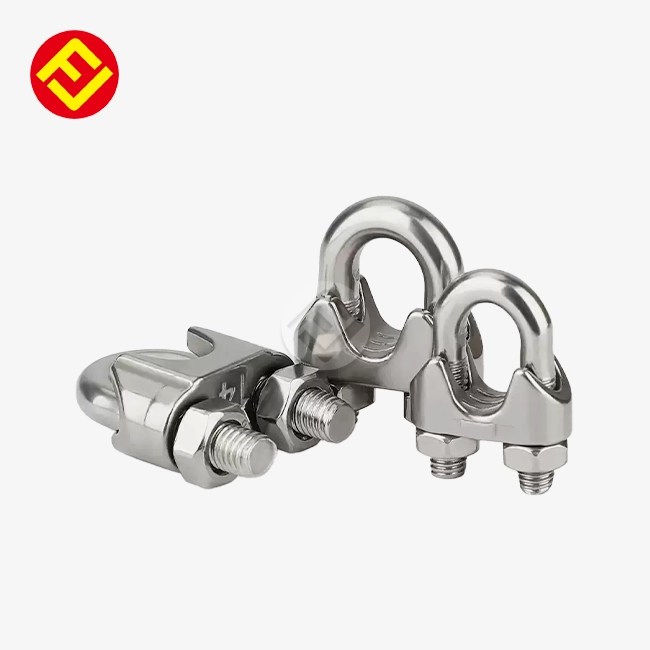
When securing wire rope connections in outdoor rigging projects, the choice of fastening hardware directly impacts safety and longevity. Cold galvanized wire rope clips offer a practical balance between corrosion protection and cost efficiency, making them an essential component in construction sites, agricultural installations, and industrial rigging systems. These electro-galvanized clips feature a bright silver-white finish achieved through precision coating processes that deposit zinc layers onto carbon steel substrates. This method creates moderate oxidation resistance suitable for environments where exposure conditions remain manageable, providing reliable cable termination without the premium pricing associated with stainless steel alternatives.

Specification |
|||
| Specification Type | Material | Surface Treatment | Specification (mm) |
| Cold Galvanized Wire Rope Clip | Carbon Steel | Cold Galvanized | 5 |
| Cold Galvanized Wire Rope Clip | Carbon Steel | Cold Galvanized | 6 |
| Cold Galvanized Wire Cold Galvanized | Carbon Steel | Cold Galvanized | 8 |
| Cold Galvanized Wire Cold Galv | Carbon Steel | Cold Galvanized | 10 |
| Cold Galvanized Wire Cold Galvanized | Carbon Steel | Cold Galvanized | 12 |
| Cold Galvanized Wire Cold Galvanized | Carbon Steel | Cold Galvanized | 15 |
| Cold Galvanized Wire Cold Galvanized | Carbon Steel | Cold Galvanized | 18 |
| Cold Galvanized Wire Cold Galvanized | Carbon Steel | Cold Galvanized | 20 |
| Cold Cold Galvanized | Carbon Steel | Cold Galvanized | 22 |
| Cold Galvanized Wire Rope Clip | Carbon Steel | Cold Galvanized | 25 |
| Cold Galvanized Wire Rope Clip | Carbon Steel | Cold Galvanized | 28 |
| Cold Galvanized Wire Rope Clip | Carbon Steel | Cold Galvanized | 32 |
| Cold Galvanized Wire Rope Clip | Carbon Steel | Cold Galvanized | 36 |
Understanding Cold Galvanized Wire Rope Clips and Their Role in Cable Safety
The Fundamentals of Electro-Galvanizing Technology
Forging high-grade carbon steel into the traditional U-bolt and saddle shape is how these clips are made. The steel is then machined to get exact thread specs. During the electro-galvanizing phase, a zinc layer of 5 to 12 microns is put on using an electrochemical process that is carried out at room temperature. In contrast to hot-dip galvanization, which submerges parts in molten zinc, this controlled deposition method keeps the dimensions of the parts and applies a uniform protective layer. The hardware that comes out of this meets ISO9001 and CE certification standards, which means that each clip can handle certain working loads when installed according to standard practice.
How Wire Rope Clips Enhance Rigging Safety?
The termination of cables is a major weakness in rigging systems. When the clip system is put together correctly, it forms a mechanical grip that keeps the rope from slipping when it is under stress. This is done by spreading the load forces across several contact points. The saddle part has a curved shape that fits the shape of the wire rope, and the threaded U-bolt squeezes the unit together to achieve holding strength of 80 to 90% of the rope's breaking strength. When holding temporary scaffolding guys or perimeter fence, construction workers depend on this performance trait because quick changes in load require consistent grip without hardware failure.
Industry Standards Governing Clip Performance
Following the rules set by DIN 741 guarantees that these clips meet light-duty requirements suitable for a range of uses. As part of quality control procedures, samples must be able to withstand neutral salt spray testing according to ASTM B117 for 24 to 72 hours before white rust starts to form. Using go/no-go gauges to check the threads makes sure that the electroplating process hasn't harmed the fasteners' ability to engage. By checking the measurements, we can be sure that the saddle gap depth is the right size for the rope widths. This keeps the rope from getting crushed or not having enough contact area. With these validated specifications, procurement teams can confidently choose hardware because they know that every batch goes through a strict inspection process before it is shipped.
Comparing Cold Galvanized Wire Rope Clips with Alternative Solutions
Performance Characteristics Across Coating Methods
Hot-dip galvanized clips have zinc layers that are 40 to 80 microns thick. They are better at resisting corrosion in harsh naval or industrial settings, but they cost more to make. When molten zinc is applied, it makes the surface uneven, which can make thread engagement harder and sometimes require more torque to be applied during installation. Stainless steel choices don't have any galvanic rust problems, which makes them perfect for places that work with chemicals or are near the coast, where salt air speeds up the breakdown of zinc. But budgets for buying things often can't support the high cost of stainless steel for projects that will be done in controlled environments.
In terms of usefulness, electro-galvanized clips are in the middle, and for Cold Galvanized Wire Rope Clip, their even, smooth finish lets you apply precise torque without galling, and the medium coating thickness works well for indoor facilities, agricultural fencing, and temporary construction rigging, with hardware wholesalers valuing the wide range of SKUs from 5mm to 36mm to fit different rope lengths, and because of their bright look, these clips can also be used for architectural wiring in business buildings where gear that can be seen needs to look professional. Their even, smooth finish lets you apply precise torque without galling, and the medium coating thickness works well for indoor facilities, agricultural fencing, and temporary construction rigging. Hardware wholesalers like that these clips come in a wide range of SKUs, with sizes ranging from 5mm to 36mm to fit different rope lengths. Because of their bright look, these clips can also be used for architectural wiring in business buildings where gear that can be seen needs to look professional.
Cost-Benefit Analysis for Procurement Decisions
The budget for setup gear should be based on how it will be used and how long it is expected to last. Permanent outdoor installations near coastlines are a good reason to spend more on hot-dip or stainless steel solutions, since they last longer and cost more at first. Instead, electro-galvanized hardware is a cost-effective way to do temporary work on the job site or indoor material handling. It provides reliable performance during project durations without adding to costs that aren't necessary. Total cost of ownership is found by comparing how often you need to change hardware with the cost of each unit, the time it takes to install, and any safety issues that could happen if the hardware fails too soon.

Installation and Maintenance Best Practices to Maximize Safety
Step-by-Step Installation Protocol
Choosing the right size is the first step in installing a clip correctly. The clip body should fit the rope diameter exactly as specified by the manufacturer to make sure there is enough saddle contact without too much compression. "Never saddle a dead horse" is the rule that everyone in the business follows: put the saddle on the live (load-carrying) end of the rope and the U-bolt on the dead (cut) end. If you flip this configuration around, the holding power drops by about 20%, which increases the risk of dangerous slippage under dynamic loads.
At least three clips should be used at each end, and the distance between them should be six times the width of the rope. Tighten nuts to the torque value recommended by the maker in a cross pattern to make sure the pressure is spread evenly. After the first load is applied, the wire rope's width will shrink slightly as the strands settle and compress. Because of this, the bolts must be tightened again within 24 hours of the first use, which is an important safety rule that is often forgotten when projects are rushed. As part of their quality assurance records, site managers should write down this retorque process.
Maintenance Schedules to Extend Service Life
The frequency of loads and the environment affect how often routine inspections need to be done. If rigging is done every day on a construction site, it should be visually checked once a week for covering wear, thread rust, and saddle deformation. Use non-abrasive brushes to clean the clips every so often to get rid of the dirt and wetness that build up and speed up the zinc's breakdown. In places with a lot of humidity, you might want to add thin layers of zinc-rich paint to worn areas where the base coating is breaking down.
If you see cracks in the saddle casting, thread stripping, or a lot of zinc loss that shows bare steel, you should replace the clips right away. When electrical utility companies do maintenance on their infrastructure, they make sure that their extra clip stocks are calibrated to the most common rope sizes. This way, crews can swap out broken hardware during regular service calls. This proactive method stops emergency failures that could stop work or put people in danger. Writing down when and why things need to be replaced is a good way to get useful information that can be used to improve future purchases and maintenance schedules.
Procurement Insights: How to Source Quality Cold Galvanized Wire Rope Clips?
Evaluating Supplier Capabilities and Certifications
When making sourcing choices, companies that show they have complete quality control systems should be given more weight. ISO9001 approval means that process controls have been set up and cover everything from checking the raw materials to doing the final inspection. Ask for proof of the results of the neutral salt spray test and the reports of the measurements checked for production batches. Reliable suppliers keep up with certification requirements by auditing them once a year. This gives buyers peace of mind that the hardware they receive meets performance standards.
When planning bulk orders or setting up long-term supply relationships, manufacturing capacity is important, and for Cold Galvanized Wire Rope Clip, FLA Industrial & Trading Co., Ltd. keeps more than 2,000 tonnes of standard specs in stock, so they can ship right away for pressing project needs, and with this stock depth, there are no longer any long lead times that could slow down construction or stop an assembly line. FLA Industrial & Trading Co., Ltd. keeps more than 2,000 tonnes of standard specs in stock, so they can ship right away for pressing project needs. With this stock depth, there are no longer any long lead times that could slow down construction or stop an assembly line. The company has been making things for 40 years, which shows that they are technically skilled in forging, machining, and electro-galvanizing processes, which have been improved through ongoing efforts to do better.
Navigating Minimum Order Quantities and Customization Options
For many hardware projects, non-standard setups are needed to work with different mounting situations. Look at providers that offer customization services and have quick response times. With access to 3D design tools, engineering teams can ask for custom saddle shapes or thread patterns that aren't found on standard parts. Custom parts can be produced in 7 to 15 days. This flexibility is very helpful when standard catalogue items can't meet certain load requirements or size limits.
Different sellers have very different minimum order amounts, which can change how big contractors and smaller businesses buy things. Manufacturers that can handle different order sizes, from small samples to full containers, give you more options for trying out new uses or keeping track of your goods. Coordinating the shipping of heavy equipment is needed to keep it from getting damaged during transit. Talk about packaging standards to make sure that clips come with their protective coating still on and are organized correctly so that they can be easily received and stored at your facility.

Why Cold Galvanized Wire Rope Clips Are the Preferred Choice in Outdoor Rigging?
Economic Advantages Supporting Long-Term Value
In addition to unit prices, total cost analysis looks at how well the product is installed, how often it needs to be maintained, and how often it needs to be replaced. Cold Galvanized Wire Rope Clips are easier to put together than hot-dip clips because they have smooth threading that doesn't bind when they're tightened. When teams can quickly finish terminations with standard tools and no special equipment, labour costs go down. The medium level of corrosion protection works well for uses in rural, suburban, or controlled industrial settings where the air doesn't speed up zinc degradation.
Hardware sellers gain from the wide range of uses these clips can be put to. Customers in building, farm, and light industry can all use the same inventory SKU. This increases inventory turnover rates and makes keeping it easier. Since the prices are fair, you can make good profits when you sell hardware in bulk to builders. Strong packing keeps the integrity of the product throughout the marketing process, which cuts down on returns due to damage from handling.
Regulatory Trends Influencing Rigging Hardware Selection
Safety rules for rigging are always changing. For example, OSHA and international standards stress the importance of written hardware specifications and installation confirmation. Using certified clips that meet published standards makes it easier to show compliance during inspections. Project engineers can look at certifications and test records from the hardware's manufacturer to see if it meets the design load requirements. This creates audit trails that support safety measures.
Electro-galvanizing works better and better as coating technologies keep getting better. Better passivation processes make these clips more resistant to rust without making them much more expensive. This means they can be used in tough situations that used to only work with high-end clips. Plumbing and HVAC contractors know that the range of capabilities is growing, so they specify electro-galvanized hardware for piping support systems that will be exposed to moderate moisture. This increase in applications shows how important it is to build supply relationships with companies that are putting money into developing covering technology.
Conclusion
When choosing the right wire rope ending gear, you have to weigh the need for performance against the available budget and the working conditions, and for Cold Galvanized Wire Rope Clip, carbon steel clips that have been precisely electro-galvanized keep cables safe in a wide range of outdoor setup situations where moderate rust protection is sufficient, and when these parts are installed correctly according to industry standards and are inspected regularly for maintenance, they will work safely for as long as they are supposed to. Carbon steel clips that have been precisely electro-galvanized keep cables safe in a wide range of outdoor setup situations where moderate rust protection is sufficient. When these parts are installed correctly according to industry standards and are inspected regularly for maintenance, they will work safely for as long as they are supposed to. When procurement teams buy from certified manufacturers with proven quality systems, large inventory holding capacities, and the ability to customize Products" target="_blank" style="color:blue" >products, they set up their companies for successful project execution while reducing hardware costs.
FAQ
How does a Cold Galvanized Wire Rope Clip differ from a Hot Dip Galvanized one?
The main difference is the covering thickness and how it is applied. Electro-galvanizing adds a thin layer of zinc that is 5 to 15 microns thick. This makes a smooth, bright finish that can be used indoors and outdoors in some light conditions. Hot-dip galvanizing uses molten zinc to coat something, leaving a 40–80 micron layer that protects against heavy-duty outdoor and marine corrosion but has a rougher surface that might make installation harder.
Can Cold Galvanized Wire Rope Clips be used for overhead lifting?
Most electro-galvanized clips are made according to DIN 741 standards, which means they are only good for light-duty uses and shouldn't be used for lifting heavy things overhead or suspending important safety loads. Drop-forged clips that meet standards like US Fed Spec FF-C-450 or EN 13411-5 and are validated through damaging testing are needed for overhead lifts.
Why must the nuts be retightened after the first load?
When the first load is put on the wire rope, the width of the rope slightly decreases as the individual strands squeeze and settle. This change in size makes clip assemblies less stable. After the first use, you must retighten to the recommended torque values as a safety measure to keep a good grip on the rope and stop it from slipping.
Partner with FLA Industrial & Trading Co., Ltd. for Your Wire Rope Clip Requirements
To get steady amounts of good rigging gear, you need to work with well-known companies that offer technical support and quick service. We can help you meet your procurement goals because we have been making hardware tools and industrial fasteners for almost 40 years. We stay certified to ISO9001 and CE standards, and our quality control procedures make sure that every clip meets the performance standards that were set. Our large inventory makes it easy to quickly fill standard orders, and our customization options allow us to get you special parts in record time.
We offer cheap solutions with expert support whether you're a hardware distributor looking for a wide range of SKUs, a construction contractor needing reliable supplies for ongoing projects, or a building maintenance team keeping track of rigging hardware stocks. When you Contact Us, we'll get back to you within 24 to 48 hours with full product details, pricing, and 3D design help. Get in touch with our sales team at sales@flaindustrial.com to talk about your needs and find out why top companies choose FLA Industrial & Trading Co., Ltd. as their Cold Galvanized Wire Rope Clip supplier.
References
1. American Society for Testing and Materials. (2019). Standard Practice for Operating Salt Spray (Fog) Apparatus: ASTM B117-19. West Conshohocken, PA: ASTM International.
2. Deutsches Institut für Normung. (2012). Wire Rope Terminations - Safety - Part 5: U-bolt Wire Rope Grips: DIN 741. Berlin: DIN Standards Committee.
3. Occupational Safety and Health Administration. (2021). Rigging Equipment for Material Handling: OSHA 1926 Subpart CC. Washington, DC: U.S. Department of Labor.
4. International Organization for Standardization. (2018). Electroplated Coatings of Zinc on Iron or Steel: ISO 2081:2018. Geneva: ISO Central Secretariat.
5. Wire Rope Technical Board. (2020). Wire Rope Users Manual: Fourth Edition. Manassas, VA: Wire Rope Technical Board Publishing.
6. National Association of Corrosion Engineers. (2017). Protective Coating Systems for Industrial Applications. Houston, TX: NACE International Publications.