Ratchet F-Clamp Enhances Precision Clamping for Woodworking and Metal Assembly
2026-07-28 14:13:04


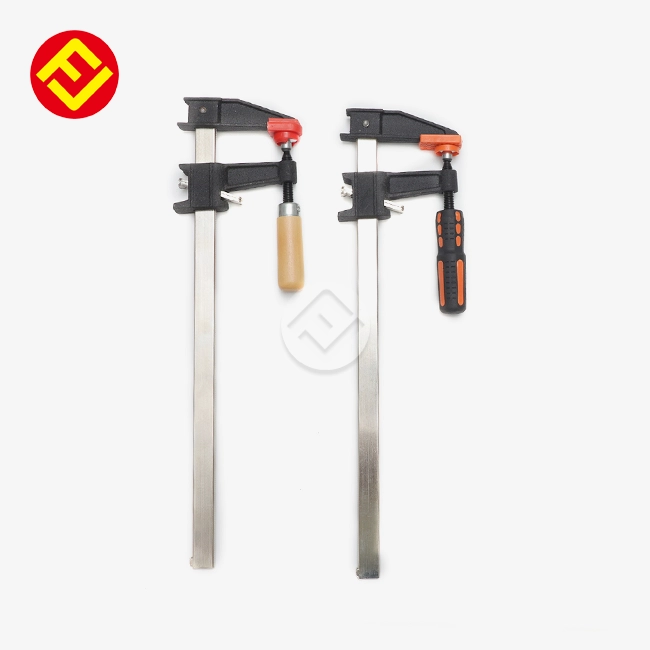
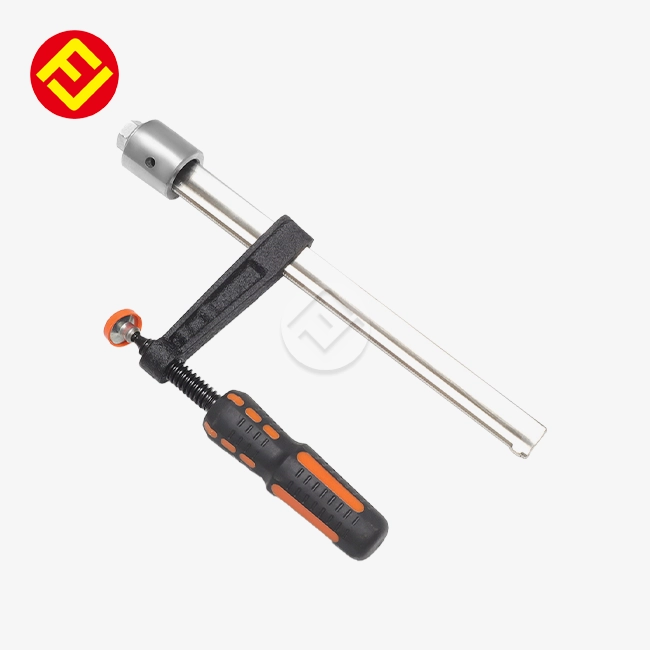
When precision matters in your production line, choosing the right clamping tool becomes essential. The F-Clamps/ratchet-f-clamp">Ratchet F-Clamp stands out as an engineered solution that combines rapid application with consistent holding force, addressing critical challenges faced by procurement teams and workshop managers. Built from malleable cast iron and steel, this clamping tool provides secure, adjustable pressure for cabinet installation, welding preparation, and metal fabrication tasks. Unlike traditional screw-driven clamps that demand continuous manual adjustment, the ratchet mechanism delivers controlled force with minimal hand fatigue, improving operational efficiency across high-volume manufacturing environments where time directly impacts profitability.


Specification |
|||
| Model | Overall Length(mm) | Shearing Capacity(mm) | Plier Handle Length (mm) |
| Track Ratchet F-Clamp 120x60 | 160 | 110 | 150 |
| Track Ratchet F-Clamp 160x60 | 210 | 160 | 150 |
| Track Ratchet F-Clamp 200x60 | 250 | 200 | 150 |
| Track Ratchet F-Clamp 300x60 | 350 | 300 | 150 |
Understanding Ratchet F-Clamps: Design, Benefits, and Practical Application
The basic structure of current Ratchet F-Clamps is the result of many years of improving the industry. These tools have both a friction-based locking system and a trigger-operated mechanism. This makes it easy for operators to place and secure workpieces.
Core Components and Mechanical Advantages
The structure is made up of a body made of cast iron that can be shaped and a screw rod made of steel that has been carefully machined. This mix of materials makes sure that the structure will last under long-term load while keeping its shape. The ratchet mechanism works with a trigger that strikes serrations on the steel rail. This lets you change the pressure gradually without having to keep applying force with your hands. This design keeps operators from getting tired during long assembly sessions and lets them position parts with just one hand.
Casting, forging, and CNC machining are some of the manufacturing processes that make sure every part meets strict tolerances for size. The throat depth is between 50mm and 300mm, and the opening size is between 100mm and 1000mm, so it can fit a variety of workpiece sizes. The clamping force can reach 2000N, which is strong enough for demanding tasks like making furniture and getting ready for structural welding. Specifications for weights between 0.8 kg and 4.5 kg strike a balance between portability and structural rigidity, answering concerns made by site leaders in charge of mobile work teams.
Operational Efficiency in Production Environments
When you're on a tight production schedule, speed is very important. The quick-release function lets you release the pressure right away, which cuts down on cycle times when moving materials or switching between steps of building. This feature is especially helpful for woodworking shops that use glue-up, where long fix times for the glue make it hard to change the way work is done. The non-marring pads protect finished surfaces, so you don't have to use protective shims, which can make setup more difficult.
Ergonomic handle design keeps your hands from getting tired when you clamp things over and over again. When production engineers switch from standard screw clamps to ratchet-operated types, musculoskeletal problems go down by a lot. This change means that workers will be more productive over longer shifts and there will be fewer injuries at work.
Maintenance Protocols for Extended Service Life
With regular maintenance, the locking mechanism will work the same way for thousands of rounds. The painted or zinc-plated finish choices make them resistant to rust, making them good for workshop settings where the humidity level changes often. The procurement teams should come up with cleaning methods that get rid of wood dust, metal bits, and glue residue from the rail serrations. This is because contamination weakens the friction mechanism's ability to hold things in place.
Compared to threaded options, they still don't need as much lubrication. Putting dry PTFE-based oils on the screw rod keeps it running smoothly without attracting dust from the workshop. At regular checkpoints, you should make sure that the jaw pads stay firmly connected and that the trigger mechanism works the same way all the way along the rail. These simple maintenance steps make tools last longer while keeping the accuracy needed for tasks that require high quality.
Comparing Ratchet F-Clamps with Alternative Clamping Tools
To choose the best clamping solutions, you need to know how the different designs meet different operational needs. Each type of tool has its own benefits that depend on the job, the amount of work being done, and the properties of the material.
Performance Analysis Against Quick-Release and Bar Clamps
When compared to Ratchet F-Clamps, quick-release bar clamps offer quicker setting but generally have less clamping force. The sliding head mechanism works great for tasks that need to be adjusted often across different workpiece sizes, which makes them ideal for prototyping environments. The ratchet mechanism, on the other hand, provides more consistent pressure, which is important for lamination bonding and precise joinery where even compression keeps things from getting out of place.
Traditional bar clamps with screw adjustments can hold more force, but they have to be turned by hand all the time, which slows down production during high-volume runs. The ratchet trigger gets rid of this need to repeat itself, so workers can reach the desired pressure with just a few squeeze-action strokes. This mechanical advantage is especially helpful when working with several clamps at once during complicated assemblies.
Evaluating C-Clamps and Pipe Clamps for Specific Tasks
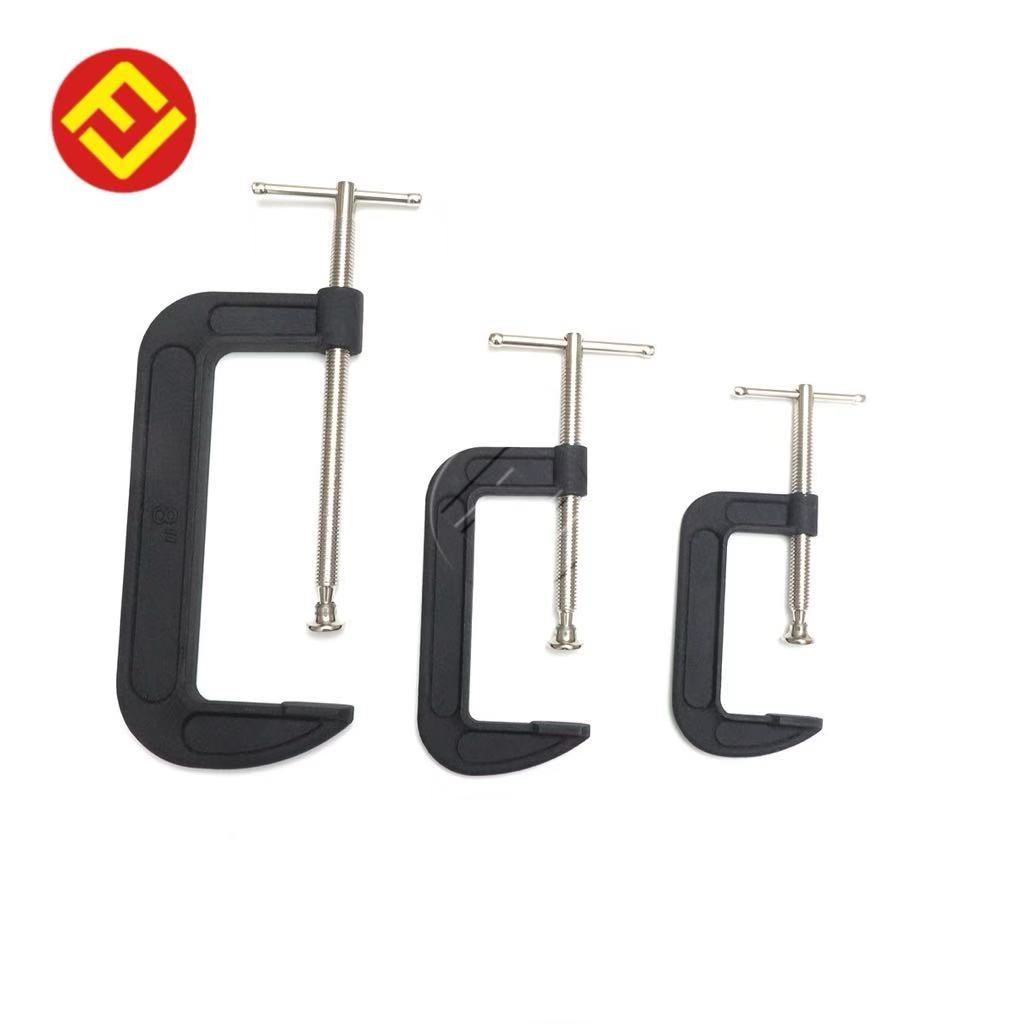
g-clamps are still necessary for mechanical tasks that need to use concentrated force in small areas. Because they are very strong and have a small shape, they are good for welding fixtures and setting up machines. Their limited throat depth, on the other hand, makes them less useful for larger workpieces that are popular in furniture production and cabinet installation. The Ratchet F-Clamp fills in this gap in capabilities by providing a longer reach while maintaining parallel jaw alignment, which is essential for keeping the workpiece from warping.
Pipe Clamps are great for holding wide panels because they can be adjusted for length, which makes them more difficult to set up. Workshops that work on a range of project sizes like being able to increase capacity by simply adding pipe sections. But the circular pipe rail makes it harder to keep things stable when attaching parts with odd shapes. F-clamps' flat rail design makes the contact shape known, which cuts down on setup time and improves clamping accuracy for precise assembly tasks.
Selection Criteria for Procurement Decision-Making
When procurement managers look at these choices, they should think about how cost-effective they are overall, not just for the initial purchases. The ratchet mechanism lasts longer and needs less maintenance, which makes up for its higher initial cost compared to simple screw clamps. When standardising tools across multiple production facilities, warranty coverage and support from the manufacturer become very important. Reliable makers give technical details that help with accurate planning of output and checking for compliance.
Weight affects how comfortable a user is during long periods of use and how tools are chosen for use in overhead applications or by mobile work teams. Models with bodies made of reinforced nylon composite material reduce fatigue without weakening the structure. Throat width and opening capacity must match the size of a normal workpiece so that you don't end up buying tools that are too big and hard to handle or too small and limited in what they can be used for.

Procurement Strategies for Ratchet F-Clamps in B2B Contexts
When looking for industrial clamping tools, you need to carefully consider the capabilities of the suppliers, the product specifications, and the logistics. Strategic purchasing practices make sure that there are reliable supply chains that keep production running smoothly.
Identifying Qualified Manufacturers and Suppliers
Manufacturers with a good reputation show their dedication to quality by getting ISO9001 certification and writing down their process controls. This approval shows that factories have consistent quality control systems that cover choosing materials, making Products" target="_blank" style="color:blue" >products, and checking them for quality at the end. When a supplier is being qualified, asking for certification paperwork is a good way to make sure that the items meet widely recognised standards.
Transparency in manufacturing is important when judging the trustworthiness of a seller. Facilities that use casting, forging, and precise machining show they have the skills needed to make long-lasting clamping tools. When suppliers offer factory audits or virtual facility tours, they let procurement teams see how things are made, which lets them make smart decisions about how much can be made and how strict quality control is.
Established manufacturers usually have relationships with major hardware and industrial distributors, and for Ratchet F-Clamp, this network access guarantees a steady supply and lets buyers negotiate prices more fairly by agreeing to buy in bulk, and checking supplier references with other companies in the same field can give you useful information about how reliable delivery is and how good the after-sales help is. This gives procurement teams more than one way to get the goods they need. This network access guarantees a steady supply and lets buyers negotiate prices more fairly by agreeing to buy in bulk. Checking supplier references with other companies in the same field can give you useful information about how reliable delivery is and how good the after-sales help is.
Evaluating Total Cost-Effectiveness and Value Proposition
A full cost study looks at more than just the unit prices. Shipping processes have a big effect on the total cost of acquisition, especially for large items that need to be shipped together. Suppliers with open shipping terms and long-term partnerships with foreign carriers make it easier to clear customs and cut down on transportation delays that throw off production plans.
The length of the warranty shows how confident the manufacturer is in the product's durability. Standard guarantee terms cover manufacturing flaws and parts that fail before they should for about one to three years. When working in tough conditions where downtime for tool replacements causes big losses in productivity, extended warranty options may be worth the slightly higher initial costs.
Long-term value realisation is affected by the provision of technical help. When suppliers offer application engineering help, it helps procurement teams choose the right models that meet operational needs. Access to 3D CAD models makes it easier to integrate fixture designs, and expert teams that can answer questions about specifications within 24 to 48 hours speed up the buying process.
Negotiating Terms for Bulk Purchase Agreements
When you commit to a certain amount of goods, you can get better pricing and more flexible scheduling for production. When standardising clamping tools across multiple facilities, making framework agreements sets clear specs while giving site managers the freedom to choose when to place their orders. Staged delivery schedules make sure that budgets for capital expenditures and inventory receipts are in sync, and that there are enough stocks to keep production going.
Customisation features are strategically useful for businesses that need non-standard specs. In competitive markets, manufacturers who offer custom throat lengths, unique jaw shapes, or private labelling can set their products apart. Collaborative design processes that use 3D modelling and sample testing make sure that unique solutions work as expected before committing to large-scale production.
Payment terms affect how you manage your cash flow and how much the whole project costs. Negotiating net-30 or net-60 payment terms is a better use of operating capital than having to pay upfront. Letters of credit protect foreign transactions and set clear standards for quality acceptance that are linked to payment release.
Optimizing Clamping Performance and Safety in Industrial Applications
Understanding how to use tools correctly and following systematic safety rules are necessary to get consistent results. When you combine good equipment with knowledgeable users who follow set procedures, you get operational excellence.
Techniques for Maximizing Clamping Accuracy and Consistency
Aligning the jaws correctly keeps the workpiece from getting damaged and makes sure that the pressure is spread evenly. Point-loading, which can break softwoods or bend thin sheets of metal, is avoided by setting the clamp teeth so they are perpendicular to the surface of the object. Using two clamps placed evenly across the joint's centerlines balances forces and stops them from moving during the curing cycles of the glue.
Applying pressure in small steps lets you see how the workpiece reacts as the clamping process goes on, and for Ratchet F-Clamp, rapidly applying too much force can cause material to be compressed or joints to slip before workers notice the problem, while the ratchet system allows for controlled pressure ramping, which lets workers watch how the workpiece behaves and make changes to their method as needed. Rapidly applying too much force can cause material to be compressed or joints to slip before workers notice the problem. The ratchet system allows for controlled pressure ramping, which lets workers watch how the workpiece behaves and make changes to their method as needed.
How well clamping works depends on how well the surface is prepared. Cleaning the matching surfaces gets rid of the dust and other things that get in the way of close touch between the parts. When holding finished surfaces, using extra protection pads on top of the built-in jaw covers keeps veneers or painted finishes from getting scratched. These safety measures keep quality standards high and keep expensive repairs from having to be done.
Safety Protocols and Injury Prevention Measures
Even though modern tools have safety measures, personal protection equipment is still very important. When clamping down, safety glasses keep debris from flying out, which is especially important when working with metal, where scale or sharp edges can be dangerous. When putting heavy pieces of work under clamps, work gloves protect your hands from pinch points and make it easier to hold on to things.
For a workpiece to be stable, it needs more support than just clamping pressure. When you use the right workbench fixtures or support stands, your workpiece won't move around, which could damage the clamps or hurt the operator. Making sure that the workpieces are still in place before starting to machine or cut them eliminates the risks that come with unexpected movement.
By checking the tool before each use, problems can be found before they become mistakes. Making sure that the jaw pads stay firmly connected keeps them from coming loose suddenly, which could cause workpieces to fall. Making sure the trigger works smoothly guarantees consistent performance, and checking the rail for damage stops quick pressure loss during important tasks.
Troubleshooting Common Operational Challenges
If the clamps slip, it's usually because the rails are dirty or the rubbing parts are worn out. Using a cleaner to clean the steel rail gets rid of the oil and glue residue that make it less gripping. If cleaning doesn't bring back the holding power, friction plate wear might mean that the part needs to be replaced or serviced by a professional.
If the trigger doesn't work consistently, it means that debris is building up inside the mechanism housing. Cleaning the trigger unit apart makes the action smooth again, but users should check the manufacturer's instructions to make sure they don't lose their warranties. Long-term dependability is maintained by using the right dry lubricants on pivot points.
Impact damage or component wear can cause the jaw to become misaligned, which can change how pressure is distributed. Using a precision edge to check the straightness of the rail shows any bending that needs the tool to be taken off the workbench. Replacing broken parts fixes the accuracy, but procurement teams should think about whether the costs of repairs are worth the investment compared to buying new models.

Conclusion
If you need to clamp things precisely and reliably, like when you're working with wood or putting together metal, the Ratchet F-Clamp is a great buy. Compared to standard screw-driven options, its ratchet system provides constant pressure while reducing operator fatigue. This directly improves production efficiency and process speed. These tools are made from steel and cast iron that can be shaped, and they were made using ISO9001-certified methods. They are very durable, which is important for harsh industrial settings. Strategic buying practices that focus on qualifying suppliers, figuring out total costs, and making sure that customisation options are available help businesses get the best value while setting up reliable supply lines that support ongoing operations.
FAQ
What throat depth specification should procurement teams prioritize for furniture manufacturing applications?
The choice of throat depth is based on the usual size of the object and the needs of the assembly fixture. When making standard furniture, throat depths between 80 mm and 150 mm are helpful for assembling cabinet panels and building drawer boxes. For custom furniture shops that work with wider solid wood panels, depths of 200mm to 300mm may be needed. Looking at output records to find out the highest reach needed keeps you from buying tools that are too small and limit your application's flexibility or too big and make handling more difficult.
How does the ratchet mechanism's clamping force compare to traditional screw clamps for lamination bonding?
Quality Ratchet F-Clamps can clamp up to 2000N, which is about the same as mid-range screw clamps and good for most lamination processes in woodworking. The biggest benefit is that the pressure stays the same during the adhesive curing processes, so there is no need to re-tighten by hand. This dependability lowers the number of joints that fail because of pressure loss during joining. This is especially helpful during high-volume production, when it's not possible to keep an eye on each individual clamp.
Can manufacturers provide custom jaw configurations for specialized metalworking fixtures?
Customisation options include changed jaw shapes, special pad materials, and unique mounting features are available from well-known manufacturers. Custom projects usually have minimum order numbers and involve joint design processes that use 3D modelling and testing prototypes. During device development cycles, procurement teams should start talking early on, giving enough time for engineering review and production plans.
Partner with FLA Industrial & Trading Co., Ltd. for Reliable Ratchet F-Clamp Solutions
Precision-based industries should work with manufacturers who have been around for a while and understand how complicated modern production environments can be. FLA Industrial & Trading Co., Ltd. has been making high-performance clamping tools for almost 40 years. These tools are designed to be reliable in woodworking, metal fabrication, and assembly. No matter what your exact working needs are, our full line of Ratchet F-Clamps can be customised with standard throat depths or custom jaw configurations to meet your individual fixturing needs.
We are a reliable manufacturer of Ratchet F-Clamps that works with Fortune Global 500 companies in the US, Germany, and Australia. Our quality management systems are ISO9001-certified, so you can count on consistent performance. Our expert team responds to support requests within 24 to 48 hours and offers services like application engineering help, 3D modelling, and specification checking that make the buying process easier for you. Get in touch with our experts at sales@flaindustrial.com to talk about buying in bulk, looking into ways to make things your own, and learning how our competitive approach can help your production processes.
References
1. Industrial Fasteners Institute. (2022). Technical Standards for Clamping Tools in Manufacturing Applications. Cleveland: IFI Publications.
2. Woodworking Machinery Industry Association. (2023). Best Practices for Tool Selection in Furniture Manufacturing. Research Report Series, Vol. 18.
3. American Society of Mechanical Engineers. (2021). Quality Control Protocols for Forged Steel Components. ASME Standards Committee Technical Paper B89.
4. National Safety Council. (2023). Workplace Safety Guidelines for Hand Tools and Clamping Devices. Occupational Health Division, Chicago.
5. Manufacturing Technology Association. (2022). Procurement Strategies for Industrial Tooling: A Comprehensive Guide for B2B Buyers. Boston: MTA Press.
6. International Organization for Standardization. (2021). ISO 9001:2015 Quality Management Systems—Requirements and Implementation Guidelines. Geneva: ISO Publications.